
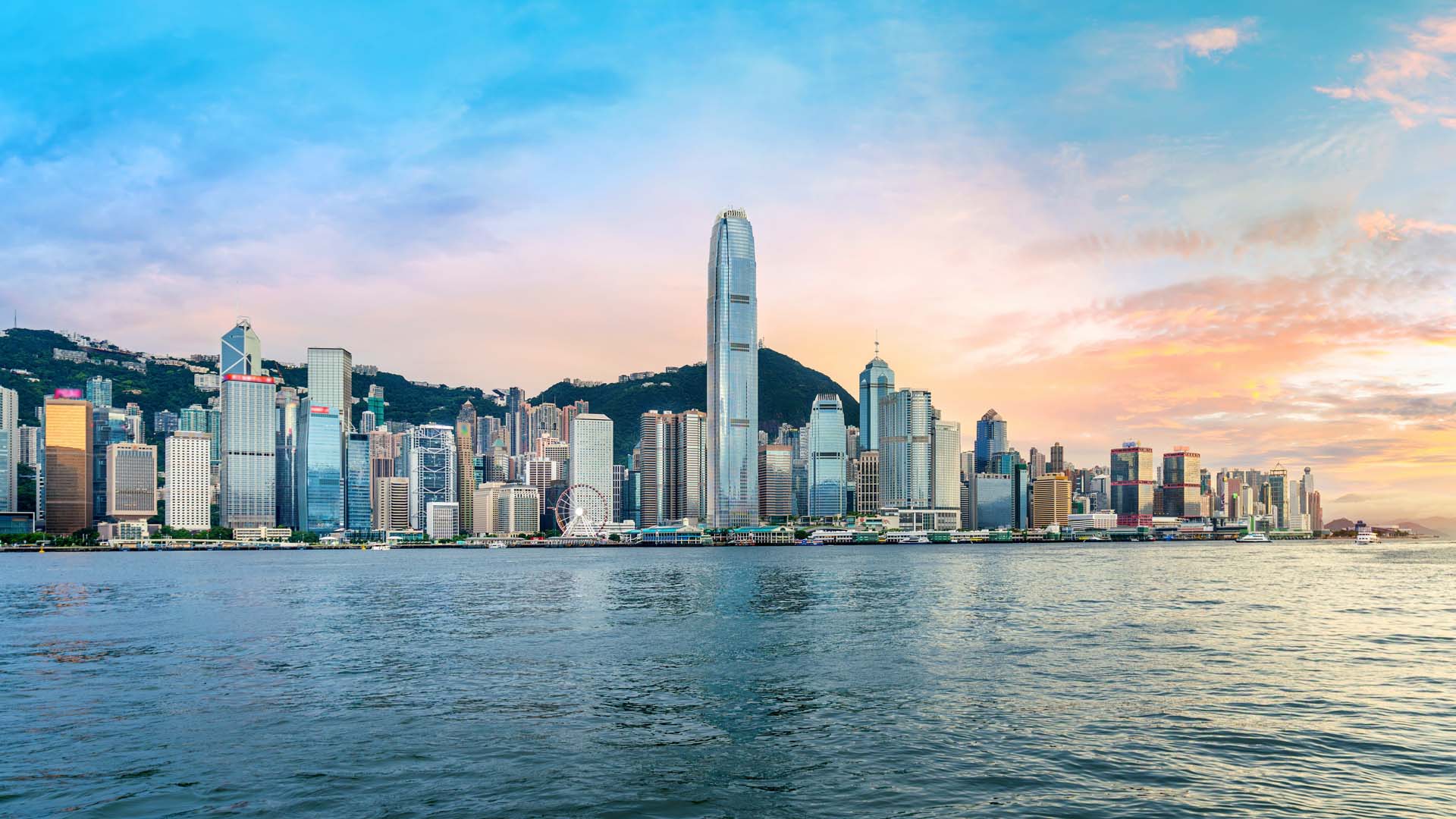
With licensed crypto exchanges, stablecoins and tokenised bonds taking shape under a single regulatory framework, Hong Kong is foreseeing that the future of finance will be digital. Its ambition goes beyond serving as a global crypto hub – the aim is to bridge digital assets with the traditional financial system
Few major financial centres have moved as far or as broadly into digital assets as Hong Kong. By August 2026, the city had 13 licensed virtual-asset trading platforms, Asia’s first spot Bitcoin and Ether exchange-traded funds (ETFs), two licensed Hong Kong dollar stablecoin issuers and three digital government bond issuances. Other jurisdictions have approved parts of this financial ecosystem, but Hong Kong is trying to connect them all.
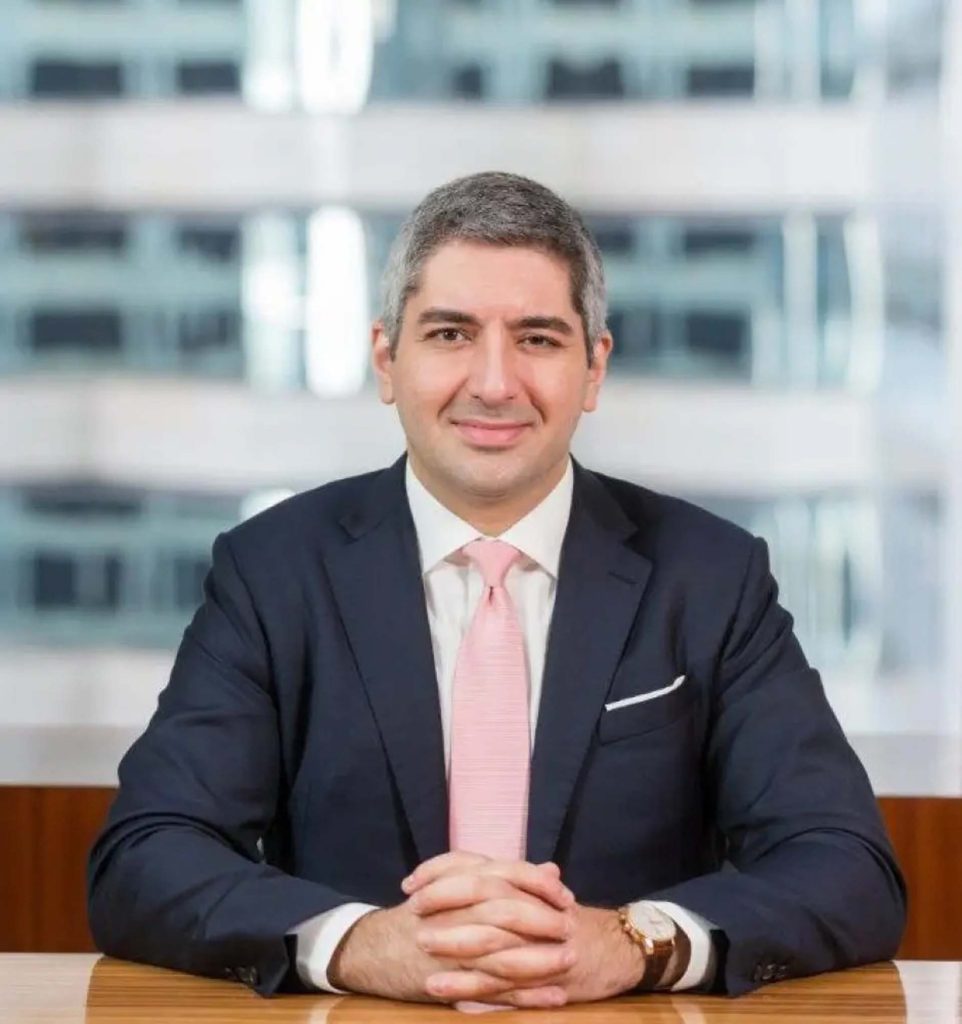
This approach has helped position the city at the forefront of Asia’s digital-finance race. “Hong Kong is one of the global crypto hubs and probably the main hub for Asia,” says Henri Arslanian, adjunct professor at the University of Hong Kong, where he teaches financial technology and cryptocurrency courses. That momentum is reflected in Henley & Partners’ 2025 index, which compares crypto-friendly jurisdictions offering investment-migration routes and ranked Hong Kong second behind Singapore.
Prof. Arslanian argues, however, that the real competition lies further west. “Hong Kong’s largest competitor is not necessarily Singapore, but rather Dubai or Abu Dhabi,” he notes.
Hong Kong is seeking to distinguish itself by integrating this new industry with the solid financial system it already has. The Securities and Futures Commission (SFC) oversees trading platforms and investment products, while the Hong Kong Monetary Authority (HKMA) supervises banks and licenses stablecoin issuers. Together, they provide a regulated route into digital assets for both established financial institutions and new market participants.
The race is about more than attracting exchanges or encouraging people to trade Bitcoin. Hong Kong is preparing for a financial system in which conventional money, bonds and investment funds can be issued and settled on programmable networks. It wants the companies, capital and expertise involved in that transition to pass through Hong Kong rather than around it.
That broader ambition first became official in a policy statement issued in October 2022, declaring the city open to global virtual-asset businesses. Speaking at Hong Kong FinTech Week at the same time, Financial Secretary of the Hong Kong Special Administrative Region (HKSAR), Paul Chan, said the policy demonstrated the government’s “determination to explore financial innovation together with the global virtual-assets community”.
When the HKSAR Government released its second policy statement on June 26 last year, the end goal became clearer: more efficient and lower-cost transactions, wider use of tokenised assets and a stronger international financial centre.
Together, the two statements produced a framework with four connected parts. Licensed exchanges create a regulated entrance to digital assets. Exchange-traded funds place cryptocurrency inside a familiar investment product. Stablecoins provide money that can move on digital networks. Tokenisation places conventional assets on those networks too. The offer to the industry is straightforward: access to a global financial centre in exchange for accepting its rules.
Regulated entrance
Hong Kong’s first move was to turn regulation into a competitive advantage. The JPEX incident in Hong Kong in 2023 revealed what could happen when customers entrusted money to poorly supervised or unlicensed platforms. Instead of abandoning its hub strategy, the city drew a line between the market it wanted to build and the one it wanted to push out.
The answer was a compulsory licensing regime, which took effect in June 2023. Under that framework, platforms must meet requirements covering custody of customer assets, capital, governance, cybersecurity and money laundering. Such a licensing system reduces the risk that the holding company will lose or misuse an investor’s assets.
The regime deliberately borrows from conventional finance rather than treating crypto as a world apart. In November 2022, Mr Chan described the principle as “same business, same risk, same rules”. A crypto platform performing the work of a financial intermediary must meet comparable standards on investor protection and financial crime.

Three years later, the SFC’s register contains 13 licensed platforms, while six applicants remained on the SFC’s published applicant list. Hong Kong had also launched Asia’s first six spot Bitcoin and Ether exchange-traded funds in April 2024. By March 2026, the total number of authorised virtual-asset spot ETFs had risen to 11.
Yet a growing product list does not necessarily mean a large market. As of March 31 this year, Hong Kong’s 11 virtual-asset spot ETFs had a combined market capitalisation of HKD4.3 billion. That represented approximately 0.7 percent of the HKD651.2 billion total for the city’s authorised ETFs and leveraged and inverse products. Regulators have therefore begun moving from providing access to encouraging activity. Since November 2025, licensed exchanges have been able to seek approval to combine their orders with those of overseas affiliates, giving them access to a larger pool of buyers and sellers.
At Consensus Hong Kong earlier this year, SFC executive director of intermediaries, Eric Yip, described the market as having entered a “defining stage”. The priority for 2026, he said, was liquidity: deeper markets, better price discovery and greater investor confidence.
Money that follows instructions
Deeper exchanges, however, solve only one part of the problem. To connect digital markets with the wider economy, Hong Kong also needs money that can move through them. Stablecoins are privately issued digital tokens designed to maintain a fixed value against a conventional currency. Hong Kong requires issuers to hold adequate reserves, keep assets separate and allow holders to redeem tokens at face value. Of 36 applications, the HKMA initially licensed only HSBC and Anchorpoint Financial.
The first test arrived on August 12, when Anchorpoint began rolling out HKD At Par (HKDAP), the first licensed Hong Kong dollar stablecoin to reach the market. The initial phase was limited to institutional distributors and professional investors. When the licences were announced on April 10, HKMA chief executive, Eddie Yue, said he hoped they would “address pain points in financial and economic activities”.
Yet for an ordinary Hong Kong resident, the reason for using one might not be immediately obvious. The Faster Payment System (FPS) already transfers money between banks and electronic wallets almost instantly. According to Bo Tang, head of the Institute for Financial Research at the Hong Kong University of Science and Technology, the main value of an HKD stablecoin does not lie “in replacing FPS for domestic retail payments”.

Its potential becomes clearer when payment needs to interact with another digital asset. Imagine a company buying a tokenised bond. A programmable stablecoin could release payment at the exact moment ownership changes hands, rather than sending the money and asset through separate systems that have to reconcile afterwards. It could also operate around the clock across compatible platforms and, where rules allow, across borders.
“Its longer-term value therefore lies less in competing with FPS and more in connecting Hong Kong’s existing financial system with emerging digital-asset and cross-border financial infrastructure,” Prof. Tang says. The stablecoin matters, then, not merely because it is a digital HKD, but because it could become the money used to settle other digital transactions.
Putting assets on the same rails
That settlement function becomes much more useful if the asset can move on the same infrastructure. Tokenisation does this by creating a digital representation of ownership in an asset such as a bond or fund. It does not make the investment safer or more valuable. Its potential advantage lies instead in changing how the asset is issued, divided, traded and settled.
To prove the idea can work, Hong Kong has tested it with its own debt, issuing a tokenised government green bond in 2023, a larger multi-currency digital bond in 2024 and a third digital offering in November 2025. By March this year, the SFC had authorised 13 tokenised retail products holding HKD10.8 billion, an increase of 594 percent from a year earlier.
Those figures suggest momentum, but Prof. Tang describes it as movement from experimentation towards early commercial adoption, not large-scale use.
“If it merely places an existing bond or fund onto a blockchain without changing the underlying process, the commercial value is limited,” he says. The real test is whether tokenisation shortens settlement, broadens distribution, enables fractional ownership or makes collateral easier to move.
The next step is to bring the money and asset together through EnsembleTX, a pilot initiative using tokenised bank deposits to settle transactions involving tokenised assets. The technical objective is relatively simple: payment and ownership should change hands at the same time on connected infrastructure.
How widely this infrastructure will spread remains disputed. Some bankers believe all finance is heading in this direction. At Hong Kong FinTech Week in November last year, Standard Chartered Group chief executive officer, Bill Winters, said “pretty much all transactions” would eventually settle on blockchains.
Global regulators are more cautious. Tuang Lee Lim, who chaired the international securities regulator IOSCO’s fintech taskforce, told Reuters news agency on November 11 that tokenisation could reshape finance but “adoption remains limited”. Hong Kong is operating in the space between those two assessments.
A bridge worth owning
If Hong Kong succeeds in connecting these different parts of the system, whom are they meant to serve?
The Chinese mainland banned cryptocurrency trading and mining in 2021 and reaffirmed its restrictions in November last year. The SFC has told virtual-asset platforms to comply with the Central Government’s law by preventing Chinese mainland residents from using their services. The city’s opening is not a back door around Beijing’s policy.
That boundary does not eliminate Hong Kong’s strategic value; it helps explain it. The city already links Chinese mainland companies with global capital through its stock and bond markets. Prof. Arslanian says “Hong Kong is an established global financial hub, so its natural edge is to become the bridge between digital assets and traditional finance”.
The existing policy’s welcome is strongest for stablecoins and tokenised real-world assets, he adds, and more limited for decentralised finance, the experimental part of crypto that often operates without conventional intermediaries.
Taken together, that boundary and the focus on established finance reveal what Hong Kong is aiming to build. Cryptocurrency companies are part of the strategy, but the city is not trying simply to reproduce a borderless crypto market inside its boundaries. It wants exchanges, banks, asset managers and regulators to place digital assets inside the financial establishment.
“Over the longer term, I believe stablecoins and tokenisation of conventional financial assets are more likely to have a structural impact on Hong Kong’s financial sector than cryptocurrency trading alone,” he notes. “Crypto trading can create new markets and attract liquidity, but it is still largely an additional asset class. Tokenisation and stablecoins have the potential to change the underlying infrastructure through which traditional finance operates.”
Both assessments point back to Hong Kong’s wider advantage. The city is at the forefront because it has already assembled more of that system than most competing centres.
What it has not yet demonstrated is mass demand. Success will not ultimately depend on the number of licences, pilots or product launches. It will depend on whether companies and investors choose this new infrastructure because it makes finance cheaper, faster, more accessible and easier to connect across borders.