
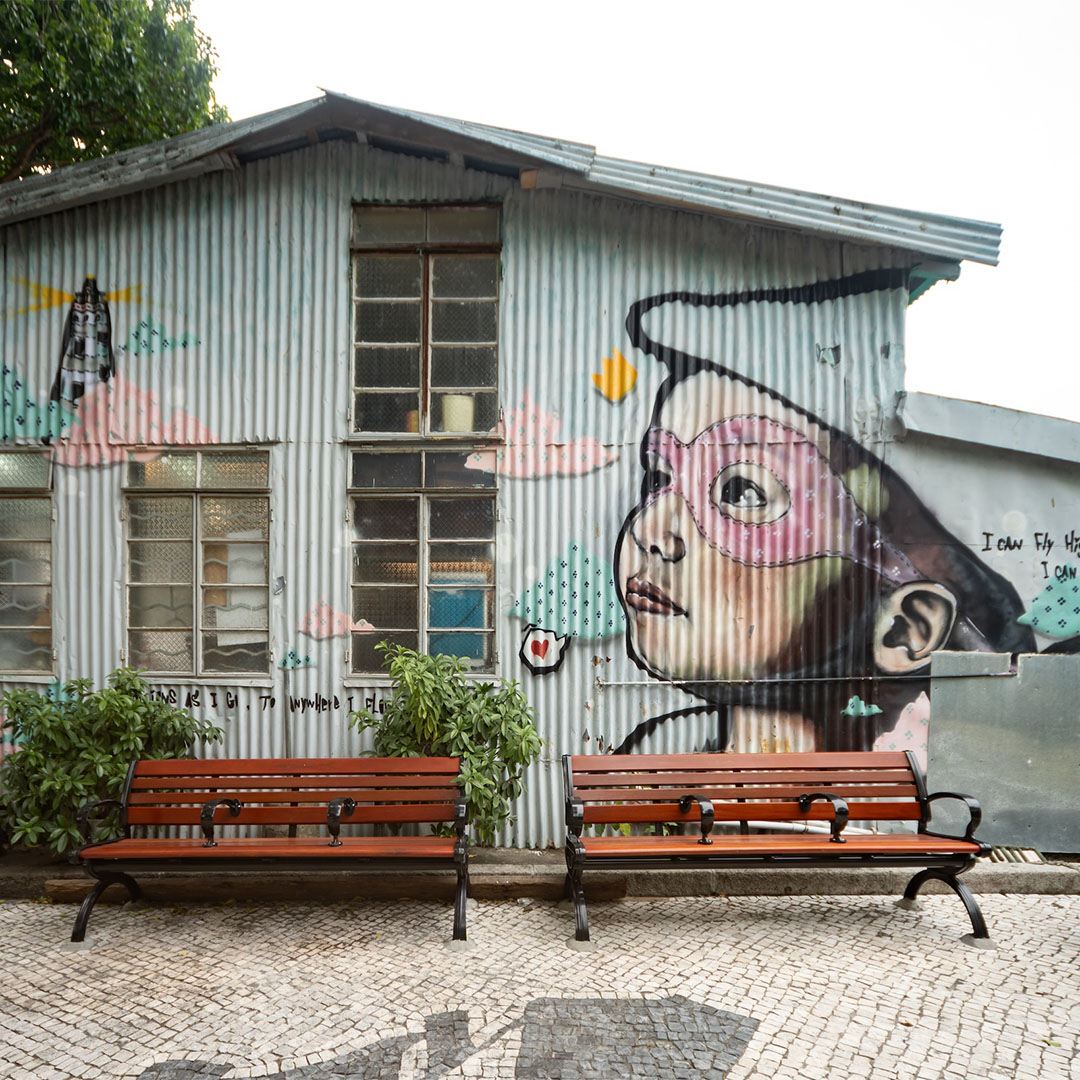
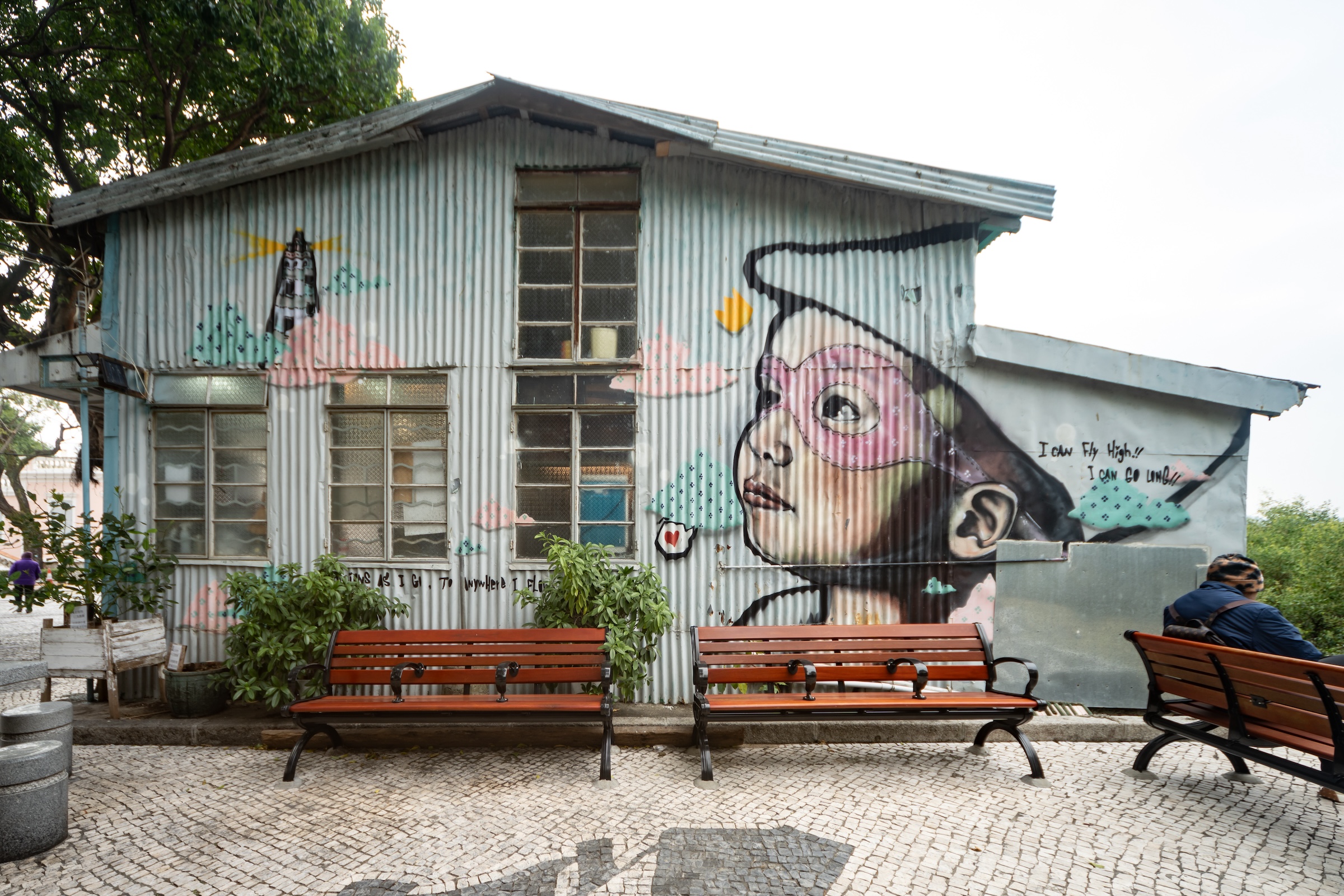
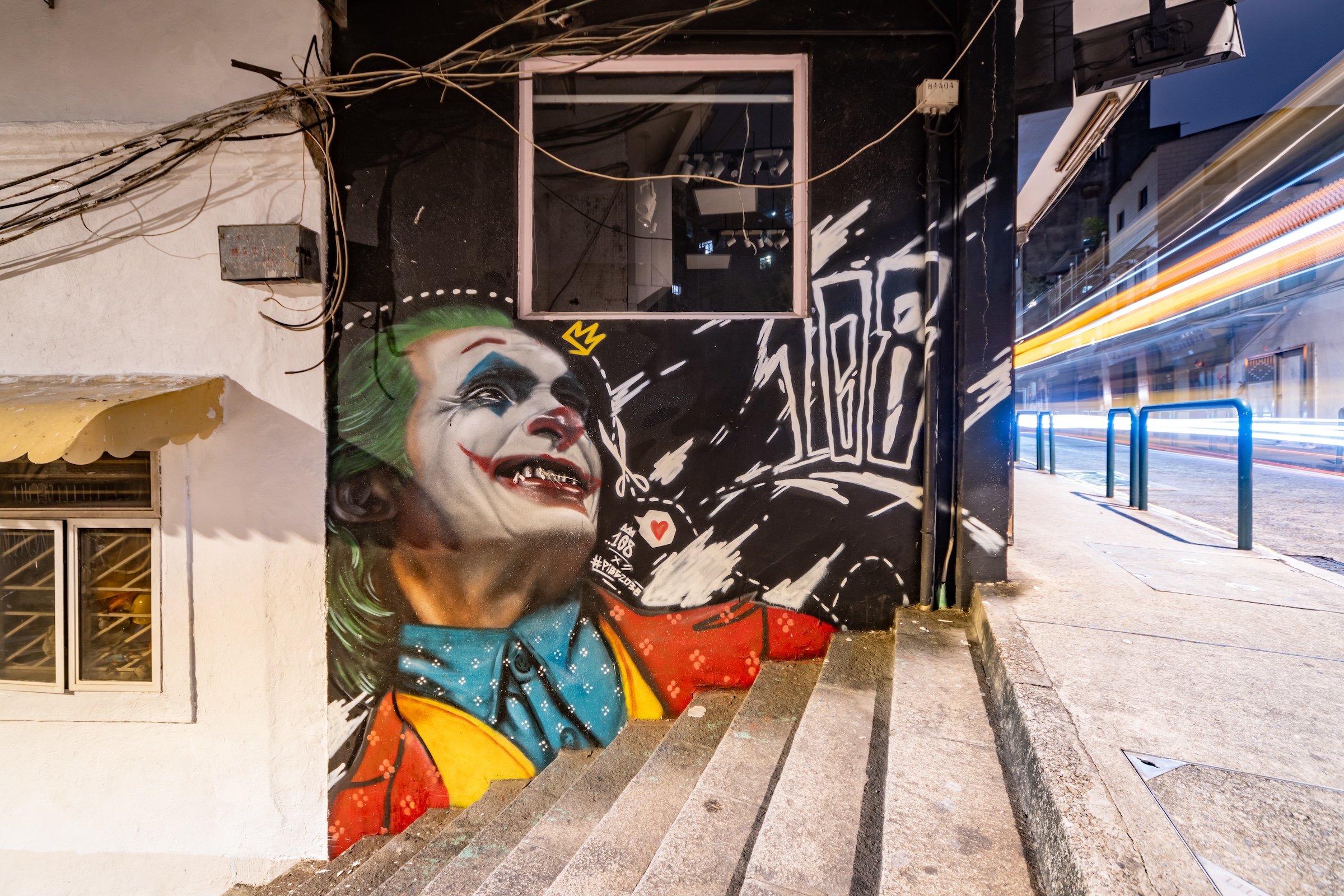
P.I.B.G. [Macao], 2017, Largo do Matadouro


![P.I.B.G. [Macao], 2017, Largo do Matadouro](https://macaomagazine.net/wp-content/uploads/slider/cache/139a64d68bc23f34b5c08e02aec2b829/CURB-Street-Art-07.jpg)
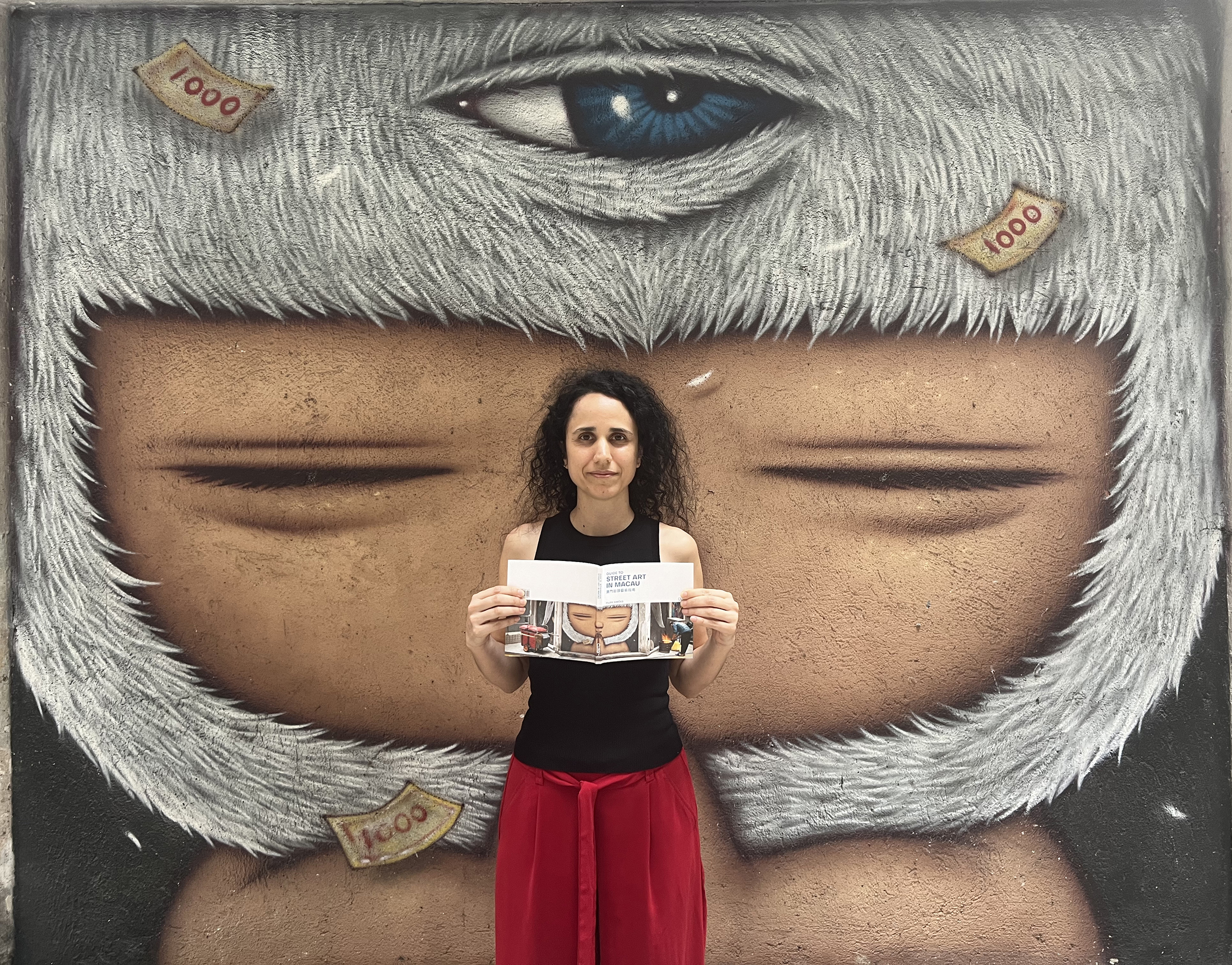
![Book author Filipa Simões stands next to artwork by Alex Face [Thailand], 2017, 54 Travessa de Francisco António](https://macaomagazine.net/wp-content/uploads/slider/cache/fd2c2bd8184f7a34f1157e7a4609d9f1/CURB-Street-Art-01.jpg)
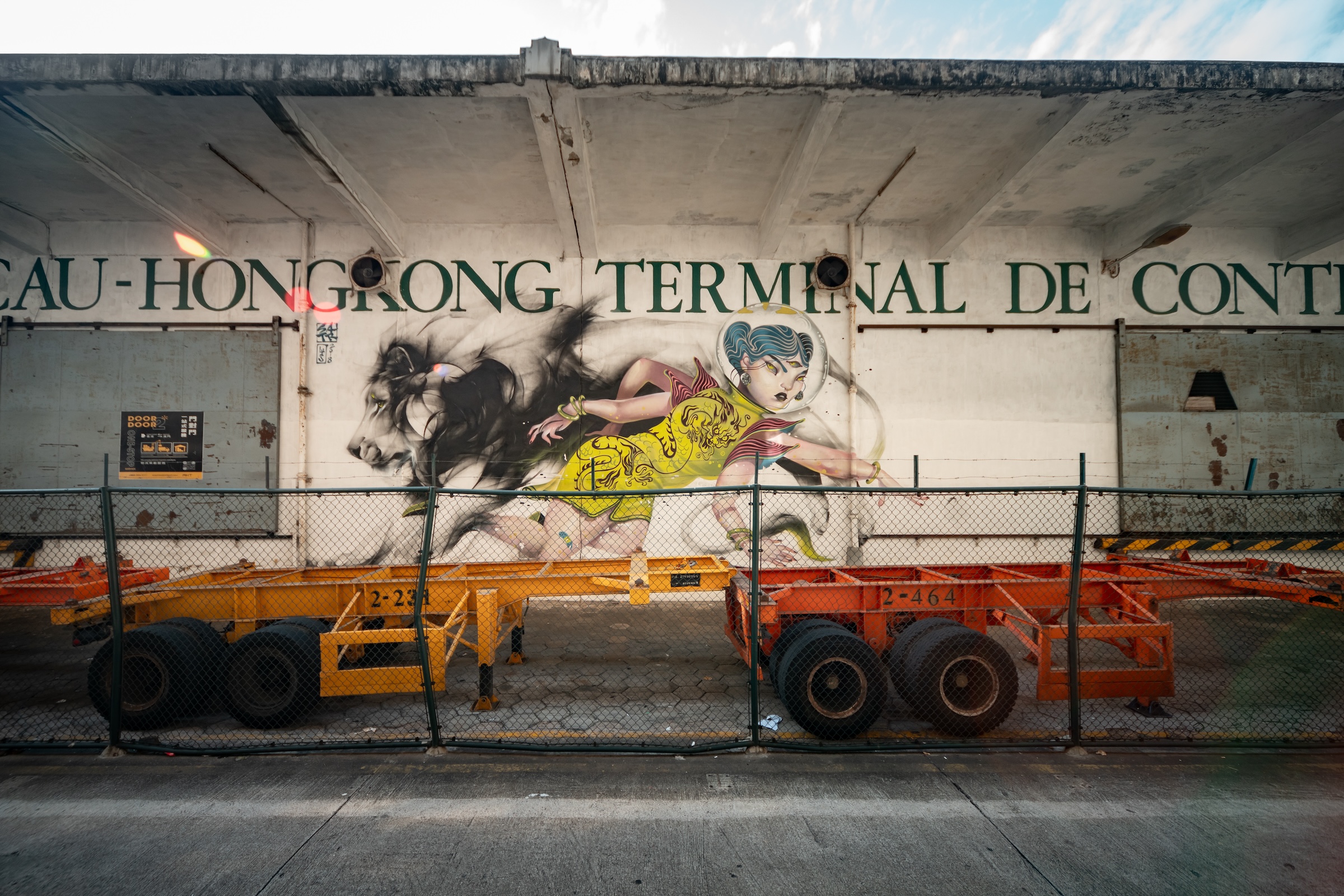
![ANHZ [Macao], 2018, Terminal Marítimo Macao-Hong Kong, Ponte No. 5A do Porto Interior, Rua da Escola Náutica](https://macaomagazine.net/wp-content/uploads/slider/cache/cd9aff1a789b2be2e2c38966475a1af9/CURB-Street-Art-10.jpg)
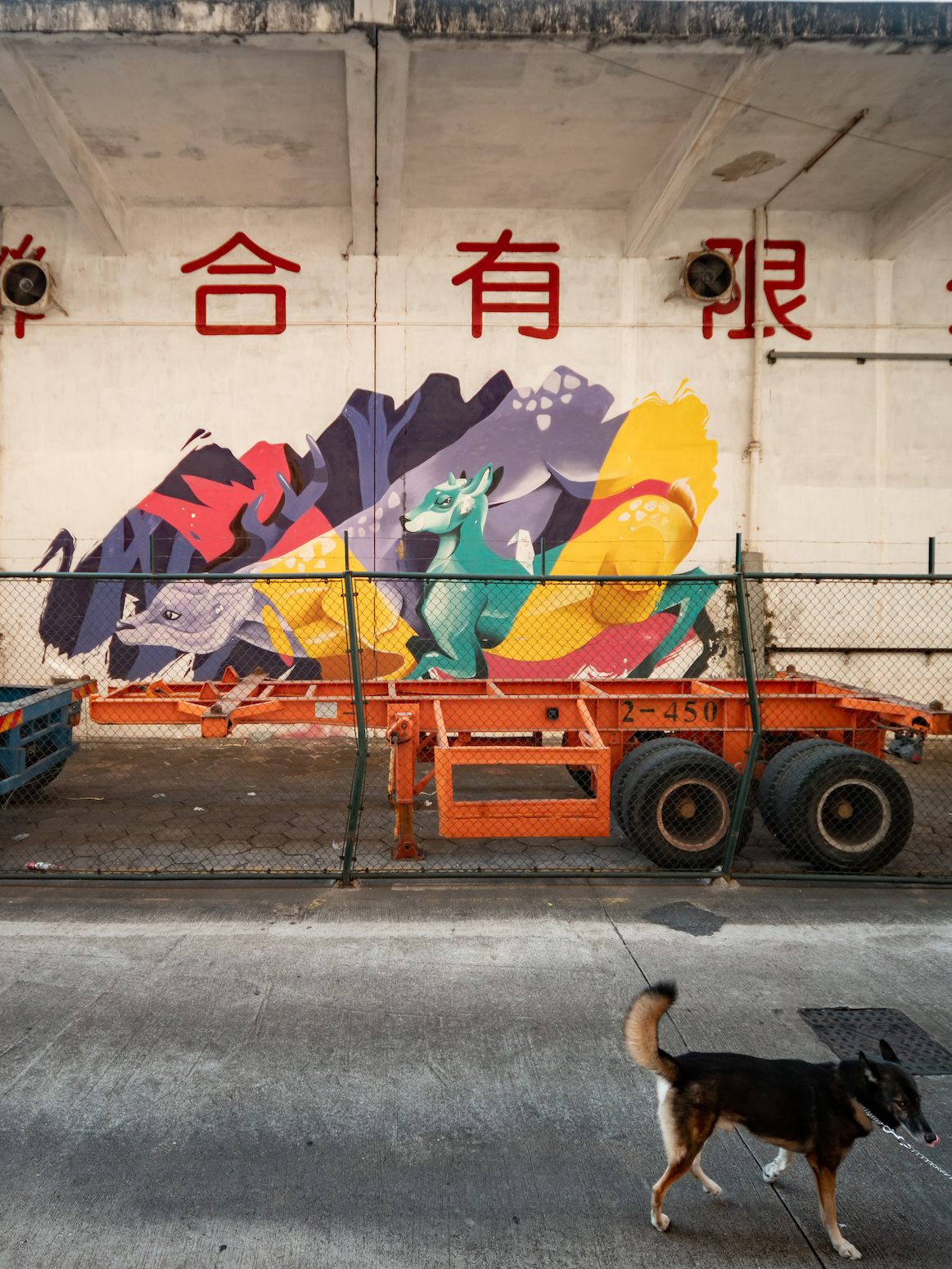
![Lauren YS [USA], SATR [China], 2018, Terminal Marítimo Macao-Hong Kong, Ponte No. 5A do Porto Interior, Rua da Escola Náutica](https://macaomagazine.net/wp-content/uploads/slider/cache/9b01de23d8c178189dbdd903ececd3e8/CURB-Street-Art-03.jpg)
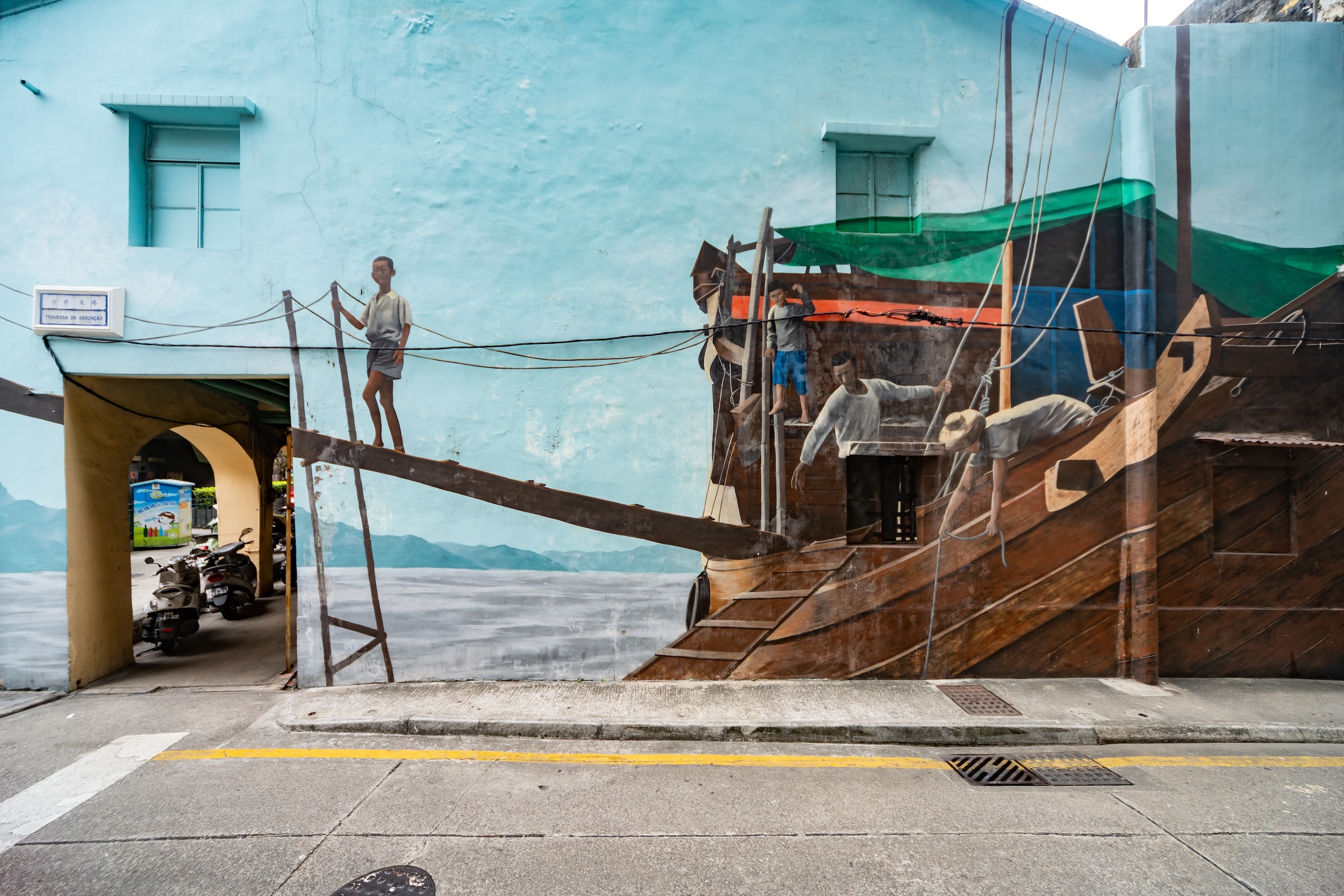
![Vitorino Vong, Jane Ieng [Macao], 2020, Travessa da Assunção](https://macaomagazine.net/wp-content/uploads/slider/cache/dc57d81626c1a7f0cbd37ae192c0a1f7/CURB-Street-Art-04.jpg)
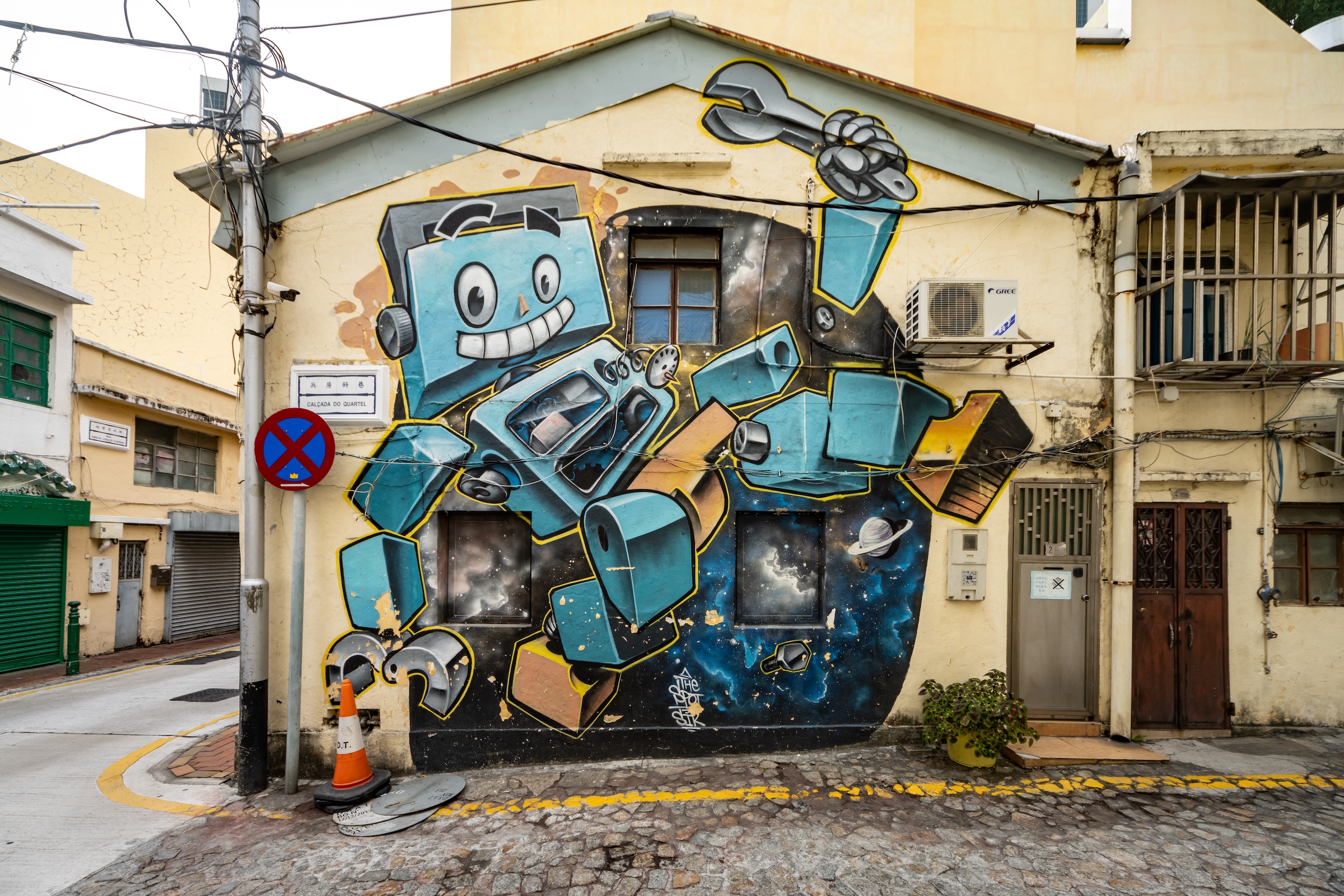
![SIK13 [China], 2018, Calçada do Quartel](https://macaomagazine.net/wp-content/uploads/slider/cache/00ad643888f8da9aa9f6308bfe3eef29/CURB-Street-Art-06.jpg)
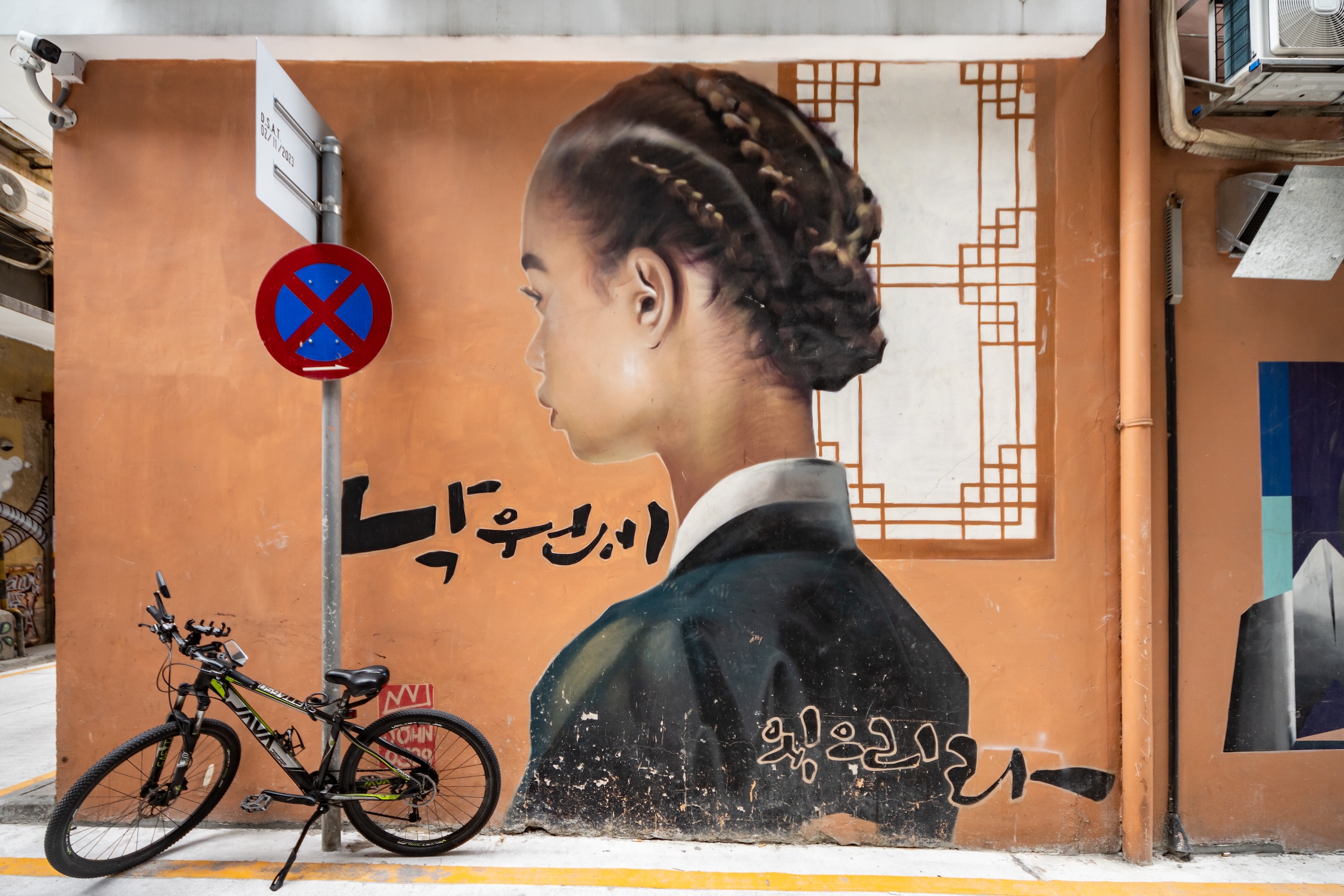
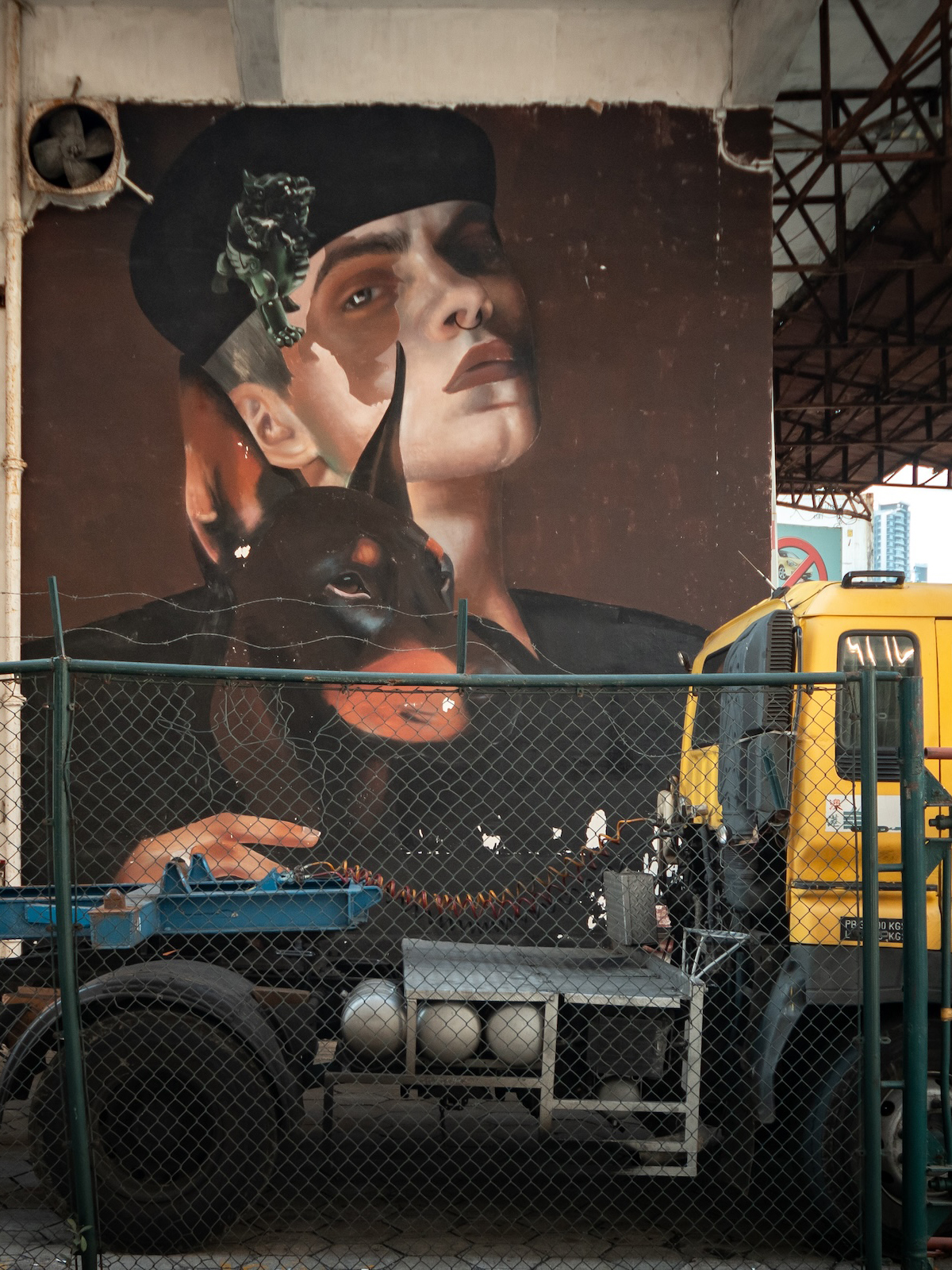
![Royal Dog [South Korea], 2017, Travessa dos Tréns](https://macaomagazine.net/wp-content/uploads/slider/cache/fb51e4e8299c7e77293f1422fc1f320e/CURB-Street-Art-02.jpg)
![Lisa King [Australia], 2018, Terminal Marítimo Macao-Hong Kong, Ponte No. 5A do Porto Interior, Rua da Escola Náutica](https://macaomagazine.net/wp-content/uploads/slider/cache/9ce3789225da267fd4fe2ccb11cd39c3/CURB-Street-Art-11.jpg)
![P.I.B.G. [Macao], 2020, Rua da Rosa](https://macaomagazine.net/wp-content/uploads/slider/cache/578ab2e1ca4609d923ef68840a7dd67b/CURB-Street-Art-05.jpg)
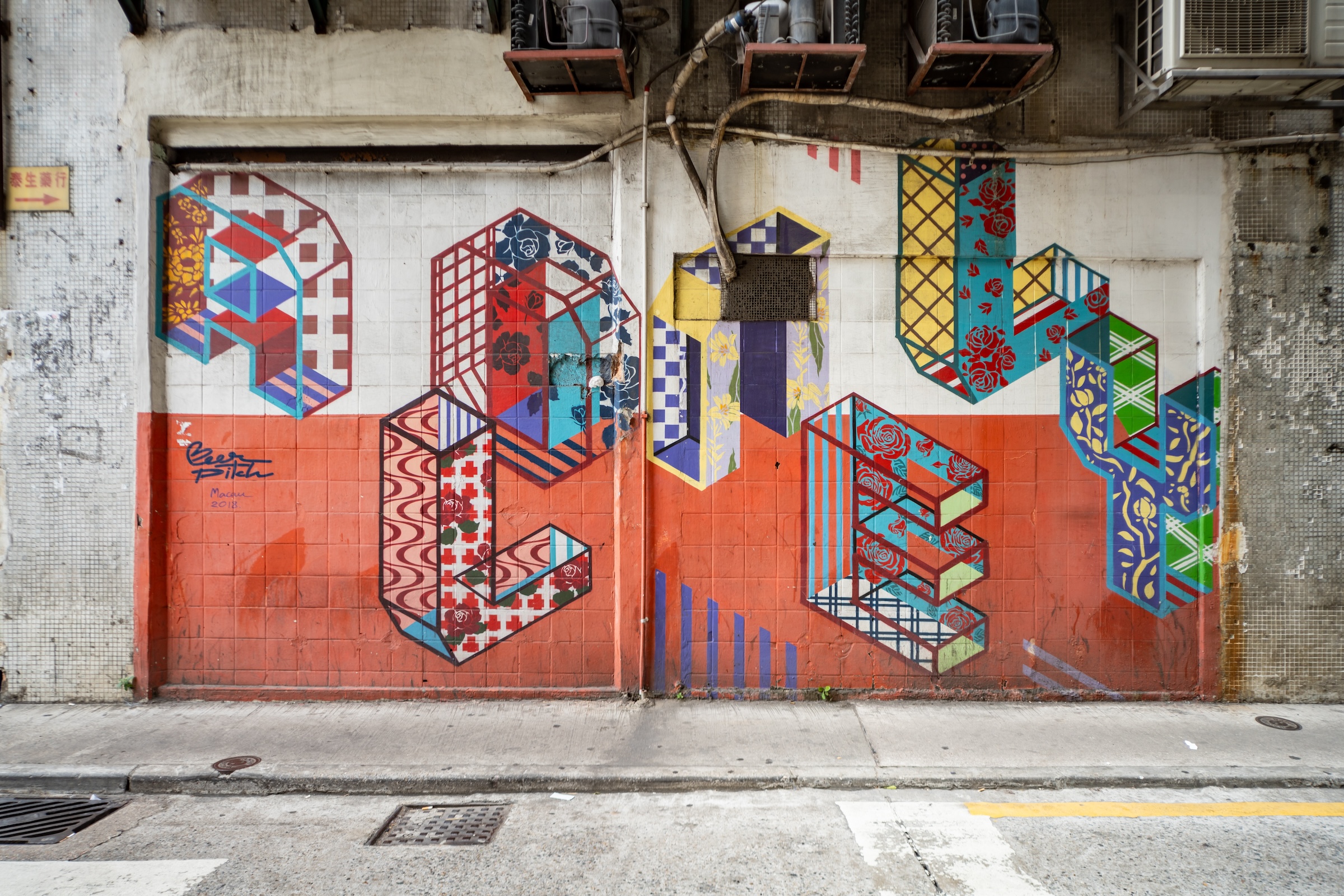
![Beerpitch [Thailand], 2018, Travessa do Cais](https://macaomagazine.net/wp-content/uploads/slider/cache/2342b5678df9be29e4bc0da1cc148e73/CURB-Street-Art-09.jpg)
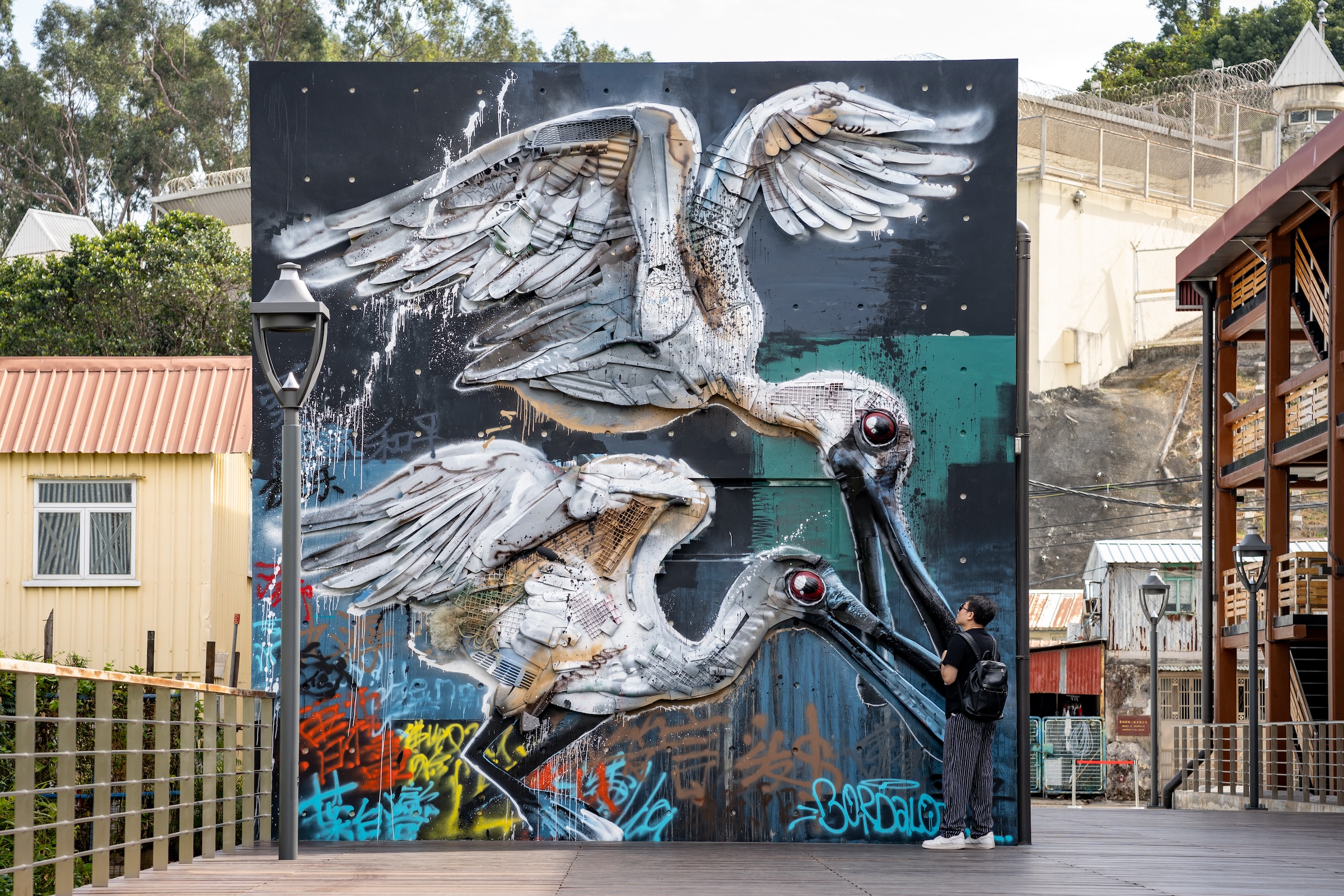
![Bordalo II [Portugal], 2023, Estaleiros Lai Chi Vun](https://macaomagazine.net/wp-content/uploads/slider/cache/afa7c7e58844e82ffbdcc414e52f3e57/CURB-Street-Art-08.jpg)


The streets of Macao have become a canvas for creativity, with street art adding splashes of colour and whimsy to an already rich cityscape. Filipa Simões’ recently published book, Guide to Street Art in Macau, celebrates these vibrant murals by local and international artists – work you won’t find in any gallery.
Simões, a Portugal-born design professor at the University of Saint Joseph, said her goal was to “strengthen and acknowledge the city’s urban culture” through shining a spotlight on its street art. She hopes it will inspire locals, visitors and other artists to explore the city in search of what are often well-hidden treasures.
The book contains photos of 56 murals painted by street artists hailing from places as far away as Australia, the US and France. Of course, artists from Macao, Hong Kong and the mainland are also represented – including local duo AAFK, otherwise known as Anny and Filipe Wong.
This creative couple say that finding spaces that welcome street art can be tricky in densely populated Macao. However, they persevere in the belief their work helps beautify the city and inspire people. AAFK always ask permission from local businesses, building owners or government departments before embarking on a new project.
Indeed, Simões says that for street artists to thrive in the small city, these kinds of negotiations are par for the course – and tend to result in a win-win outcome. Murals often become attractions in themselves, boosting foot traffic in their surroundings and customers for nearby stores.
“This balance between the artist’s message and the promoters’ interest has been fruitful, but not defining of the local street art scene,” Simões says.
The genre is gaining more mainstream appreciation in Macao thanks to support from initiatives like the annual !Outloud Street Art Festival, which promotes both art and dance. Simões’ Guide to Street Art in Macau should help it reach an even larger audience.