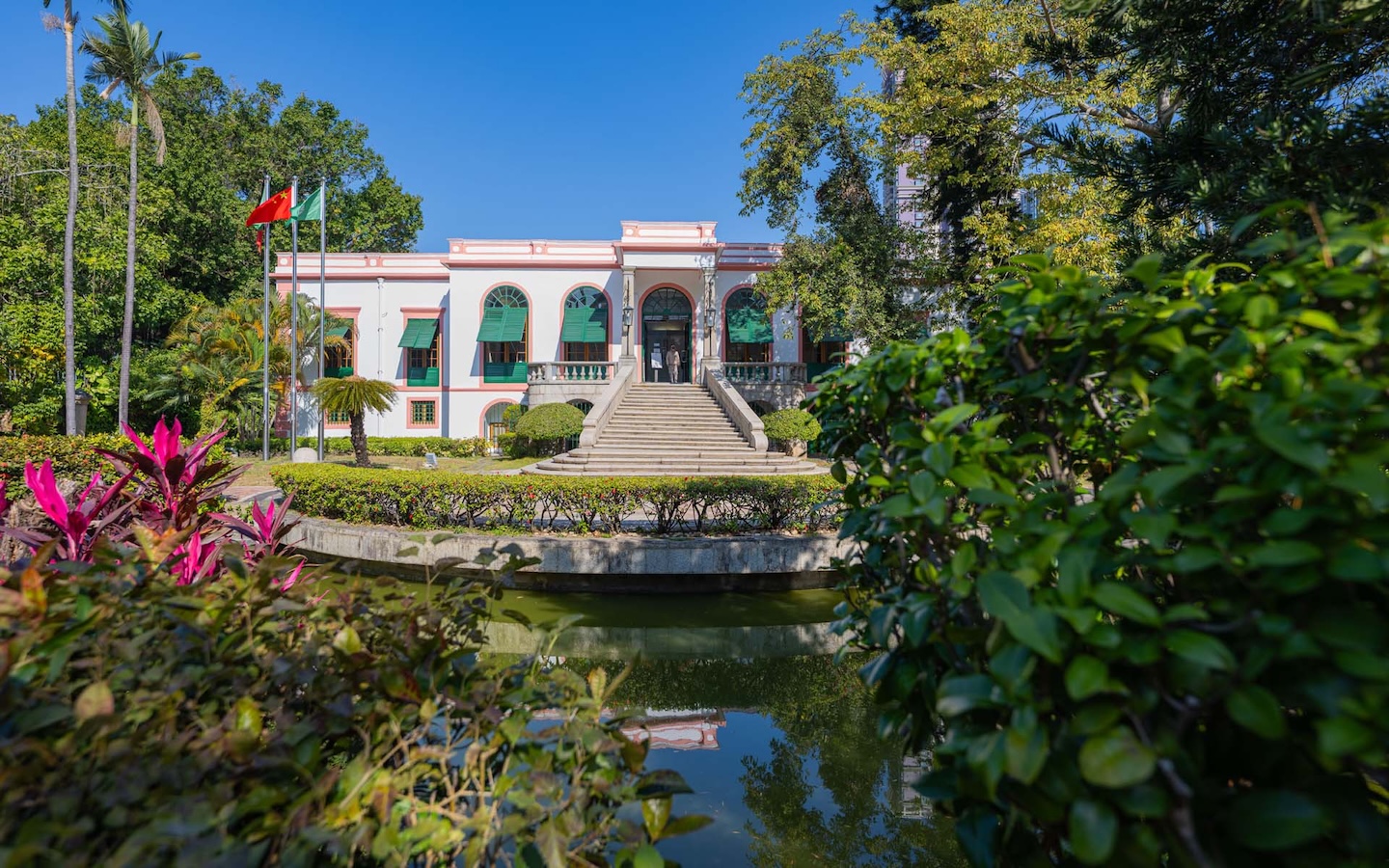
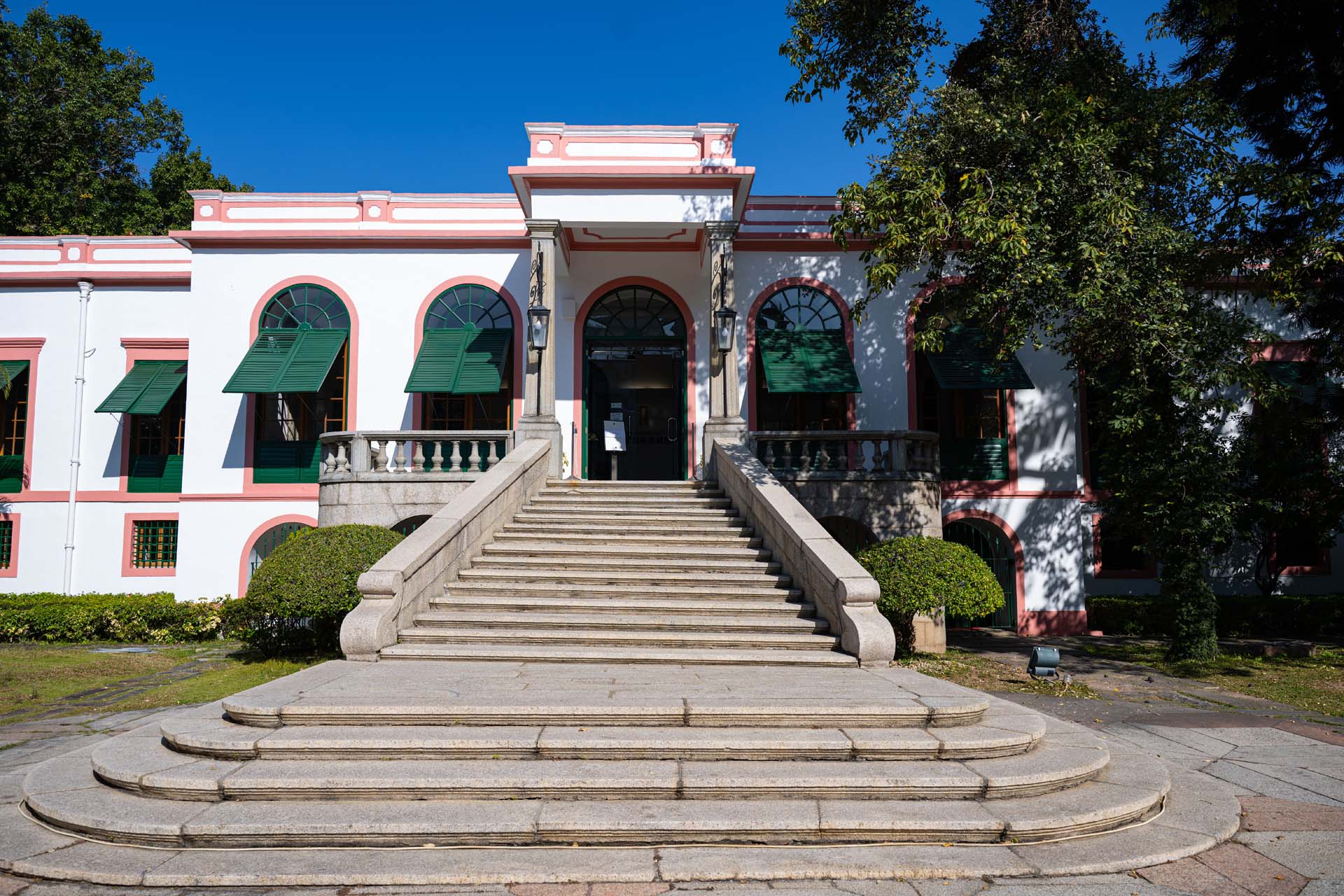
In the heart of a bustling Macao lies a hidden gem. Amid high-rises and crowded streets – Casa Garden – a grand 18th-century manor with a magnificent white façade, pastel pink accents and dark green-shuttered windows, proudly stands in its own ‘pocket of peace’ in Macao. It is a striking reminder of Macao’s tranquil past, yet remains a living testament to the rich cultural ties between East and West.
Built around 1770, the specific details of Casa Garden’s origins remain shrouded in mystery. Located in the Santo António district, the land where Casa Garden stands was originally owned by the Society of Jesus until 1762. A wealthy Portuguese merchant, Manuel Pereira, known for his significant investments in the city, is believed to have commissioned the construction of the mansion and resided there, but no documentary evidence has been found to support this. It is known, however, that Mr Pereira was deeply connected to the history of Casa Garden, having acquired it in 1815. While he may not have lived in the mansion himself, when his youngest daughter Maria Ana Pereira married Lourenço Pereira Marques, the building became the property of the young couple.
While its origins may be surrounded in mystique, the historical significance of Casa Garden is well attested. The mansion has taken on many important roles over the years. In the 1780s it was leased to William Fitzhugh, and so to the British East India Company, becoming their headquarters in Macao. Over the next five decades, until 1838, the manor hosted officials such as Sir George Thomas Staunton and Lord George Macartney, turning into a focal point of international trade and intrigue. After his ill-fated diplomatic mission to Beijing, Lord William Amherst was said to have sought solace in the mansion’s shaded veranda.
Casa Garden also once welcomed the heir to the throne of France, Charles X, and former United States president, Ulysses S. Grant, before being used as a war munitions depot and becoming, in 1937, Macao’s first modern museum.
More recently, over the past four decades, Casa Garden has served as the headquarters for the Orient Foundation (Fundação Oriente) – a key pillar for strengthening ties between China and Portugal. In 2005, Casa Garden was inscribed as UNESCO World Heritage Site, becoming one of 22 designated buildings within the Historic Centre of Macao – a prestigious honour recognising the mansion’s significant historical value.
Serving many roles
Over the last two-and-a-half centuries, Casa Garden has known neglect and revival. In the late 1830s, Maria Ana Pereira and Lourenço Caetano Marques took up residence in the mansion. The estate remained in private use until 1885, when then Governor Thomas de Souza Rosa purchased it, for the sum of 35,000 patacas, “the house and land called the Camões Grotto”.
Once it became public property, the manor was put to different uses. It belonged to the Department of Public Works, and it had a brief run as a war munitions depot, before being transformed into the local branch of the Portuguese National Press, an archive and, later, the Luís de Camões Museum.
By the later part of the 20th century, the Orient Foundation stepped in as the manor’s guardian. Dedicated to bridging East and West, the institution acquired Casa Garden on May 18, 1989, and made it their local headquarters. Soon after, the residence underwent a major overhaul, the largest in its over 200-year history. Working with engineers José Silveirinha, António Andrade e Pereira Coutinho, architect Carlos Marreiros oversaw the challenging refurbishment.
“The project was ambitious because the building was very old. Like many of the oldest dwellings built in Macao, Casa Garden was devised using a technique that was quite common at the time, the so-called socle. The socle was a short plinth used to raise the building, so that it wouldn’t have direct contact with the soil moisture,” Mr Marreiros explained. “Casa Garden had a very good socle, but it was not deep enough to be put into use. We were asked by the Orient Foundation to transform that space into a gallery and an auditorium. As soon as we proceeded to the excavations, we discovered a natural spring rushing beneath our feet.”
Stones, shadow and birdsong
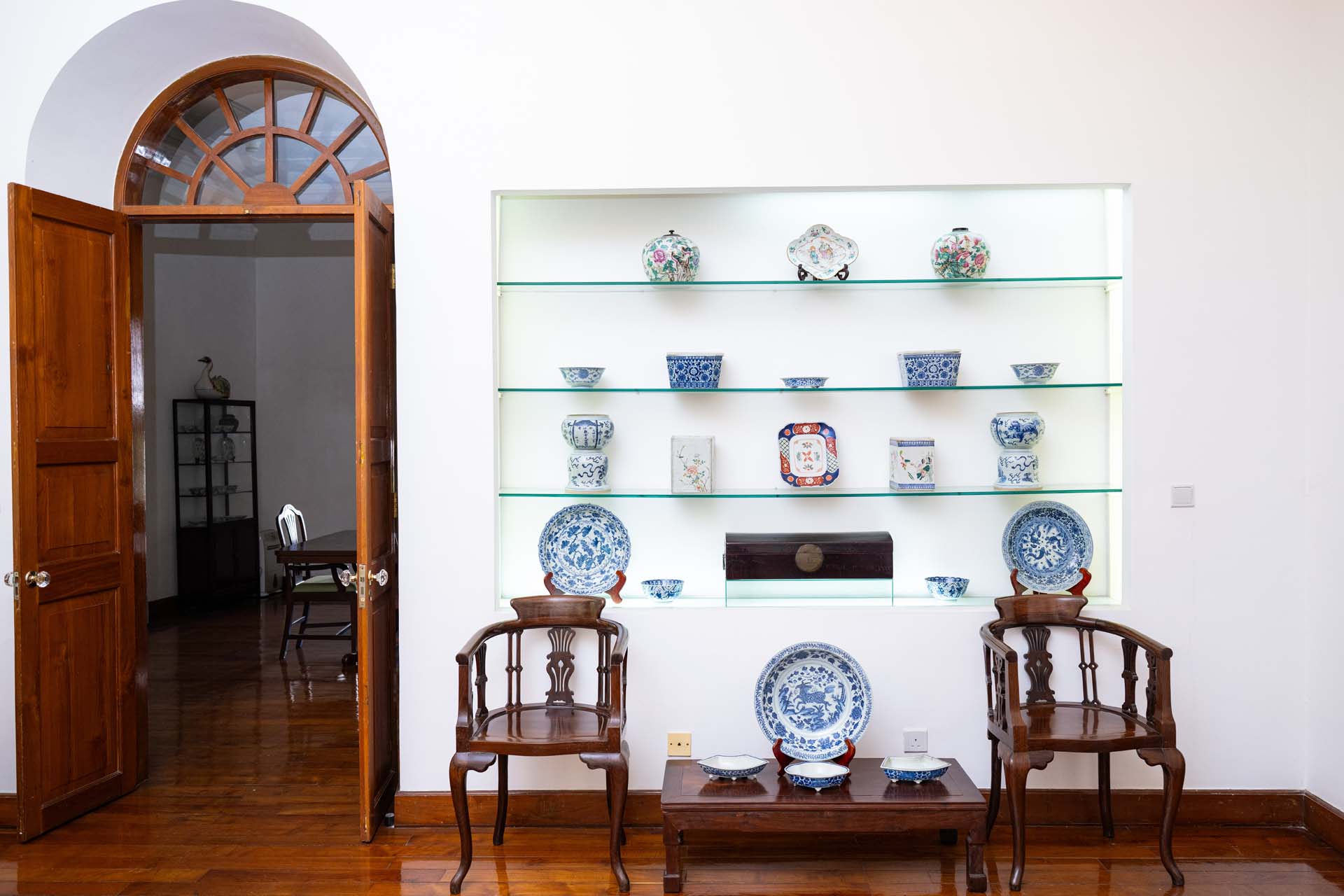
Hollowing out the historical mansion’s basement was, nevertheless, only a part of the rehabilitation process. An innovative glass roof was installed over the manor’s inner patio and a brand-new building, used ever since to host artistic residencies, was added to the domain, as well as a small fishpond, surrounded by plants and vegetation.
As demanding as it was, the intervention was as undisruptive as possible, to enhance and highlight the original characteristics of the building, Mr Marreiros explained. As such, Casa Garden remains a neoclassical beauty rising from the earth, its two-story frame elevated on a noble plinth, accessed by a grand granite staircase that seems to ascend towards the heavens. Symmetrical and serene, its façade boasts arched windows framed in green shutters, allowing the breeze to dance through its rooms.
“There is more to architecture than just the stones. The experiences – the people, the sounds, the smells – are way more important than the stones when it comes to heritage,” Mr Marreiros described.
“One of the defining features of Macao’s traditional architecture was the fact that the doors and the windows were always open to allow for natural ventilation. Along with the open shutters, there was a constant din of birds and that was one of the characteristics that we wanted to keep,” the architect affirmed.
He added: “This atmosphere – the birdsong outside, the shadows of the arches drawn on the walls – created a sense of time that doesn’t exist anymore. It takes visitors back in time to an era when everything was slower, everything was calmer and there wasn’t much stress.”
By the early 2020s, the building showed, once again, signs of age. Cracks appeared in its plaster and rain seeped through its roof, forcing the Orient Foundation to launch, in late 2024, a major five-month overhaul. The reopening, in June 2025, has allowed the site to resume its function as a venue for exhibitions, lectures and cultural exchange, reinforcing Casa Garden’s unrivalled status as a living link between Macao’s past and present.
Restoring a grande dame
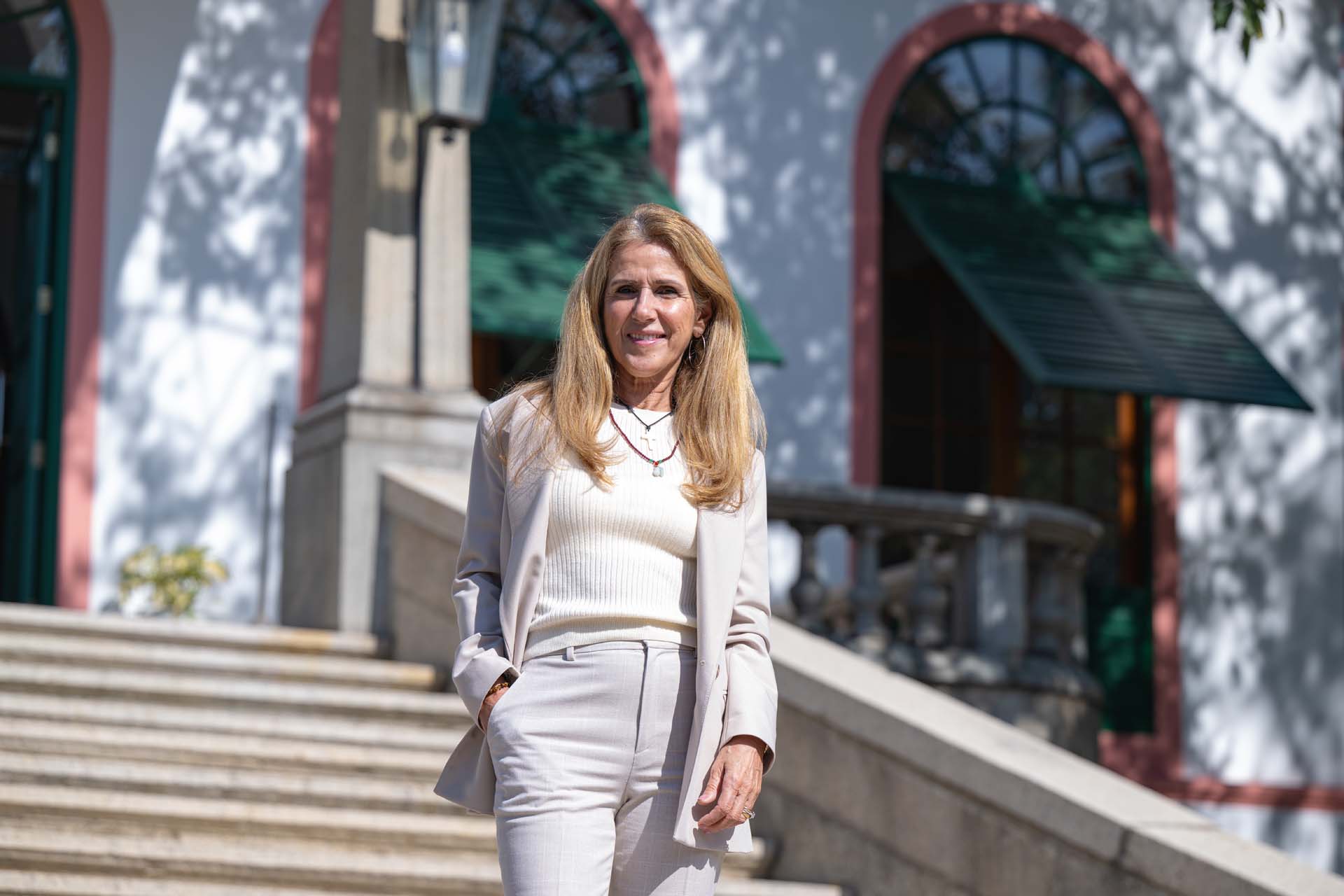
Surrounded by lush greenery, the property’s gardens extend into what is now Camões Garden, and the enduring connection remains a defining feature. Together, they form a sanctuary where time slows and the soul finds respite from the relentless pulse of modern life, says Catarina Cottinelli da Costa, Director of the Macao delegation of the Orient Foundation and architect who was instrumental in overseeing the most recent restoration of the historic headquarters.
“It’s obviously a huge privilege to work in a manor like this,” Ms Cottinelli da Costa said. “In a heavily populated place like Macao, this space is truly a pocket of peace and tranquillity. It has a delightful garden, that coexists harmoniously with the adjacent park – Camões Garden was once part of the property. We can hear the birds chirping outside the windows, we have squirrels roaming around. I mean, it’s a privilege, isn’t it? I believe there’s no comparable place in Macao.”
“It’s a privilege, but at the same time, a big responsibility to operate in a place imbued with so much history,” she added. “Deep down, this house is like an old lady, and we need to take good care of her.”