
Macao’s leading telecommunications provider, Companhia de Telecomunicações de Macau, S.A. – widely known as CTM – is accelerating its push into artificial intelligence (AI) and next-generation digital infrastructure, positioning itself at the centre of the city’s transition towards a smart, diversified economy. Backed by an extended operating concession, the company is investing in AI applications across sectors ranging from transport to tourism and multilingual customer support.
With ambitions to develop localised large language models (LLMs) – including a Portuguese-language platform aimed at strengthening Macao’s role as a bridge between China and the Portuguese-speaking markets – CTM is also embedding AI into its own network operations, cybersecurity systems and future 6G readiness.
Ebel Cham Pou I, CTM’s vice president for commercial services, says the company is committed to providing Macao with advanced integrated communications by adopting new technologies and accelerating digital transformation. She notes that CTM has been an early adopter worldwide of technologies such as fixed–mobile dual 5.5G to deliver smart solutions across different industries.
“Telecom technology-wise, Macao ranks in the top layer globally and in China. We have already built a 5.5G mobile service together with a 5.5G fixed internet service. Not many markets have launched this kind of high-technology service,” Ms Cham said in an interview.
“At the same time, 100 percent of our mobile customers have already upgraded to 5G services. In terms of fixed internet service, about 50 percent of our clients have already upgraded to at least 1Gbps internet service.”
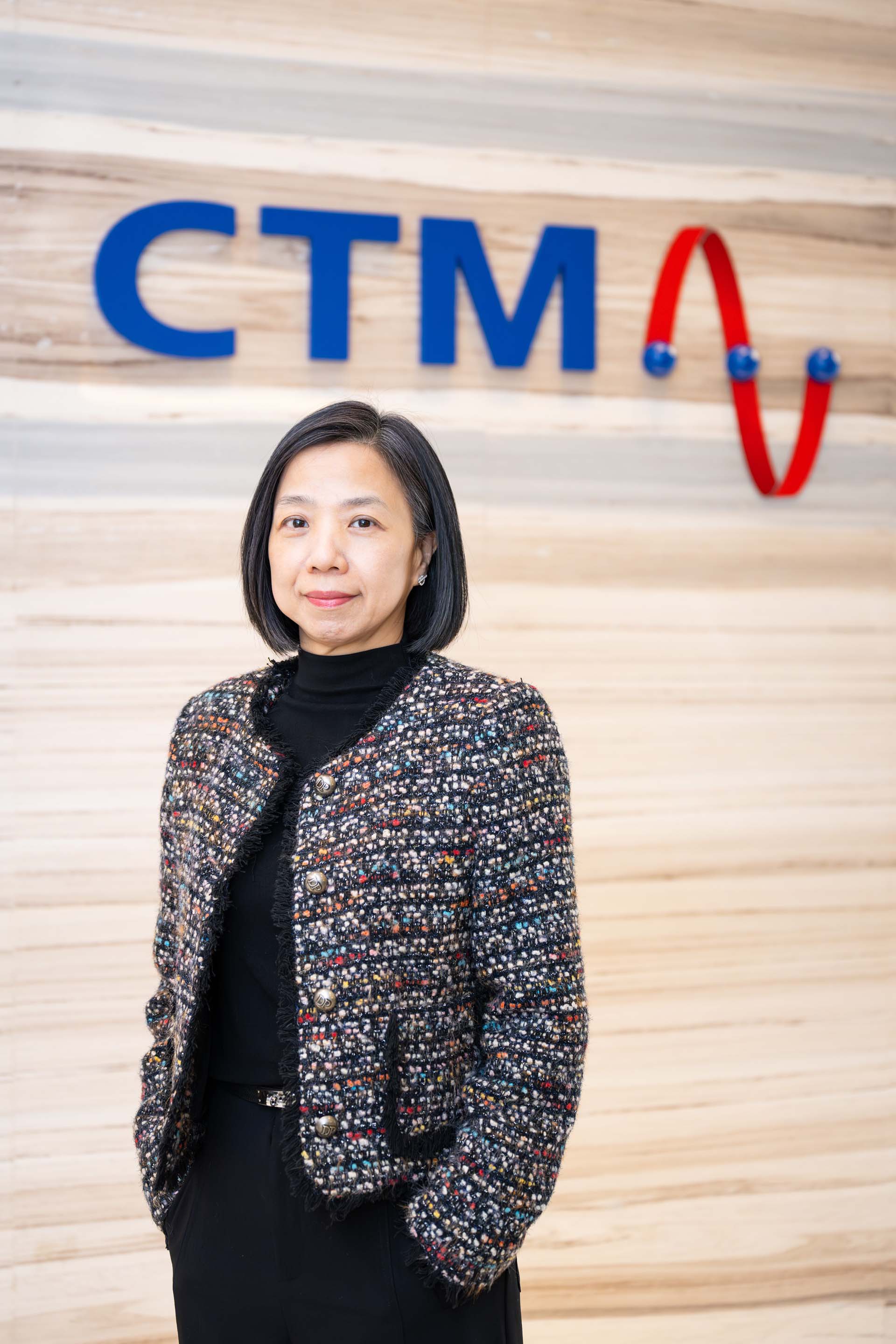
She emphasises that CTM has positioned itself as a key enabler of smart transformation across Macao and has prioritised the development of AI and big data applications.
“Over the past year, CTM has been promoting the vision of ‘digital Macao’, [which involves] building an advanced backbone to support the whole of Macao to digitalise,” she said. “We already completed this vision: in terms of telecom technology, we are already at a high global standard.”
The vision has now evolved into what she calls “AI digital Macao”. “That means CTM will put full force and resources into promoting faster adoption of AI across different industries and also to end customers.”
Localised solutions
Ms Cham notes that the 2026 Policy Address delivered by Macao Special Administrative Region (MSAR) Chief Executive Sam Hou Fai, emphasised the use of AI in government services and across the economy as part of efforts to turn Macao into a smart city. “This is a good opportunity not only for CTM, but also technology companies, to do business.”
One of the company’s priorities is integrating AI algorithms into localised models. For that, it is partnering with Baidu, the Chinese technology giant specialising in Internet services and AI.
“We localised the Baidu AI platform,” Ms Cham said. “We are already investing so that end users, government departments and the business sector can rely on our AI digital platform to deploy their AI applications or create their own AI developments.”
In addition to Baidu, CTM is partnering with Alibaba, Tencent and other solution providers from the Chinese mainland to introduce AI services and applications to Macao.
Given that the MSAR’s economy relies heavily on tourism and services, one of the first AI business solutions developed by CTM was in customer service, supporting eight languages. “Because Macao is welcoming an international tourism base, multi-language communications – either oral or written – are very important,” Ms Cham said, identifying retail, catering and government service as potential application scenarios for the technology.
A key project for the company is the development of a Portuguese-language LLM, with potential applications in report generation, audio and video translation, Portuguese-language consultation and e-commerce customer service.
LLMs are a type of AI designed to understand, generate and work with human language. They are trained on extremely large amounts of text – books, articles, websites, reports and other written material – so that they can recognise patterns in language and produce text that sounds natural and coherent. Portuguese, along with Chinese, is one of the official languages of the MSAR.
“We want to build something unique,” Ms Cham said, adding that CTM plans to unveil the initial phase of its Portuguese-language LLM system later this year. “On one hand, we can serve the MSAR Government and, at the same time, help link Macao as a bridge between China and Portuguese-speaking countries.”
In transport, CTM plans to deploy applications such as real-time traffic monitoring and dynamic alert systems using Internet of Things (IoT), big data and AI technologies, as well as integrating Baidu Maps to support smart mobility and tourism.
Ms Cham acknowledges that a major challenge for AI development is the availability of skilled professionals. To address this, CTM has launched youth programmes, competitions and internal training initiatives focused on AI.
Internal transformation
Established in October 1981, CTM has long been the leading telecommunications provider in Macao, offering mobile, fixed-line, fibre broadband and enterprise solutions. The company operates seven retail shops across the city. Its controlling shareholder is CITIC Telecom International Holdings, while its ultimate parent company is the state-owned conglomerate Citic Group.
Last September, CTM saw its public telecommunications service concession contract extended until the end of September 2027 under a “one-year fixed contract, one-year rolling contract” arrangement. As part of the extension, at the start of 2026, CTM reduced fees for several services, including residential and business broadband services.
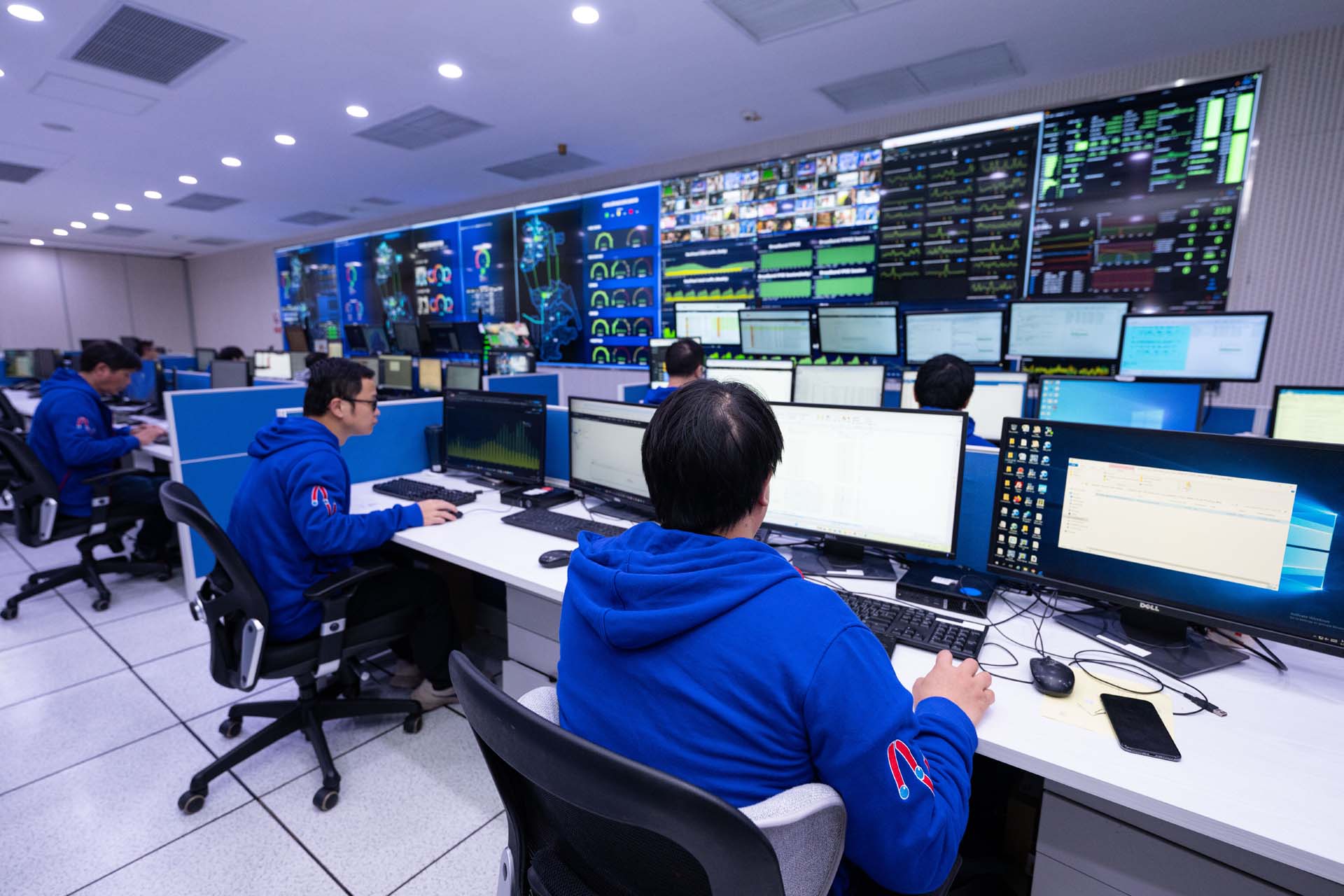
The company has also been advancing its own internal digital transformation by integrating AI into network management operations, says Thomas Ng Si Iu, CTM’s vice president for network services. The firm is focusing on enhancing 5.5G, 50G PON, AI and other advanced technologies as part of its 10GB network infrastructure development, to provide much faster internet access and capabilities that can support the expansion of digital services that businesses and government offer online.
“For example, we employ AI in power consumption management, improving operational efficiency and power consumption,” Mr Ng said.
AI is also used to predict potential network failures before they occur. “Before impacting people, we can rectify the fault,” he explained, noting that many successful cases were recorded last year.
AI is helping to maintain communications during severe typhoons. “Under severe weather conditions, we can manage power usage more effectively to extend the battery life” of backup systems at mobile communication base stations, he said, noting that this is particularly important if the electricity utility provider CEM shuts down power stations in areas at risk of flooding.
AI will also be essential for the future adoption of 6G telecommunications, potentially as early as 2029, Mr Ng argues. “Without this AI capability, we cannot handle this complicated network.” The next step for CTM is therefore the development of an autonomous network system, “injecting more AI” into operations.
The upgrades anticipate a surge in demand for faster, better network services as AI adoption increases community-wide. “Currently, we see more than 10,000 people on average using AI applications” on the CTM network, Mr Ng said. “I can see that this figure will keep increasing.”
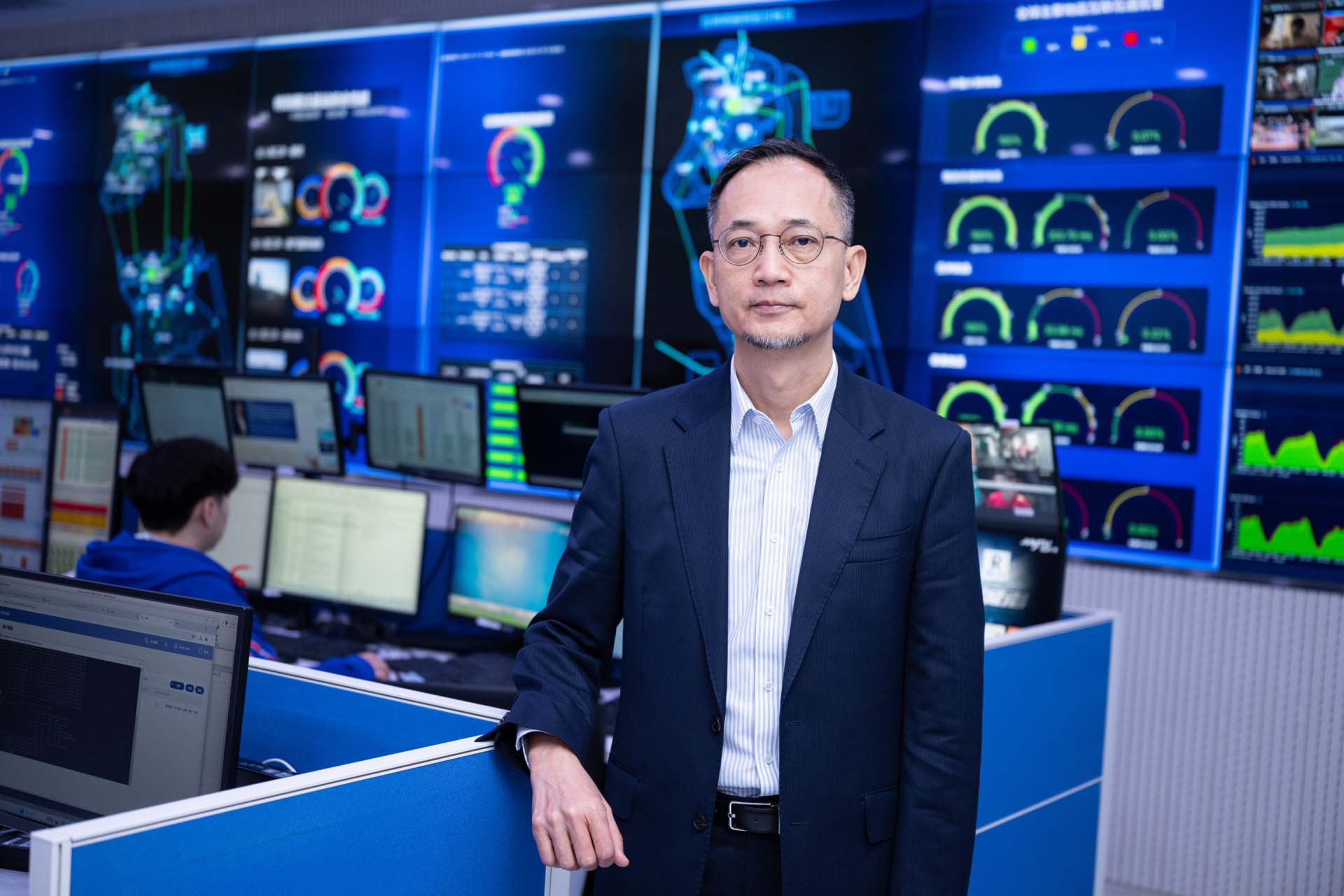
He added: “Until 2030, I can see a lot of new AI applications being developed and computing power being required. CTM will work with the Government to improve this and serve society and our customers better.”
Complementing CTM’s efforts, regional cooperation remains essential to ensure Macao is connected both globally and regionally, particularly with the Guangdong-Macao Intensive Cooperation Zone in Hengqin and the Guangdong–Hong Kong–Macao Greater Bay Area.
“Macao is very small. We must work together,” Mr Ng said, adding that emerging sectors such as the so-called low-altitude economy will also require advanced telecommunications infrastructure.
Tackling cybersecurity
As AI reshapes industries and infrastructure, cybersecurity is emerging as one of the most critical challenges facing telecommunications networks. At CTM, AI is now playing a central role not only in services and network management but also in defending digital infrastructure against increasingly sophisticated cyber threats.
Jennifer Angulo Hai Yan, director of information technology at CTM, says the company has significantly increased investment in cybersecurity protection systems. “CTM makes significant investment in technologies to make sure that we have all kinds of protection infrastructure that can respond to cyber threats that happen day in and day out,” Ms Angulo noted.
“With the emerging trend of AI and quantum computing, everything is moving at a faster pace. We need to make sure that we have the right skill set and the right technologies to take corresponding actions towards those threats.”
According to Ms Angulo, the company’s cybersecurity strategy is built around three pillars: processes, people and technology. Staff training and awareness are considered as important as technological investment, particularly as cyberattacks become more complex and automated. “We make sure that our staff are well trained, so that they always stay on high alert.”
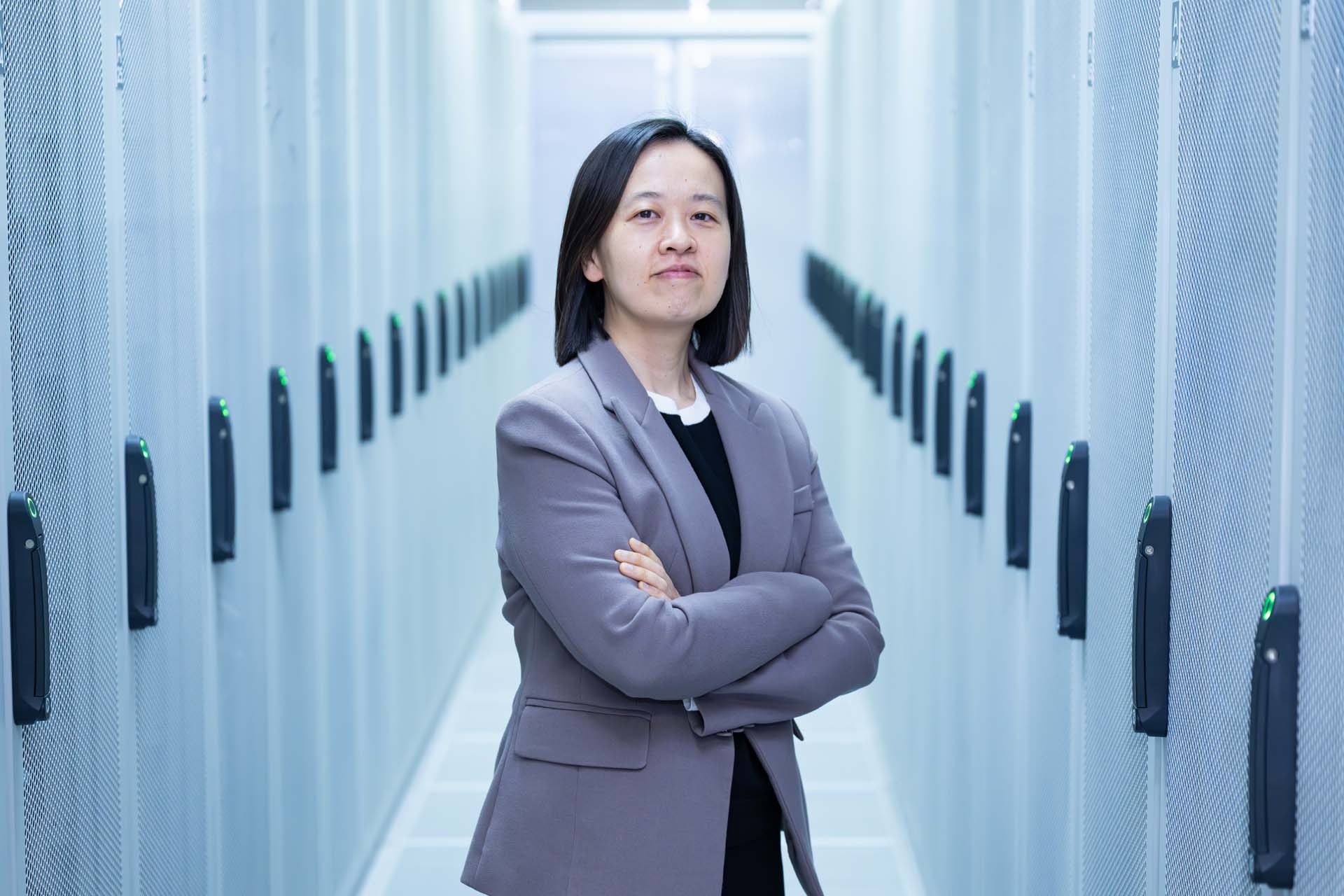
CTM operates its own specialised security and service operation centre, responsible for monitoring and protecting network infrastructure around the clock. The unit plays a crucial role in maintaining the stability and security of Macao’s telecommunications systems, which underpin government services, businesses and daily communications. “They’re basically a team who protects Macao’s network every day, around the clock,” Ms Angulo said.
AI is increasingly being used on both sides of the cybersecurity battle. While attackers are using AI to develop more sophisticated threats, telecom operators are also deploying AI tools to detect anomalies, respond to incidents and automate security operations, Ms Angulo said. “We also rely on AI in our operations so that our people can focus on more specialised tasks.”
Looking ahead, she believes the rise of AI and other technologies will fundamentally change how networks are protected and managed. Cybersecurity will require new skills, new operating models and constant adaptation. “The coming trend is that the skill set is going to be different; how we operate, how we protect, everything is going to change.”