
A bold new cultural destination in Macao invites visitors on an interactive journey across the past 500 years. The Grand Lisboa Palace Art Gallery, located in Cotai, debuted in May with The Lisboa, Stories of Macau – a technologically ambitious exhibition utilising motion-sensitive projections, digital installations and artificial intelligence (AI) across eight themed zones. This playful yet thought-provoking take on the city’s history culminates in the inaugural unveiling of “The Lisboa Collection,” a treasure trove of important art from the Qing dynasty underscoring Macao’s broader cultural context within China.
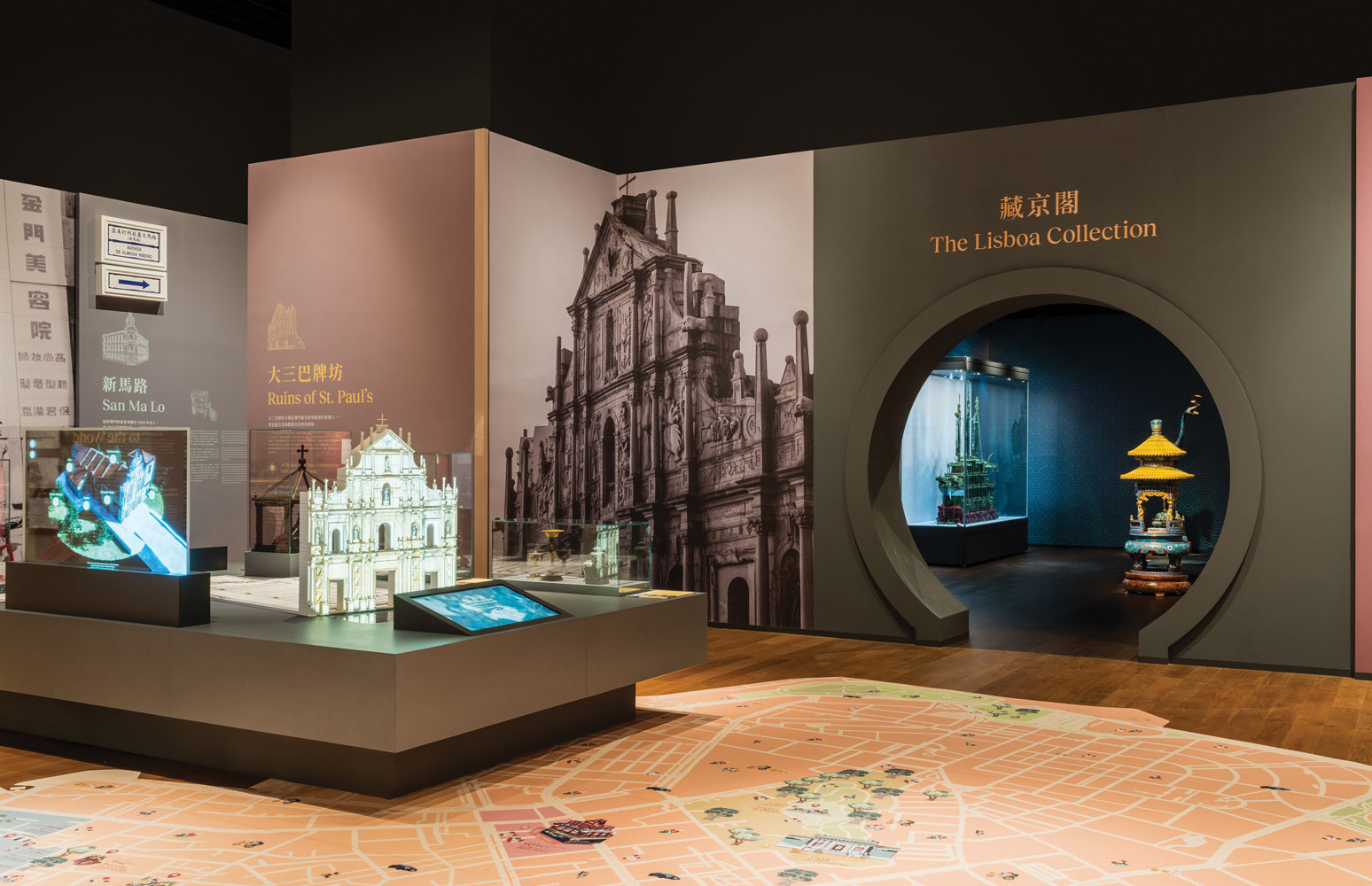
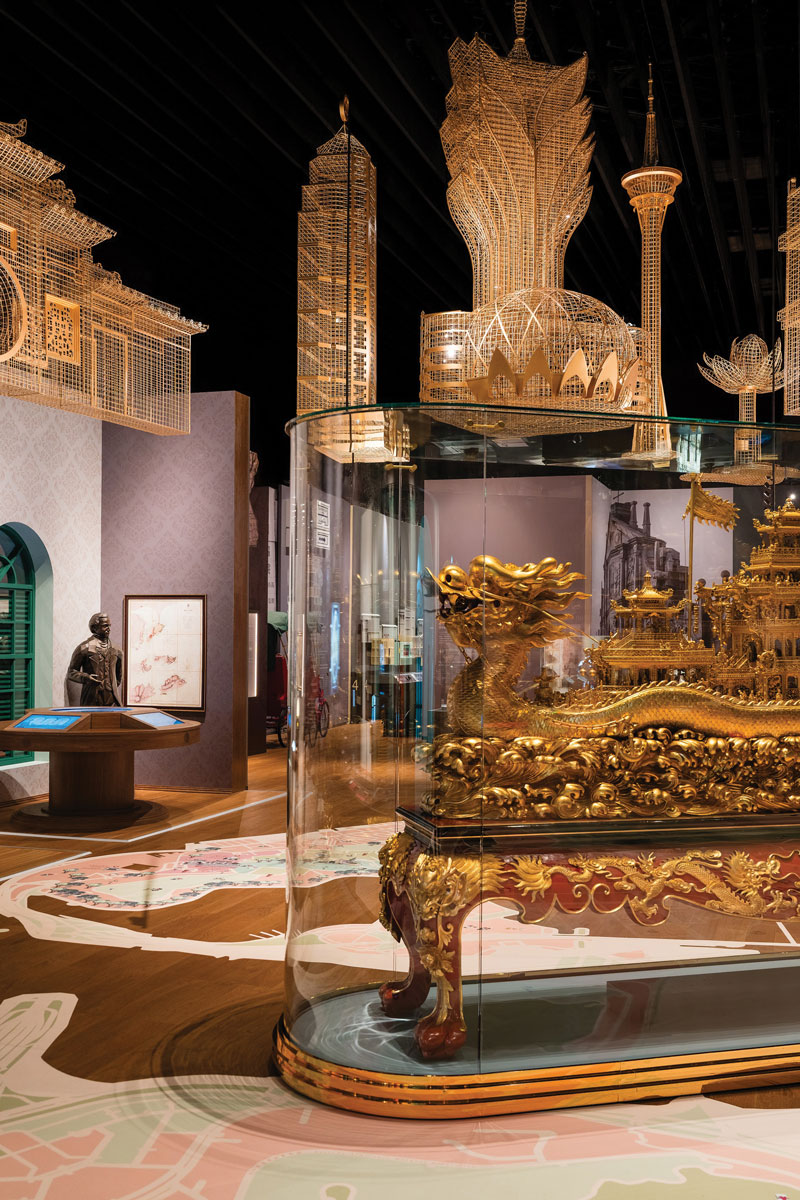
Stepping inside the exhibition, visitors are immersed in a fusion of heritage and futuristic design. A striking sculptural rendition of Macao’s skyline is suspended from the ceiling, above a map of the city illustrated by local artist Sardine the Meow. This introductory space sets the tone for the entire exhibition: contemporary creativity with historical reverence.
Moving forward, the exhibition is framed as a tour of the city; each of the gallery’s themed zones centres on a significant location that’s played a compelling role in Macao’s historical narrative.
Christian and Buddhist legacies
First comes a section dedicated to Kun Iam Tong, a large Buddhist temple honouring the Goddess of Mercy. Founded in the 13th century with its present structure dating back to 1627, the temple is not only a place of spiritual significance for the people of Macao, but also a symbol of the city’s historical and aesthetic heritage. The Kun Iam Tong complex consists of three main halls separated by open courtyards. These halls are dedicated to the goddess herself, the Buddha of Longevity and the Precious Buddhas.
Visitors to the exhibition will also learn about the temple’s aesthetic ties to southern China’s Lingnan culture. It’s particularly visible in the building’s distinctive roof ridges, which are richly decorated with Shiwan ceramics – most notably a central orb flanked by two Ao (mythical dragon-fish).
The Ruins of St Paul’s section, meanwhile, offers insights into Macao’s Christian heritage. The ruins’ façade, all that remains of the 17th-century Church of Mater Dei after a devastating fire in 1835, is known for its surprisingly heterodox motifs carved by Japanese Christian artisans. The exhibition offers hands-on games that interact with a scaled replica of the structure via a digital screen, encouraging users to match images of carvings with symbols of what they depict. These range from Japanese chrysanthemums and Chinese mythological figures to skeletons and a large Portuguese ship on stormy seas.
Each correct match conjures up an illumination on the ruins’ miniature, along with an explanation of the symbol’s meaning. The ship, for example, represents the difficult path Christians must follow towards salvation. Of course, it’s also a nod to Portuguese sailors’ long journeys between Europe and China. These kinds of details make the Ruins of St Paul’s an important architectural testimony to Macao’s multicultural identity.
Additional religious context is provided by Catholic artefacts, including three sacred vessels (a ciborium, holy chalice and monstrance). These items are on loan from local churches like St Dominic’s, known for its extensive collection of sacred art.
Speak, listen, learn
At the Tap Seac Square section, visitors encounter statues of four people with strong connections to the large, distinctively paved convergence point located in the heart of the Macao peninsula. These figures are the British painter George Chinnery (1774–1852), whose body of work captured 19th-century urban life in Macao; Fernando Aníbal Marques, a Macanese hockey player from the 1950s (the square was once an open-air hockey pitch); Eddie Hung, former manager of the now-demolished Hotel Estoril; and Nina Sousa, a student at the now-defunct Liceu Nacional de Macau, a Portuguese-curriculum secondary school, during the 1940s.
Visitors are able to converse with Chinnery, Marques, Hung and Sousa about their imagined “recollections” of Tap Seac Square thanks to AI-powered voice recognition technology simulating real-time dialogue.
More listening awaits in the Dom Pedro V Theatre section, where songs sung by local theatre troupe Dóci Papiaçám di Macau are played in Patuá, the local creole. An interactive video features Miguel de Senna Fernandes, co-founder of the troupe and recently appointed by the Ministry of Culture and Tourism as a representative transmitter of Patuá Theatre. A lawyer-cum-playwright, Fernandes guides viewers through an audition for one of his productions, demonstrating basic gestures and expressions typical of these comedic performances. The full video can be downloaded to your phone as a keepsake.
Built in 1860 in the Macao peninsula’s St Lawrence district, Dom Pedro V Theatre was one of the first Western-style theatres in East Asia and remains a well-loved event venue today. Patuá Theatre has been inscribed on China’s List of National Intangible Cultural Heritage since 2021.
Trade across the ages
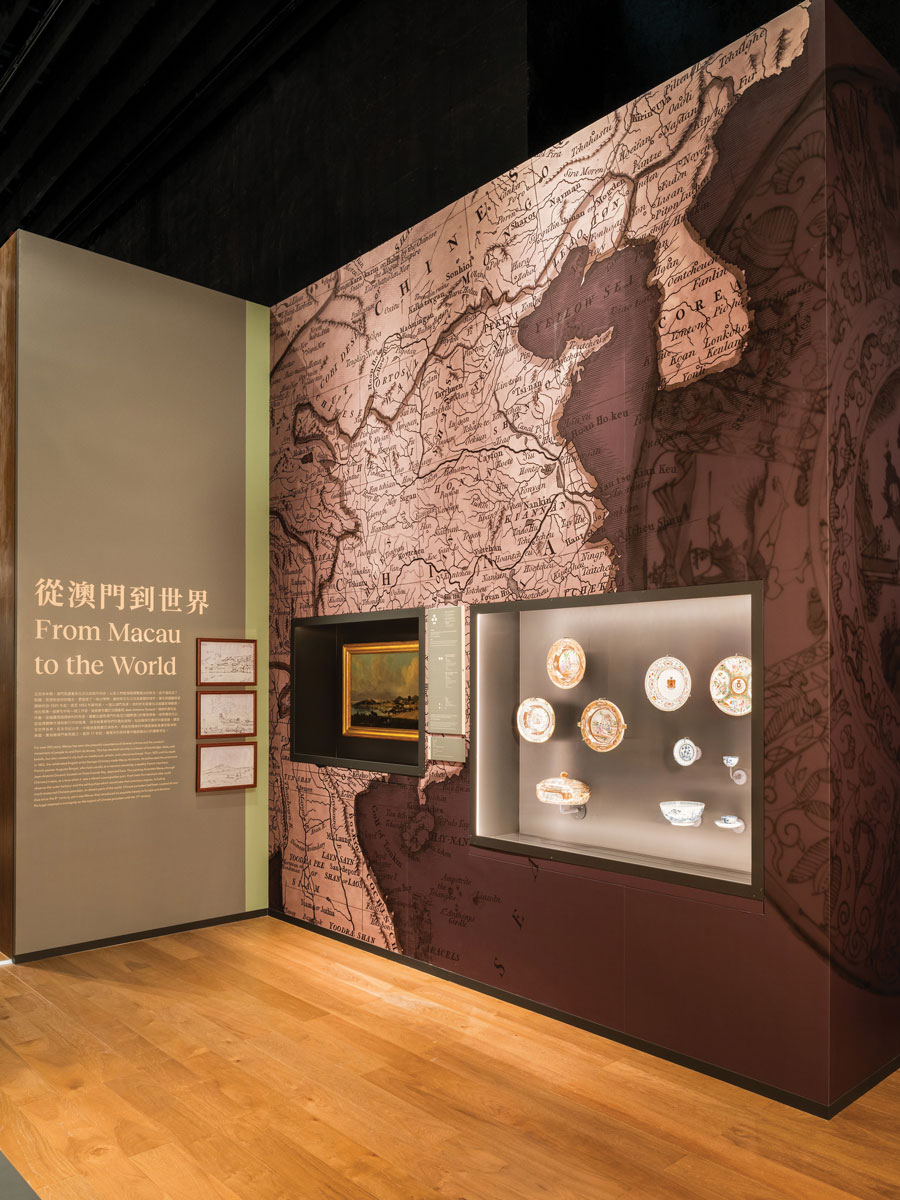
The exhibition’s scope includes Macao’s pivotal role in maritime trade from the late 16th century. In one game, players roleplay as merchants from Portugal, France and Spain. The objective? To purchase highly valued silk, porcelain and tea from Guangzhou, via Macao, and transport it back to Europe – fending off pirates and navigating typhoons along the way. Up to four “crews” can compete against each other at a time, their respective journeys playing out on screens. The experience is further brought to life by displays of real porcelain dating back to the era.
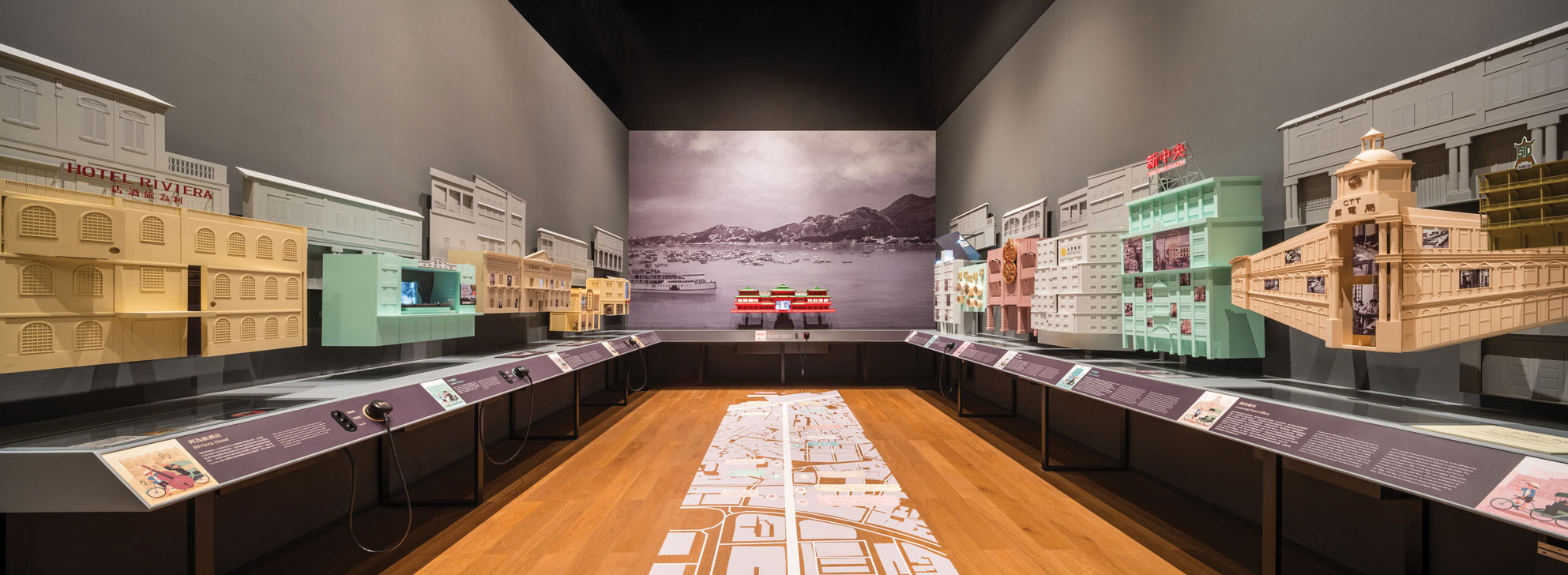
By the early 20th century, Macao’s commercial focus had shifted to Avenida de Almeida Ribeiro. The avenue’s Cantonese name, San Ma Lo, translates to ‘New Road’ in English – a moniker adopted after it was laid in 1918. The 620-metre-long major thoroughfare connected the Macao peninsula’s Inner Harbour to the Nam Van area, replacing a maze of alleyways to facilitate trade and urban expansion. Its section includes miniatures and archival photos showcasing landmarks like the Apollo Cinema (1935–1993), the Leal Senado Building, the Tak Seng On Pawnshop (now a museum), the recently reopened Hotel Central (built in 1928), and the Banco Nacional Ultramarino building – now a modern high-rise behind its original 1926 pink façade. The architecture of Avenida de Almeida Ribeiro helps illustrate the city’s evolution.
Art and artefacts
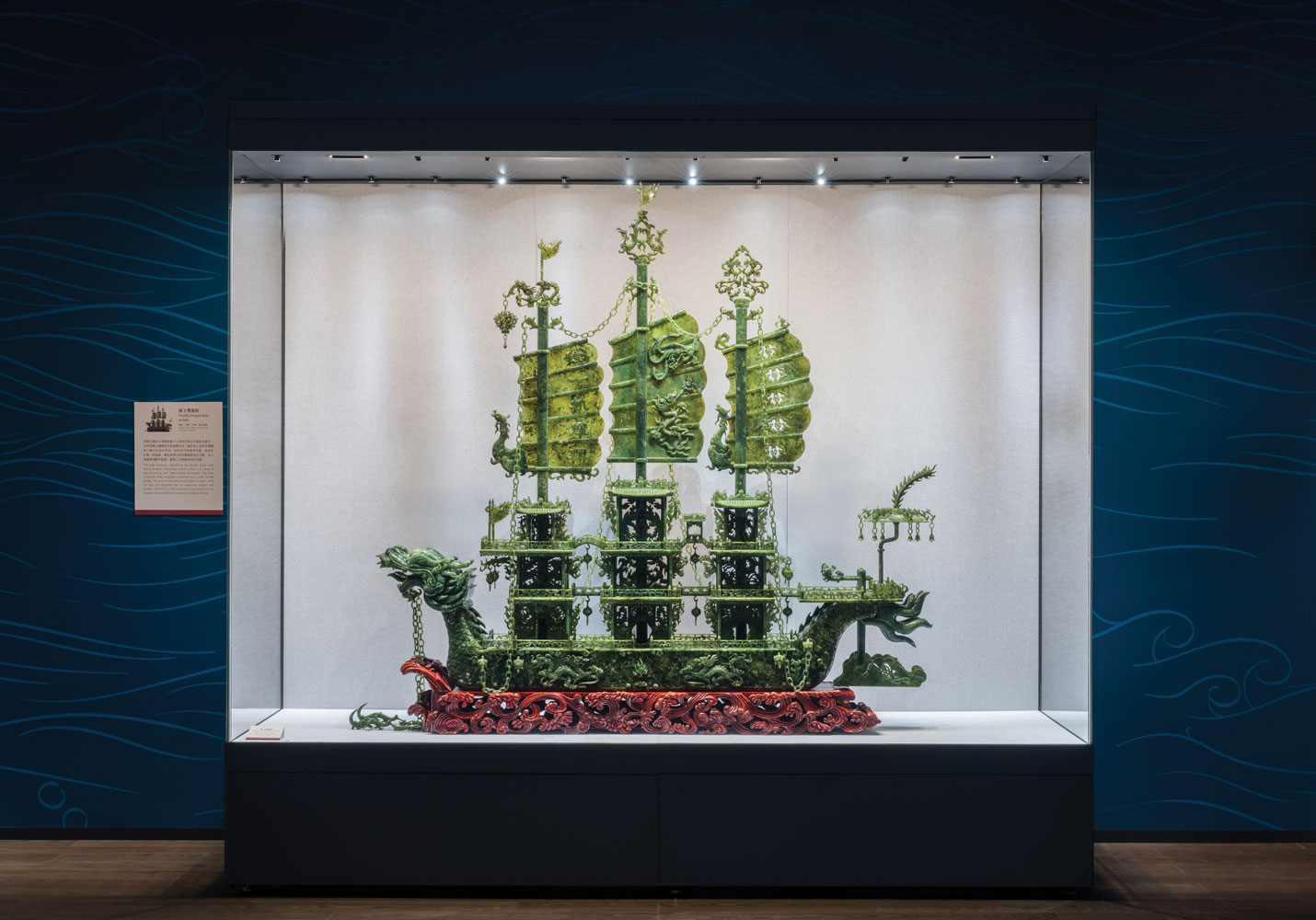
Complementing the city-focused themes, “The Lisboa Collection” focuses on the craftsmanship of the Qing dynasty court. The artistry and technical sophistication of pieces included here help viewers understand Europe’s appetite for Chinese-made goods during this time.
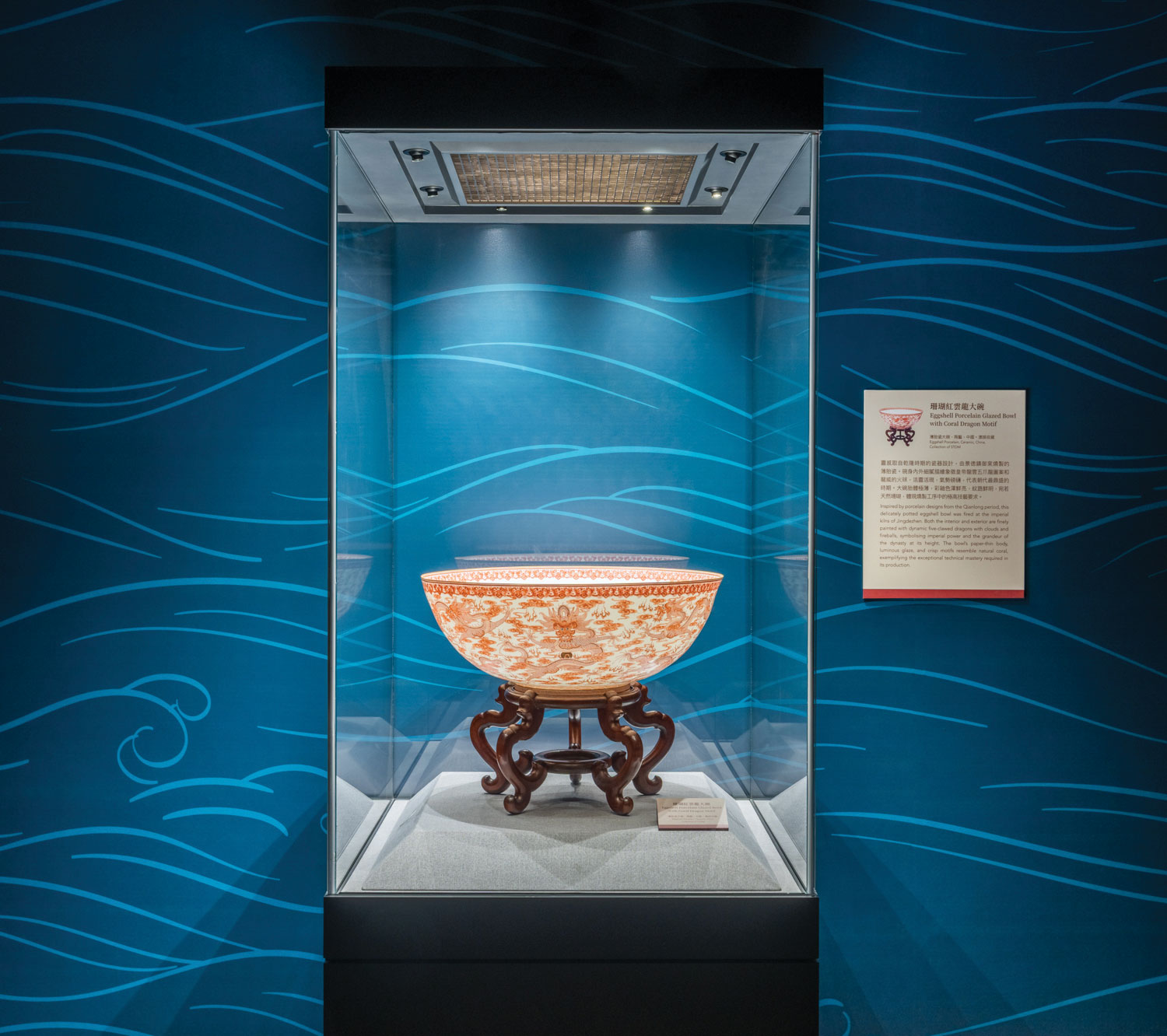
At its centre is a gilded dragon throne from the Kangxi period (1662–1722), resplendent with symbols of longevity and imperial authority. The throne employs both incised gold and filled-in lacquer techniques, befitting its imperial provenance. The collection also displays a jade double dragon boat, inspired by a vessel Emperor Qianlong used on his southern inspection tours. Its elaborate design featuring three pagodas connected by a graceful arched bridge highlights the sophistication of Qing-era relief carving techniques.
The exhibition invites visitors to engage with the city’s complex historical narrative through stunning visuals, sound and movement. By combining precious artefacts and architecture with AI and innovative games, this state-of-the-art gallery presents a living archive of Macao.