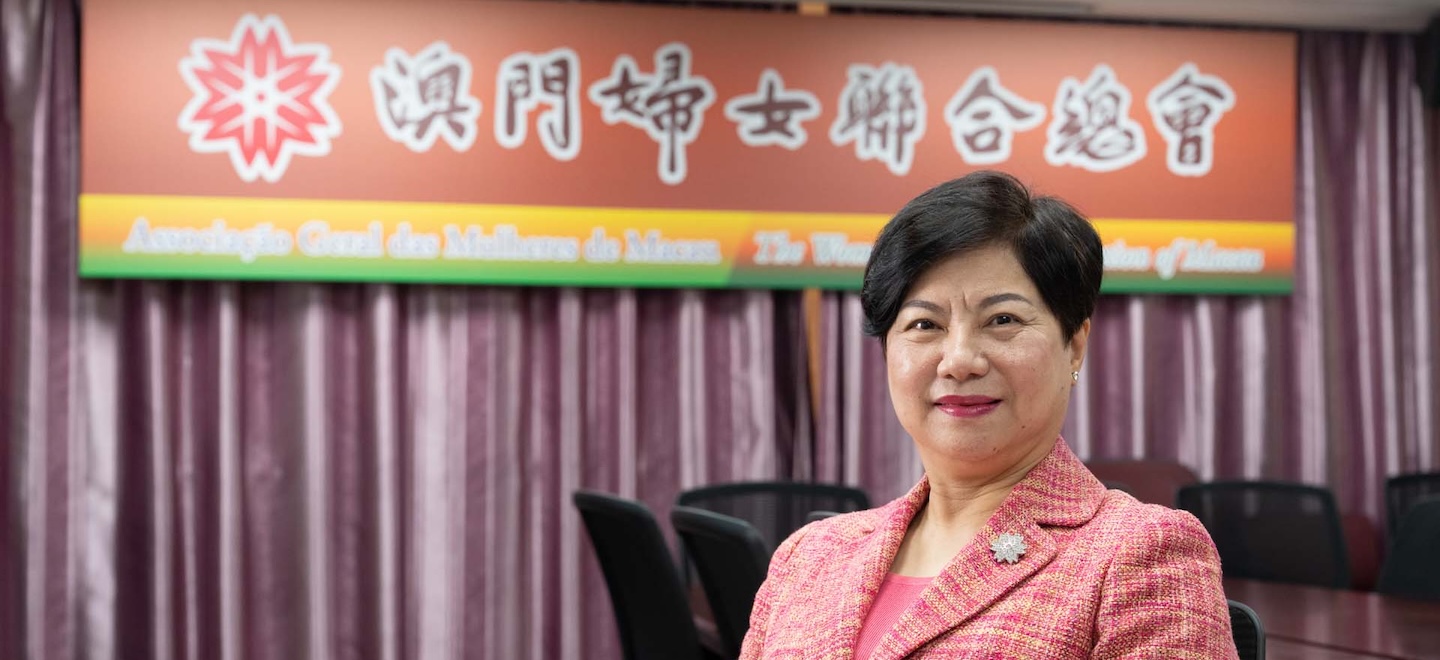
What footprint is the Women’s General Association of Macau (“Women’s Association”) leaving on Macao today?
It has been 76 years since the establishment of the Women’s Association. Currently, we have more than 60,000 female members aged 18 and above, drawn from all sectors of society.
The association currently has more than 500 full-time staff and more than 2,000 volunteers of all ages. It comprises seven functional departments covering areas such as social affairs, women’s rights, culture, recreation and sport, and youth development. We operate 28 service centres and work closely with community groups and affiliated organisations to meet the needs of various age groups and sectors of the community. In recent years, our services have also expanded to the Guangdong-Hong Kong-Macao Greater Bay Area.
How has the Women’s Association evolved over the years to meet the changing needs of the community?
The association’s growth has closely tracked Macao’s social development and changing needs.
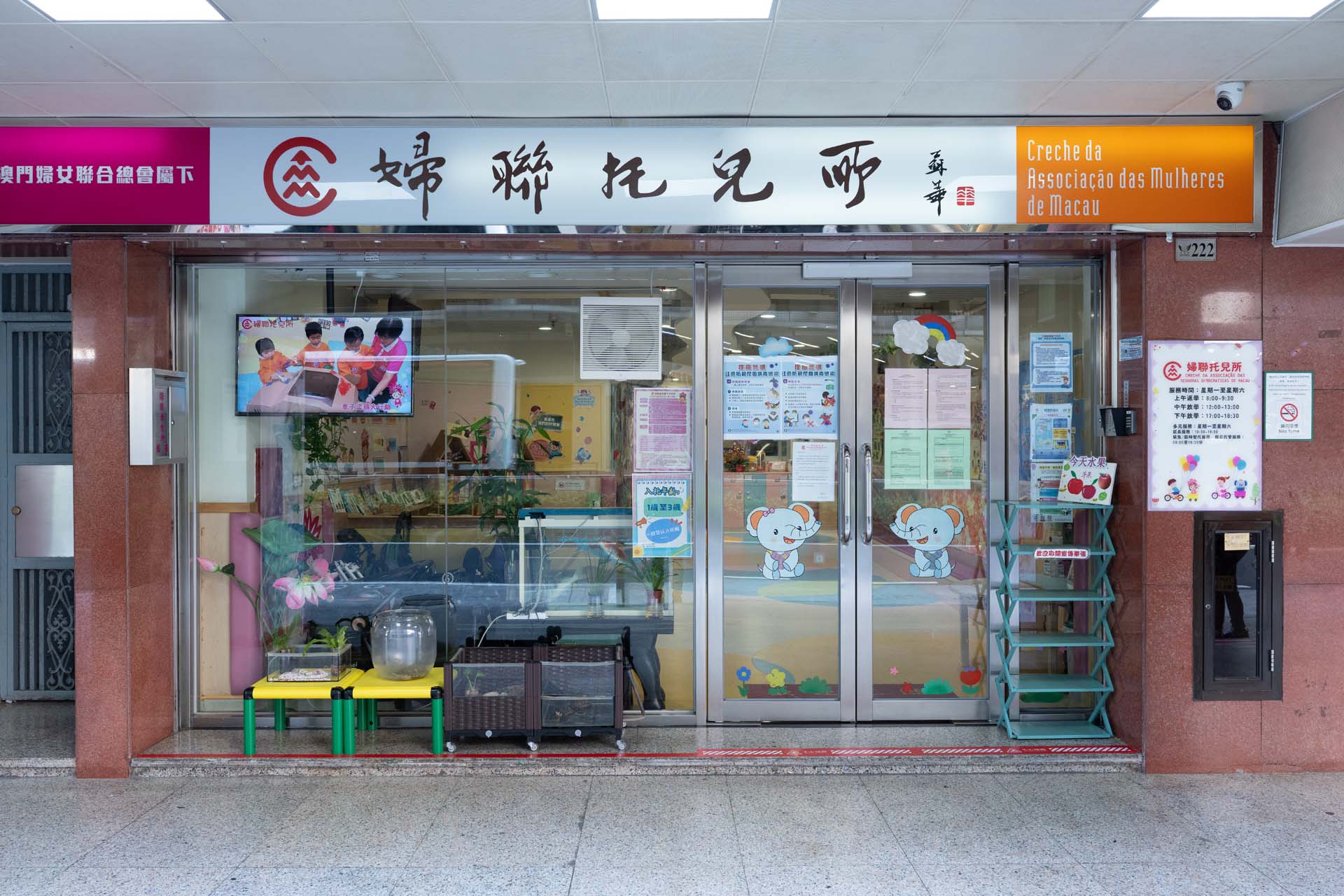
Between 1989 and 1999, a rise in the birth rate drove strong demand for childcare services. In response, we opened six nurseries, helping families manage the pressures of raising young children while enabling more women to enter the labour force.
Following the establishment of the Macao Special Administrative Region (MSAR) in 1999, community organisations assumed a more prominent role in grassroots governance and social service provision. With the support of local authorities, we established our first family service centre in 1999, laying the groundwork for a network that now spans the city.
Over time, the association has evolved, embedding itself into many aspects of daily life and responding to residents’ aspirations for a better quality of life.
In recent years, youth development – particularly for young women – has become a growing focus.
We place strong emphasis on young people, recognising them as the future of Macao. We are committed to supporting youth organisations and centres, while delivering targeted programmes for younger generations.
One flagship initiative is the International Affairs Training Program, launched in 2014. Now in its 13th edition, it has trained more than 1,000 participants and enabled over 200 outstanding individuals to attend international conferences. The programme has become a key platform for empowering women in Macao.
Another initiative, the Association of International Affairs Exchange and Training of Macao, was launched in 2024 and is open to participants of both genders. In partnership with China Foreign Affairs University, the association introduced its first foreign affairs training course in 2025. This course aims to help young people better understand China’s diplomatic landscape and foster a global outlook.
We have also launched a range of additional youth programmes aimed at improving talent development and supporting young people in building careers locally or internationally, while enabling them to share the stories of China and Macao with wider audiences.
How is the association continuing to expand its social services portfolio?
There are initiatives at various levels to meet the community’s needs. Some are in collaboration with the MSAR Government, local community groups and affiliated units. The Women’s Association, together with six other community groups, has partnered with the Health Bureau and the Social Welfare Bureau to launch a new programme this year providing comprehensive healthcare support to pregnant women and mothers of newborns. The initiative brings together 13 service centres to deliver coordinated family and community integrated care.
Our “Happiness in Harmony” Family Integrated Services Center continues a support programme for expectant mothers and new parents, which was first introduced in 2019. In Taipa, we have in place a “canteen for the elderly” programme, providing meals and services for older residents in need.
Last year, we opened a new child support centre to offer early intervention training and personalised therapy for children with developmental disabilities, alongside support for their families.
In addition, we run initiatives aligned with Macao’s strategic positioning, including cultural exchange activities between China and Portuguese-speaking countries. In 2014, we launched our triennial “Family-Friendly Employers Award Scheme”. It encourages employers to foster more supportive working environments.
The Women’s Association has developed a presence in Macao’s political landscape. What areas does the group focus on?
Since the establishment of our association, we have been dedicated to serving in the community. We first engaged in the political sphere alongside other community groups. Since 2017, we’ve run for seats in the Legislative Assembly under our own association’s platform. Besides the Legislative Assembly, we also have representatives in various civic councils and committees.
Our goal is to advocate for women, children and families from a legislative perspective, while also nurturing civic-minded leadership skills in patriotic and Macao-loving individuals. Today, more than 30 of our members sit on civic councils and committees, contributing to policymaking and governance.
Our focus is on the promotion of family-friendly policies and women’s empowerment. One example is maternity leave: we have actively advocated for longer leave periods and, within our own organisation, already provide 90 days of maternity leave. We encourage other employers to follow suit.
How is the Women’s Association extending its work into neighbouring Hengqin and the Greater Bay Area?
In response to the call for supporting Hengqin’s development, we have actively encouraged Macao residents to live and work in the Guangdong-Macao Intensive Cooperation Zone. Our Guangdong office opened in 2021, and we also run a Hengqin-Macau Parent-Child Activity Center. Both facilities provide support for local families.
In 2024, we launched the Macau New Neighbourhood Family and Community Service Center in Hengqin. It offers comprehensive, professional social services that meet Macao’s high standards.
Are there plans to expand the association’s footprint in Hengqin?
The second phase of the development of the Cooperation Zone in Hengqin is now underway. We have outlined a series of initiatives designed to integrate Macao women into national development and enhance our association’s contribution to it.
First, we will strengthen existing service platforms and brands. Taking the establishment of the Cooperation Zone and the fifth anniversary of the inauguration of our Guangdong office as opportunities, we will continue to optimise the work of our Family and Community Service Center in Hengqin.
Second, we plan to expand cooperation in the Greater Bay Area. We will continue to support integration and collaboration among women in the region, regularly organising study tours and exchanges for women and youths to learn about life on the Chinese mainland. In addition, we will explore cooperation with other organisations to host women-focused activities and services, promoting the co-construction, sharing, and interconnection of maternal and child health services throughout the Greater Bay Area.
Third, training professional service teams in the region is another priority. We intend to establish parent–child and youth volunteer teams, strengthen partnerships with universities and professional institutions, and build development platforms for family mediation, domestic services, and skilled workers. By adapting Macao’s service styles and aligning them with the actual needs of the Greater Bay Area, we work to promote better integration in terms of social affairs and community governance, towards a high-quality Greater Bay Area.
What are your future plans for Macao?
This year marks the start of Macao’s Third Five-Year Plan for Economic and Social Development. We will seize this opportunity to unite and support women, focusing on three key areas.
Firstly, we will promote patriotism and love for Macao. We will study the doctrines discussed in the fourth plenary session of the 20th Central Committee of the Communist Party of China and the 2026 sessions of the National People’s Congress and the Chinese People’s Political Consultative Conference. We will also conduct and enliven patriotic education activities to pass on our patriotic DNA.
Secondly, we will actively support Macao’s development. We will work with the MSAR Government in law-based governance, uphold the executive-led system, and act as a bridge between the Government and the community. We will take part in political consultation, offer policy advice, help improve governance, and support the principle of ‘patriots governing Macao’.
Finally, we will keep serving women, children, and families. We will modernise community services with artificial intelligence and other tools, and strengthen support in family care, elderly services, health and education. By expanding our community platforms and building a full support network, we will meet their needs for a better life, and build a more wonderful home for all in Macao.
| A LEGACY OF SUPPORT AND ADVOCACY For over three decades, Lau Kam Ling has stood as a steadfast guardian of women’s and children’s welfare, devoting her life to community work in Macao. Her journey in public service began to take shape when she became a member of the Women’s General Association of Macau in 1994, a decision that laid the foundation for her dedication to women’s rights and welfare. In 2022, Ms Lau rose to the position of chairwoman, a role that allowed her to amplify her impact even further. Beyond Macao, she also serves on the executive committee of the All-China Women’s Federation, a state-backed organisation dedicated to advocating for women’s rights and interests across the People’s Republic of China. Ms Lau’s influence extends far beyond the Women’s Association. She is a member of the Talent Development Committee, which offers advice to local authorities on talent cultivation policies. Additionally, she serves on the Monitoring Committee on Discipline of Public Security Forces, contributing her expertise to upholding discipline and integrity within the region’s security sector. When reflecting on her role as the leader of the Women’s Association, Ms Lau shared that her vision is guided by a commitment to “caring for women and children, and serving the community”. She describes the association as a vital bridge connecting Macao’s residents with the city’s Government – a bridge that ensures voices are heard and needs are addressed. “We are frequently consulted on a wide range of issues,” Ms Lau explained. “It is our responsibility to convey the public’s concerns and needs to officials in a timely manner, so that no voice is left unheard.” The Women’s Association, founded on May 21, 1950, has grown and evolved alongside the city itself. Throughout the decades, it has remained true to its core of focusing on women’s and children’s welfare while adapting to the ever-changing needs of Macao’s society. Recalling the association’s early days, Ms Lau fondly remembers its original mission: “to unite all women in Macao and promote the welfare of women and children”. In the 1950s and 1960s, during China’s nationwide literacy campaigns, the association played a crucial role in bringing education to women in Macao. “We launched literacy classes in Macao for women, as well as evening schools for working women to help them improve their educational levels and empower them to take control of their own lives,” she said. Education has always been at the heart of the association’s work, and this commitment has endured for more than 70 years. Today, the association runs a network of nurseries and schools across Macao, a legacy that began in the early 1950s. “We opened our first nursery in 1952 and a school for members’ children in 1955,” Ms Lau said. “At that time, many women were burdened with childcare, which prevented them from pursuing careers. Our nurseries and schools relieved that burden, allowing them to focus on advancing in the labour market.” Over time, the Women’s Association’s reach has broadened. The association is now active across a wide range of sectors, from elderly care and family services to healthcare, culture and leisure, and nurturing young people. This is a sign of its enduring role in the social fabric of Macao. |