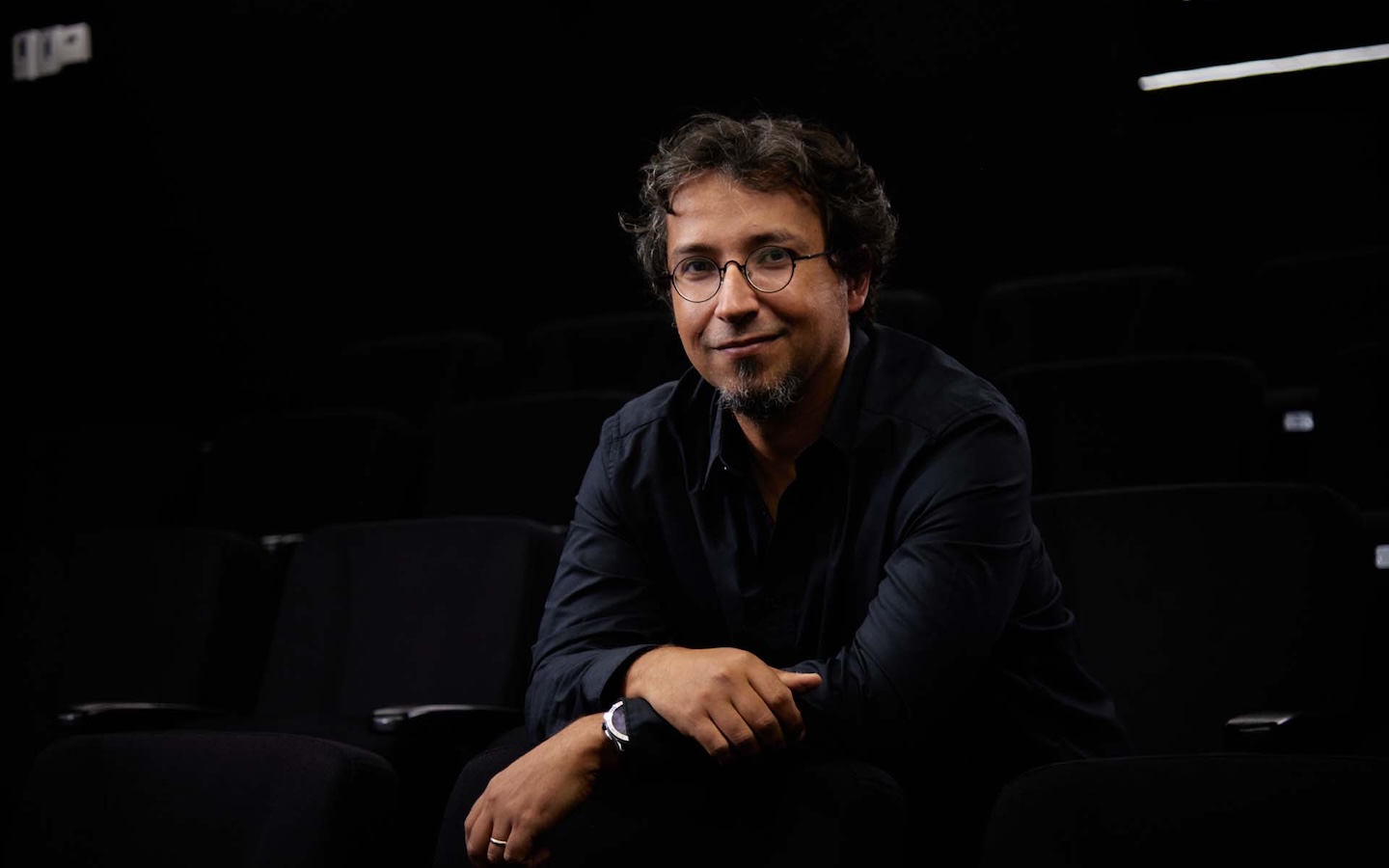
In a city famed for its glittering resorts and dazzling city lights, Macao’s cultural heartbeat often lies in quieter corners: independent galleries, small studios and university campuses. It is here that Gu Yue has established himself as both an accomplished artist and a respected scholar. A professor at the Macau University of Science and Technology (MUST), he was recently awarded funding from the China National Arts Fund for his oil painting “Pursuit – Setting Sail”, known as “拼搏·起航” in the Chinese original.
The fund announced its list of 2026 project grants last December, with 13 applications from Macao selected. It marked the fifth time the city’s cultural initiatives received national recognition, underscoring Macao’s growing presence on China’s arts landscape.
The selected projects span theatre, performance, fine arts and youth creativity. Prof. Gu’s ‘Pursuit – Setting Sail’ was the only Macao proposal chosen under the category of individual artistic creation.
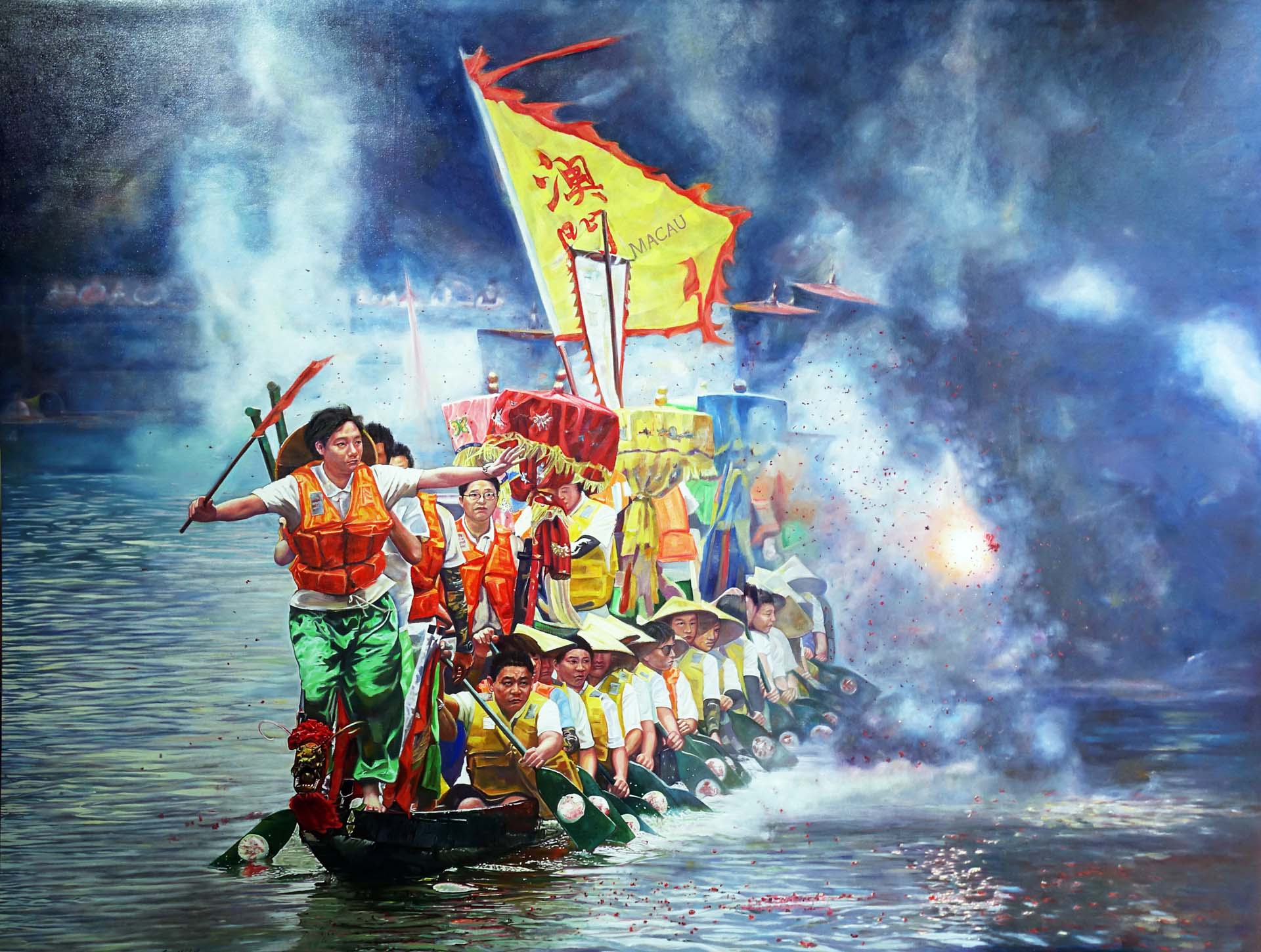
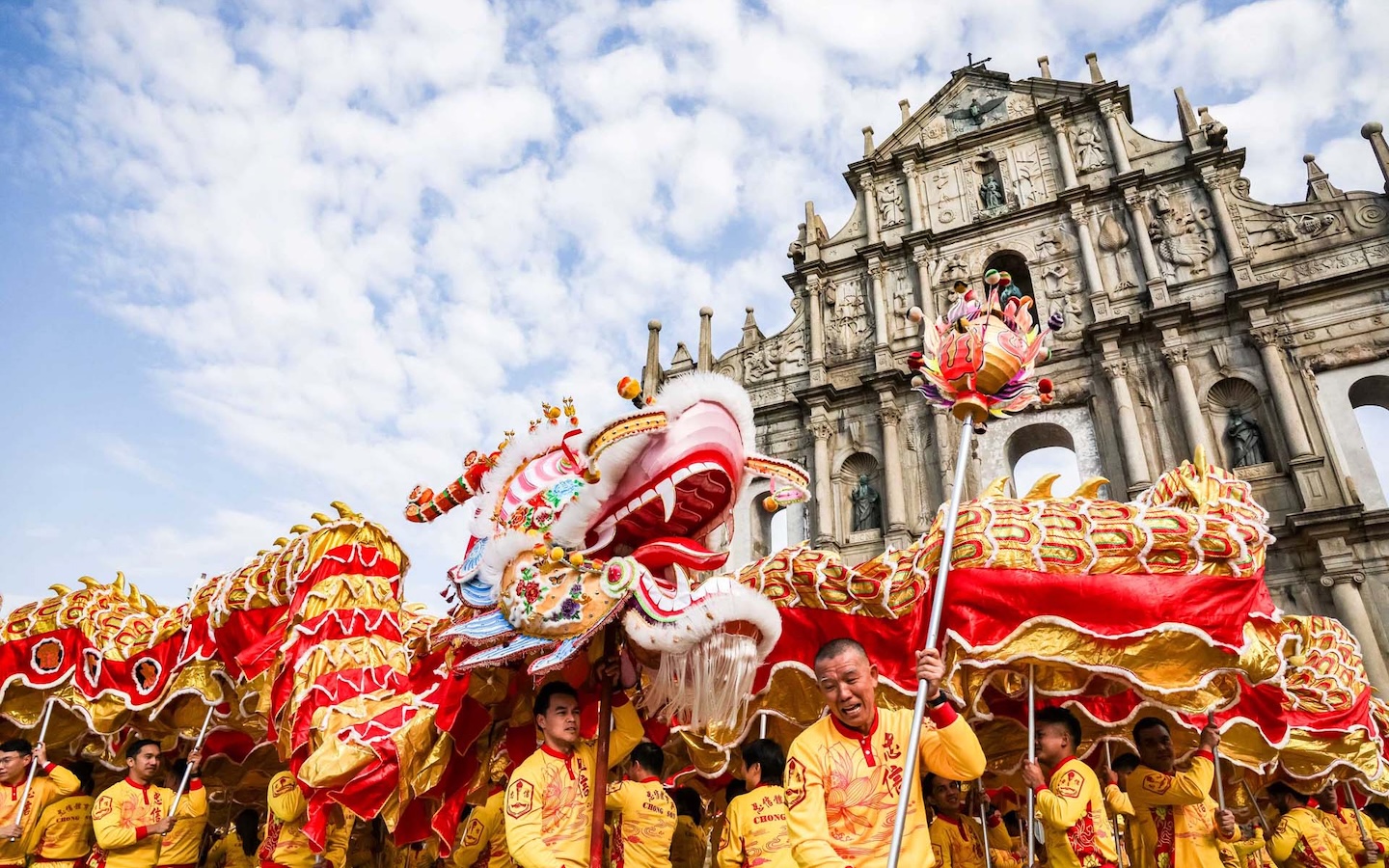
The painting seeks to capture the dynamism of Macao’s dragon boat races, blending the physical intensity of competition with motifs drawn from Chinese traditions. Prof. Gu explained that the work employs imagery, colour and form through a visual language intended to resonate with the public, evoking a sense of cultural belonging within the Guangdong-Hong Kong-Macao Greater Bay Area. For him, the project is more than an artwork; it reflects a broader cultural identity and Macao’s place within the national narrative.
“The reconciliation of historical reality and artistic truth carries multiple layers of meaning,” he told Macao Magazine. “In creating ‘Pursuit – Setting Sail’, I focused on how to address the relationship between historical authenticity and artistic authenticity.”
Seeds of creativity
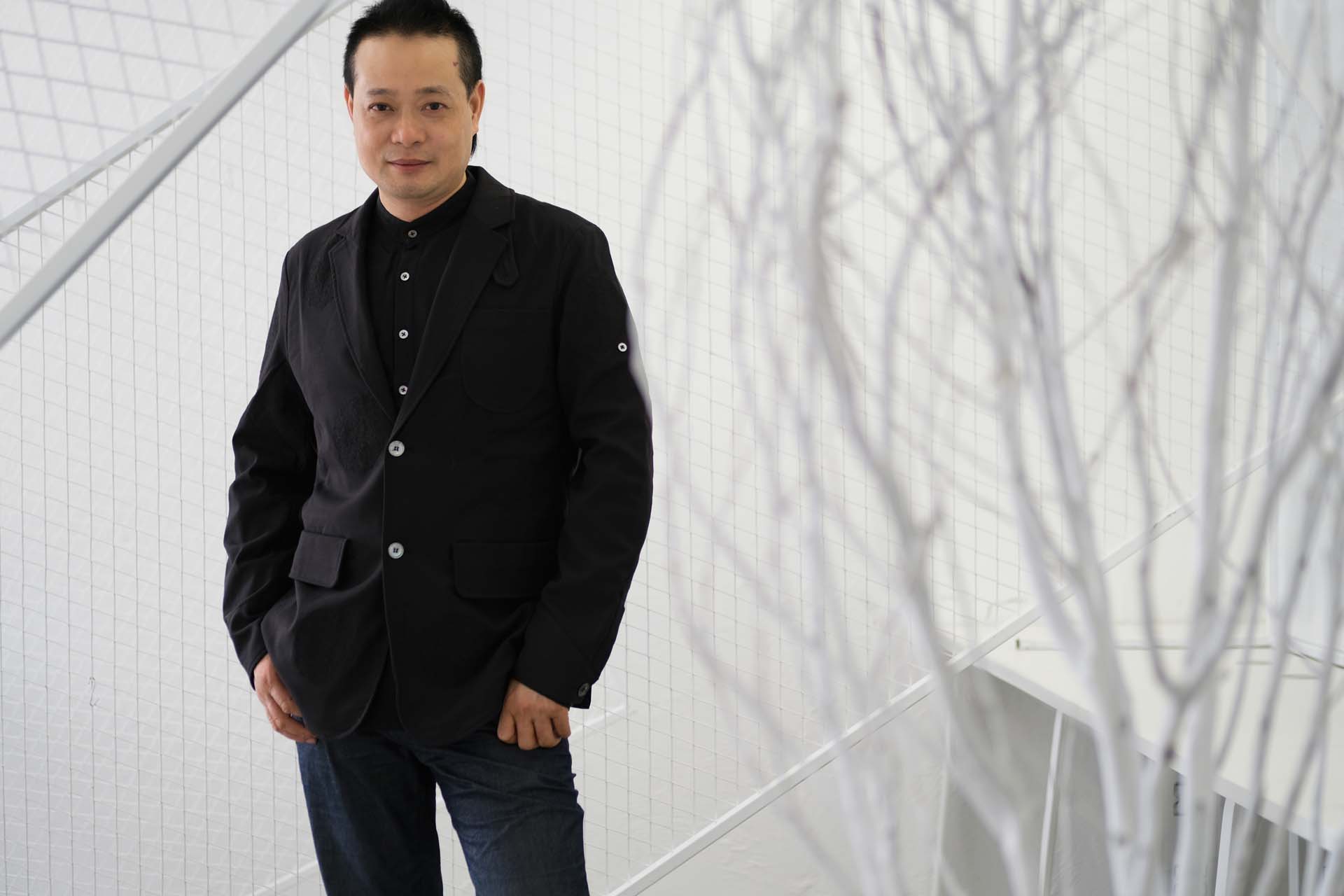
Prof. Gu’s artistic journey began in Anhui province, long before his career took him to Beijing and later to Macao. Reflecting on his earliest encounters with art, he says that they were shaped not by formal institutions but by the domestic crafts of his childhood.
“My mother’s embroidery transformed everyday fabrics into canvases of delicate motifs and animal figures,” he recalled. “Those tactile encounters instilled in me a fascination with visual storytelling.”
Literature soon expanded his horizons. Western classics such as Victor Hugo’s “The Hunchback of Notre-Dame” opened imaginative worlds far beyond Anhui, while closer to home, the masks and costumes of Sizhou opera – a local theatrical tradition – offered a vivid display of colour, drama and exaggeration. By primary school, he was already winning painting competitions.
This early enthusiasm evolved into formal training. He began structured art study during secondary school, graduating in fine arts from Anhui University in 1993. After eight years of professional practice, he pursued postgraduate studies at Xiamen University, before earning a doctorate in visual art theory and practice in 2008 at the Academy of Arts & Design at Tsinghua University.
Following his doctorate, Prof. Gu joined the National Museum of China in Beijing, where he spent nearly a decade studying, working and raising a family. Immersed in the capital’s cultural depth, he was moved by encounters with national treasures of exceptional significance. “It was on this basis that I pursued theoretical research and creative practice,” he explained, “publishing academic monographs and articles, while also holding solo and group exhibitions.”
Yet Beijing’s grandeur brought its own challenges. “Within its weighty historical context, an individual’s awakening consciousness is subtly assimilated,” Prof. Gu reflected. “This tested my creative individuality and innovative capacity, particularly when confronted with the conceptual influences of contemporary art.”
By contrast, Hong Kong and Macao offered a different perspective. “During my years in Beijing, I often travelled to Hong Kong for exhibitions, and I grew fond of the region’s urban character – its strong sense of locality and remarkable openness to Western contemporary art,” he said. These experiences gradually reshaped his outlook. Eventually, Prof. Gu resigned from his post and moved to Macao, a city he believed could offer fresh inspiration for the next phase of his artistic life.
Artistic pursuits in Macao
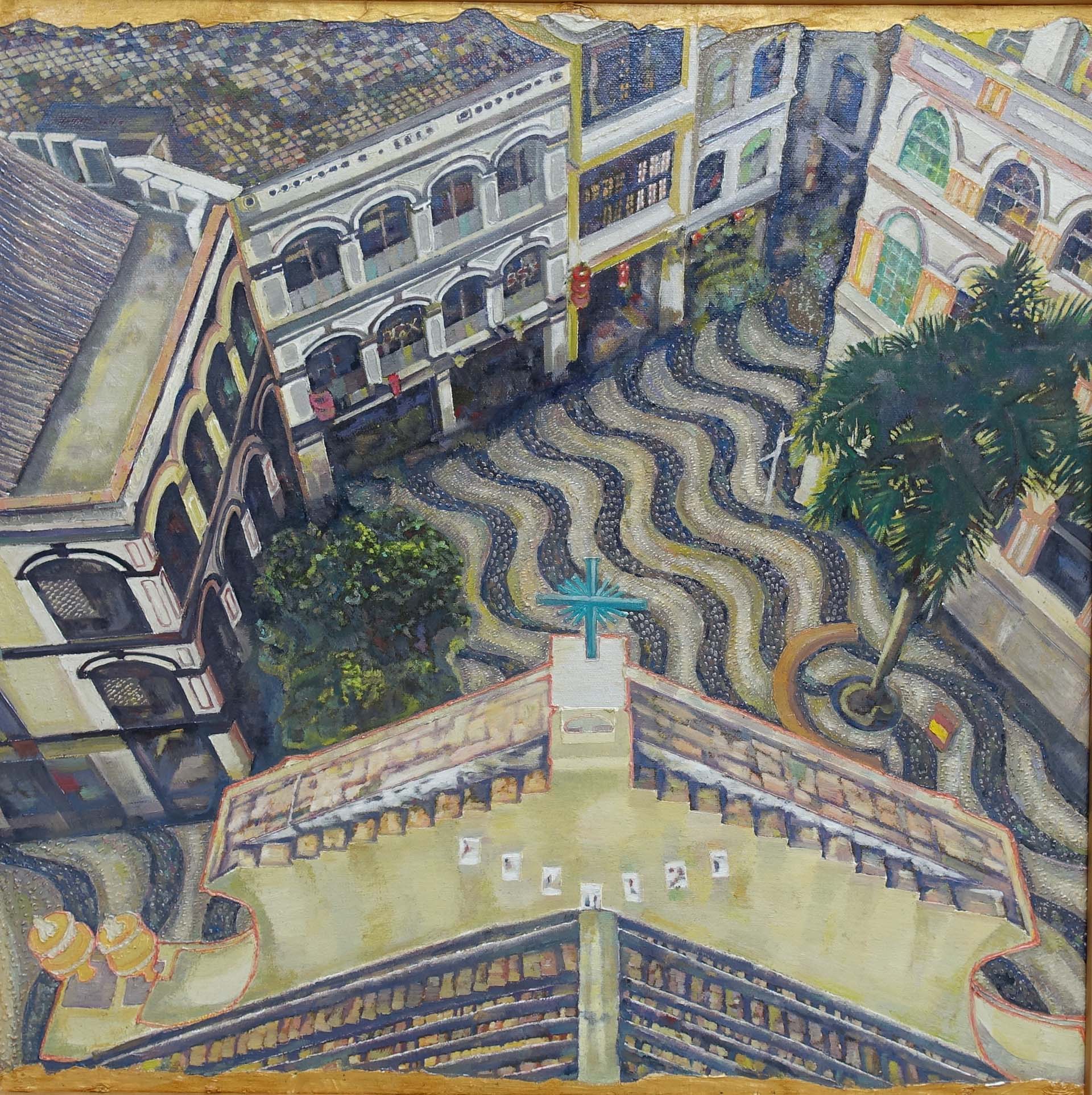
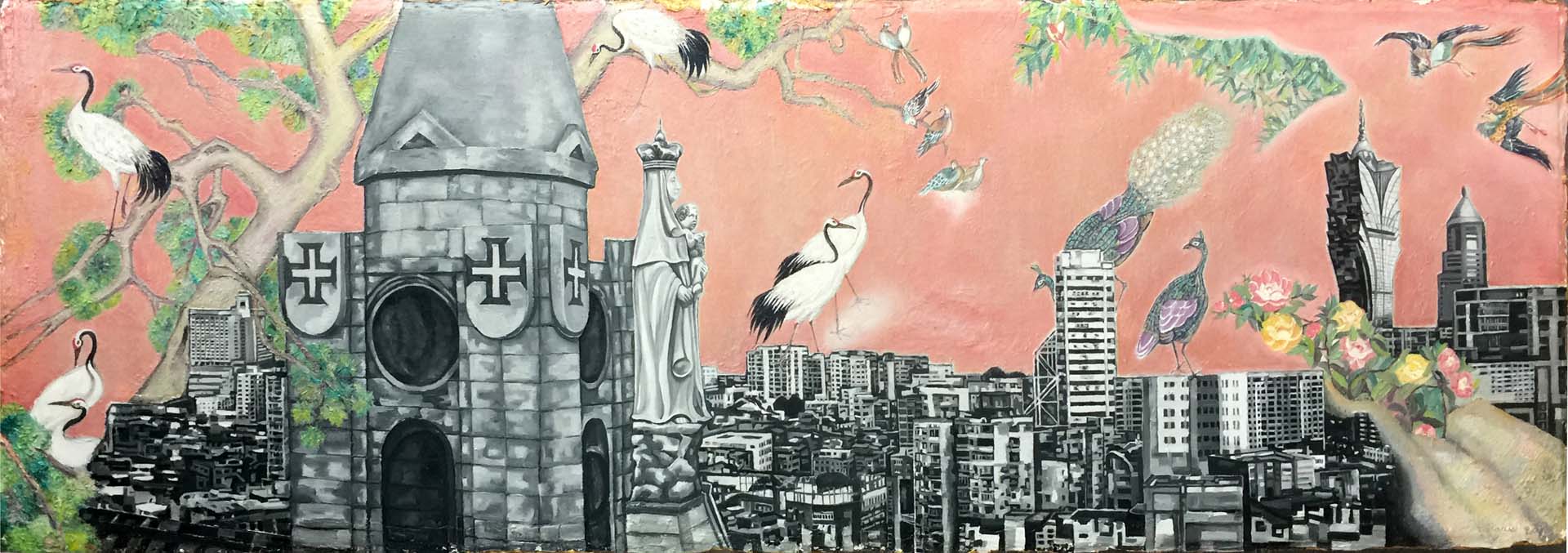
“Beyond my teaching duties, artistic creation has always been a vessel for my emotions and a dwelling place for my thoughts,” he said. “Rather than saying that Macao itself has shaped my identity as an artist, it is more accurate to say that its urban landscapes – and the deconstruction and reconstruction of their visual imagery and symbolic forms – have consistently been central to my artistic pursuit.”
In 2015, Prof. Gu joined MUST’s Faculty of Humanities and Arts as an associate professor, teaching contemporary art theory and practice, among other subjects. Where Beijing carried the weight of history, Macao revealed a cosmopolitan openness. Its layered urban landscapes and multicultural environment soon became recurring themes in his work, prompting him to deconstruct and reassemble the city’s visual symbols.
Prof. Gu’s artistic philosophy is informed by an ongoing dialogue between East and West. He draws on theories of traditional Chinese painting while engaging with Western philosophical concepts, an exchange that continues to shape his practice. “What drives me to keep creating is my artistic idealism and my deep love for art. I hope that what I devote my life to, can move others and inspire the public to pursue diverse understandings of beauty.”
At the core of his work lies an exploration of how visual narratives can balance factual representation with aesthetic interpretation. Prof. Gu regards Macao as especially fertile ground for this enquiry.
“The hybridity embedded in the cultures of Hong Kong and Macao represents a visual hallmark of modernity,” he said. “By contrast, modern Chinese art developed later elsewhere. These differences have become central points of interest in my research.”
Celebrating Gu Yue’s achievements
Over more than two decades of academic inquiry and artistic practice, Prof. Gu has gained wide recognition. His 2016 monograph “Research on Thematic Oil Painting in the 20th Century” received backing from the National Publishing Fund, while later works were recognised in 2019 and 2022 by the Macao Foundation’s Outstanding Achievement Awards for Macao Research in Humanities and Social Sciences. In 2017, he was awarded a research grant by the Cultural Affairs Bureau for his project “Images and Appreciation – The Art of Sculpting in Macao in Light of Sino-foreign Art Exchanges”.
His academic career has also included appointments as a researcher at the Wu Guanzhong Art Research Center at Tsinghua University and as a visiting researcher at Peking University, two of China’s most prestigious higher education institutions.
As an artist, Prof. Gu was admitted to the China Artists Association in 2017. Two years later, his work “Raising the Flag in the Land of Lotus” received a Distinction Award at the Macao Museum of Art’s Open Call for Artworks of Macao Artists 2019. The initiative culminated in a special exhibition at the National Art Museum of China in Beijing, where Prof. Gu’s work was subsequently acquired for the museum’s permanent collection.
The future of Macao’s art landscape
Looking ahead, Prof. Gu speaks candidly about the challenges facing Macao’s artists. Exhibition spaces remain limited, large-scale venues are scarce, and transporting sizeable works across borders can be cumbersome. Internationally, he notes, high-level exchanges and exhibitions featuring Macao artists are still relatively few. Yet he remains optimistic.
As both artist and academic, Prof. Gu sees the cultivation of young talent as one of Macao’s most pressing cultural priorities. With comparatively few local students pursuing postgraduate degrees in fine arts, he argues that training must be targeted and purposeful.
“On the one hand, I emphasise Macao’s cultural distinctiveness, guiding and encouraging students to explore the diversity of local traditions,” he said. “On the other, I actively recommend that Macao’s youth take part in exhibitions and projects at home and abroad, broadening their artistic horizons and enriching both their theoretical and practical work.”