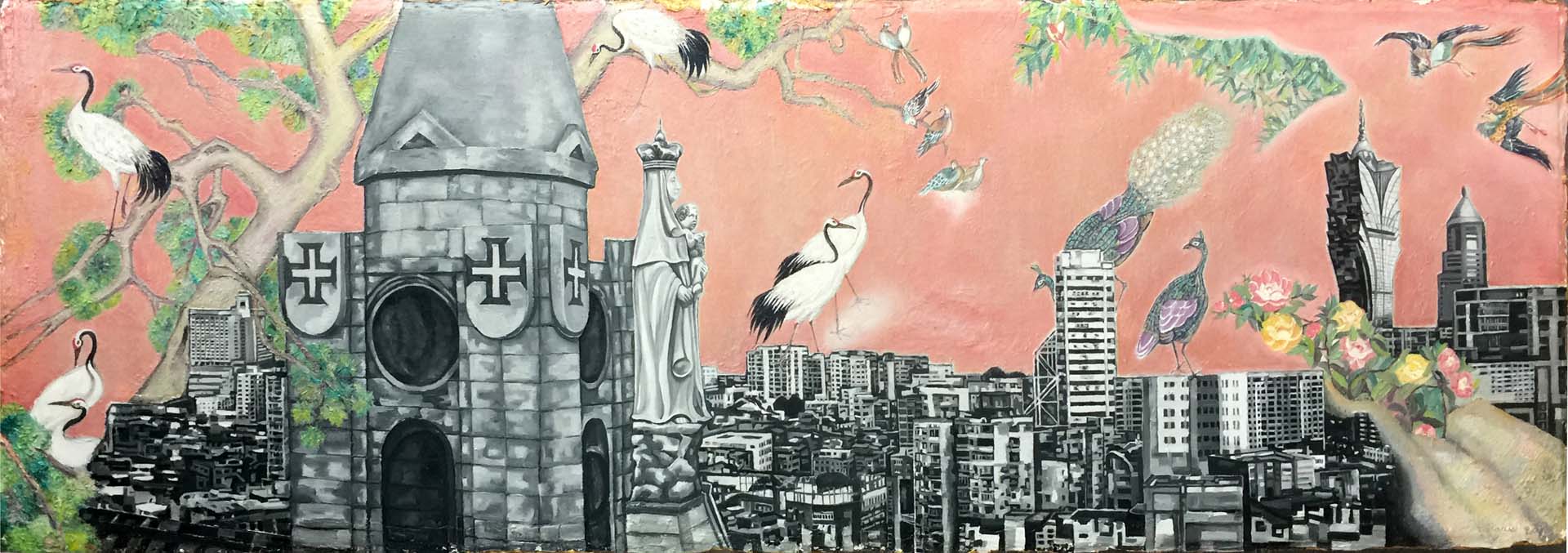
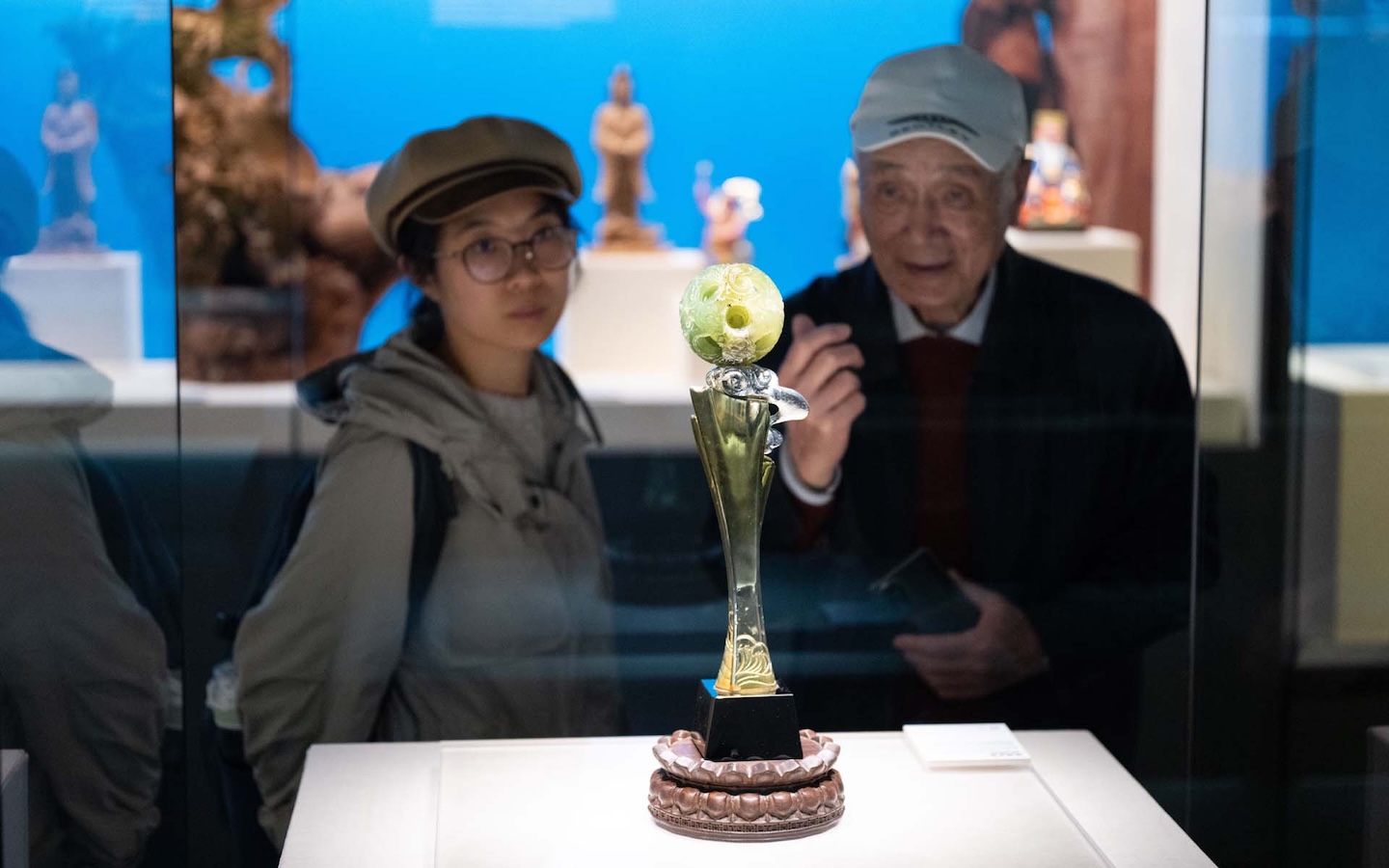
Perched upon the historic stone ramparts of Mount Fortress, part of the Macao Museum has been transformed into a vibrant portal where the ancient and the modern embrace. The “New Momentum – Cultured Bay Area, Brilliant Intangible Cultural Heritage: Showcase of Guangdong-Hong Kong-Macao Greater Bay Area Intangible Cultural Heritage”, now on until March 15 in the Exhibition Gallery of the museum, features over 50 intangible cultural heritage items and more than 100 exhibits, combining craftsmanship, digital interactivity, and creative crossovers to celebrate the wisdom and creativity passed down through generations in the Lingnan region. Lingnan is a geographic and cultural region in southern China defined as the area south of the Nanling Mountains.
As visitors walk through the halls, they are invited to experience what the exhibition calls a “source of life inexhaustible” – a cultural lineage that refuses to remain frozen in time.
The timing of this showcase is no coincidence. It aligns with the high-octane energy of the 15th National Games, creating a unique synergy where the spirit of athletic competition meets the endurance of cultural heritage. In this curated space, the four dimensions of the exhibition – Colour, Form, Sound, and Concept – take on new meaning. Colour represents the vibration of vitality, Form captures the elegance of movement, Sound echoes the rhythm of competition, and Concept aspires to the supreme mastery of excellence.
The exhibition allows the public to “learn about the techniques of intangible cultural heritage rooted in the traditional Lingnan culture and experience the Eastern aesthetics of the intangible cultural heritage refined through the fusion of Chinese and Western cultures as embodied in the Greater Bay Area,” according to the exhibition organisers.
Sounds of Lingnan
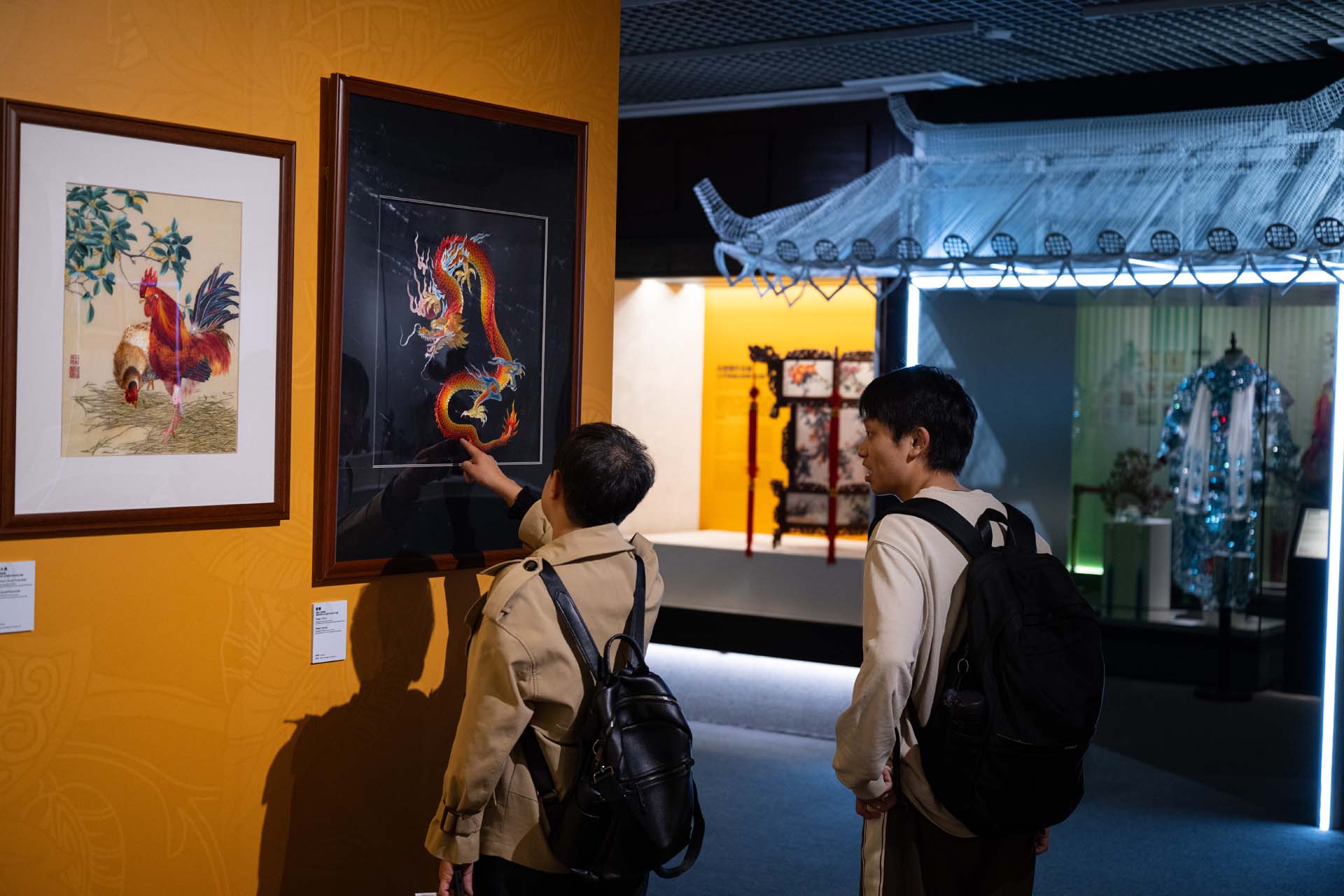
To truly understand the Lingnan region is to listen to it. The exhibition’s “Play of Sounds” dimension is rooted in a profound traditional Chinese aesthetic: that “the great sound is tenuous,” and “sounds and scenes are interwoven as one”. Here, sounds are treated as an art in time: fragile yet powerful cultural threads that tug at the heartstrings and construct a collective memory that echoes through the stadiums of the mind. The soundscape of the region is a complex, multi-layered tapestry that transitions from the melodic, high-pitched instrumental rhythms of the Cantonese Opera stage to the haunting, solitary chords of Naamyam narrative singing.
Naamyam, specifically the “Dishui Nanyin” style, holds a special place in the exhibit. Historically performed by blind singers – men known as Gushi and women as Shiniang – it makes use of colloquial lyrics to tell epic, improvised tales of romance and folklore. The Gushi typically played the zheng and yehu as accompaniments, keeping time with a clapper, while the Shiniang often played the yangqin (hammered dulcimer) or qinqin (Chinese long lute). These performances were a masterclass in oral tradition, with stories that could last ten minutes or stretch into serial narratives spanning months.
But the sounds of the Greater Bay Area are far more diverse. Visitors can hear the Tuna Macaense songs in the Patuá dialect, which beautifully blends Portuguese and Cantonese musical elements, alongside the fluid, meditative melodies of the Guqin. The Guqin, or “Qin”, is an ancient seven-stringed instrument whose creation – involving nine painstaking stages – is an art form unto itself, elegantly termed “Zhuoqin”.
Interactive martial arts
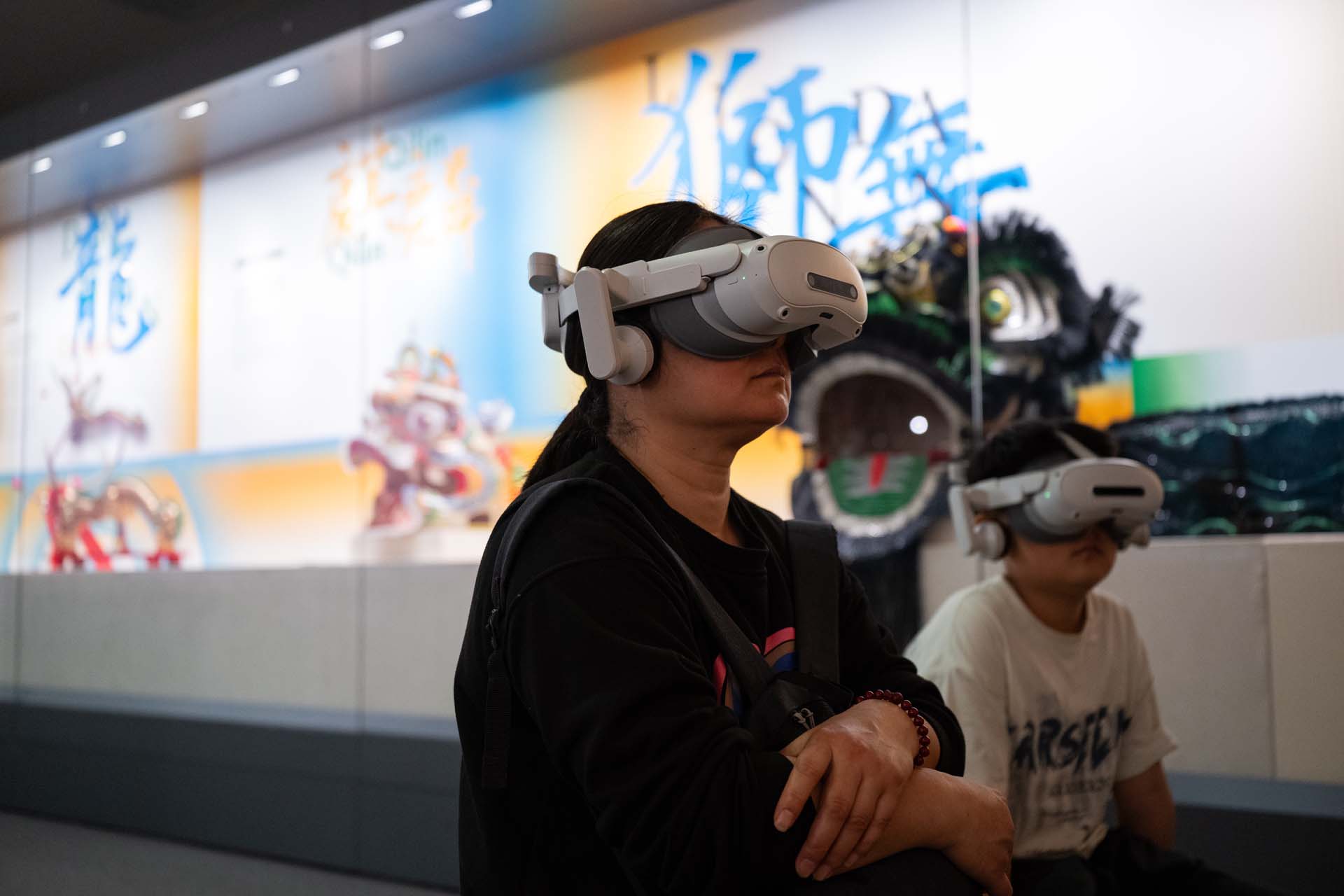
The exhibition also brilliantly bridges the gap between ancient combat and 21st-century technology through the “Wing Chun: Legacy” project. A collaborative effort between the Guangzhou Academy of Fine Arts and the Guangdong Cultural Centre, it transforms the philosophy of martial arts into an interactive digital experience. Players assume the role of an apprentice, navigating four themed scenarios where they interact with virtual books, weapons, and acupuncture charts to grasp the deep philosophy behind Wing Chun’s efficient strikes.
Beyond Wing Chun, the exhibition honours the Mok Family Martial Arts, one of the “Five Great Famous Styles” of Guangdong province. Originating in Huizhou nearly 300 years ago, this style is renowned for its vigorous fist movements and flexible, diverse kicks. It is a rare technical hybrid, combining the heavy strength of Southern styles with the agile footwork typically associated with Northern martial arts.
These martial traditions are complemented by the Xianshui Saltwater Songs, the tradition of the Tanka boat people. These “question and answer” songs, sung in Cantonese dialect, cover every aspect of life from fishing to courtship, serving as a social thread that binds the coastal communities together.
Fire, clay and paper
The “Creation with Geometry” section shifts the focus to the tangible – the interplay of myriad lines and the philosophy of cosmic order. This is most vividly expressed through the region’s world-class ceramics. The traditional Cantonese architectural ridge ornaments, often called “Gongzai” or figure ridges, are a testament to the harmony between clay, glaze, fire, and art. These ornaments are crafted using ancient wood-firing techniques in “Loong” (dragon) kilns. Success in this field relies entirely on a master’s decades of experience to navigate the three distinct temperature zones of the kiln, ensuring that the elaborate figures and floral patterns bake perfectly.
The Shiwan ceramic sculpture technique further emphasises this humanistic appeal. Categorised into five types – figures, animals, vases, miniatures, and ridge ornaments – the process requires highly refined clay and a deep understanding of traditional glazes.
Similarly, the porcelain of Guangzhou features the unique “Zhijin” or gold-weaving technique, an innovative method that creates an effect of “stacked gold and accumulated jade” on white porcelain. By the 1930s, these workshops moved to Hong Kong and Macao, where artisans adapted the motifs – incorporating folk symbols alongside customised designs tailored to Western tastes – while meticulously preserving the Lingnan soul.
The exhibition also celebrates the “soft” arts that define the domestic and festive life of the region. Cantonese embroidery, or Guangzhou embroidery, is a masterclass in texture and light. Using over 30 distinct methods of point, via velvet, gold, silver, and bead threads, embroiderers depict intricate textures by carefully manipulating the direction of their stitches. The five primary techniques – nailing, quilting, mounting, embellishing, and layering – allow for a vast range of themes that balance shadow and brilliance.
The Guangdong paper-cutting technique is equally impressive. In Foshan, artists use scissors for freehand work or specialised chisels for more complex designs, sometimes carving through 20 to 100 sheets of paper in a single session. These cuttings, featuring themes of good luck and longevity, find their way onto the “deng se”, also known as Foshan coloured lanterns. These lanterns depict scenes of celebration and operatic legends, often adorned with shimmering copper cutouts.
Supporting these are the Foshan New Year Woodblock Prints, which use a special “Eternal Red” background. These prints, whether hand-painted or wood-carved, serve to protect the home and invite blessings, characterised by bold lines and full-coverage compositions. This vibrant visual style is also seen in Longmen Farmer Paintings, which use exaggerated forms and intense colours to reflect nature, love, and rural society, blending elements of ink painting, watercolour, and traditional embroidery.
East and West fusion
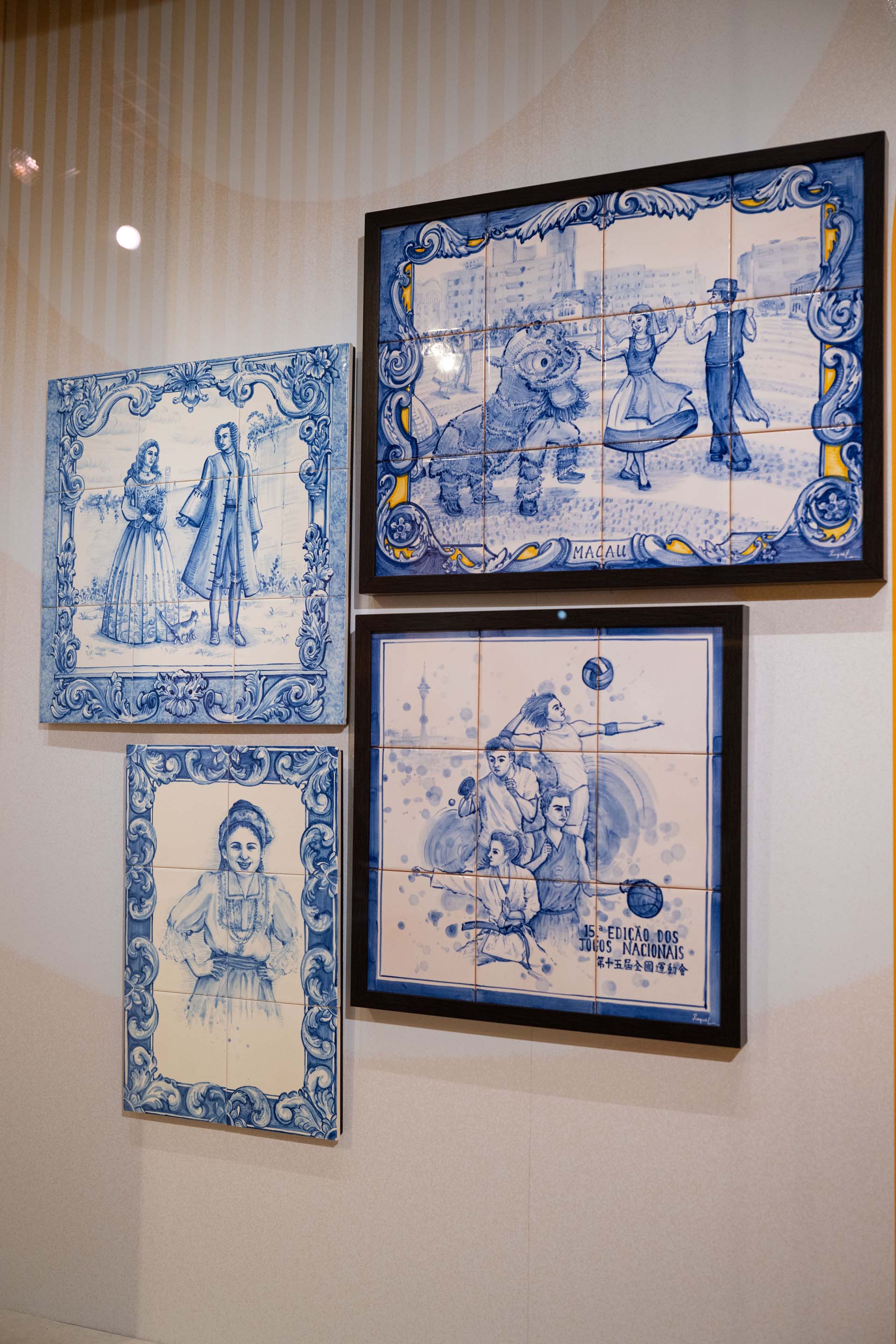
Macao’s specific heritage is a highlight of the “Colours of Lingnan” section, showcasing a history of cultural exchange. The production of Portuguese tiles is a beautiful example of this cross-cultural craftsmanship. The process is gruelling: moulding raw clay, an initial firing, applying an enamel base, hand-painting the motif, and a second firing at up to 1,100°C for eight hours.
Another local treasure is the carving of sacred images in wood, a craft born from the religious beliefs of local fishermen. This art form incorporates techniques from the Ningbo sect as well as foreign influences from Myanmar. The works range from deities worshipped by fishermen to large-scale public Buddhist statues, involving a complex process of sanding, priming, gilding with lacquer, and applying gold leaf.
Even the game of Mahjong has a place in this cultural voyage. Originally made from animal bone and bamboo – a process known as “bamboo scraping” – Mahjong pieces represent a declining hand-carved tradition.
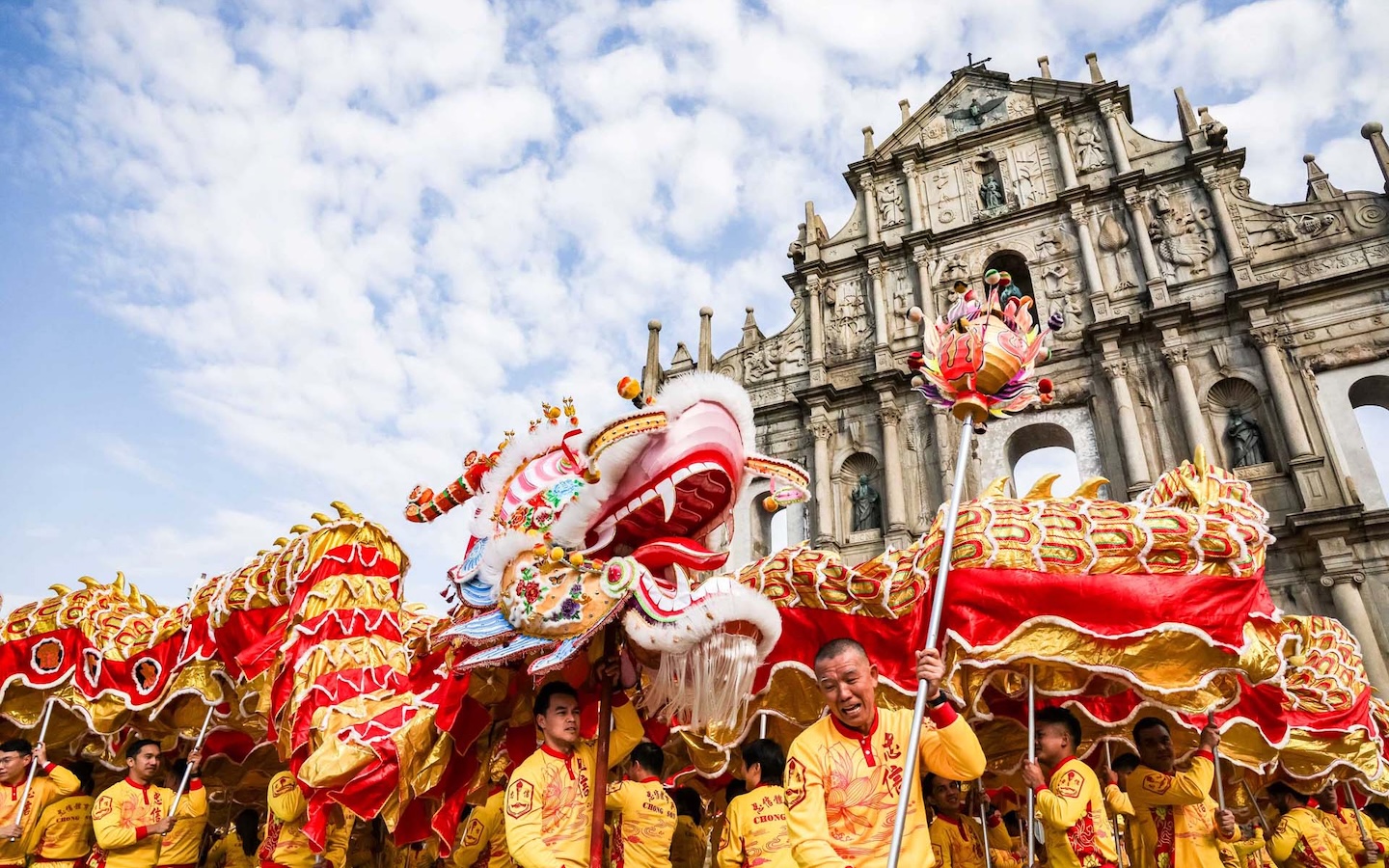
But no exploration of Lingnan culture is complete without the “Southern Awakening Lion”. This integrated art form combines sculpture, painting, and embroidery. The technique for making the lion heads, especially in Shilong, follows strict traditional material choices: bamboo for the structure, paper gauze for the skin, and a handmade starch paste for adhesion. The six-stage process creates a vivid creature that serves as a powerful symbol of community identity and bravery.
As the journey through the Macao Museum concludes at the section titled “The End – Or the Beginning?”, visitors are left with a vital realisation: tradition is not a “rootless sprout”. Its power comes from the creative reinterpretation of an ancient DNA: the colours, forms, sounds, and concepts that have defined Lingnan for centuries.