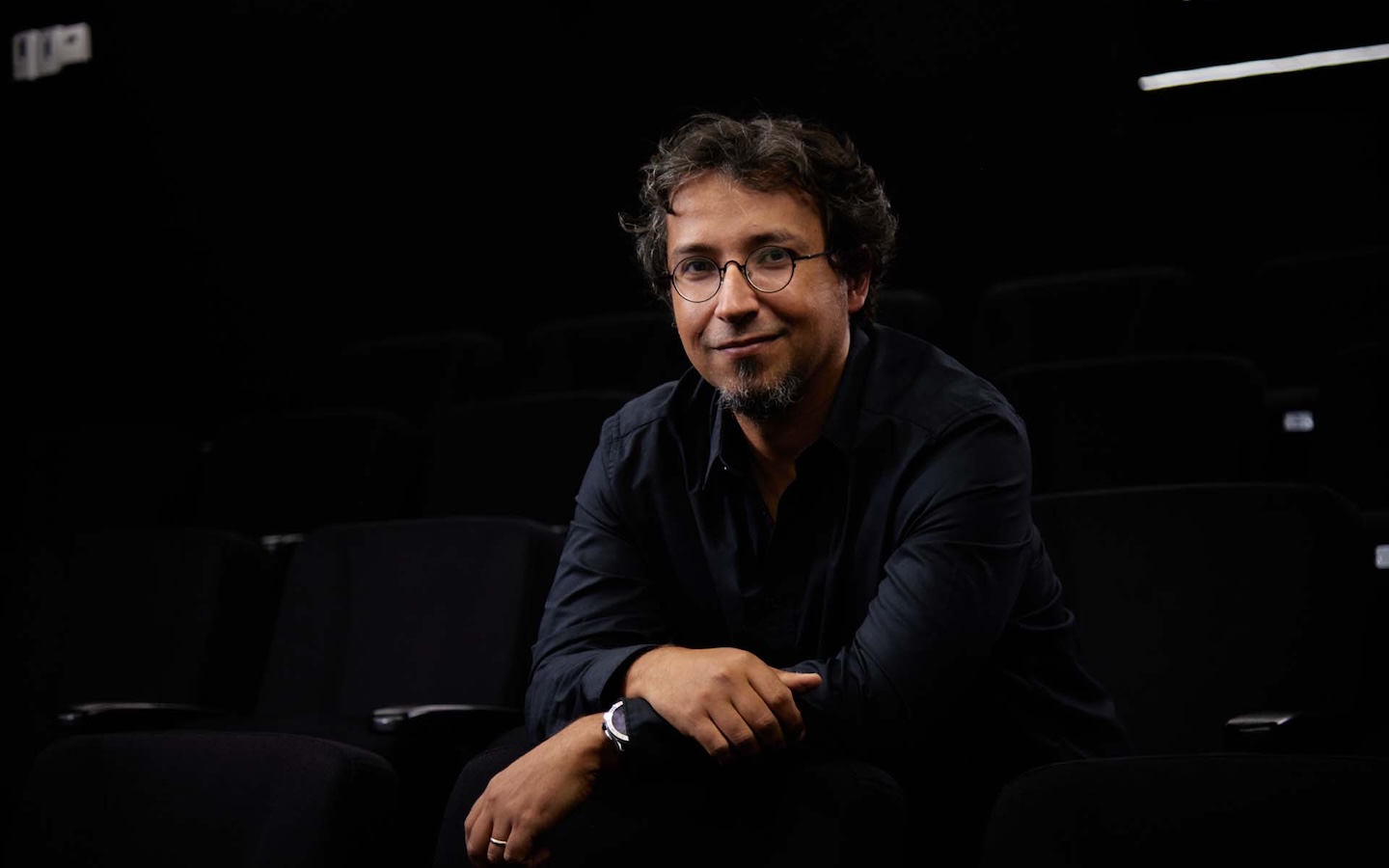
A keen observer, a chronicler of a town in constant metamorphosis, but first and foremost, a storyteller. At 46, Sérgio Perez is steadily earning a reputation as one of Macao’s most exhilarating audiovisual fabulists and for good reason.
Unassuming and soft-spoken, the Macanese filmmaker took home the “Best Event Film” trophy at the International Motor Film Awards, held in London in October, with “Macau Races On”, an eight-minute reel screened exclusively at the Macao Grand Prix Museum.
The film – a love letter to speed daredevils and enthusiasts – portrays the Macau Grand Prix not just as a motorsport spectacle but as a defining heartbeat of the city that draws, from all over the world, competitors and spectators alike. Mr Perez’s sensibility behind the camera infuses it with a rhythmic, almost poetic intensity, but the director claims that the acknowledgement the movie received in the International Motor Film Awards was, nonetheless, unexpected.
“We started submitting our Grand Prix content with ‘The Legend of the Macau Grand Prix’ in 2021, and the film was selected as one of the six nominations for the ‘Best Event Film’ category,” the Macanese moviemaker recalls. “After that, we started to push ourselves to see what we could do to take this content up to the level of projects in the genre that were being produced all over the world. We did this project for the [Macao] Grand Prix Museum, and we were confident about the result but we all felt this would probably be the best that we could do with the time and the resources that we had. I was hopeful, but if you asked me if I expected to win…I didn’t,” the producer adds.
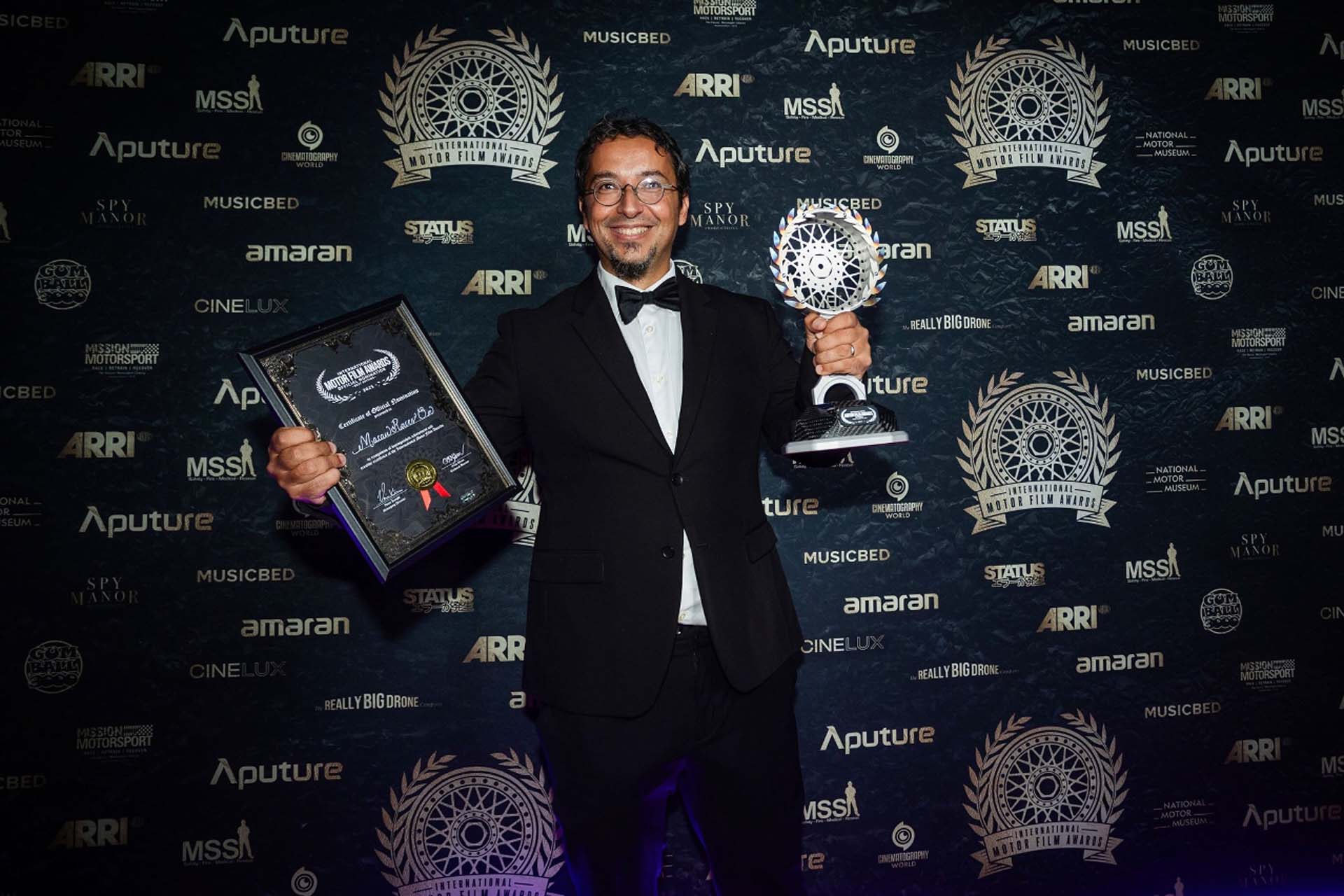
Born and raised in Macao, Mr Perez partially draws his aesthetic approach from a carefree boyhood amongst Portuguese colonnades and the neon-lit façades. Macao’s layered identity – wedged in an East-meets-West everlasting narrative – became the raw material with which he crafts the image of a dynamic, ever-changing urban landscape and captures the soul of a city with a unique cultural tapestry. Some of his most treasured memories come, nevertheless, from the serpentine madness of the local street track, a circuit that twists through picturesque Guia Hill like a dragon uncoiling.
“I don’t see myself as an artist, in the sense that I am not trying to create works of absolute art. I see myself more as an audiovisual storyteller, someone who is lucky enough to depict one of his most endearing personal passions. My father was into racing when he was younger, and he passed that passion to me. The Macau Grand Prix was part of my upbringing,” the filmmaker says.
“Everybody that grew up in Macao has the same sort of memories that I do: the engines roaring on the track, the adrenaline and the excitement taking over the city. All of this had, probably, a great impact on the way I shoot motorsport,” Mr Perez ascertains.
A tale of two cities
Like many filmmakers from small regions, Mr Perez’s formal path to movie making was as twisting and tortuous as the Guia Circuit itself. After finishing secondary education in Macao, he moved to Porto, Portugal, where he spent several formative years immersed in the city’s crisp Atlantic light. The Portuguese sojourn, he claims, was life-changing, both professionally and personally.
“Going to Portugal was very important. You never really know how different you really are, culturally speaking, unless you spend a good while living somewhere else. I have a lot of good friends in Porto, and the city is deep in my heart, but it was in Porto that I found out how different I really was,” the Macanese director explains. “It was there that I began to focus on my individuality and my self-understanding, that I started wondering about what I had to say. What one has to say comes a lot from their upbringing, the traditions handed down by the ancestors, the relationships built over time and the place where a person grew up. You end up expressing your individuality by acknowledging all these aspects. This had a big influence on me joining Dóci Papiaçám [theatre group] later”.
Back in Macao by the early-2000s with a degree from the School of Arts of the Portuguese Catholic University, Mr Perez had a brief stint with public broadcaster TDM before joining the Macao Government Tourism Office’s (MGTO) audiovisual department. Unknowingly, the move would define his career. His professional ascent matched Macao’s own transformation from a sleepy trading post to a fast-paced city, but the then young director soon made a point of showing that there is more to Macao than the electric allure of the city’s entertainment complexes.
Over the past 20 years, Mr Perez has directed dozens of short promotional pieces – fireworks displays, heritage walks, festival highlights – each one quietly uncovering a different facet of Macao underneath the city’s glitzy façade.
“We have lots of tourists, we have some of the biggest casino complexes in the world, some of the biggest resorts, some of the biggest entertainment venues, but, at the same time, we have this traditional, multicultural, very special town and, in a way, we can even see this diversity reflected in the Grand Prix by the people involved in the event,” he points out.
Mr Perez’s portfolio isn’t, nonetheless, confined to asphalt epics and fireworks reels. The filmmaker made his first and most intimate mark in 2008 with “Rua de Macau”, a 45-minute hybrid work that blended fiction and documentary. Shot on a near-zero budget with friends and co-workers as cast, the film follows a young local woman wandering through the city’s old quarters, guided by long-forgotten Cantonese and Patuá songs and longing for a sense of belonging. Not exactly a biopic, the movie mirrors, nonetheless, the director’s own mind-bending trajectory to self-awareness.
“When I returned to Macao, it took me a few months to reconnect with the city. When we return to the place where we grew up, we tend to pursue our past. In my case, it wasn’t necessarily that. I came to Macao and I learned a lot again. When we stay away for a while, we start to embrace things in a much different way,” he acknowledges.
Identity through the lens
Beyond the racetrack, Mr Perez has entrusted much of his energy to preserving something even more fragile than the memory of the Grand Prix heroes and stunts – the Patuá dialect itself. Since 2005, he has served as audiovisual director and producer for Dóci Papiaçám di Macau, the theatre troupe that took in its hands the colossal task of reviving the endangered Macanese creole by performing original, humorous plays.
“A Macanese is naturally multicultural. But being multicultural is much more than just being mixed. It’s, first and foremost, being culturally conscious of the differences. The differences in communicating, but also of different nuances and sensibilities, of different ways of acting, of moving, of talking and even of etiquette,” he claims. “Because they are multicultural, the Macanese are very aware of all these things and that self-awareness is very good for humour. On the other hand, the Macanese community is also a community that creates bridges and humour, naturally, is a good way to connect people.”
Every year, Mr Perez films prologues, epilogues and short companion pieces that are screened before or during the live Dóci Papiaçám performances at the Macao Cultural Centre. No longer than five minutes, these short films have become aesthetic artifacts in their own right, carefully woven to bring together the different communities that embody Macao’s complex cultural mosaic.
He explains: “We try to tell the stories with our audience in mind. Every single year, we know that we have our family and friends in the audience, that we have the Macanese community, but we also have people from different communities, who are paying to watch our latest creations.
“This is something unique in Macao. Year after year, our main purpose is to create something that might bring about a sense of belonging, but also draw different communities together, uniting them in laughter.”
“There is one thing that I would really love to do: a Dóci Papiaçám feature film. But it would have to be done with the same essence of the theatre performances, with the same characters that people love,” he shares.
Mr Perez’s dual obsessions – the breathless pace of cars roaring in Guia Circuit and the melodic charm of a long-fading language – might seem unrelated, but, for him, they are two sides of the same coin: the emphasis on using his audiovisual creations to foster conversations about identity, heritage and belonging. A father of two, Mr Perez isn’t Macao’s loudest voice, but one of the steadiest. Through engine revs and archaic rhymes, he makes sure the city’s most singular and endearing tales don’t fade to black.