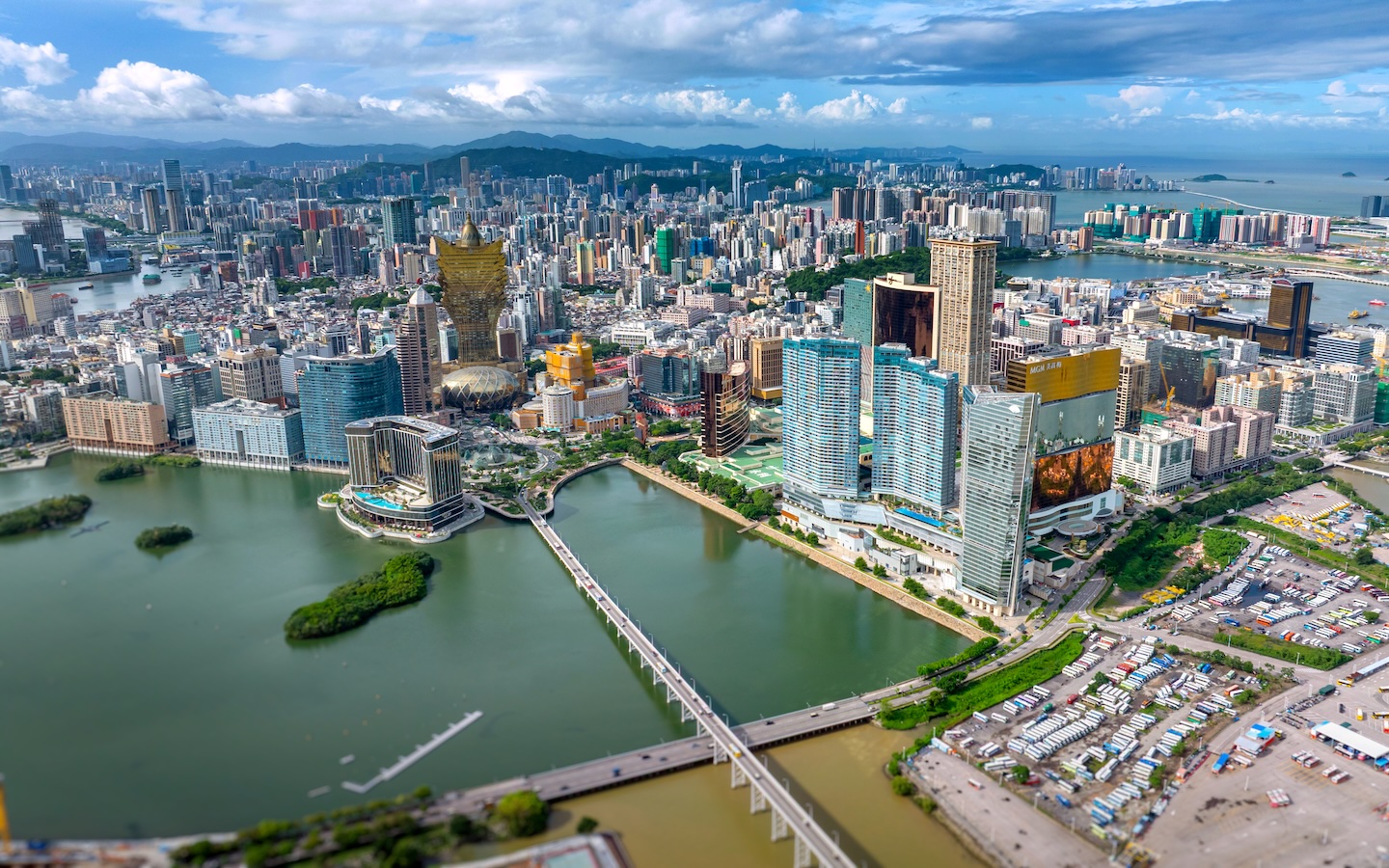
As Macao ushers in 2026, the city is not only turning a page on the calendar but also turning a corner in terms of its development. Two landmark legal reforms, the new Investment Funds Law and a revised Fiscal Code, come into effect in January, reflecting the city’s determination to align with international financial standards and attract capital from both domestic and international markets. The goal is clear: to position Macao not just as a tourism and entertainment hub, but as a credible player in the global finance and business landscape.
The Investment Funds Law (Law No. 11/2025), which replaces the Decree-Law No. 83/99/M enacted in 1999, significantly overhauls the framework for establishing, operating, and supervising investment funds in the Macao Special Administrative Region (MSAR). According to the Monetary Authority of Macao (AMCM), the law was designed to align further with international regulatory practices, enhance investor protection, diversify fund structures, remove operational hurdles, and create a more conducive environment for fund management and capital deployment.
One of the new law’s highlights is its clear definition of roles and responsibilities within the funds industry, including fund managers, custodians, and distributors. Under the new framework, fund managers must be incorporated in Macao and have a minimum capital of 3 million patacas, subject to licensing by the MSAR Government. Banks and financial institutions may also act as fund managers, provided they meet regulatory requirements. The new law also repeals the previous 30-investor and 10-million-patacas minimum subscription thresholds for fund constitution, and scraps the annual supervisory charge of 0.1 percent on net asset value.
The framework also introduces a broader array of fund structures, including contractual funds, joint-stock companies, and limited partnerships, and clearly distinguishes between public and private funds based on fundraising methods. Public funds, intended for retail investors, will require prior regulatory authorisation and are subject to stricter governance standards. In contrast, the issuance of private funds targeting professional investors – defined as individuals with assets of at least 8 million patacas or institutions with 40 million patacas in assets – will only need to notify the regulator.
This overhaul reflects the Government’s recognition that the previous legal framework was “outdated and insufficient” to support the development of a competitive, internationally aligned funds industry in Macao, Calvin Tinlop Chui, co-managing partner at local law firm Lektou and president of the Macao Financial Law Association, told Macao Magazine.
“[The law] reflects a commitment to aligning Macao’s financial sector with international best practices while addressing local market needs and supporting Macao’s strategic positioning as a financial services platform between China and Portuguese-speaking countries,” Mr Chui explained.
He added that the new framework will play a key role in advancing Macao’s wealth management capabilities and the broader development of the city’s modern financial sector. Modern finance is among the four nascent sectors identified by the Government to facilitate the city’s economic diversification effort.
Regulations and tax incentives
Another standout provision under the new framework is the introduction of a re-domiciliation mechanism, allowing foreign funds to relocate to Macao without losing their legal identity or contractual continuity. Mr Chui said this would be instrumental in integrating Macao’s funds industry into global markets and attracting international sponsors looking for a gateway into the region.
While the law sets out a broad regulatory framework, its full implementation hinges on forthcoming secondary legislation and circulars from the authorities, including investor qualifications and other technical standards. “[These] will be critical to realising the law’s objectives and ensuring Macao’s competitiveness as a fund management centre,” he noted.
Amidst this legislative overhaul, Macao’s funds industry remains in its infancy. As of November 2025, only three investment fund management companies had been authorised to operate in the city. Just one public fund had been launched, and two private funds had completed the filing process, according to AMCM data.
Of the three fund management firms, only one has started operations. Bernardo Alves, founder and chairman of A&P Investment Fund Management Co. Ltd. – the firm behind the city’s first pataca-denominated public fund – agrees that the new law could help accelerate the internationalisation of Macao’s funds industry and develop the local financial ecosystem by clearly defining the roles and requirements of industry participants. “The Government has taken the first step by implementing clear rules,” Mr Alves stated. “For markets, transparency and clarity are always key as these are the main drivers of investor confidence.”

Another critical element in building a viable funds ecosystem is taxation. “Clear guidance on tax treatment, including income and capital gains, is essential so managers and investors can understand the fiscal implications from the outset,” he observed.
The 2026 Policy Address, delivered by MSAR Chief Executive Sam Hou Fai in November, confirmed the Government’s intention to introduce competitive tax incentives for investment funds. These measures are expected to attract both domestic and foreign capital to establish fund management companies in Macao.
Untapped capital
Drawing on conversations with overseas fund managers, Mr Alves noted they see opportunities in Macao, driven by the substantial pool of untapped capital, namely fixed deposits held within the local banking system. In October 2025, resident deposits rose 7.1 percent year-on-year to 815.55 billion patacas, while non-resident deposits grew 7.4 percent to 340.70 billion patacas. Adding public sector deposits, total deposits in Macao’s banking sector reached nearly 1.39 trillion patacas as of October-end, according to AMCM figures.
According to Mr Alves, unlocking this pool of capital will require the MSAR Government and other stakeholders to advocate public education on fund products and investment vehicles beyond simply introducing a new law. “Financial literacy in Macao is still relatively low, and that’s a challenge that needs to be addressed. It’s important to educate the population that investment funds aren’t inherently risky, as there are different structures tailored to different needs,” he remarked.
The development of Macao’s funds ecosystem to attract global players will take time. “Building the [funds] ecosystem will require a long-term commitment. For any firm entering the market, especially foreign players, it’s not just about short-term profit… because in a new market, that simply doesn’t happen overnight,” he added.

In his November address at the Legislative Assembly, Macao’s Chief Executive also outlined key priorities for implementing the Investment Funds Law in the year ahead. In addition to introducing tax incentives, the Government plans to engage with Portuguese- and Spanish-speaking countries, as well as stakeholders in the Chinese mainland, to promote the new legal framework. It will also encourage reputable fund managers operating in neighbouring Hengqin to establish a presence in Macao.
Furthermore, two newly Government-led funds, an industrial investment fund and a technology guidance fund, could also play a role alongside the new legal framework. Aimed at supporting projects in high-tech and emerging industries, these Government-led funds may collaborate with private funds to co-invest in future initiatives that help drive Macao’s economic diversification agenda, Mr Sam said.
New tax regime
Macao is also introducing another significant legal reform, via a revised Fiscal Code. The Government has said the updated framework will enhance the local business environment and improve Macao’s competitiveness by providing a unified, transparent, and internationally aligned tax system.
Among the key changes is Macao’s formal adoption of the territoriality principle, meaning the Government will generally tax only income, property, or consumption generated within the city. Foreign-sourced income and other offshore activities are exempt, effectively lowering the tax burden for establishing holding companies in Macao.
Another major development is the introduction of transfer pricing principles, a first for Macao. Accompanied by the corresponding administrative regulation, Transfer Pricing Regulation, also effective from January 2026, this change addresses cross-border transactions between related entities.
Under the new rules, transfer pricing refers to the valuation of commercial or financial transactions between a taxpayer in Macao and its related parties in other tax jurisdictions. These transactions must comply with the “arm’s length principle,” meaning they should be priced and conducted as if between independent, unrelated parties under market conditions.
If a Macao taxpayer or its related parties fail to comply with the “arm’s-length principle,” the new code gives power to the city’s Financial Services Bureau to apply the transfer pricing methods to make necessary tax assessments and adjustments for such transactions.
“The concept of transfer pricing is not new, but it has only now been introduced in Macao in response to evolving development needs,” said Lei Iun Mei, president of the Macau Society of Certified Practicing Accountants. “It regulates the pricing of related-party transactions to prevent tax revenue loss caused by deviations from market value.”
“This principle supports cross-border tax cooperation and helps guard against revenue erosion in international transactions, aligning [Macao] with global tax governance standards,” she explained.
From Ms Lei’s perspective, the new code not only improves the local tax system but also strengthens Macao’s role in regional cooperation and its integration into broader national development strategies. Nonetheless, she cautions that it will take time for businesses and the professional services sector to adapt to the new framework during the initial phase of implementation.
To support the implementation of the new Fiscal Code, the Financial Services Bureau launched an extensive promotional campaign throughout 2025. The initiative included a series of briefing sessions, as well as the launch of a dedicated Fiscal Code website, which addresses frequently asked questions and offers guidance to businesses, professionals, and the general public trying to navigate the city’s updated tax landscape.

Simple and low tax system
The code also introduces several key common tax-related concepts, including tax residents, tax agents, and permanent establishments. Under the new rules, a tax resident in Macao refers to either a legal person with a registered office or place of effective management in the city, or a natural person residing in Macao for 183 days or more during a tax year. This definition has been in effect since the start of 2025.
Meanwhile, a tax agent is defined as any individual or entity authorised to act on behalf of a taxpayer in exercising their rights and fulfilling their obligations under the tax regime.
The code also clearly defines what constitutes a permanent establishment. Any fixed place of business used for commercial or industrial activities – including offices, factories, workshops, mines, oil or gas wells, quarries, or facilities for exhibitions, conferences, seminars, and trade fairs – will fall under this category. Both local and foreign entities with a permanent establishment in Macao will be required to pay complementary tax on income attributable to that establishment.
Analysing the reform in a recent report, the Hong Kong and Macao offices of PricewaterhouseCoopers (PwC), one of the world’s leading professional services firms, described Macao’s new Fiscal Code as a modernisation of the city’s tax system. The code incorporates elements of international standards, particularly those set by the Organisation for Economic Co-operation and Development (OECD), while adapting them to the city’s unique economic context.
The PwC report noted that the code consolidates existing legislations into a single framework, clarifying tax norms and aligning them with Macao’s broader development goals. The firm believes this creates a more attractive and globally competitive environment for investors and businesses.
“Given that the current general tax rate of Macao’s complementary tax is 12 percent [or less], which is generally lower than that of neighbouring jurisdictions, and with no turnover tax and a simple tax system, the tax reform will further promote the establishment of cross-border holding structures, making Macao an ideal investment platform,” PwC stressed.
“With Macao closely connected to Hengqin and other cities in the [Guangdong-Hong Kong-Macao] Greater Bay Area, enterprises may increasingly consider using Macao-based companies as vehicles for investments in the region,” the institution added.