While Macao may be constantly evolving as a dynamic urban centre, visitors can still find pockets of calm away from the city’s fast pace and step back in time. Tucked within the St Lazarus District, the Albergue da Santa Casa da Misericórdia – now better known as Albergue SCM – is one such sanctuary.
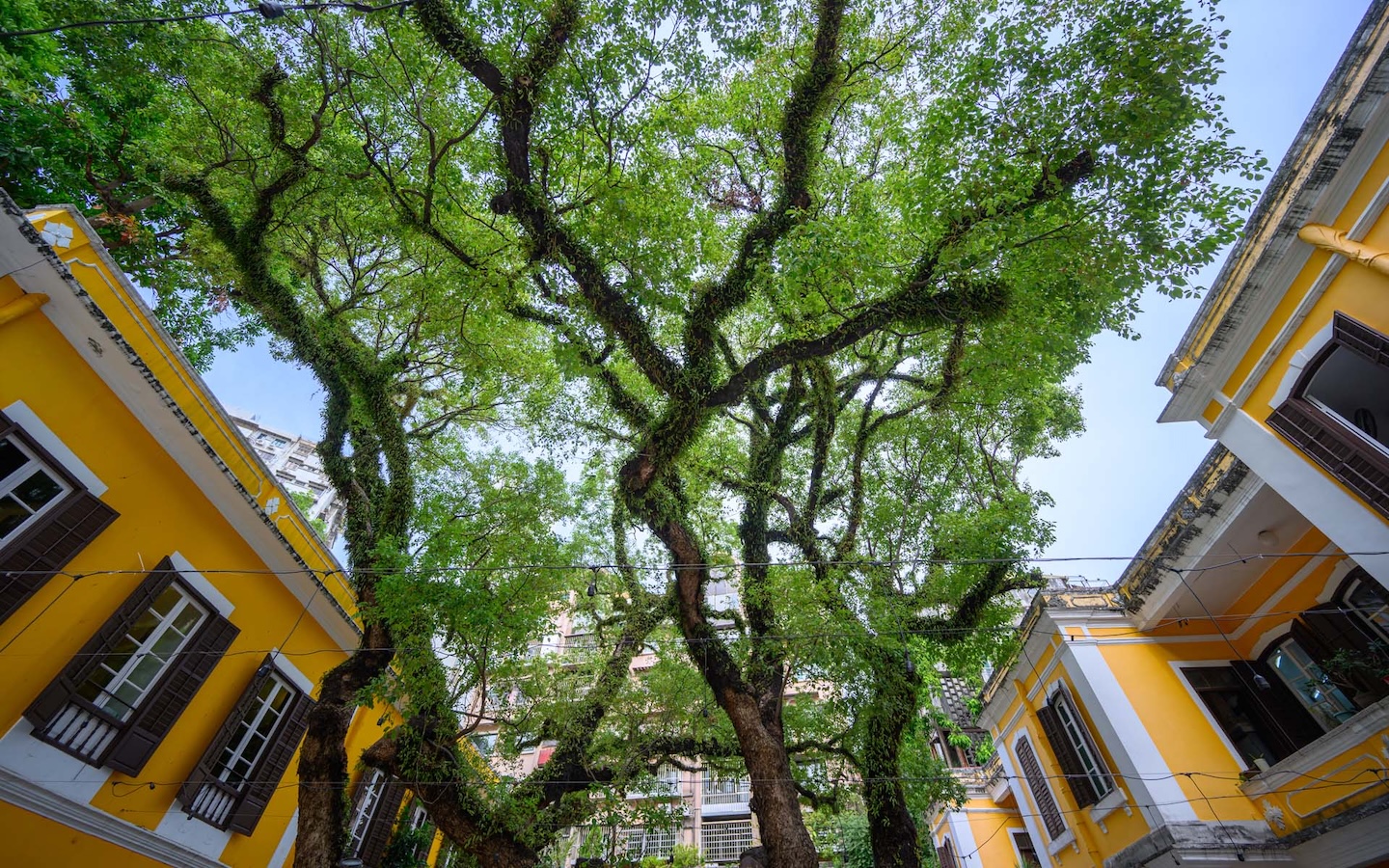
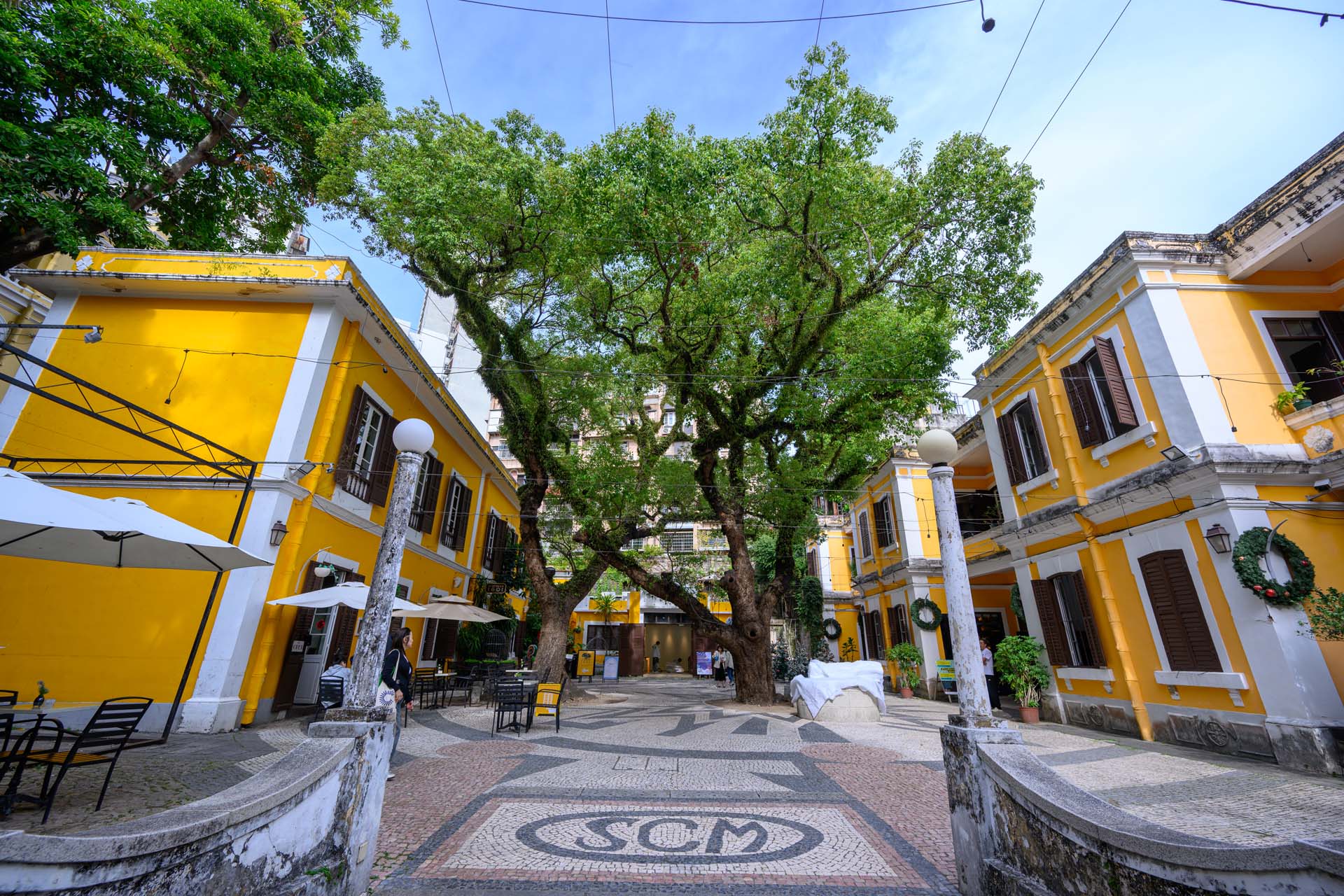
The bright yellow façades of Portuguese-style buildings frame a leafy courtyard dominated by two grand camphor trees whose branches have sheltered generations. Once a refuge for those displaced during the Second World War, as well as for the poor, the site has since reinvented itself as a cultural and creative hub. Today, visitors arrive not in search of shelter but to view exhibitions, attend workshops, explore traditional festivals, or enjoy wine after a meal in its Portuguese restaurant.
The Albergue belongs to the Macau Holy House of Mercy (‘Santa Casa da Misericórdia’ in Portuguese), a brotherhood founded in 1569 by D. Belchior Carneiro, the city’s first Catholic bishop. For centuries, the organisation has carried out charitable work, establishing St Raphael’s Hospital – the first Western-style hospital in China – alongside a leprosarium, elderly homes and orphanages.
The roots of St Lazarus
The Albergue complex sits within the protected St Lazarus District. The district is named after the leprosarium once operated there by the Holy House of Mercy. The “lazar house” closed in 1896, when residents were relocated to a new facility in Ká Hó, Coloane.
In the late 19th century, officials introduced Macao’s earliest urban planning initiative in the area, aiming to create an orderly grid of homes and streets. Based on a design by Spanish architect J. M. Casuso, the plan marked the city’s first attempt at structured urban development.
Around the same period, a Chinese philanthropist is believed to have donated land in the St Lazarus District to the Holy House of Mercy. Construction for a shelter for elderly women proceeded gradually: the earliest building followed the donation, with two more added between 1910 and 1940. Locals later came to know the complex as the “Old Ladies’ House”.
According to renowned Macao architect Carlos Marreiros – himself a member of the Holy House of Mercy brotherhood – the oldest section of the complex stands to the right of the entrance. The building on the left, now home to the restaurant Albergue 1601, dates from around 1910 to 1920. Directly opposite the courtyard stands a detached cottage built between 1930 and 1940.
The first part was built to accommodate the people living at the complex, he explained. Later, as there was a need to provide food in large quantities, a kitchen was constructed, which is the block on the left of the entrance. That kitchen served not only the residents of Albergue but also supplied other properties of the Macau Holy House of Mercy.
Albergue ceased operating as a home for the elderly in the early 2000s, when its residents were relocated to the Our Lady of Mercy Home for the Elderly, also run by the Holy House of Mercy.
In 2001, the local dance-theatre group Comuna de Pedra briefly moved in, hoping to transform the complex into an arts hub. Their stay was short-lived due to structural safety issues. “It was really dangerous at the time,” recalled Mr Marreiros.
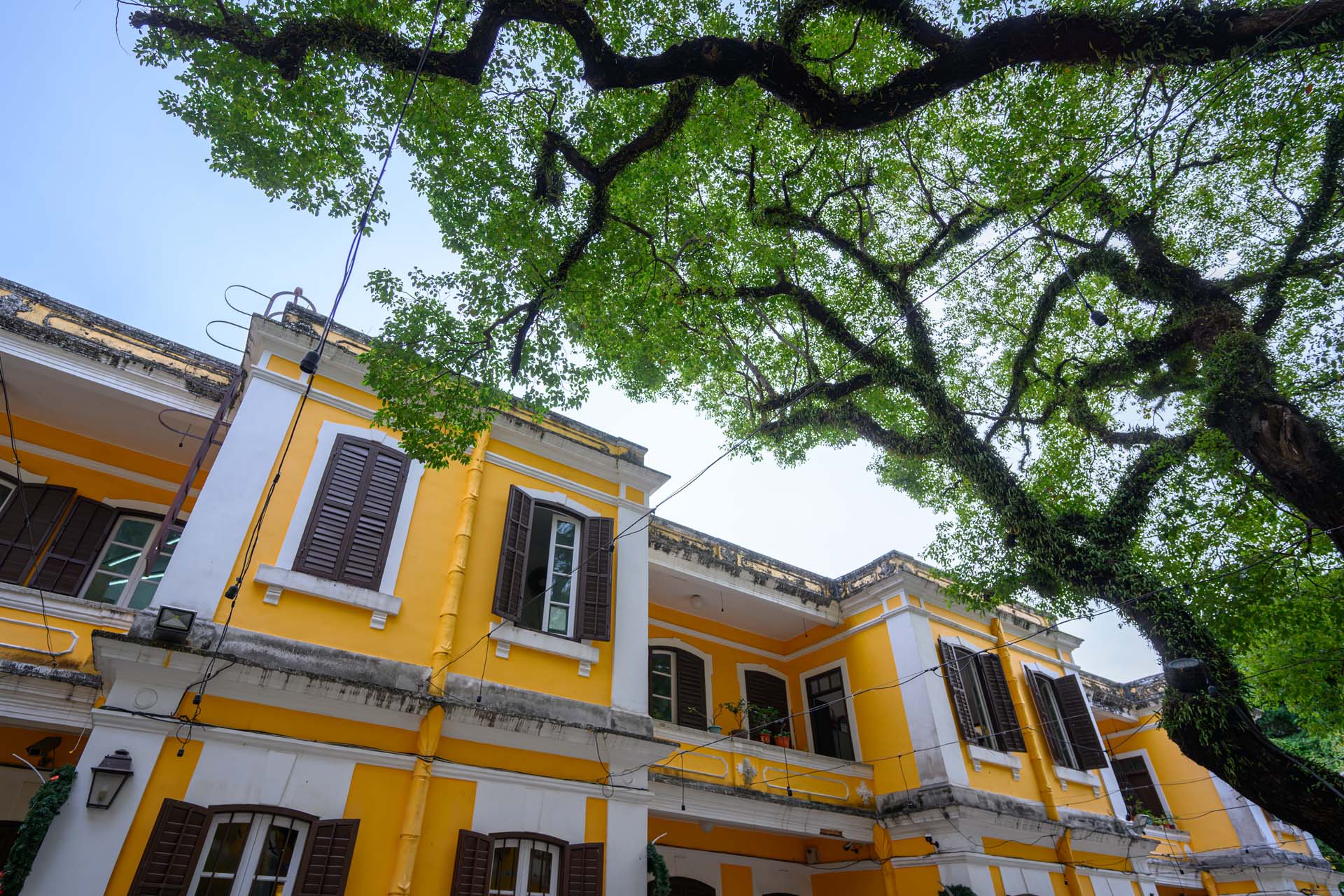
In 2003, Mr Marreiros took the lead in restoring the complex, working with engineers Gilberto Gomes and José Silveirinha to stabilise the buildings. The goal was to solidify the structure while preserving as much as possible. “The yellow colour on the walls remained the standard Portuguese yellow,” Mr Marreiros said.
The initial restoration focused solely on reinforcing the site. “The Holy House of Mercy said the key was to make the venue safe. As for its future use, it was still unknown.”
Various proposals – including converting the site into a hotel – were considered before a different vision took hold.
A new chapter for Albergue
The venue now operates under the brand ‘Albergue SCM / ALBcreativeLAB’, serving as a centre for art, design and cultural exchange. Officially established in 2009, the concept had already begun to take shape a few years earlier. “We were considering other possibilities around 2007,” Mr Marreiros said. “I thought: ‘What if we build a creative hub here?’ Many people at the time were already talking about cultural and creative industries in Macao.”
After securing approval from the Holy House of Mercy, Mr Marreiros and two other members of the brotherhood established Bambu – Sociedade de Artes Limitada to manage the Albergue complex. Further renovation took place, but the original layout remained intact: buildings flanking the main gate, the twin camphor trees, and a smaller structure at the back.
Today, the right-hand building houses office space, a gift shop, an exhibition gallery and designers’ studios. The restaurant operates on the left, while the rear building hosts exhibitions, workshops, seminars and lectures.
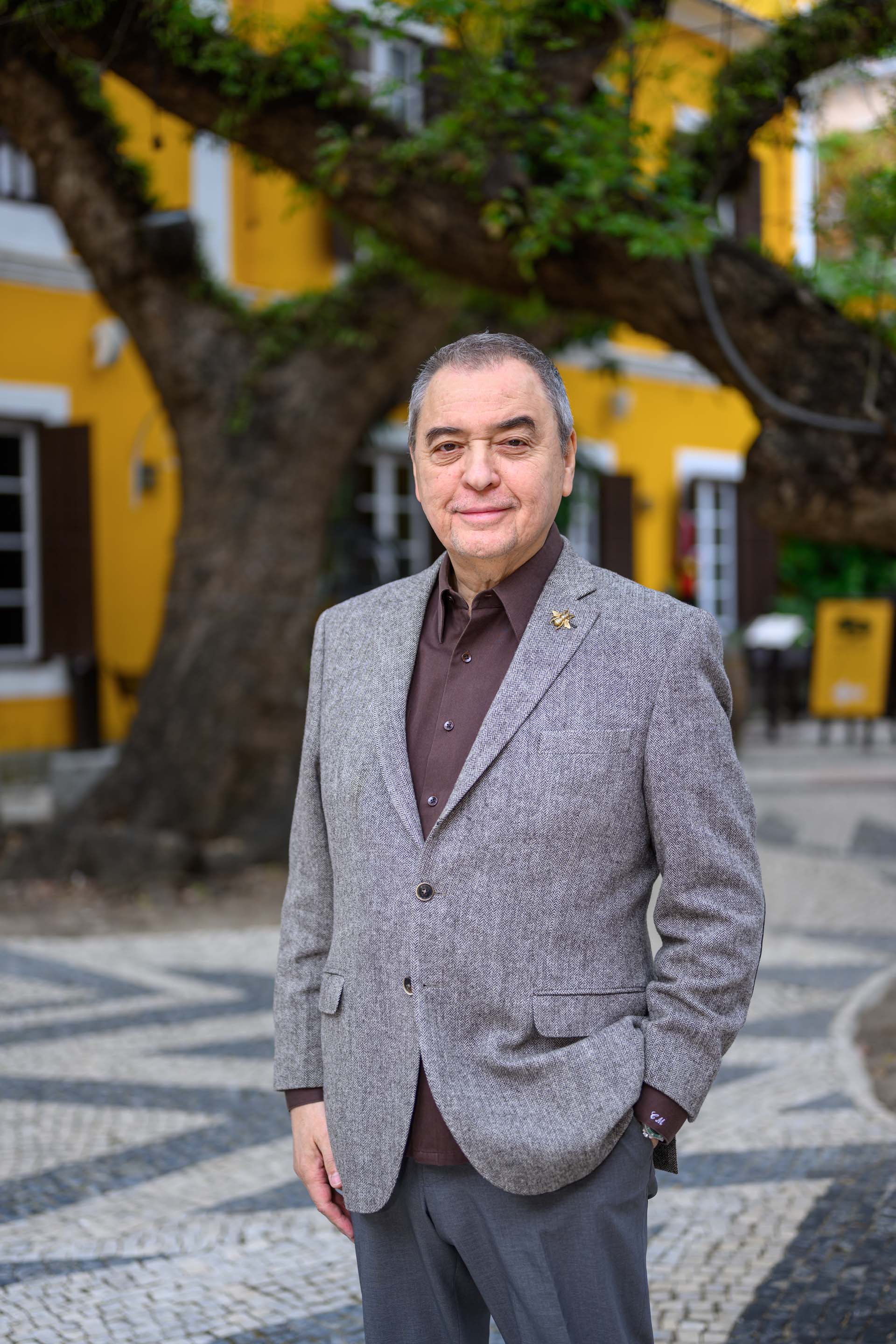
“We also organise activities during festivals like the Mid-Autumn Festival and Halloween, mainly for the neighbourhood. People are happy to gather here: we have some food and raise some charity funding for the elderly,” said Mr Marreiros.
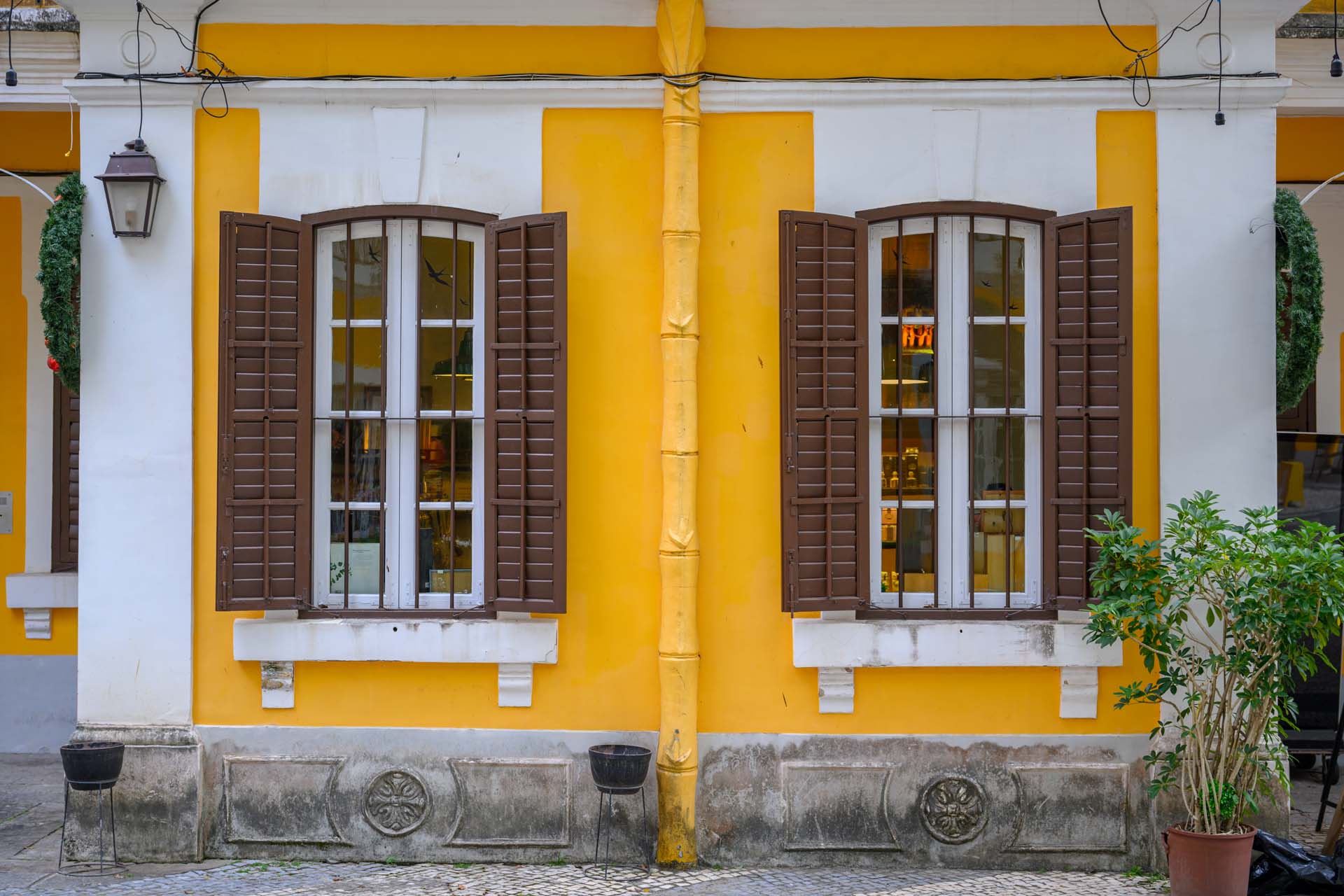
Albergue’s architectural character is carefully preserved. “The buildings have Portuguese elements, and the renovation maintained these,” he said. But there are also Chinese features. “If you look closely at the drainage pipes, they resemble bamboo, and the plastering uses a traditional Lingnan technique” from southern China, Mr Marreiros said.
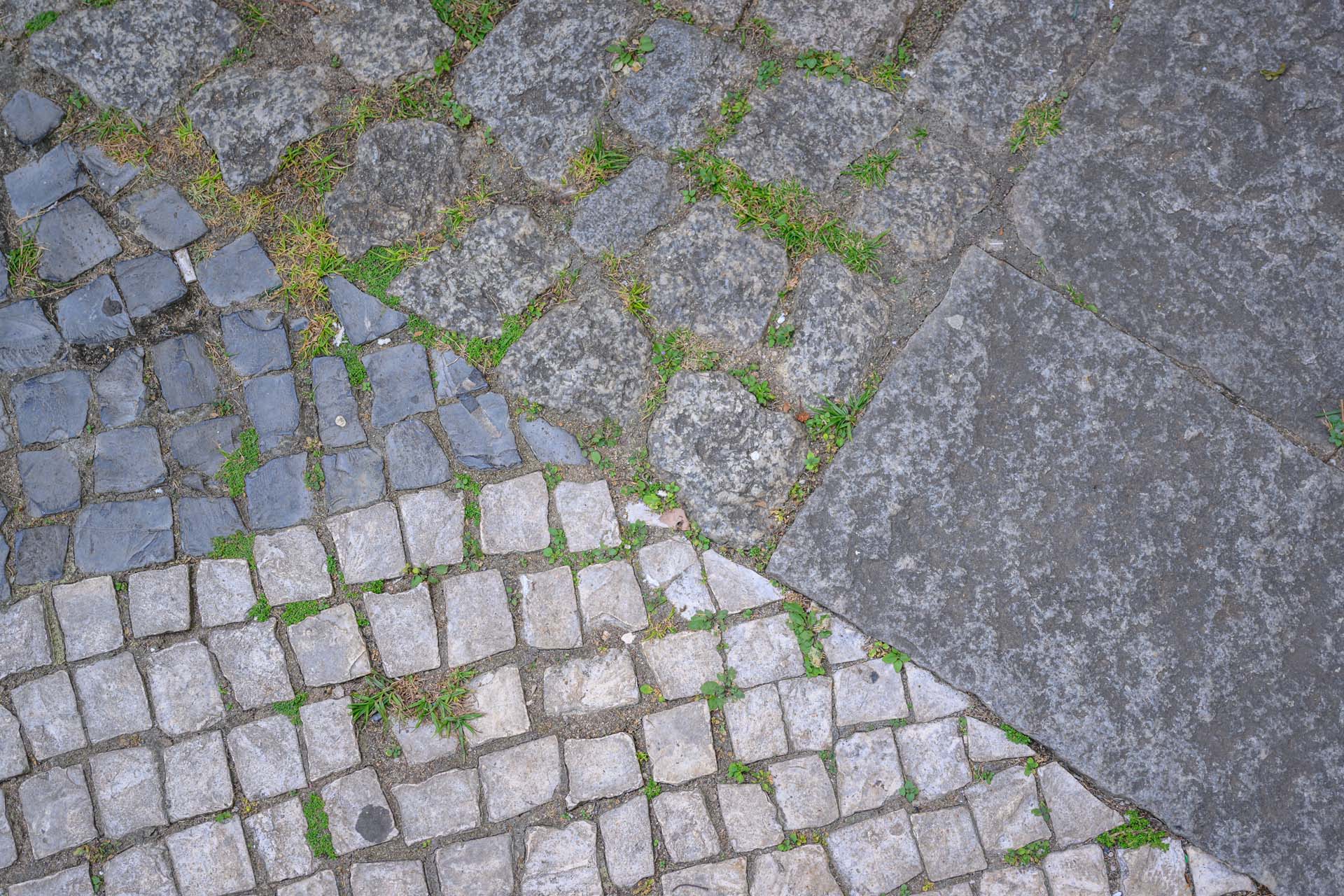
Distinctive pavements further reflect the site’s layered identity: Portuguese-style paving marks the entrance, larger Chinese-style stones are used near the buildings, and other types traditionally used in Macao are featured throughout.
Together with the surrounding neighbourhood, Albergue SCM creates a vivid scene of cultural fusion – an embodiment of Macao’s centuries-long encounter of worlds. For Mr Marreiros, this is a place of culture and creativity. He hopes to see more young people contributing to the district’s future. “I really want this neighbourhood to become a space where young people gather, and a place where culture and creativity can grow.”