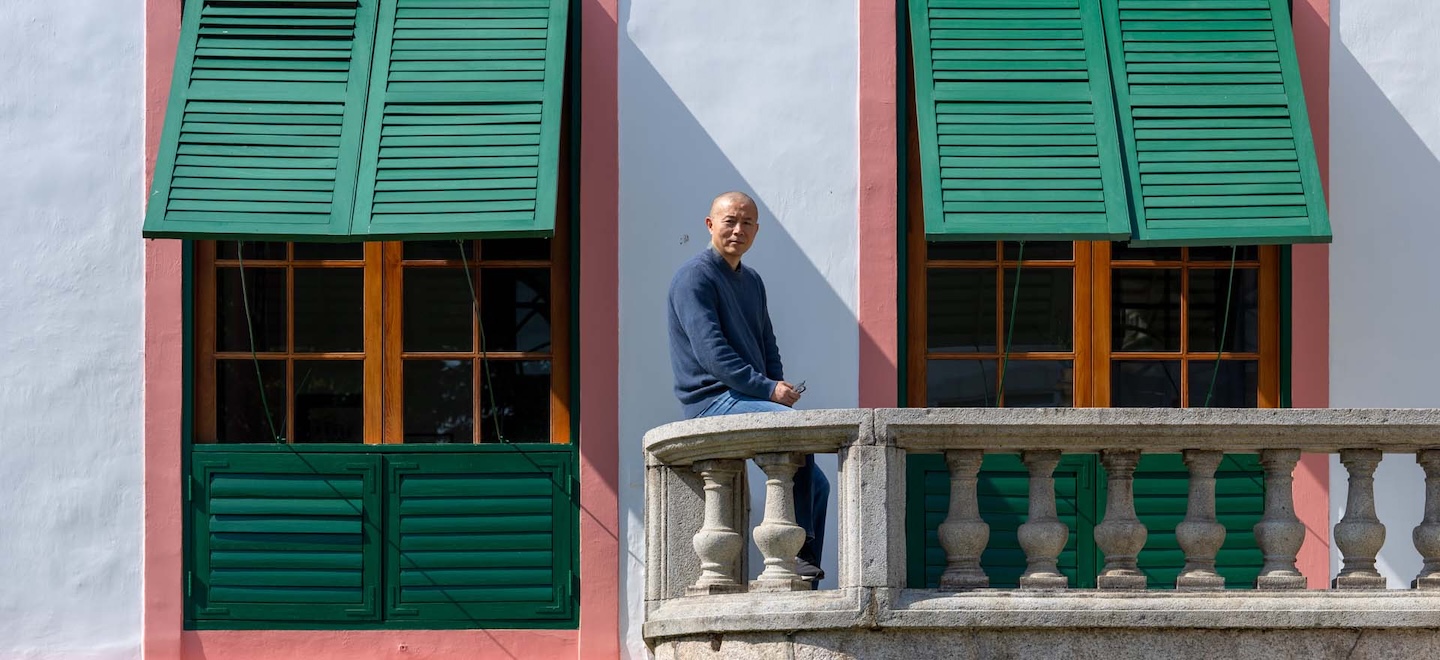
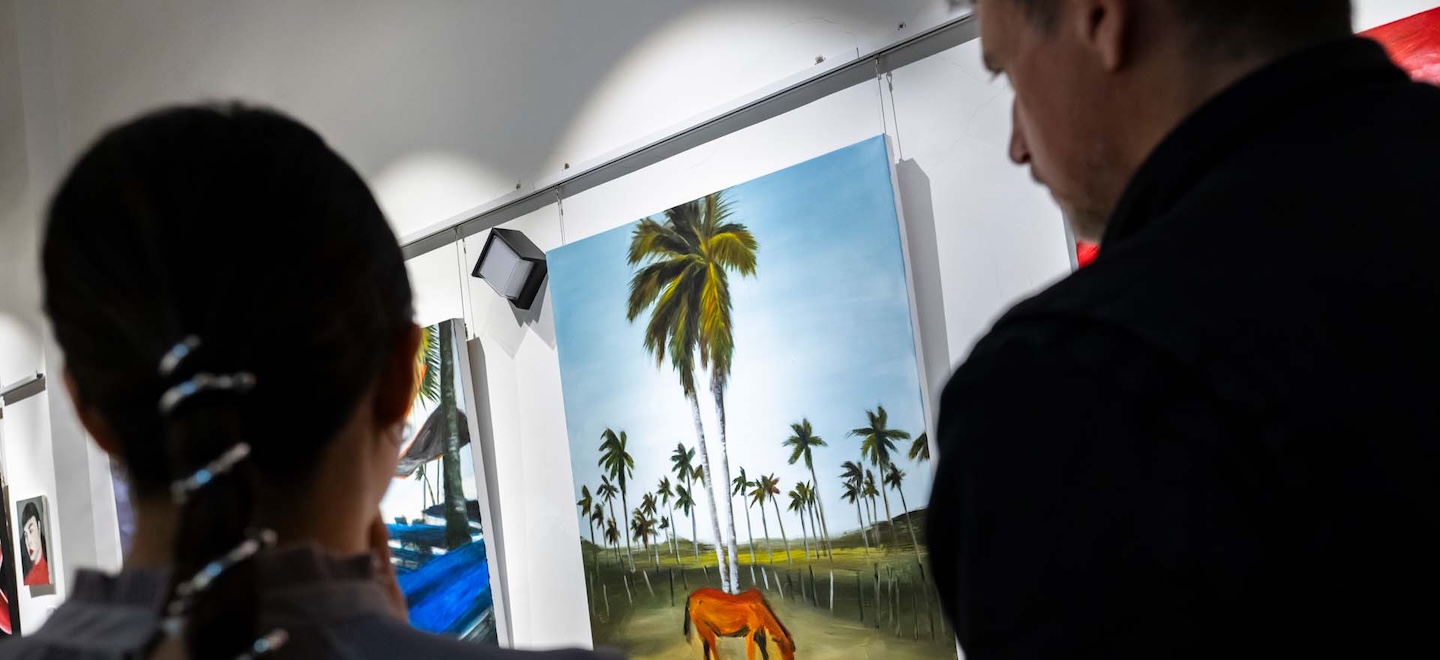
It is a quiet afternoon in Old Taipa Village. Pastel façades glow in the sunlight as the streets hum with life: tourists pause for photographs while locals slip into cafés where Chinese and Portuguese flavours mingle. Amid the narrow lanes and alleyways of this quarter steeped in heritage stands the Taipa Village Art Space, run by the Taipa Village Cultural Association, which this year celebrates a decade of placing art at the heart of the community.
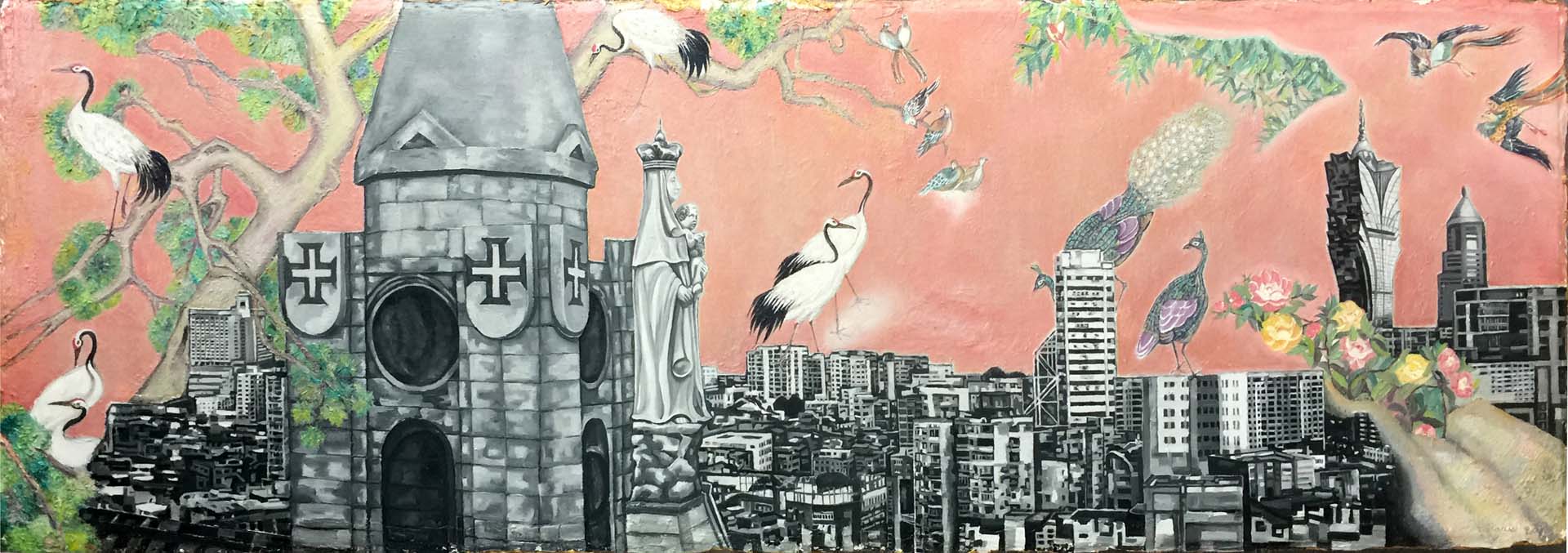
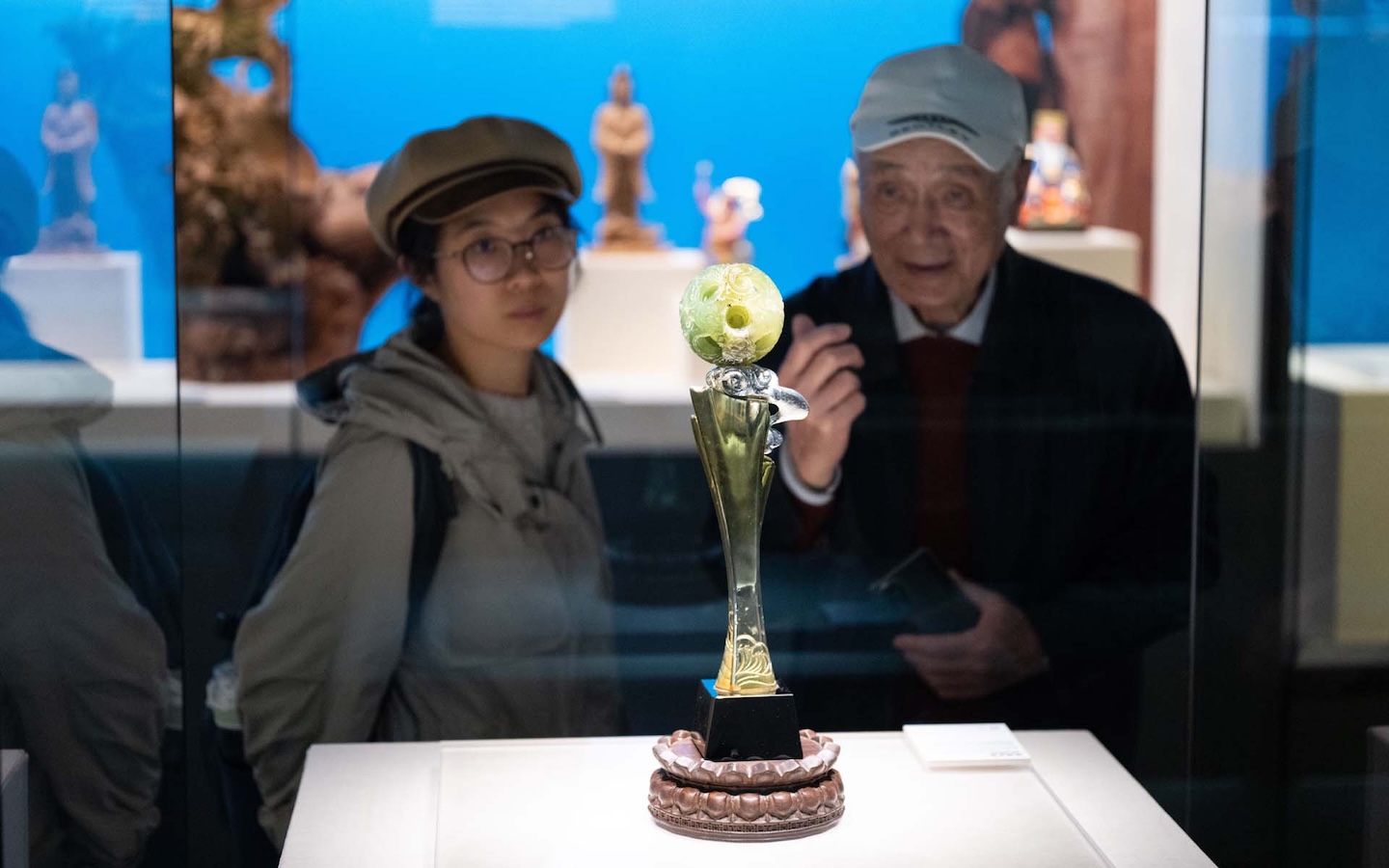
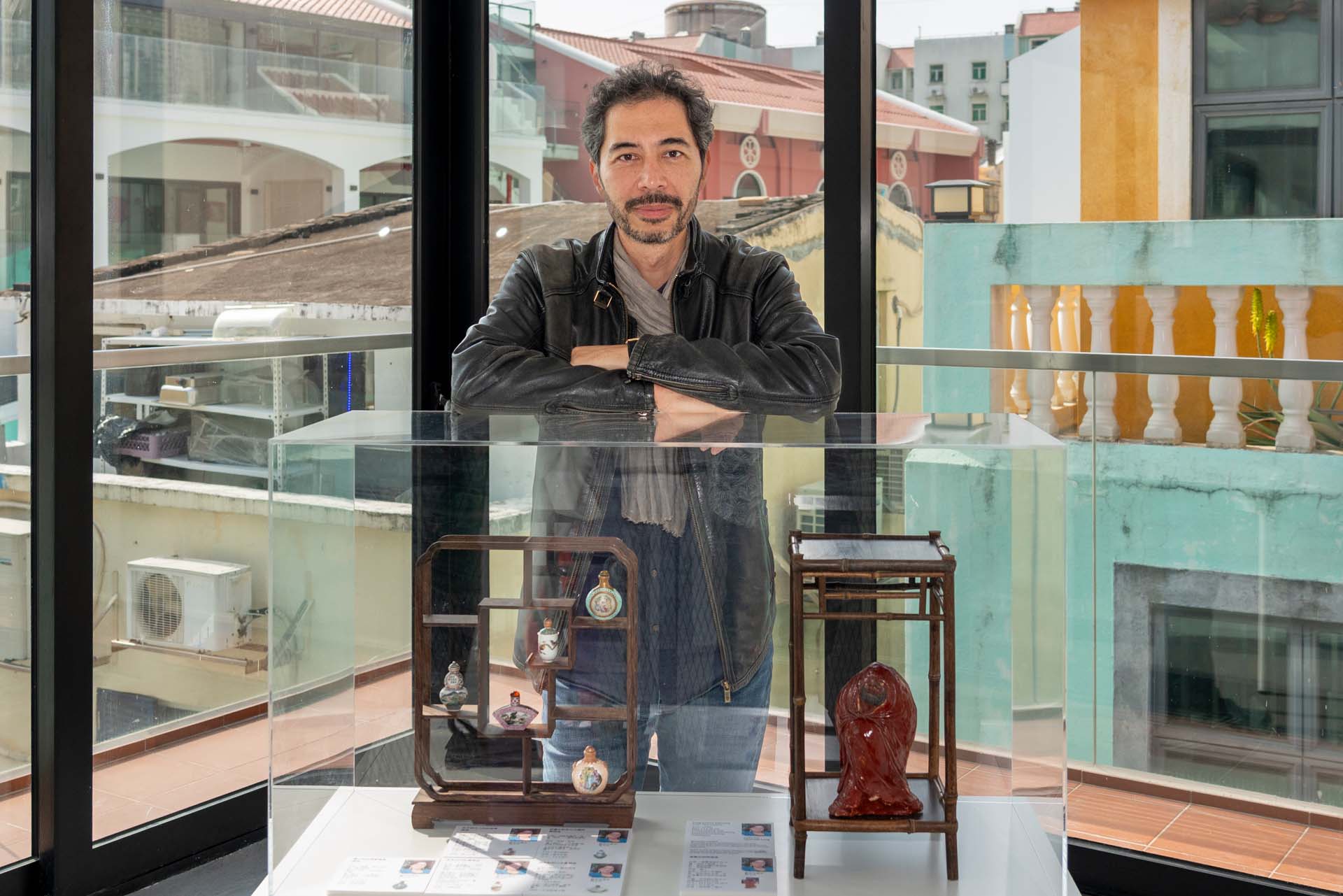
On show at the gallery until May 15 is “Show-Off 4.0: Three Collectors’ Exhibition by José Isaac Duarte, Luís Pessanha and Chao Iok Leng”. The “Show-Off” series presents selections of works amassed over the years by local art collectors. This edition brings together economist José Isaac Duarte, legal consultant Luís Pessanha and artist Chao Iok Leng. The premise is simple yet compelling: inviting residents of Macao to share their private art collections with the public, while reflecting on what they collect, why they do so and the long-term meaning of that passion.
In essence, that idea captures the spirit of the Taipa Village Cultural Association: bringing art and community closer together – not only exhibitions, but experiences; not only events, but encounters.
Founded in 2016, the association emerged from a straightforward yet ambitious vision – to extend the Old Taipa Village experience beyond dining and tourism and establish a cultural pulse for the neighbourhood. The aim was to position the district as an artistic destination within Macao.
“We wanted visitors to stay longer, to discover hidden gems, to feel the artistic spirit of the village,” Pamela Chan Weng Sun, vice-president of the association’s board, told Macao Magazine. Reaching the 10-year mark, she added, is about more than longevity. It is about the connections formed along the way.
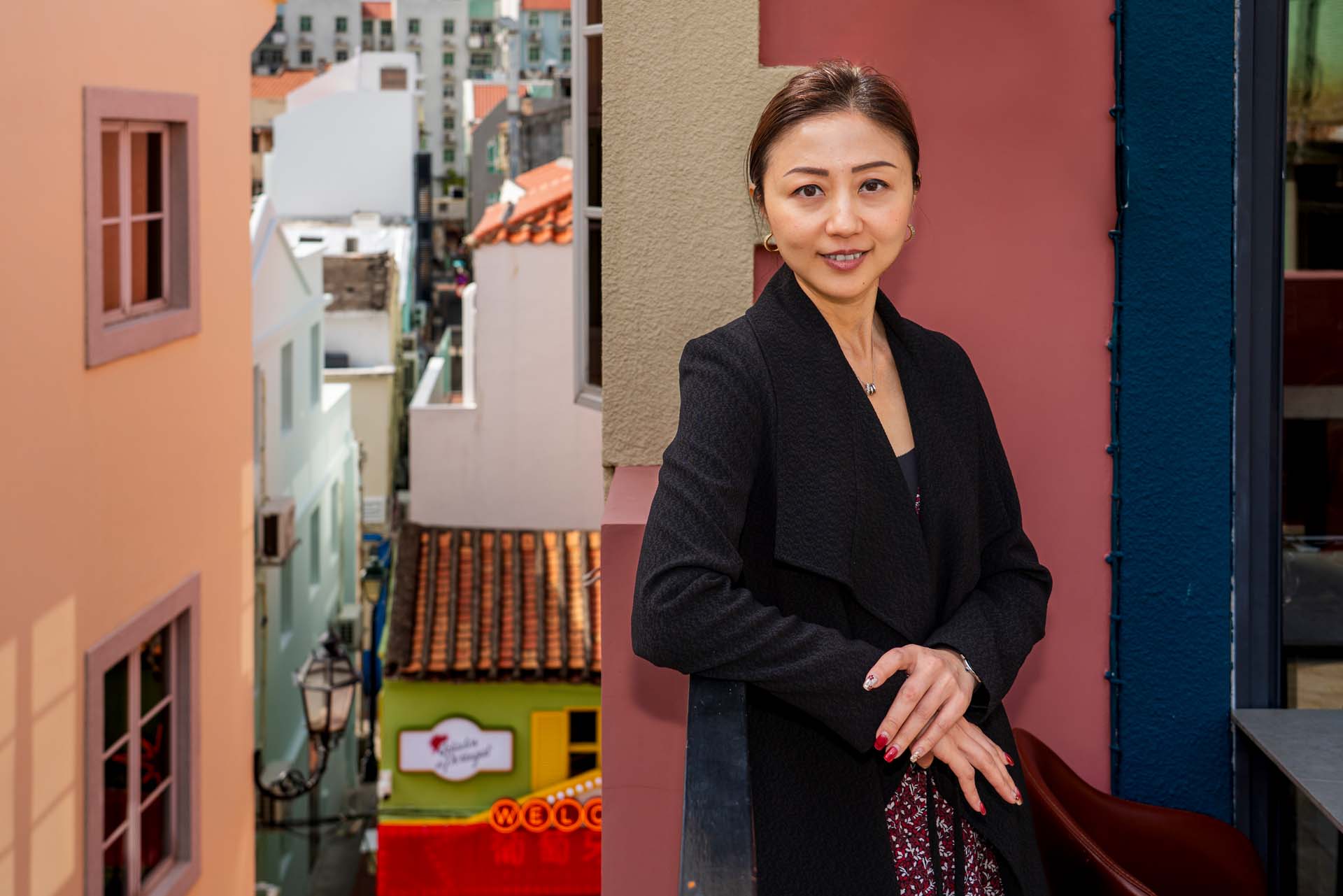
The association’s board president, João Ó, expresses a similar view, describing Old Taipa Village as “a location unlike any other in Macao”. Being involved in the organisation’s work, he says, has been both a “privilege” and a “deeply educational experience” – a decade spent discovering how art can reshape a place.
The first steps
From the outset, the association set an ambitious tone. To mark the formal opening of the Taipa Village Art Space in October 2016, it invited local graffiti pioneer P.I.B.G. to present his first solo exhibition. The gallery has since relocated – it now sits on Rua dos Mercadores – but that moment remains a “meaningful and symbolic” milestone, according to Ms Chan.
A steady rhythm soon followed, with around four exhibitions each year. Over the past decade the association has organised more than 40 exhibitions and about 15 community events, adding a new cultural dimension to Old Taipa Village.
The curatorial approach has also been distinctive. Rather than competing with established art institutions, Mr Ó explains the association focused on emerging contemporary artists. “Our job has been to find new talents with motivation but no platform,” he said.
Among the early discoveries was Portuguese-American conceptual artist and photographer Hugo Teixeira. Based in Macao as an English-language teacher, he first exhibited at Taipa Village Art Space in early 2017 and returned in 2020. His work is currently on display at the Guangdong Museum of Art in Guangzhou as part of the Guangzhou Image Triennial 2025, which runs until May 5.
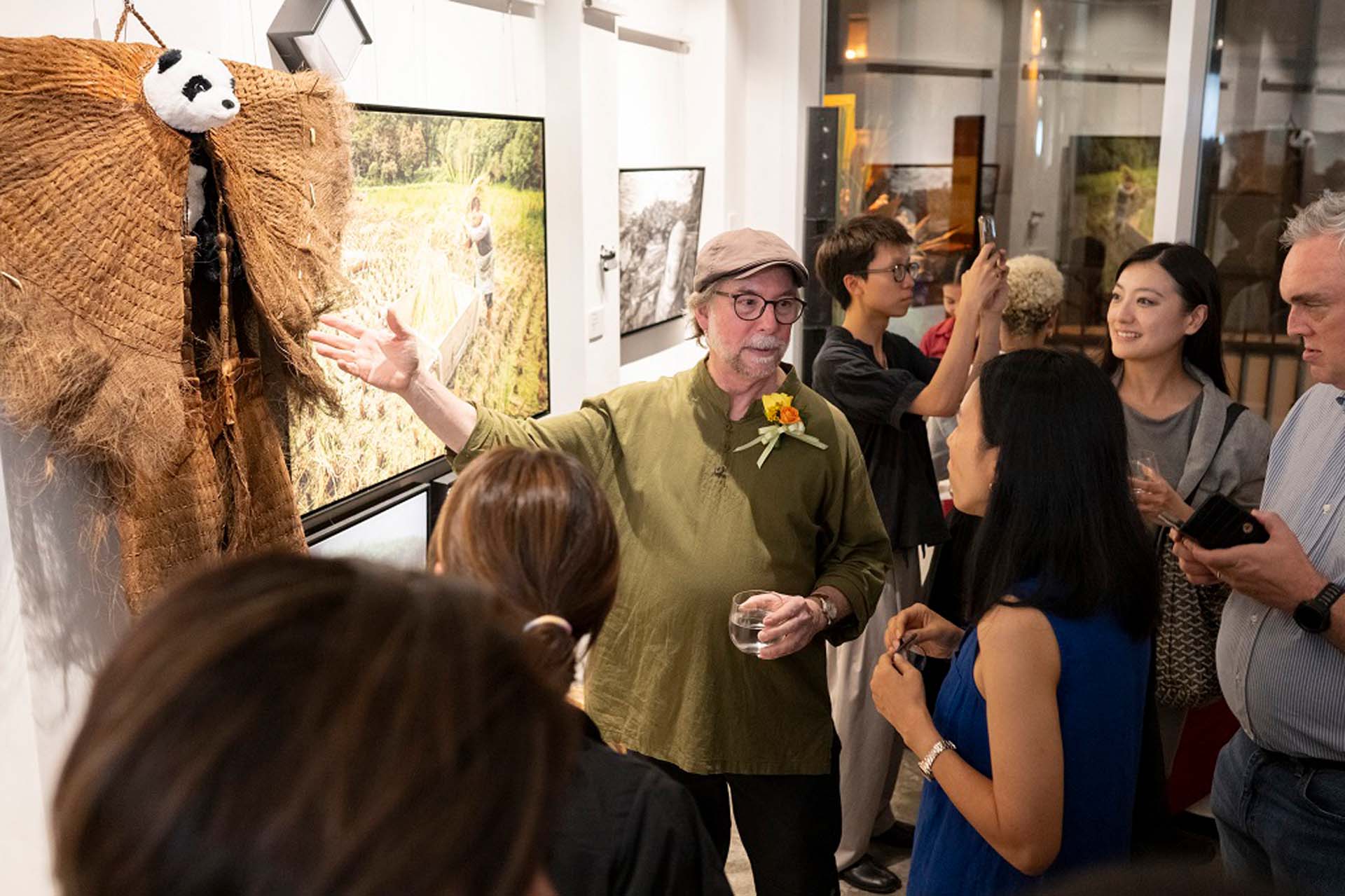
International collaborations have also broadened the gallery’s reach. In late 2022 the association invited acclaimed Portuguese illustrator André Carrilho – who spent part of his teenage years in Macao and has contributed to publications including the New York Times, Vanity Fair and Harper’s Magazine – to present works drawn from his travel sketchbooks. More recently, in February, the gallery concluded an exhibition by the American painter and printmaker Elizabeth Briel, who spent two decades living in Asia before relocating to Paris in 2024.
“We wanted international artists who could engage in a dialogue with Macao itself, with the village,” Mr Ó said. Over time the formula became clear: four exhibitions a year, typically three by local artists and one by an international guest, balancing local roots with global exchange.
Community beyond the gallery
The association’s impact extends well beyond its art gallery walls. It regularly organises family-oriented events such as its Easter programme, which brings local families into the village each spring for Easter egg hunts.
Its influence can also be seen in the streets of Old Taipa Village. In 2021, working with the Cultural Affairs Bureau, the association invited Macao artists Vitorino Vong and Jane Ieng to create murals on stairways at Travessa da Boa Vista and Escada do Coxo.
“We transformed ordinary stone stairs and plain white walls into striking paintings,” Ms Chan said. “It became very attractive for tourists to take photos and share them online.”
Other murals and graffiti have been commissioned by the association in Old Taipa Village and elsewhere in Macao.
The group has also sought to promote social inclusion. In 2017, through a partnership with the British Council, it hosted “Dream with Love”, a photography exhibition aimed at encouraging greater acceptance of people with disabilities.
“It was very meaningful,” Ms Chan said. “It addressed social inclusion, diversity and empowerment.”
The Taipa Village Cultural Association’s journey has not been without challenges, particularly in the early years. “We had to work within the available funding,” Ms Chan recalled. “But it encouraged us to keep moving.”
Space has been another constraint. Over the past decade its gallery has relocated several times, each move requiring adjustments to the type and scale of projects that could be presented. “You have to be flexible, adjusting the scale of the art to fit the space,” Mr Ó said.
Then came the pandemic. While many cultural institutions closed temporarily, the Taipa Village Cultural Association continued organising exhibitions, adapting them to comply with health regulations.
“We didn’t stop,” Ms Chan said. “Maybe fewer people came, but those who did valued the intimacy. In a way, the lockdown created closeness: people were stuck in Macao, so they found reasons to gather.”
Looking ahead
Over the years the association has hosted events spanning a range of art forms, including music, film screenings and workshops that invite the wider community to participate.
“These moments capture the essence of the Taipa Village Cultural Association,” Mr Ó said. “Art as community, culture as celebration.”
Some initiatives have ventured outdoors. In 2022, local sculptor Wong Ka Long installed two three-metre-high bamboo structures in a public display.
“Outdoor work is very challenging but joyful,” Mr Ó said. “It’s for everyone. You don’t need to go inside a space – it’s like offering something to the city, to the village.”
As a non-profit organisation, the Taipa Village Cultural Association provides artists a platform to present their work without the pressure of sales performance. “It’s about inner emotions, about seeing the world through each other’s eyes,” Mr Ó said.
He added that art can also play an important role in everyday wellbeing. “It’s important for citizens in terms of mental health. Art is like therapy – relaxing, like reading a book.”
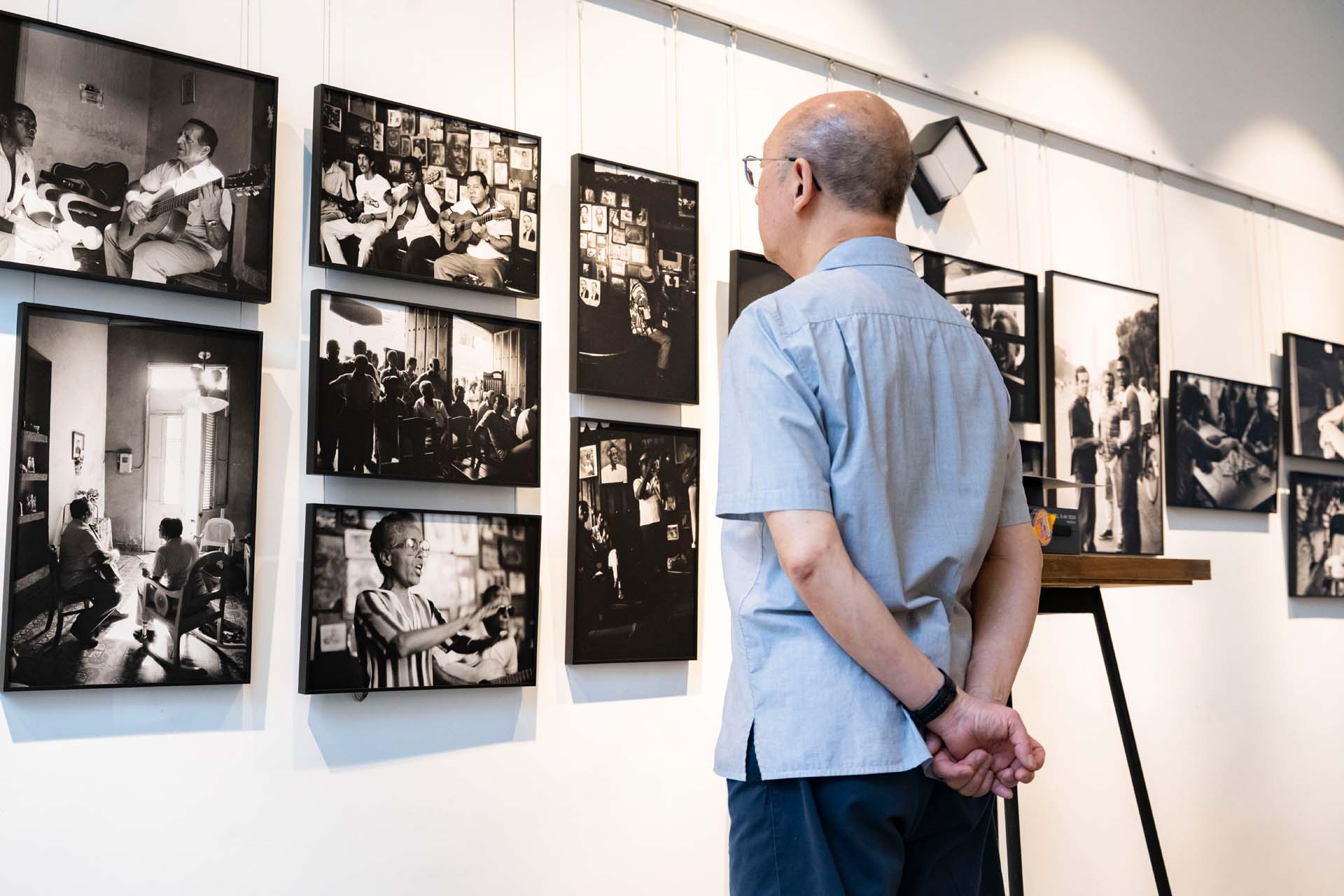
As the association marks its 10th anniversary, its leaders are already looking ahead. One forthcoming project, a new edition of its “Walking Culture” exhibition series, will scatter artworks across the village, inviting passers-by to encounter art in unexpected places. Featuring more than a dozen local and international artists, the event aims to be both celebration and experiment.
The expansion of cultural infrastructure in Macao – from museums to integrated resorts – also presents opportunities for collaboration.
“Worldwide, museums collaborate with local communities,” Ms Chan said. “I hope these new facilities open up to associations like ours, so we can bring local art into their beautiful spaces.”
One memorable episode still makes the organisers smile: a collector from Hong Kong wandered into the gallery while exploring the neighbourhood and purchased a work on the spot.
“It was a surprise,” Mr Ó recalled. “That’s what we seek – those moments of discovery, when art connects unexpectedly.”Ms Chan sees such encounters as part of a wider network of relationships. “When we invite artists, they bring their families, their friends, their networks. Each person has their own circle of connections. That’s how the village fills with life.”