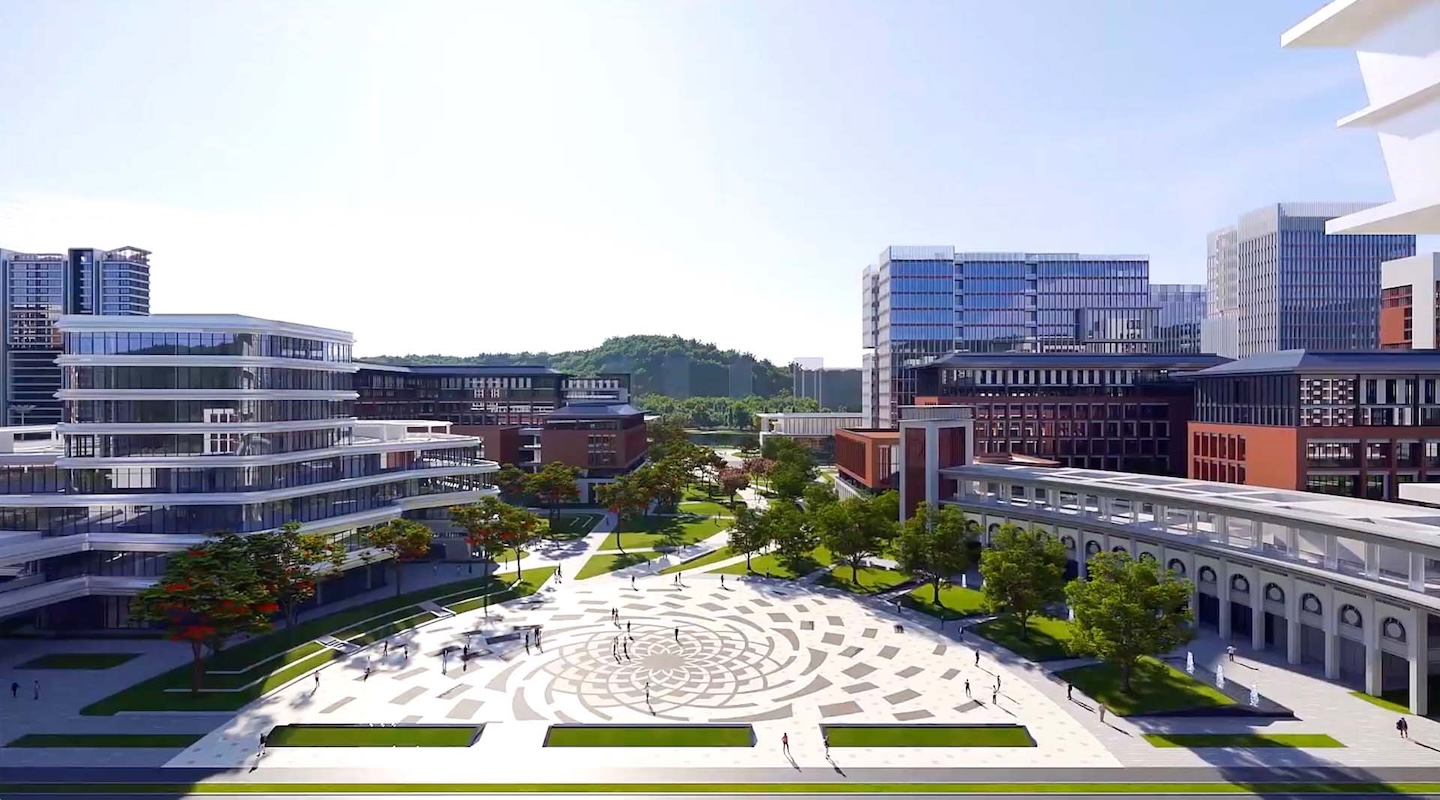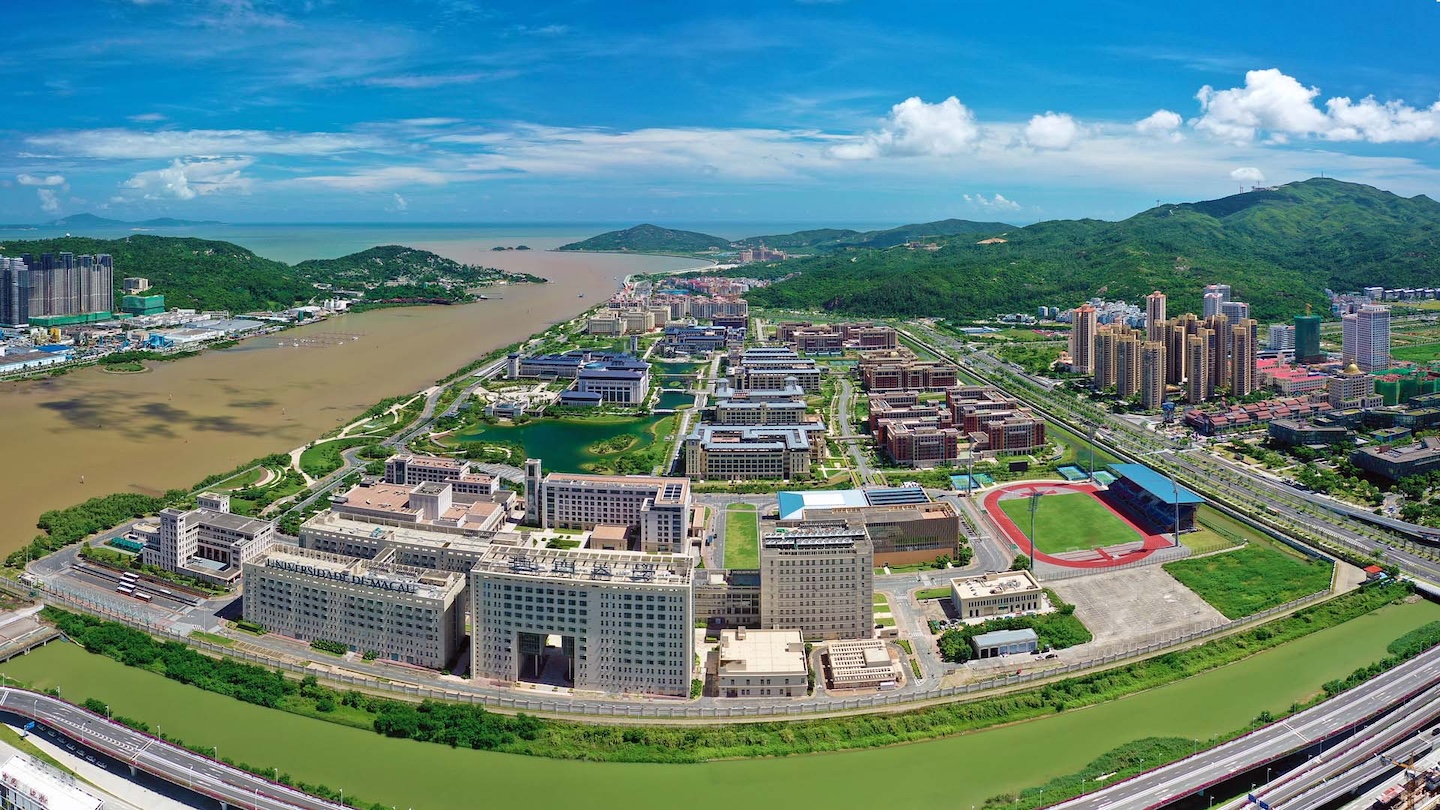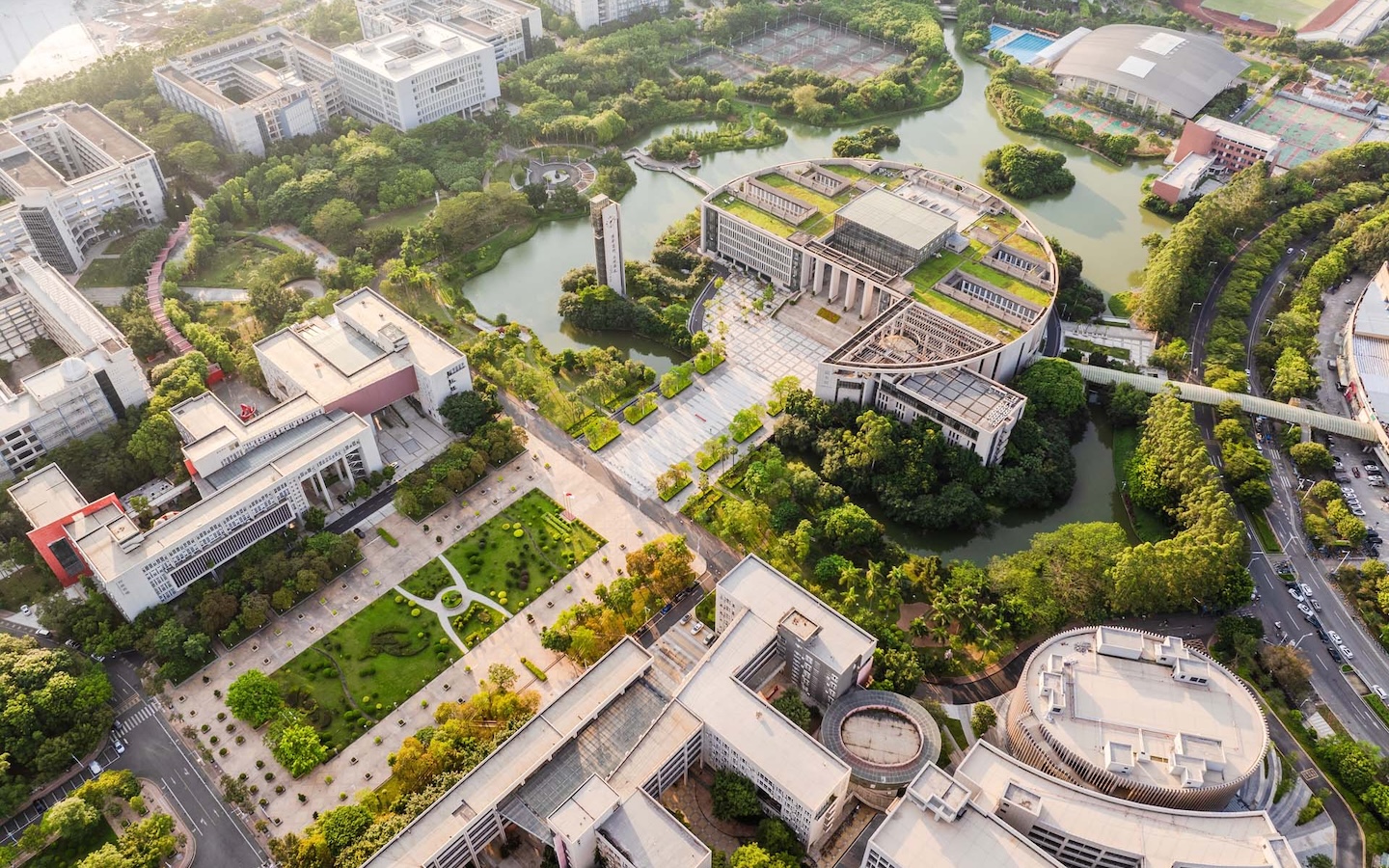
As cities around the region race to attract talent and strengthen their innovation ecosystems, Macao is making a strategic bet on its diversified future. The city is moving fast to develop the Macao–Hengqin International Education (University) Town, an ambitious project designed to turn the city into a regional hub for research, learning, and high-end talent cultivation.
Set to open in three phases through 2030, the initiative brings together Macao’s established academic institutions and the spatial advantages of neighbouring Hengqin, part of Zhuhai Municipality in Guangdong Province on the Chinese mainland, thus creating a cross-boundary platform for educational collaboration and innovation. The project, according to the Macao Special Administrative Region (MSAR) Government, aims to support the city’s long-term economic diversification and deepen its integration into national development.
At the core of the initiative are three of Macao’s public universities: the University of Macau (UM), Macao Polytechnic University (MPU), and the Macao University of Tourism (UTM). These institutions will establish new campuses within the Guangdong-Macao Intensive Cooperation Zone in Hengqin, with a combined capacity to accommodate more than 20,000 students, said Chief Executive Sam Hou Fai when he presented the Policy Address for 2026 in November.
The University Town is described as one of four landmark infrastructure projects aimed at boosting Macao’s development. According to the official blueprint, the Ministry of Education has given the green light for the three universities to establish their respective campuses in Hengqin, with the MSAR Government pledging full support to ensure these campuses uphold the same academic quality and standards as their home institutions in Macao.
In a meeting with the Minister of Education Huai Jinpeng last year, Mr Sam reaffirmed Macao’s commitment to expanding international cooperation in higher education and deepening regional academic collaboration, according to a Government press release.
“The MSAR Government remains committed to the policy vision of ‘developing Macao through education and strengthening Macao through talent’,” the city’s leader was quoted saying in the meeting.
Mr Sam said efforts are being made to integrate education, technology, and talent development to cultivate new quality productive forces. The University Town will boost the sustainable development of Macao talent and create a better environment for nurturing youths as the region integrates into national development strategies, he added.
Three key phases
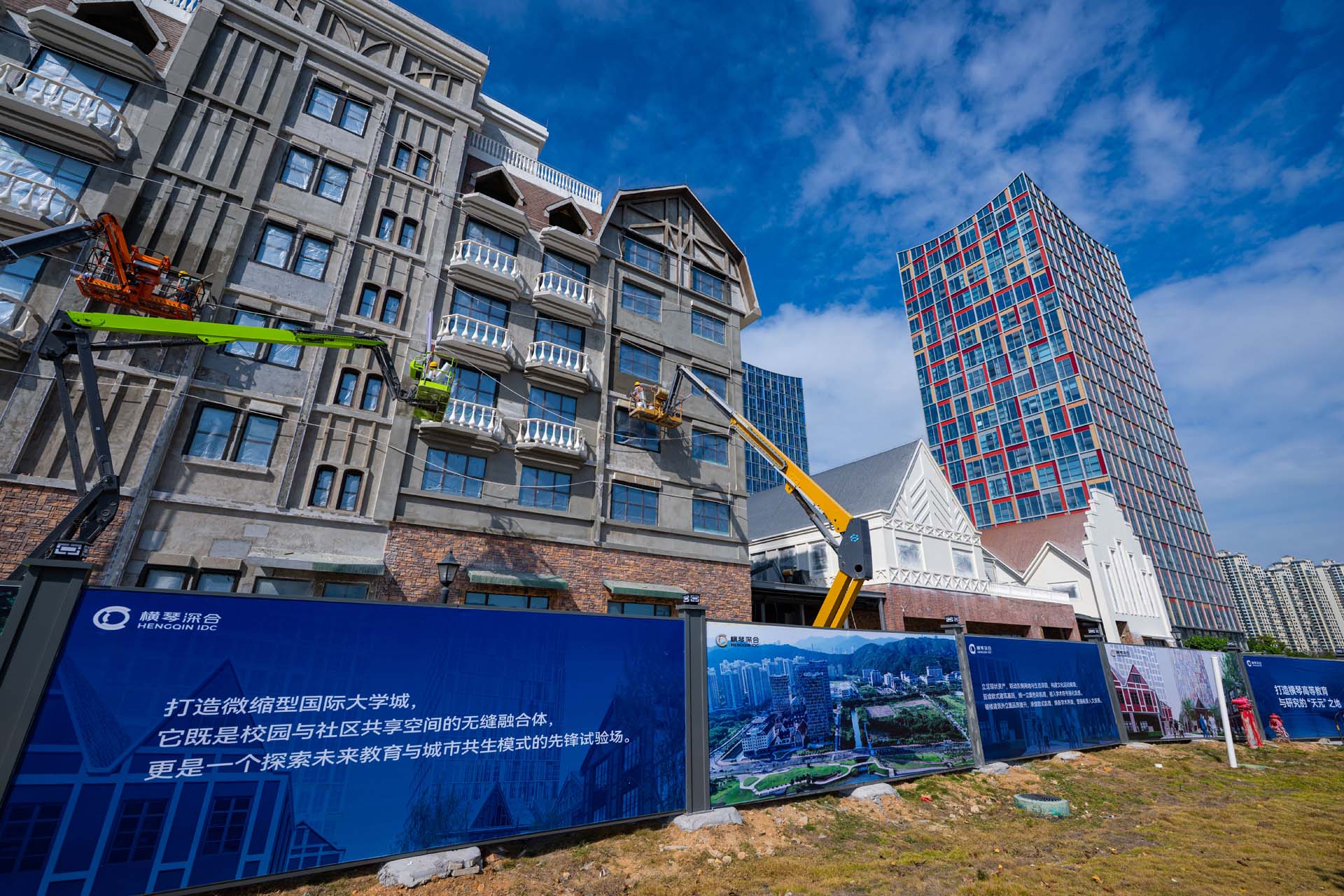
The University Town project is divided into three planned phases, each marking a new step forward in Macao’s higher education journey.
The first phase, set to launch by September 2026, will see the three public universities begin offering postgraduate programmes from a temporary campus in Hengqin – an early glimpse of the planned academic offer.
The second phase, already in motion, focuses on the construction of the UM’s new permanent campus, a major milestone scheduled for completion in 2029.
By 2030, the final phase will bring to life a shared campus for the MPU and the UTM, completing an ecosystem designed to foster collaboration, innovation, and international academic exchange.
While no budget has been confirmed yet, previous Government estimates put the project’s overall cost at around 20.0 billion patacas. According to information provided by the authorities to the Legislative Assembly last year, the UM campus has a price tag of about 7.0 billion yuan, or 8.4 billion patacas, and the joint MPU-UTM campus will require an investment of just over 9.5 billion patacas.
Hub for international talent
Speaking to legislators earlier this year, Secretary for Social Affairs and Culture O Lam emphasised that the University Town project is a direct response to the Central Government’s call to build a high-quality higher education system and nurture high-quality talent. She noted that the initiative was guided by the principle of “responding to national needs with Macao’s strengths”.
The MSAR Government, she noted, will maintain close collaboration with the Ministry of Education and the Guangdong Provincial Government to establish regulatory frameworks which will ensure that campus operations in Hengqin are aligned with Macao’s education standards.
The goal is to complete a majority of the project by 2030, with student enrolment gradually increasing to the 20,000-target, she added. The figure accounts for roughly 30 percent of the existing student population of 67,332 enrolled in postgraduate and undergraduate programmes across Macao’s 10 public and private higher education institutions in the 2025/26 academic year, according to data from the Education and Youth Development Bureau (DSEDJ).
“Over the next five years, our goal is to develop a high-quality, distinctive Macao-Hengqin International Education (University) Town and transform Macao into a key hub for high-end international talent,” Ms O stated. Once more operational experience is gained, there might be opportunities for Macao’s private higher education institutions to expand into Hengqin as well, she added.
To get the initiative off the ground, Dezhi Plaza, a commercial development in Hengqin, will be transformed into a transitional campus for UM, MPU and UTM as part of the first phase, spanning 65,000 square metres. The facility will include a high-rise teaching and office building, student apartments, a hotel, and 10 low-rise teaching blocks.
Initially, the three universities will offer a combined 42 postgraduate programmes to an inaugural cohort of 1,200 students. UM will lead with 23 courses, while MPU and UTM will contribute seven and 12 programmes respectively, with a focus on fields such as artificial intelligence, data science, fintech, microelectronics, and international tourism management.
New UM faculties
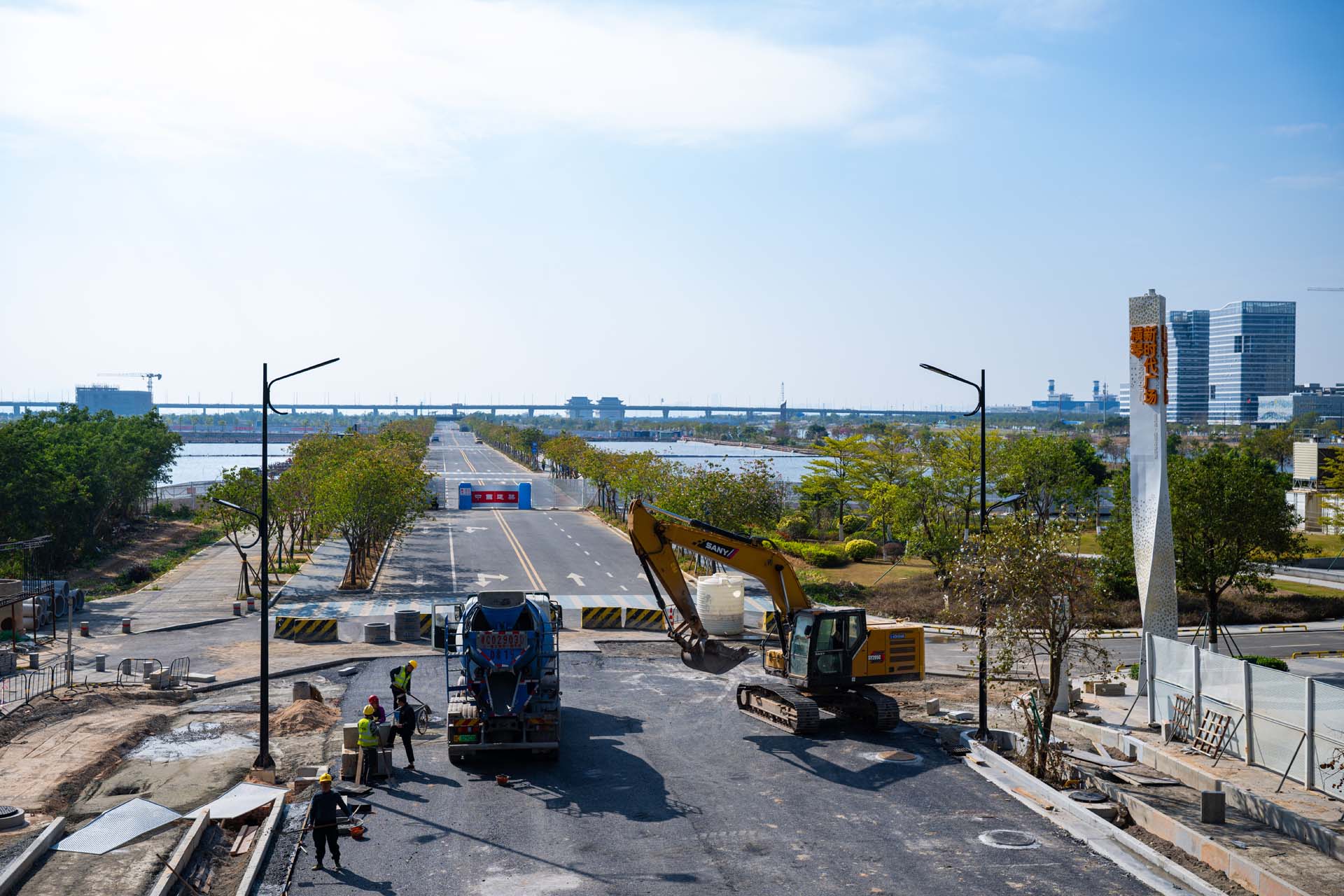
The project’s second phase involves the construction of UM’s second campus on Hengqin across a sprawling 375,600-square-metre site, with a gross floor area of 831,000 square metres – the latter similar to the size of its existing main campus. Facilities will include a central teaching building, a sports complex, an international exchange centre, modern residential quarters for students and staff, and other supporting facilities.
This will be UM’s second campus on Hengqin. In 2009, with the support of the Central Government and the MSAR Government, UM received approval to build a campus on Hengqin, with the MSAR authorised to exercise jurisdiction over the campus, and applying MSAR law (see pages 16–19). In 2014, UM fully relocated to the the original Hengqin campus, which is separated from Taipa by a waterway.
The new campus, scheduled to begin trial operations in 2028 and reach full completion by 2029, will accommodate about 10,000 students and house four faculties: Medicine, Information Science and Computing, Engineering, and Design. This capacity represents nearly 59 percent of UM’s current student body. In the 2025/26 academic year, the institution had 17,105 students enrolled across its postgraduate and undergraduate programmes, including 5,740 local and 11,365 non-local students, according to DSEDJ data.
“UM has taken the lead in offering education and establishing a campus … in the Cooperation Zone,” UM rector Yonghua Song said last December during a groundbreaking ceremony for the new campus. “UM will build an innovative, multidisciplinary research platform on the new campus to support future development.”
He pledged that UM would integrate its two campuses and incorporate the development of the Hengqin facility into its next five-year strategic plan. Making use of the new campus, the institution would also aim to deepen industry-academia collaboration across the Guangdong-Hong Kong-Macao Greater Bay Area and contribute to the national objective of “achieving high-level scientific and technological self-reliance,” he said.
“The university seeks to become a hub for top international talent through global education, international student recruitment, diverse faculty teams, and international academic activities,” the rector stated. “UM is committed to supporting the integration of Macao and Hengqin and contributing to the diversification of Macao’s economy.”
Global reach
The University Town’s third phase will see the establishment of a shared campus for MPU and UTM. The MSAR Government has said it plans to coordinate with the two universities to acquire a land plot in 2026, with construction to start in 2027 and full completion expected by 2030.
While detailed plans are still taking shape, UTM anticipates that the new campus will allow it to expand its student intake to 4,000 once ready, up from the current 2,800. The new infrastructure in Hengqin will be developed with its Macao base in mind, focusing on hotel management, tourism, technology, and science-related disciplines.
As part of the MSAR Government’s goal to encourage local universities to collaborate with international institutions in launching new programmes aimed at attracting and retaining global talent, UTM and the Swiss Education Group (SEG) signed a memorandum of cooperation last December, with emphasis on Hengqin. The agreement led to the establishment of the Macao University of Tourism – César Ritz Colleges Switzerland Centre for Innovative Talent Development.
This new partnership will strengthen UTM’s collaboration with SEG-affiliated institutions – such as the Culinary Arts Academy Switzerland, HIM Business School, Swiss Hotel Management School, and César Ritz Colleges Switzerland – with plans to extend selected programmes into Hengqin, UTM said in a statement.
“UTM is actively aligning with the MSAR government’s development plan for the Macao-Hengqin International Education (University) Town and is steadily advancing the expansion of its educational operations within the Cooperation Zone,” UTM Rector Fanny Vong Chuk Kwan said in the statement. “This collaboration is a key step in that process.”
“UTM aims to fully leverage the policy advantages and development opportunities offered by the Cooperation Zone, explore innovative educational mechanisms, and work towards creating an internationally influential model of academic collaboration, ultimately contributing to Macao’s deeper integration into the national development strategy,” she added.
MPU is also positioning itself as a bridge between China and Portuguese-speaking countries. In December, it signed a strategic agreement with the University of Coimbra in Portugal to establish a higher education cooperation base in Hengqin, with a focus on the high-tech and healthcare sectors. The initiative also aims to build a collaborative network spanning Portuguese-speaking countries and beyond.
“To enhance the internationalisation of the Macao-Hengqin International Education (University) Town, Macao Polytechnic University is leveraging Macao’s unique role as a ‘precise connector’ between China and Portuguese-speaking countries,” MPU’s Rector Marcus Im Sio Kei said in a statement about the new partnership.
MPU aims to deepen its collaboration with leading global universities through joint education programmes, collaborative research, faculty and student exchanges, as well as via the establishment of joint laboratories and dual-degree initiatives. “The MPU campus in the Cooperation Zone is set to become a key hub for China–Portuguese-speaking countries and broader international educational collaboration,” Mr Im added. “This will enable Macao to play a distinctive role in advancing the nation’s ambitions to become a global leader in education, science and technology, and talent development.”
| A GLIMPSE AT MACAO’S HIGHER EDUCATION INSTITUTIONS (2025/26) Total Number of Higher Education Institutions: 10 (4 public and 6 private) Total Number of Students: 67,332 Local vs. Non-Local Students: 15,563 (23.1%), 51,769 (76.9%) Undergraduate vs. Postgraduate Students: 38,633 (57.4%), 28,699 (42.6%) University of Macao (UM) Total Students: 17,105 Local vs. Non-Local: 5,740 (33.6%), 11,365 (66.4%) Undergraduate vs. Postgraduate: 8,269 (48.3%), 8,836 (51.7%) Macao Polytechnic University (MPU) Total Students: 7,827 Local vs. Non-Local: 3,914 (50%), 3,913 (50%) Undergraduate vs. Postgraduate: 5,389 (68.9%), 2,438 (31.1%) Macao University of Tourism (UTM) Total Students: 2,809 Local vs. Non-Local: 1,181 (42%), 1,628 (58%) Undergraduate vs. Postgraduate: 2,255 (80.3%), 554 (19.7%) |