Ten years after the “Belt and Road” initiative entered a broader phase of implementation in 2016, the project is adding a new layer to its foundational ports and railways. New investment patterns and growing people-to-people exchanges are reshaping what connectivity means – and charting what the next decade may bring.
According to research from Fudan University’s Green Finance and Development Center, the first half of the year marked the initiative’s strongest start since its launch in 2013. Across 150 participating nations, Chinese investments hit 49.8 billion U.S. dollars, paired with 76.5 billion U.S. dollars in international construction contracts, signalling renewed momentum despite global trade uncertainty.
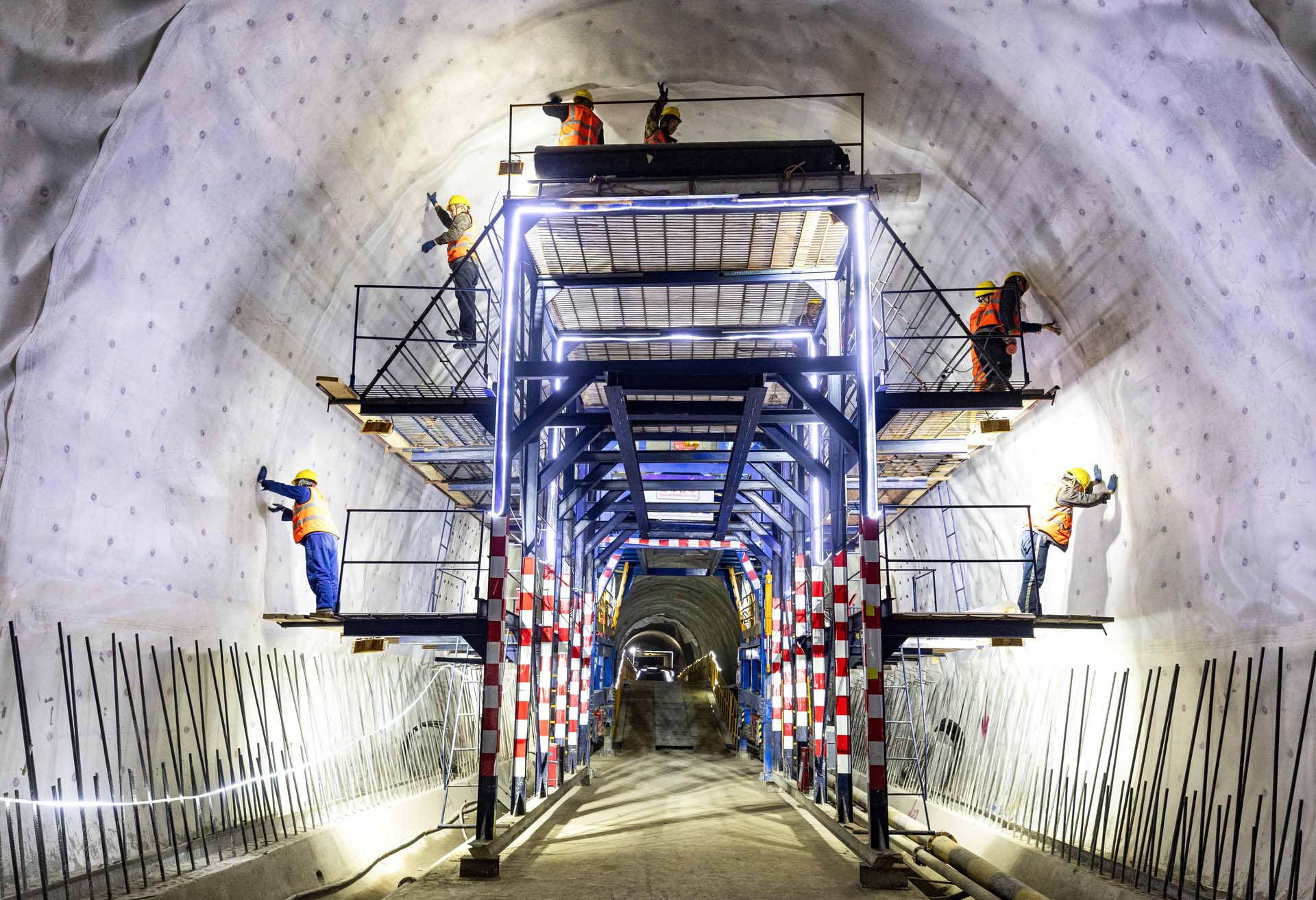
This surge is fuelled by a return to large-scale projects. Over 30 individual agreements exceeded the 1 billion U.S. dollar mark.
Dr Christoph Nedopil, the centre’s founding director and professor at the University of Queensland Business School, explains that, during the pandemic, travel restrictions made it harder for Chinese companies to negotiate and deliver major overseas infrastructure projects. After borders reopened, however, companies rapidly returned to large deals in energy, technology and mining.

“The biggest shift to a new development paradigm of the ‘Belt and Road’ initiative took place after Covid-19 around 2023,” Dr Nedopil told Macao Magazine.
Going green
That return to large-scale projects is reflected in research published by the Green Finance and Development Center. The review shows energy projects dominated China’s “Belt and Road” activity in the first half of the year, reaching a record 36.3 billion U.S. dollars. For the first time, more than half of this (56 percent) was directed toward green energy – a new record both in absolute and in relative terms.
China also accelerated spending in critical minerals and metals processing, with 21.8 billion U.S. dollars flowing into steel and aluminium projects vital for automotive manufacturing, transmission lines and clean‑tech supply chains.
Africa, again, emerged as the top destination for “Belt and Road” investment, almost tripling Chinese investment compared to the first half of 2025 to 33.5 billion U.S. dollars – more than ever – while the Middle East led construction activity. The Chinese private sector expanded its share of total engagement as measured in U.S. dollars from 13 percent in 2020 to 48 percent in the first six months of 2026, compared to state-owned companies.
The expanding sectoral mix reflects a broader change in what connectivity means, observers say. It no longer refers only to moving goods along new roads or railways; it increasingly encompasses industrial supply chains, digital systems, technical standards, professional knowledge and the capacity to operate projects after construction is complete.
For instance, in the first half of the year, China exported 1.14 million new-energy vehicles to “Belt and Road” partner countries, up 59.4 percent year-on-year, according to Chinese customs data compiled by the China Association of Automobile Manufacturers. Automotive products shipped to those markets were valued at 83.67 billion U.S. dollars, accounting for more than half of China’s automotive exports.
This shifting industrial focus coincides with China’s broader push to ‘green’ the initiative, introducing stricter environmental guardrails. Most notably, the “Green Development Guidance for BRI Projects” – launched in 2019 – established a ‘traffic light’ system based on a project’s effects on pollution, climate and biodiversity. Dr Nedopil, who contributed to the work, regards it as an important step in elevating environmental considerations in overseas development.
A global framework
President Xi Jinping proposed the “Belt and Road” initiative in 2013 as a framework for improving connectivity and economic cooperation across countries and regions. Often referred to as the “New Silk Road”, it is structured around two main components: the overland “Silk Road Economic Belt” connecting China to Central Asia and Europe; and the “21st-Century Maritime Silk Road” linking China’s coast to Europe through the South China Sea and the Indian Ocean in one route, and from China’s coast through the South China Sea to the South Pacific in the other.
Two years after the launch of the concept, the National Development and Reform Commission’s “Vision and Actions on Jointly Building the Silk Road Economic Belt and 21st-Century Maritime Silk Road” set out five main areas of cooperation: policy coordination, infrastructure connectivity, unimpeded trade, financial integration and closer people-to-people ties.
The “Belt and Road” incorporation into China’s 13th Five-Year Plan in 2016 marked the transition from a broad vision to a more coordinated phase of implementation. The initiative became more firmly embedded in national planning and began to further advance through government bodies, financial institutions, local authorities and companies.
Wang Yiwei, a professor at the School of International Studies at Renmin University of China, places the changes of 2016 within the initiative’s longer development. “2016 can well be regarded as a key institutional watershed for the ‘Belt and Road’ initiative, though it did not bring about a fundamental change in the initiative’s nature,” he told Macao Magazine.
“Rather, it witnessed a historic transition from a visionary concept to institutionalised national arrangements and multilateral implementation.”
In 2021, “small-but-beautiful” projects became a more explicit part of the policy when Chinese officials called for such people-centred schemes, designed to respond directly to livelihood needs, to become a priority in overseas cooperation. The term describes relatively modest, practical projects intended to deliver visible local benefits in areas such as agriculture, health, poverty reduction and vocational education.
“Large-scale infrastructure and ‘small-but-beautiful’ projects are alternatives that complement rather than replace one another,” Prof. Wang said.

In his view, major infrastructure provides the physical backbone of connectivity, while smaller projects in health, agriculture, poverty reduction and vocational training allow the benefits of cooperation to reach communities more directly. Green and digital projects add a further layer, responding to changes in energy systems and technology.
Prof. Wang points out that while the outcomes of smaller-scale projects may take longer to quantify than the completion of a grand engineering feat, they can ultimately determine whether new infrastructure fosters lasting domestic development. “People-to-people bonds constitute the social foundation determining whether infrastructure projects can endure, and their effects can indeed be observed and quantified,” he said.
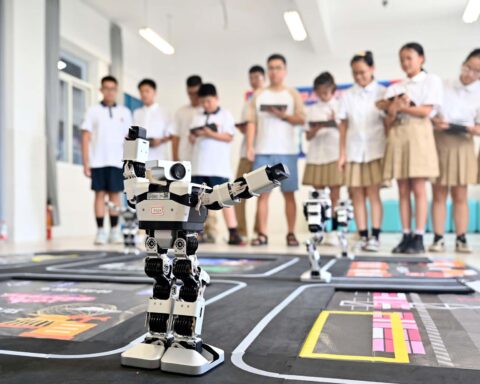
Luban Workshops form part of that process. Pairing Chinese vocational institutions with overseas partners, they have expanded to more than 20 countries, offering training in fields ranging from industrial robotics and electrical engineering to agriculture and transport. Other programmes cover public health, student exchanges, joint research and training for officials and technical personnel.
Portugal in practice
Portugal illustrates how the “Belt and Road” initiative has moved from a broad international proposal towards more specific industrial and commercial cooperation.
Chinese capital was already present in the country’s energy, banking and insurance sectors following the 2011 financial crisis that impacted the European nation. However, many Portuguese companies initially viewed the initiative itself as distant from their day-to-day business.
Bernardo Mendia, secretary-general of the Portugal-China Chamber of Commerce and Industry and president of the Portugal-Hong Kong Chamber of Commerce and Industry, says that around 2016, “Belt and Road” was largely perceived as an infrastructure drive centred on Asia, Central and Eastern Europe and maritime corridors. It attracted strategic interest but remained “somewhat abstract or distant” for many Portuguese companies and small and medium-sized enterprises (SMEs).
A memorandum of understanding signed by the People’s Republic of China and Portugal in December 2018 gave their cooperation a formal framework. According to Mr Mendia, it shifted attention towards more concrete trilateral cooperation involving China, Portugal and other Portuguese-speaking countries, while highlighting Portugal’s maritime and port capabilities. The official endorsement also gave companies greater confidence to develop longer-term projects and commercial partnerships, he says.
Mr Mendia notes Chinese investment in Portugal has since diversified beyond its earlier concentration in energy, banking and insurance into industrial technology, the green transition, logistics and real estate. “We have moved past exploratory delegations toward mission-driven, actionable programmes.”

He cites Chinese battery manufacturer CALB’s plant project on Portuguese soil as a leading example of cooperation in mobility and energy storage, with the potential to strengthen Portugal’s role in European electric-vehicle battery manufacturing. Last January, the Portuguese Government said the CALB project represented an investment of about 2.07 billion euros and would create 1,800 jobs, including 497 highly qualified positions, with production expected to start in 2028.
The next phase
Over the next decade, Prof. Wang expects the “Belt and Road” initiative to experience a gradual shift from project-led delivery towards greater coordination of institutions, development strategies and ideas. Major engineering works will remain relevant, but he anticipates more attention to regulatory alignment, mutual recognition of standards and cooperation between industrial systems across participating countries.
“Success will be measured less by the number of completed facilities and more by integrated alignment of development strategies, regulatory regimes and industrial systems across participating nations,” he said.
The scholar also expects participation to broaden beyond major contractors. SMEs, think tanks, youth groups and civil society organisations could assume a larger role, alongside multilateral institutions, multinational companies and third-country partners.
Cooperation is likely to extend further into areas that Prof. Wang describes as shared human challenges, including the low-carbon transition, digital governance, food security, public health and poverty reduction.
Dr Nedopil approaches the outlook from the perspective of Chinese companies. He expects their internationalisation through overseas investment to continue, accompanied by “stronger localisation through local hiring of workers and management”.
He also believes there is considerable room for that engagement to expand. China’s outward foreign direct investment is currently comparable to that of the United States when measured relative to the size of its economy, at a ratio of about 0.84 percent. However, Dr Nedopil notes that export-oriented economies such as Japan (4.2 percent) and Germany (1.7 percent) invest considerably more overseas on the same basis.
“This suggests that there is significant upward potential for China’s overseas engagement,” he said.
Prof. Wang nevertheless cautions about “persistent headwinds” in the global economy, including geopolitical competition, protectionism and fragmentation. “Still, the ‘Belt and Road’ initiative draws its vitality from genuine development demands across partner countries.”