In a city where tourism and entertainment play a significant role in the cultural landscape, Ox Warehouse has spent more than two decades carving out its own distinct cultural space. Founded as a non-profit association, it has become one of Macao’s leading platforms for experimental art, providing artists with the freedom to test ideas, challenge conventions and engage with the public in new ways.
Ox Warehouse takes its name from the Former Municipal Cattle Stable which was originally built for cattle and later repurposed into an art venue. While the stable remains central to Ox Warehouse’s identity, the organisation has expanded beyond the historic site. Today, its exhibitions, performances, video works and installations are presented across Macao, while collaborations with artists from the Chinese mainland, Asia and beyond continue to expand its artistic impact. Yet despite this evolution, its guiding philosophy has remained the same.
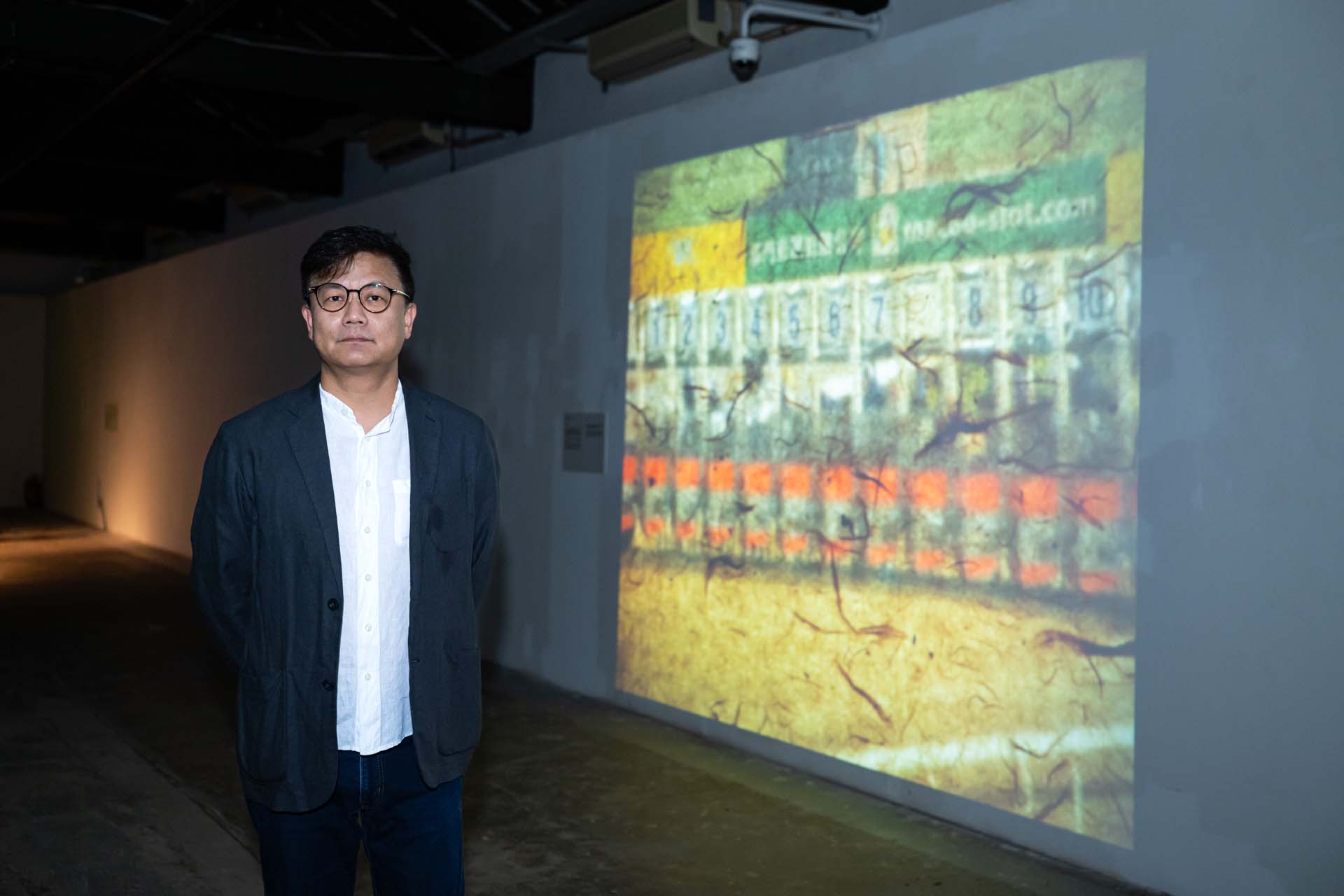
According to Noah Ng Fong Chao, the group’s academic director and president, Ox Warehouse seeks to create an environment where art can remain “authentic, experimental and 100 percent personal”.
That philosophy is perhaps most evident in its artist residency programme, which welcomes around six artists each year to develop new work inspired by Macao. Rather than exhibiting projects conceived elsewhere, visiting artists are encouraged to immerse themselves in local neighbourhoods, communities and everyday life before beginning the creative process.
“We always ask that the creative starting point is Macao,” Mr Ng explained. “The work needs to have a real connection to the city. We don’t accept projects where an artist simply brings something that was already made elsewhere.”
Fostering cultural exchange
The artist-in-residence programme has become one of Ox Warehouse’s most impactful channels for cultural exchange. Visiting artists are given the opportunity to fully immerse themselves in Macao, where they can create works of art shaped by their experiences.
According to Mr Ng, the programme is intended not merely to provide studio space, but to encourage new interpretations of Macao which will resonate with audiences beyond the city.
The breadth of the programme was evident in a trio of exhibitions staged earlier this year. The first – “Seak Kam Tong: Yuan Zeqiang” – which took place in January, showcased installations, paintings, video and mixed-media pieces by Hunan artist Yuan Zeqiang. “Seak” is the Cantonese word for “stone” and his works drew inspiration from Macao’s stone-paved streets, weathered stone pillars, layered masonry and textured façades – a reflection of the city’s distinctive material character.
Running alongside it was “Land and Sea: David Fank”, an exhibition created by Belgian artist David Fank during his residency with Ox Warehouse. Centred on two large-scale installations, “Land” and “Sea”, the exhibition was inspired by his travels across the Guangdong-Hong Kong-Macao Greater Bay Area, as well as journeys to Beijing and elsewhere in China.
The organisation’s activities extend well beyond supporting artists alone. Curators and cultural managers gain practical experience through the production of exhibitions and festivals, while initiatives such as the Macao Experimental Video Festival (EXiM) connect local practitioners with broader regional networks. The latest edition of EXiM, which concluded in June, brought together artists from Xi’an, Lisbon, Hong Kong, Macao, Taipei and Tainan, showcasing work across a wide range of experimental video formats.
In March, Ox Warehouse hosted “The Golden Ratio – Macau Exchange Exhibition”, featuring 10 female artists from the Chinese mainland and Macao working across video, painting, photography, installation and more. The “golden ratio” is traditionally associated with a mathematical proportion used to measure facial symmetry and aesthetic harmony. However, this exhibition not only challenged traditional gender roles and social expectations, but also sought to reimagine and redefine a “golden ratio” belonging to women, while also encouraging dialogue.
From theatre to indie art
Ox Warehouse’s story began before the organisation adopted its current name. Its roots can be traced to Comuna de Pedra, an independent artistic collective founded in 1996 that focuses on physical and dance theatre.
In 2001, several members of the group, including the late photographer Frank Lei Ioi Fan and theatre director and choreographer Jane Lei Ioi Chon, established the Old Ladies’ House Art Space at Albergue da Santa Casa da Misericórdia. The platform was formally launched in March 2002, with a goal to transform the heritage complex into a space for contemporary artistic exchange.
The project was short-lived. Structural safety concerns forced the group to leave the site, but the initiative left a lasting mark on Macao’s emerging arts community. The Albergue hosted exhibitions, performances and discussions that introduced new forms of artistic practice to the city.
“For a small place like Macao, having somewhere for young artists to experiment was very important,” Mr Ng said. “It also allowed us to remain independent in our work.”
He recalls that the project quickly attracted attention within independent arts circles. From the beginning, the group sought to provide a space where experimental practices – including performance, video and installation art – could be explored.
“It became very well known,” Mr Ng said. “No one else, not even Hong Kong, had anything like it.”
A more permanent home arrived in 2003, when the collective leased the Former Municipal Cattle Stable.
Originally built in 1912, the Former Municipal Cattle Stable quarantined and housed cattle. In 1924, the stable was reconstructed, and its layout and exterior have largely been persevered to this day. Featuring two parallel bungalows with truss roof structures, the colours of the mahogany roof and khaki walls are a testament to Portuguese eclectic architecture. In 1987, cattle-stabling operations moved to Ilha Verde. As a result, part of the structure was converted into a storage facility and the rest into an exhibition venue.
The repurposed site provided greater stability and allowed the organisation to expand its programme.
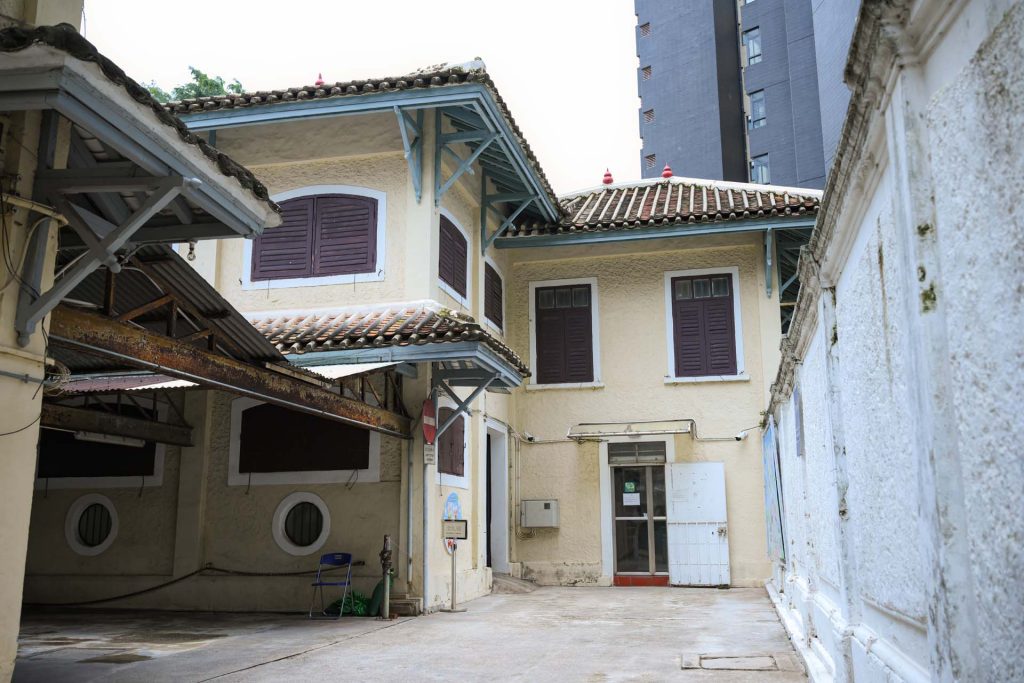
Over time, the venue and the group became closely linked – so much so that in 2011 the Old Ladies’ House Art Space officially changed its name to Ox Warehouse. The former cattle stable evolved into one of Macao’s best-known spaces for experimental art, combining exhibitions with education and community activities.
A space for all
Alongside contemporary art exhibitions, Ox Warehouse organised workshops, music events and theatre performances. The venue also housed a specialist theatre library, an art archive, a bookshop and a weekend café, creating an informal gathering place for artists, students and local residents.
One of its most enduring initiatives was a children’s art programme, reflecting the organisation’s belief that creativity should be accessible to everyone rather than confined to professional artists.
“We want kids to have fun with the art, express their feelings and be creative with their imagination,” Mr Ng said. “If their drawings don’t look real or they don’t match what the teacher says, it doesn’t matter, because there aren’t any hard and fast rules or pressure.”
During this period, Ox Warehouse also broadened its outlook beyond Macao. Among its initiatives was the establishment of the Macao International Performance Art Festival (MIPAF), which strengthened the organisation’s connections with artists and practitioners from across the region and beyond.
In 2016, the Former Municipal Cattle Stable came under the administration of the Cultural Affairs Bureau. An inspection carried out that year identified safety risks resulting from the building’s age and deterioration. The bureau subsequently launched a comprehensive restoration programme, including repairs to the roof, internal and external walls, waterproofing, drainage systems, flooring, windows and doors.
For nearly 15 years, the Former Municipal Cattle Stable was the hub of Ox Warehouse’s activities. That chapter came to an end in 2017, when the organisation vacated the site to allow extensive restoration works to begin.
Artistic freedom
Leaving the Former Municipal Cattle Stable marked a turning point for Ox Warehouse. The organisation reinvented itself, taking on a more flexible approach. Rather than focus on one location, the group turned Macao itself into a canvas for artistic exploration, hosting projects all throughout the city.
From 2018 to 2022, exhibitions, performances and community projects were held across a range of venues, including Rua do Volong, where the group established its “Post-Ox Warehouse Experimental Site”, as well as the Mong-Há Villas, the former Art Garden venue and other pop-up locations. This approach allowed Ox Warehouse to remain active while adapting to the practical realities of Macao’s cultural landscape.
In 2022, Ox Warehouse returned to the renovated Former Municipal Cattle Stable. The group now regularly hosts exhibitions and other events at the venue, although the complex is managed by the Cultural Affairs Bureau, which also leases the space to other local arts organisations.
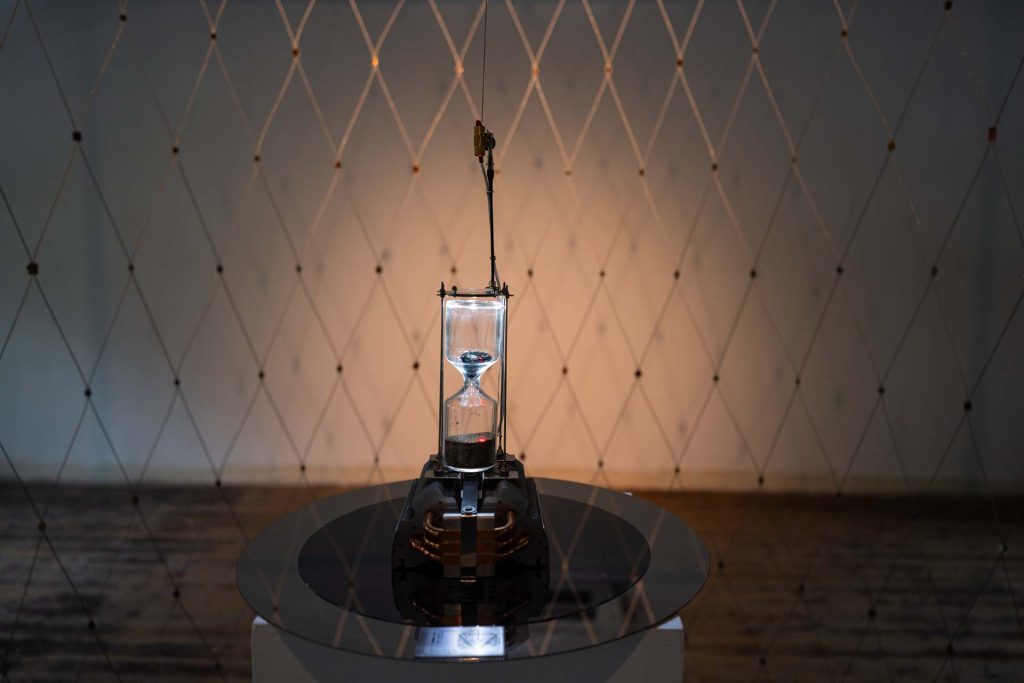
Mr Ng says independent organisations still have a comparatively limited presence within Macao’s cultural ecosystem. Rather than competing with larger commercial institutions, Ox Warehouse focuses on experimentation and artistic risk, placing emphasis on new art forms, new conversations and new perspectives. Many of its projects are supported by funding from Macao’s publicly backed Cultural Development Fund.
The association’s president would like to see more dedicated exhibition spaces and facilities designed for contemporary artistic practice. He believes that allowing groups such as Ox Warehouse to develop longer-term programmes and build stronger relationships with audiences through a clearer identity associated with their venues would be beneficial.
For Ox Warehouse, maintaining its artistic independence remains central to its mission. Its aim continues to be on encouraging experimentation, supporting emerging talent and sustaining dialogue between local and international artists.
“As long as we keep doing our work, we’re here,” Mr Ng said. “We create our own presence.”