As the Chinese mainland and the Association of Southeast Asian Nations (ASEAN) continue to be each other’s biggest trading partners, a new and unexpected link is developing between these two economic powerhouses: Macao. Known for its cultural mix and free port status, Macao is moving into a more strategic role, as it aims to connect the Chinese mainland and Southeast Asia through trade, innovation, and shared heritage.
With its strong ties to overseas Chinese communities in the region, Macao is reshaping itself as a dynamic gateway for cooperation and exchange. Kelvin Tan Hai Ching, chairman of the Macao ASEAN International Chamber of Commerce (MAICC), is leading this vision, highlighting the ASEAN’s vast potential as a trade partner, namely its growing population and fast-expanding economy.
“ASEAN currently has a combined population of over 600 million, and some studies suggest the bloc’s GDP [gross domestic product] could surpass that of the European Union by 2032,” Mr Tan said in an interview with Macao Magazine. “The potential of ASEAN is truly unmatched.”
Originally a 10-member bloc – comprising Brunei, Cambodia, Indonesia, Laos, Malaysia, Myanmar, the Philippines, Singapore, Thailand, and Vietnam – the group welcomed Timor-Leste as its 11th member in October 2025, underscoring its growing regional reach.
With its young population and fast-growing economies, ASEAN is projected to become the world’s fourth-largest economy by 2030, according to a December article by The World Economic Forum, an international advocacy non-governmental organisation.
The “ASEAN Economic Community (AEC) Strategic Plan 2026 – 2030”, adopted in June 2025 at the 46th ASEAN Summit, outlines key measures for building a prosperous, integrated, and innovation-driven economy.
Beyond ASEAN’s growth potential, trade relations between China and the 11-member bloc remain strong. In 2024, the Chinese mainland marked its 16th straight year as ASEAN’s top trading partner, while ASEAN has held the same position with China for five consecutive years.
Against this backdrop of economic ties, alongside the development of the Guangdong-Hong Kong-Macao Greater Bay Area and Macao’s status as a free and open port, Mr Tan believes the city could deepen its role as a bridge between ASEAN and the Chinese mainland, mainly for the Greater Bay Area. “Macao’s most effective role between the two sides lies in trade, particularly as a transit point,” he said. “It can serve as a gateway for products from the Greater Bay Area to move through Macao into ASEAN markets, and vice versa.”
To unlock such potential, the Regional Comprehensive Economic Partnership (RCEP) is critical, Mr Tan suggested. The RCEP, which came into effect in 2022, is the world’s largest free trade agreement, uniting ASEAN members – except for Timor-Leste – with Australia, China, Japan, South Korea, and New Zealand.
Now that Hong Kong has applied to join the RCEP, Mr Tan suggested Macao should also consider joining the pact to strengthen its trade and economic ties across the region. “We should take a more proactive approach in leveraging international agreements to maximise Macao’s unique position,” Mr Tan stated.
Halal certification centre
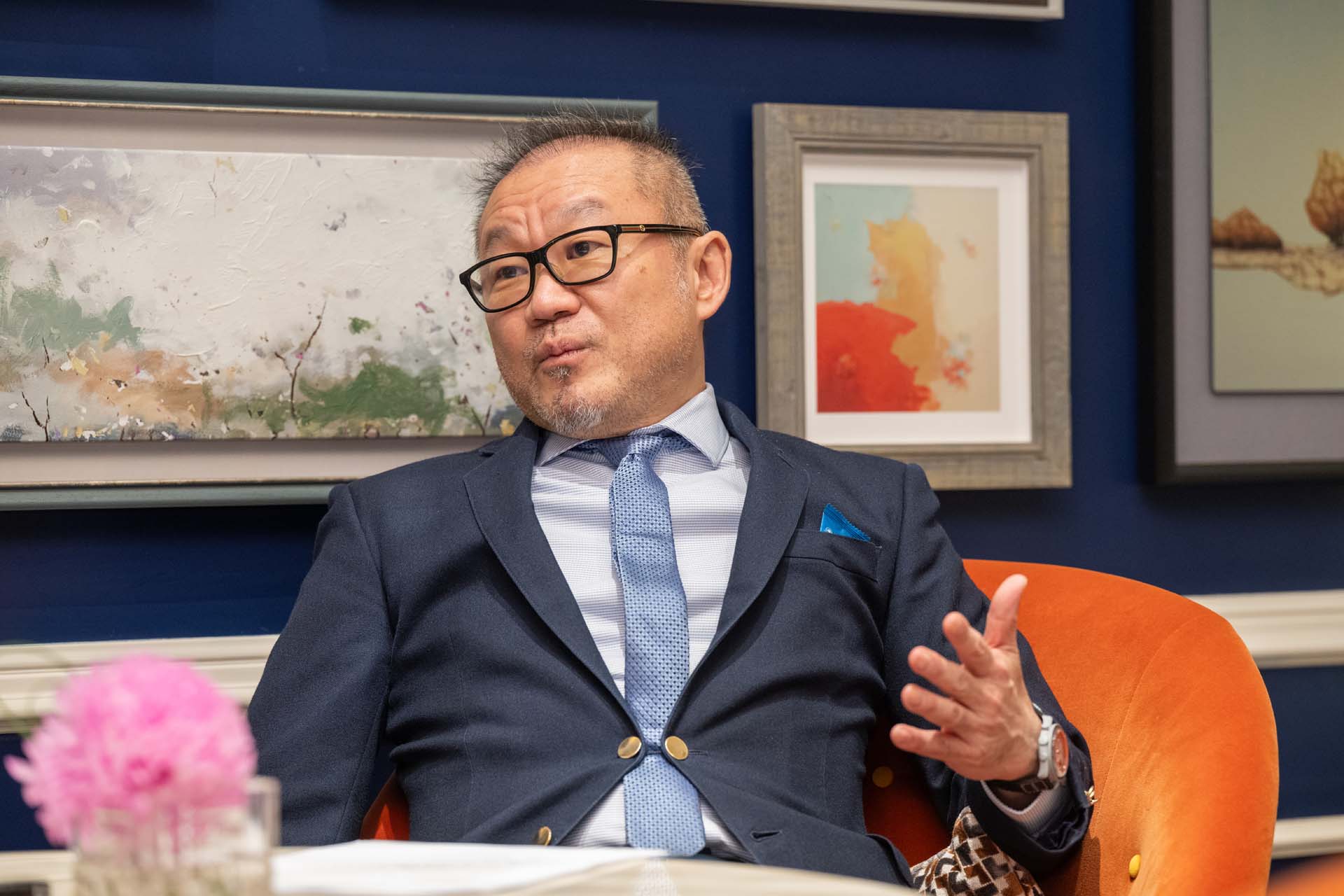
One initiative that could greatly improve Macao’s role as a regional trade facilitator would be the establishment of a halal certification centre in the city. The potential, according to MAICC’s president, is immense, as about 300 million people across ASEAN are Muslim, and they typically consume only products certified as halal. Halal certification would then be a mark of trust for consumers, ensuring that food and other products adhere to Islamic law, meaning they must avoid pork, alcohol, and other prohibited substances, use only permissible ingredients, and follow specific preparation, processing, and slaughter methods.
However, Mr Tan pointed out, many exports from Guangdong province, a major manufacturing hub, still lack this certification, creating barriers to entry in one of the world’s fastest-growing regions. “Halal certification is a complex process that requires full traceability because every raw material and its country of origin must be verified,” Mr Tan explained.
Recognising this opportunity, efforts are already underway to establish a halal certification centre in Macao. The initiative, spearheaded by a board member of the MAICC, has gained momentum through outreach to the Malaysian government, specifically the Department of Islamic Development Malaysia (JAKIM), one of the most recognised halal certification bodies globally.
“The Malaysian government has dispatched representatives to Macao to inspect and follow up on the matter… We hope the centre can be established within this year to support the exports from the Greater Bay Area to ASEAN markets,” he detailed. The proposed centre will focus on food products and cosmetics, two of the common categories exported from Guangdong to ASEAN countries.
Setting up such a centre is also no simple task. Personnel involved must undergo specialised training, and some roles must be filled exclusively by Muslim professionals. In addition, the centre must be located away from pig farms or pork-processing facilities, a requirement Macao satisfies due to the absence of agricultural and heavy industries.
“The process is undoubtedly complex,” Mr Tan acknowledged. “But Macao offers ideal conditions for halal certification. If we can establish such a centre, it will greatly benefit exports from the Greater Bay Area to Muslim markets, not only in ASEAN but also across the Middle East.”
Focus on Greater Bay Area
Beyond the efforts to facilitate halal certification, the MAICC, founded in 2009, has been actively undertaking an array of initiatives to accelerate bilateral ties between Macao and ASEAN members. Among key activities is the organisation of visits for the chamber’s 200-plus members, including business representatives and entrepreneurs, to ASEAN countries.
Recent visits to Singapore, Malaysia, and Thailand have given local businesses valuable insights into the latest market developments and opportunities in Southeast Asia. The chamber is now considering new destinations, with Vietnam, one of ASEAN’s fastest-growing economies, and Timor-Leste, the bloc’s newest member, as potential destinations for 2026.
The MAICC also extends support to ASEAN government and business delegations visiting Macao to attend major trade fairs, such as the Macao International Trade & Investment Fair (MIF). “The purpose of establishing the chamber was to promote commercial, economic, and tourism exchanges between ASEAN countries and Macao,” Mr Tan said.
In its early years, the MAICC adopted a broad approach, engaging with businesses across the Chinese mainland. “But in recent years, we’ve sharpened our strategy to specifically target the Greater Bay Area, given Macao’s role within this region,” he added. “We are now actively supporting both local and even Greater Bay Area enterprises in expanding into ASEAN markets, while also encouraging ASEAN businesses to invest in Macao, which in turn serves as a gateway into the Greater Bay Area.”
Tourism exchanges
While trade remains central, Mr Tan also sees tourism as a powerful avenue to build stronger ties between Macao and ASEAN. With tourism being one of Macao’s key economic pillars, the city has been actively seeking to diversify its visitor structure and attract more international travellers.
In the 2026 Policy Address, the Macao Special Administrative Region (MSAR) Government announced plans to establish two new tourism and trade offices – one in Southeast Asia and another in Northeast Asia – to attract more tourists beyond the Greater China market. Malaysia’s capital, Kuala Lumpur, has been chosen for one of the new offices, in a bid to boost trade and economic exchanges, but also to attract more visitors from Muslim countries, according to the document.
“Through combined efforts by the government and industry stakeholders, there’s been a clear increase in the number of Southeast Asian visitors in recent years, but some figures have yet to return to the pre-COVID levels seen in 2019,” Mr Tan pointed out. To appeal to a broader market, he said, Macao must continue improving its facilities and services, particularly in areas like halal-certified dining options and multilingual service staff, especially those proficient in English.
According to data from Macao’s Statistics and Census Service, visitors from the Chinese mainland, the Hong Kong SAR and the Taiwan region accounted for circa 93.1 percent of total arrivals in 2025, with ASEAN countries topping the international segment: Thailand, the Philippines, Indonesia, Malaysia, and Singapore ranking among the city’s top 10 sources of overseas visitors. Macao witnessed robust growth from Thailand in 2025, with a 38.1 percent year-on-year surge in visitors (185,963 arrivals), resulting in a 22.7-percent increase over 2019. Conversely, Singaporean visitor numbers dipped slightly from a year earlier, declining by 1.7 percent to 117,165, but up 1.2 percent compared to the pre-pandemic levels.
Rooted in the past
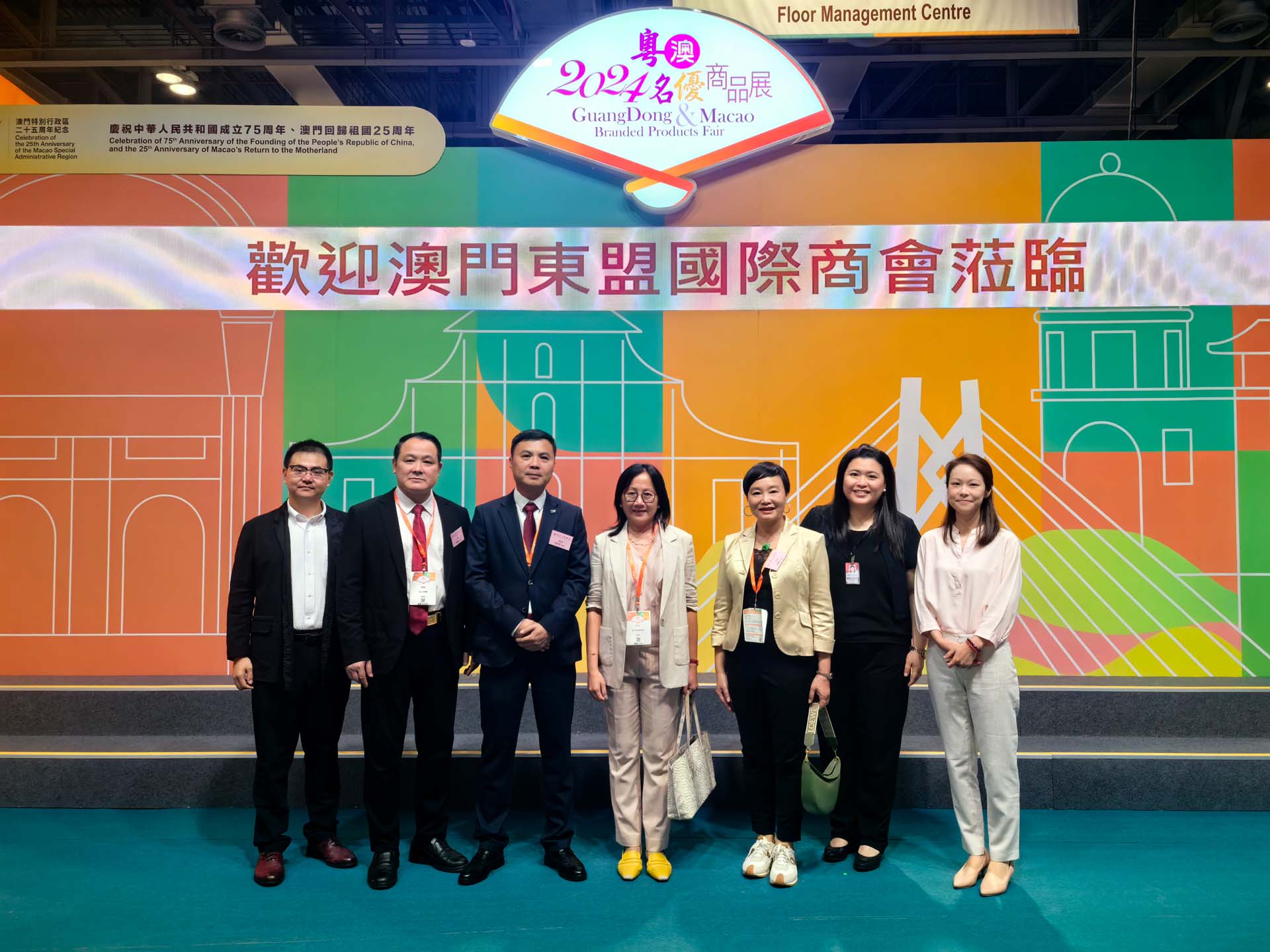
Macao’s market is smaller than neighbouring Hong Kong, and that is why it hosts fewer businesses from the ASEAN bloc, Mr Tan observed. However, Macao is home to several prominent corporations and brands across a wide range of sectors, including Singaporean multinational banking group OCBC, real estate and hospitality brand The Ascott, and luxury hotel chain Capella Hotels & Resorts.
Beyond the business landscape, Macao’s connection to ASEAN extends into cultural and historical aspects. The city shares deep ties with Southeast Asia, shaped by waves of Chinese migration throughout the 20th century. During the political and social movements throughout Southeast Asia in the 1960s and 1970s, thousands of overseas Chinese eventually settled in Macao and formed what has been described as a “vibrant” part of the local community, according to a study of returned overseas Chinese in Macao.
One enduring symbol of these deep-rooted connections is the Association of Returned Overseas Chinese Macau, which has been linking generations of families since its founding in 1968. The organisation claims to represent and connect more than 100,000 returned overseas Chinese and their families from 65 countries and regions, many of them from Southeast Asia and Portuguese-speaking countries.
“Macao has a significant number of returned overseas Chinese and their families. Many of them have deep-rooted ties to Southeast Asia through family, businesses, and government connections,” Mr Tan said, himself a member of the Malaysian Chinese diaspora. “We’ve been leveraging these relationships to strengthen regional cooperation and engagement between Macao and ASEAN,” he explained.