In an interview with Macao Magazine, Henry Chun Kwok Lei, Associate Professor in Business Economics at UM, highlighted the creation of two government-backed funds, regulatory reform, and deeper integration with Hengqin as central elements of Macao’s next stage of economic development.
Professor Lei noted that the latest blueprint dedicates an entire section toward diversification efforts, particularly the advancement of the Government’s “1+4” development strategy. The chapter, he added, sets out the plan to establish an industrial investment fund and a technology guidance fund, which could prove decisive in bridging the capital shortages faced by the city’s emerging industries.
“These funds, capitalised by both public and private resources, can provide financing to qualified ‘1+4’ projects, or those that can contribute to the diversification process of Macao … allowing risk-sharing,” he explained. By leveraging additional private investment, the new funds can “serve as a catalyst for innovative activities,” the scholar added.
Regulatory enhancement forms another major pillar for 2026. The Government intends to simplify administrative approvals and streamline regulatory procedures that affect the city’s business environment. Professor Lei believes such measures could improve Macao’s international competitiveness. “Hopefully, it can help reduce the financial and administrative costs of doing business in Macao, strengthening the attractiveness” for businesses, he noted.
Professor Lei also welcomed the clearer direction set for key sectors, including “Tourism+”; the expansion of tourism in Southeast Asian markets; further development of the “big health” industry; efforts to attract investment management firms; and improvements to the technology enterprise certification scheme. He said these initiatives build on Macao’s existing foundations while opening new opportunities for growth.
Transport infrastructure
Macao is also preparing for one of its most ambitious infrastructure shifts in years, as the MSAR Government moves ahead with its plan to optimise existing urban infrastructure, which could redefine the city’s mobility, as well as its regional role in the Guangdong-Hong Kong-Macao Greater Bay Area.
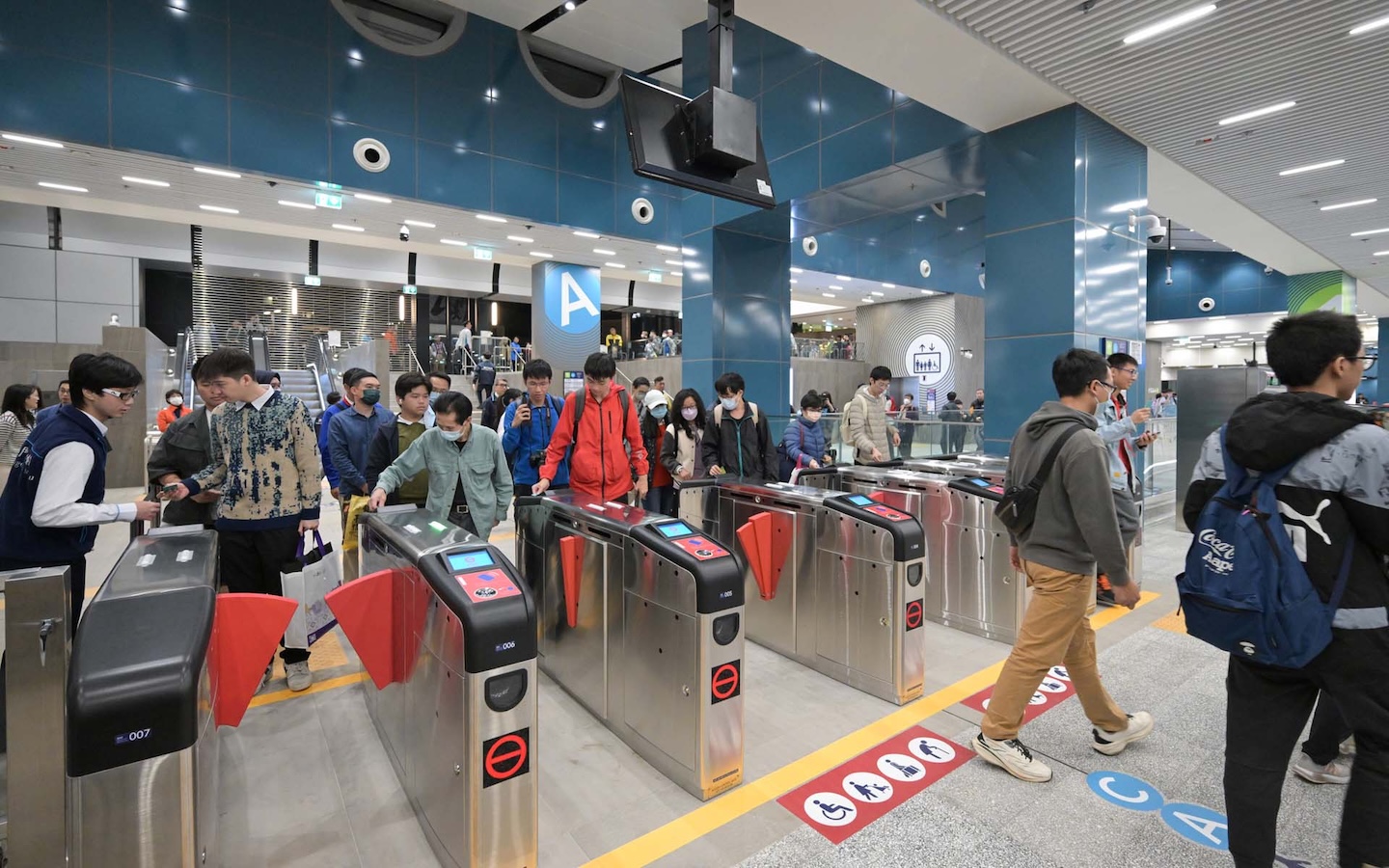
“Urban transport is one of the greatest concerns in Macao,” said Kun Pang Kou, Associate Professor at UM’s Department of Civil and Environmental Engineering. With the Barra, Hengqin and Island Hospital extensions of the Light Rapid Transit (LRT) system now in service, and the Taipa section “basically completed,” attention is now turning to the East Line, he added.
Once in place, the East line is expected to transform buses into the “last-mile” connectors rather than the backbone of Macao’s transport system, as the Government will likely reorganise bus routes to ensure that services complement, rather than duplicate, the rail network, Professor Kou said.
The MSAR Government has also announced plans to begin a feasibility study for a South line of the LRT system, and a potential link to Barra and the East Line would “significantly improve mobility” across the southeastern areas of the Macao peninsula, Professor Kou noted. A more ambitious proposal would be for the South line to extend directly into Hengqin, further tightening regional ties, he suggested.
The LRT’s West line, referenced in the latest policy address, remains further from implementation. “Even though it’s not possible to have the work on the West line started soon, due to the complex local conditions – such as narrow streets, flooding issues and population density – it’s good to start the feasibility study,” Professor Kou told Macao Magazine. “Hopefully in the coming ten years a closed route for the light rail [system] can be established.”
While large-scale rail plans dominate long-term discussions, the city’s day-to-day congestion continues to be shaped by buses, the scholar observed. Currently, “many routes overlap”, a situation that contributes to “unnecessary traffic congestion”. Bus terminals, he added, could be redesigned as major transfer hubs between Macao and Taipa, allowing overlapping routes to be consolidated.
Regional integration
Meanwhile, integration with Hengqin remains vital for the MSAR’s diversification agenda, Professor Lei stated. “Hengqin is able to offer the needed valuable resources, such as land, human resources, technology, and even a [wider] market,” he said. “It is an inevitable outcome that Macao needs to strengthen integration with Hengqin to make good use of its resources,” to achieve the city’s economic diversification goals, the scholar added.
Professor Lei highlighted the “Macao + Hengqin” framework, which sets out six priority areas of collaboration for 2026, as a potentially transformative step in aligning cross-boundary development. In the 2026 Policy Address, Macao is set to “play a proactive role in the development of Hengqin,” Professor Lei observed. “If it can be effectively enforced, it could significantly deepen the integration between Macao and Hengqin.”
He also emphasised the importance of expanding Macao’s role within the Greater Bay Area. Effective implementation of new cooperation mechanisms, he noted, could significantly tighten integration with Hengqin and strengthen wider regional integration.
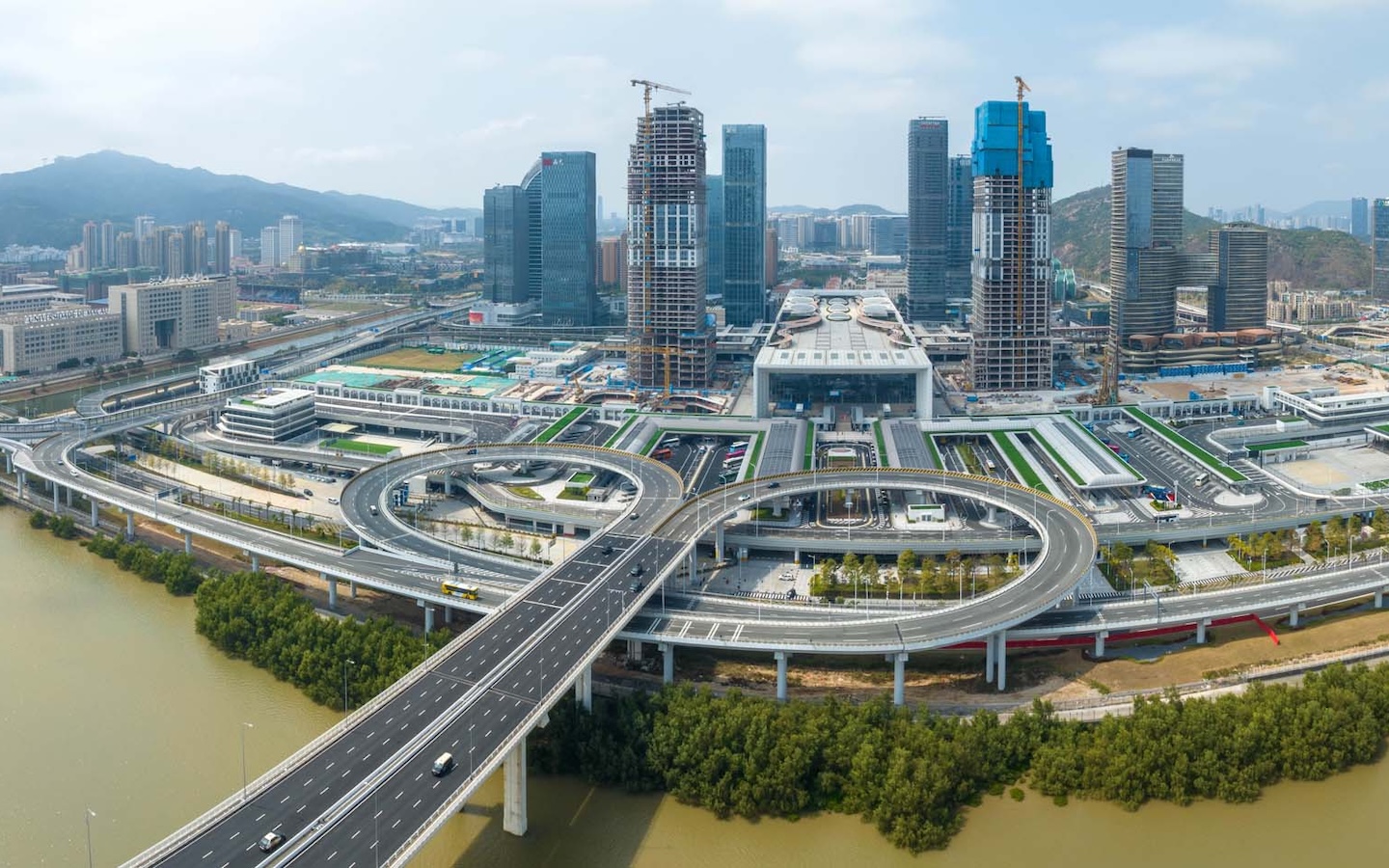
Professor Kou added that Macao’s regional integration envisages new cross-boundary rail infrastructure. The location of the Hengqin station on the Guangzhou–Zhuhai (Macao) high-speed railway has already been confirmed, and the next priority is creating “an urban link” between Macao and this new hub, he suggested. Hengqin authorities have announced that four complementary ports will be built in the coming years, raising the likelihood that the urban connector will pass through one of these new crossings.
If the connection integrates smoothly with Macao’s LRT system, it could significantly reshape cross-boundary mobility. If such a connection is established, “not only would Macao residents have faster access to Hengqin and the Greater Bay Area, but also visitors from the Greater Bay Area and the [Chinese] mainland could come into Macao more easily,” Professor Kou said. For a city seeking both economic diversification and closer regional cooperation, “this project means a lot to Macao,” he stressed.
Supporting SMEs
Professor Lei said small and medium-sized enterprises (SMEs) must upgrade and distinguish their products and services to maintain competitiveness. However, many SMEs lack the resources and expertise to undertake such improvements and therefore “government support in the form of loans, subsidies, grants, and training is essential,” he added.
Investing in technological innovation is equally significant. According to Professor Lei, innovation boosts competitiveness, allowing Macao “to strengthen its economic resilience, developing a stronger ability to withstand, adapt to, and recover from economic fluctuations”.
He also said that if SMEs want to inject new life into local neighbourhoods, they should try to better understand the needs of consumers and create a niche with more unique, high-quality products. This, he explained, “could attract both local residents and tourists, creating new economic activities to revitalise the community economy.”