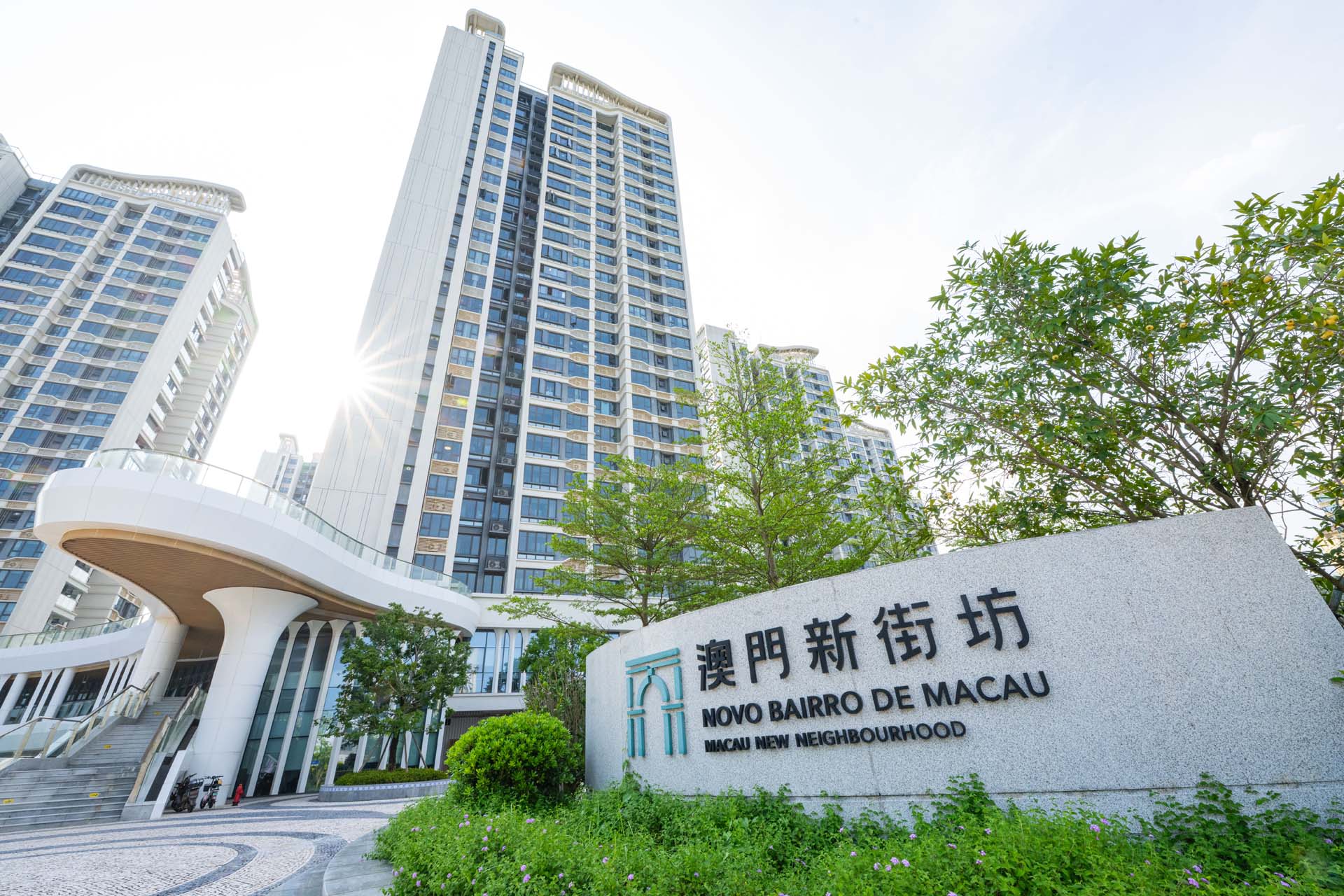
On a weekday morning in the Macau New Neighbourhood complex in Hengqin, two routines unfold a few residential towers apart.
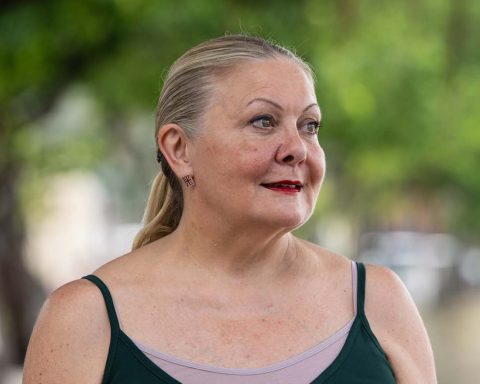
Abby Huang walks her elder son to kindergarten at the Hengqin School Affiliated to Hou Kong Middle School – a journey of about five minutes from her door. A short distance away, Nancy Leong, having dropped off her own child, drives her Macao single-plate car across Hengqin Port to her office in Macao’s Nam Van district. On a good day, the journey takes under half an hour.
One crosses the boundary each morning to work in Macao; the other has moved her family from elsewhere on the Chinese mainland to build a new life in Hengqin. Their routines, ordinary as they may seem, reflect how far cross-boundary living between Macao and Hengqin has developed in five years.
The setting for both women is the same: the Macau New Neighbourhood, the first integrated livelihood project built exclusively for Macao identity (ID) card holders in the Guangdong-Macao In-Depth Cooperation Zone in Hengqin.
Also in this feature
 The Hengqin experiment
 Hengqin’s four pillar industries gain momentum
Developed by Macau Urban Renewal Limited, a Macao government-owned company, the residential complex contains about 4,000 flats located roughly a six-minute drive from Hengqin Port. It is built around a school, a health station, and elderly and family service centres. Residential units went on sale at the end of November 2023.
The community was conceived as a testing ground for extending Macao’s public services onto Hengqin soil – and the experiment is perhaps best judged through the details of everyday life. Ms Leong was among the first residents to move in, about two years ago; Ms Huang bought a unit in 2025 and settled there earlier this year.
A natural move
For Ms Leong, the decision to buy a home in Hengqin was almost instinctive. “The moment the Macao Special Administrative Region (SAR) Government launched the New Neighbourhood project, I bought – I didn’t think twice,” she told Macao Magazine.
“My grandmother was from Hengqin, so I’ve always known the place,” she said. “I was here when Hengqin still had no high-rises.”

What has changed most, in her view, is the ease of movement between Macao and Hengqin. She drives to work through Hengqin Port, where the clearance process that once caused delays has gradually become smoother.
“There’s face recognition now; before, you could only scan a card. It just keeps getting better,” she said.
Driving remains her preferred option, but she recalls how time-consuming the journey once was before the opening of the Hengqin Line of the Macao Light Rapid Transit system. “With the light rail now, it’s far more convenient.”
One frustration remains. Macao single-plate vehicles such as hers are currently restricted from leaving Hengqin for other parts of Zhuhai. “Hengqin is, after all, your own home,” she said.
That restriction is expected to ease. Authorities announced plans in April to allow Macao vehicles with Hengqin entry permits to travel throughout Guangdong province from the neighbouring island, with implementation expected later this year.
Ms Huang’s family had previously lived in Zhongshan, Guangdong province. Her husband, who is from Macao, travelled into the city daily for work, while Ms Huang herself grew up on the Chinese mainland.
When her elder son reached school age, the family moved to the Macau New Neighbourhood. She had considered schools in Macao, as well as Hong Kong-and-Macao education streams offered by Chinese schools, but chose the Hengqin School Affiliated to Hou Kong Middle School.
“The whole school is made up of Macao students, and many of the teachers were brought over from Macao. The content and the learning are closer to Macao’s,” she said.
The school, the first on the Chinese mainland for children of Macao residents, opened in September 2024 and is operated by Hou Kong Middle School, an educational institution based in Macao.
Before her Hengqin flat was ready, Ms Huang sent her son to school from Zhongshan by car. “Two to two-and-a-half hours a day,” she recalled. Now, living in the block beside the school, the difference is immediate.

Ms Leong, whose walk to the school gate is similarly short, expects her child to remain there. “The Hou Kong Middle School already has a strong reputation in Macao. We’ll definitely keep him there.”
Healthcare integration has been a more gradual process. Both mothers use the neighbourhood health station for everyday medical needs.
The facility is the first medical institution established by the Macao SAR Government on the Chinese mainland to be operated and managed directly by Macao’s Health Bureau. Although the long-term goal is to replicate the model of Macao’s public health centres, some limitations remain because of regulatory differences between Macao and Hengqin.
“It’s very convenient to see a doctor,” Ms Leong said. “For a cold or a fever, it’s fine.”
Efforts to expand services are continuing. The number of Macao-registered medicines available at designated institutions, including the neighbourhood health station, has increased to 545, from an initial batch of 296 approved in April 2024.
Official figures show that between November 2024 and the end of November 2025, the station recorded about 6,500 consultations for Macao ID card holders, most of them walk-in appointments.
Macao-Hengqin integration at work
Luo Ping, who heads the Macau New Neighbourhood office of the Women’s General Association of Macau, one of the SAR’s largest civic organisations, observes the process of integration from the front line.
The gradual easing of boundary-crossing procedures, she told Macao Magazine, “has driven a same-city way of living” – reducing the time cost of crossing the boundary and making it increasingly normal to work on one side while living on the other.
Her organisation monitors residents’ needs through regular home visits and surveys conducted with a Hengqin research institute. The feedback has helped shape practical improvements, including the installation of the Macao Government Services 24-hour Self-service Centre in the neighbourhood.
Ms Luo acknowledges that Macao-Hengqin integration remains an ongoing process. Childcare is one area where differences between the two systems are still visible.
“In Hengqin, places generally only take children from age two or three,” she said, explaining that this can create difficulties for dual-income families. While the Women’s General Association provides childcare services for younger children in Macao, its remit in Hengqin does not cover the same provision.
The wider challenge, she said, is institutional. “To build a system that blends Macao’s way of doing things with local management in Hengqin – something Macao ID card holders can accept and that local laws and regulations can also accommodate.”
Even her own office reflects that approach. Its 16-member team includes supervisors from Macao and staff from both sides of the boundary. “This in itself,” she said, “is a model of Macao-Hengqin integration at work.”
A real sense of belonging
Other Macao civic organisations, including the General Union of Neighbourhood Associations of Macau and the Macao Federation of Trade Unions, have also established branches in Hengqin.
Public services may bring people across the boundary, but a sense of belonging is what turns a development into a community. Ms Luo has seen the change in the people who visit her office. Her organisation has brought aspects of Macao’s social-service model into the neighbourhood, from volunteer programmes to family mediation.
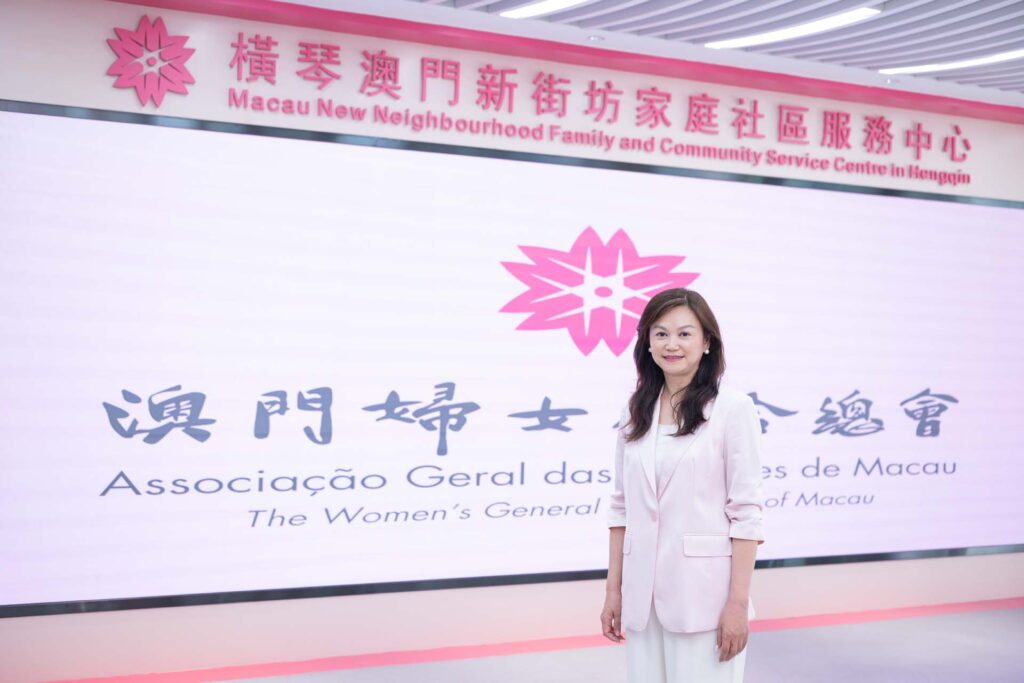
During this year’s Dragon Boat Festival, the office invited a master of intangible cultural heritage bamboo weaving to teach residents. “Then families wrapped rice dumplings together, and went to visit households in need,” she said.
Ms Leong rejects the idea that life in Hengqin is less convenient than in Macao. “In Macao I still have to go downstairs to the supermarket to buy fish. Here I press a button on an app and it’s delivered to my door,” she said.
Even payments have adapted. She uses her Macao e-wallet in Hengqin to pay in patacas and exchanges renminbi only “when I want a slightly better rate”.
The pilot dual-currency payment scheme, allowing residents and visitors to make small mobile purchases in either patacas or renminbi, was introduced in September 2024. By August last year, it had expanded to six major commercial districts within the Cooperation Zone.
Life in the Macau New Neighbourhood has also developed the rhythms of a familiar community. Residents organise seafood group purchases through neighbourhood chats, weekend ball games and barbecues.
“Since moving to Hengqin,” Ms Leong said, “I really don’t go back to Macao for anything except work.”