When Chief Executive Sam Hou Fai departed Macao on August 29 for an eight-day journey through Southeast Asia, his objectives went well beyond strengthening ties with three individual countries.
The visits to Singapore, Indonesia and Malaysia formed part of the Macao Special Administrative Region (MSAR) Government’s “Down South” strategy and its broader effort to reinforce the city’s role as a bridge between China and international markets. They also offered an opportunity to present the priorities of the Third Five-Year Plan for Economic and Social Development of the MSAR (2026–2030) and attract international resources to Macao and Hengqin.
According to the MSAR Government, Southeast Asia has longstanding cultural, economic and people-to-people links with Macao, while five of the city’s 10 largest international visitor source markets are in Southeast Asia. The Macao authorities see those existing connections as a foundation on which to reinforce cooperation.
This was reflected in the composition of the delegation. Around 120 business representatives from Macao, Hengqin and other parts of the Chinese mainland joined the tour under a “joint voyage” model designed to help companies explore overseas markets while attracting international partners to Macao and Hengqin.
By the end of the visit, the numbers provided a measure of its scale. Mr Sam took part in 37 events, ranging from official meetings and business promotions to cultural and educational activities. More than 370 business-matching sessions were held and 189 cooperation agreements signed involving government bodies and businesses. These covered economic and trade cooperation, conventions and exhibitions (MICE), technology, traditional Chinese medicine (TCM) and “Big Health”, halal products and brand marketing.
Mr Sam said the visit had “comprehensively strengthened” the overall level of cooperation between Macao and the countries visited, as well as with the Association of Southeast Asian Nations (ASEAN).
Speaking to reporters at the end of the tour, the Chief Executive said the three-country visit had also promoted Macao’s successful implementation of the “One country, two systems” principle, as well as the city’s Third Five-Year Plan.
Mr Sam said the visit “bolstered exchanges” with the three countries and “deepened practical cooperation”.
Singapore: complementary strengths
Singapore, the first stop, provided an opportunity to explore cooperation between two compact, highly internationalised Asian cities facing some similar challenges while possessing complementary economic strengths.
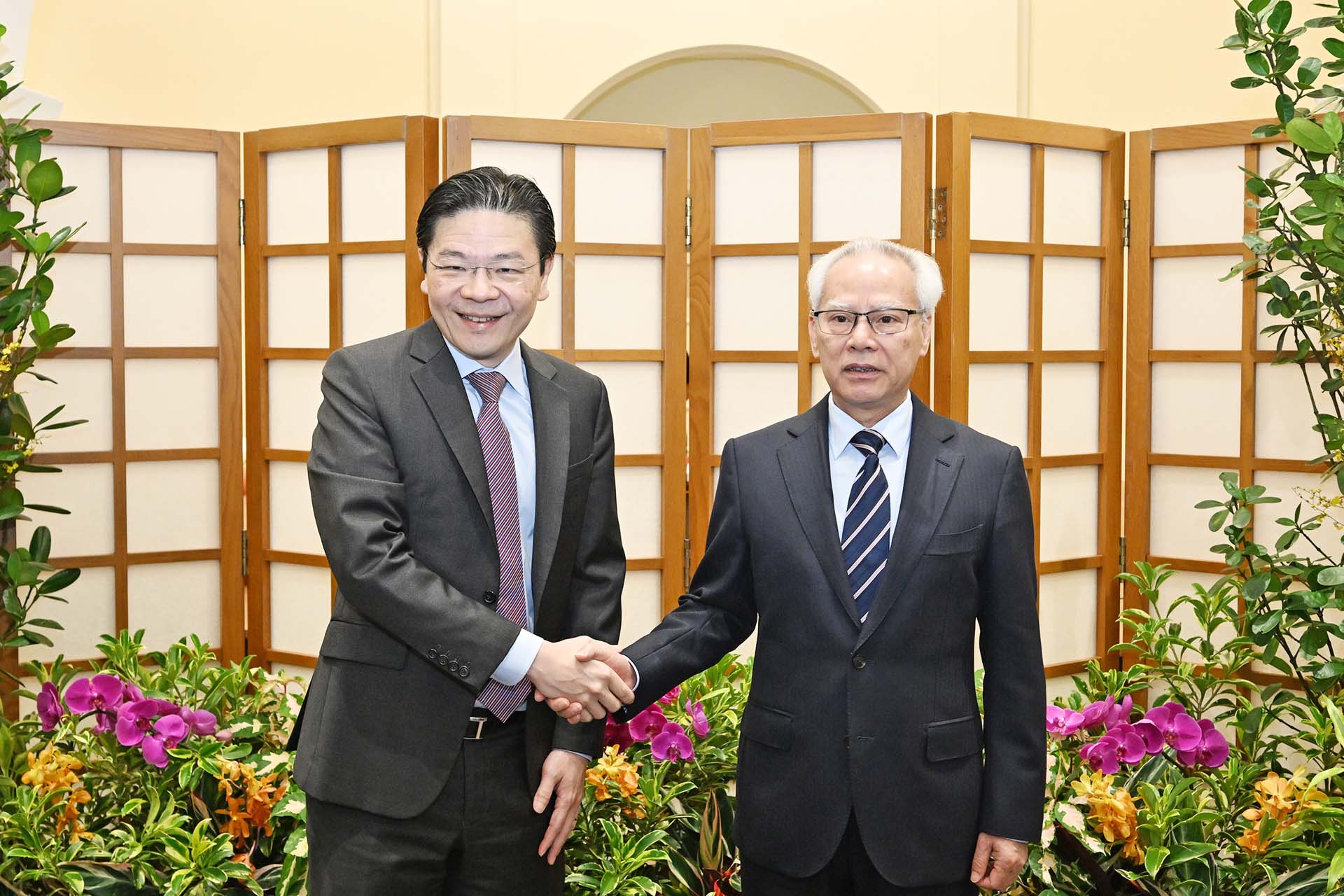
In a meeting with Prime Minister and Minister for Finance, Lawrence Wong, Mr Sam highlighted existing exchanges in tourism, MICE, trade, education and culture. He also presented opportunities arising from the “Macao + Hengqin” development model, encouraging Singaporean companies to use Macao and Hengqin to connect with the Guangdong-Hong Kong-Macao Greater Bay Area and wider Chinese mainland.
Mr Wong noted the similarities between the two cities as open economies with high population densities and said the participation of entrepreneurs from Macao, Hengqin and the Chinese mainland in the delegation could strengthen connections with Singaporean investors.
“Macao, as a key part of the Guangdong-Hong Kong-Macao Greater Bay Area, is actively advancing the high-quality development of the Guangdong-Macao In-Depth Cooperation Zone in Hengqin, presenting abundant development opportunities,” Mr Wong added.
Economic diversification featured prominently in other meetings. Singapore’s Deputy Prime Minister and Minister for Trade and Industry, Gan Kim Yong, discussed with the Chief Executive potential cooperation in higher education, the digital economy and industrial transformation. Singapore’s experience in reducing dependence on individual industries and cultivating new growth engines was particularly relevant as Macao pursues its own economic diversification strategy.
Mr Gan added that this visit would “certainly spark greater interest among Singaporean enterprises in establishing operations in Macao and Hengqin.”
Education and talent development emerged as another potential bridge. Mr Sam – during a meeting with the Chinese Ambassador to Singapore, Cao Zhongming – invited Singaporean universities and research institutions to participate in projects including the Macao-Hengqin International Education (University) Town and the Macao Technology Research Industrial Park. He also identified opportunities linking Singapore’s expertise in healthcare and TCM with Macao and Hengqin.
Singapore’s strengths in the digital economy, industrial transformation, international trade, and healthcare, combined with Macao’s unique role in connecting the vast Chinese mainland market with Portuguese-speaking countries, “can form a new framework of mutually beneficial cooperation,” Mr Sam noted. “The two sides should continue to deepen industrial linkages and resource alignment, to achieve synergistic development,” he stated.
Business links accompanied the official discussions. In 2025, merchandise trade between Macao and Singapore increased by 36.3 percent, according to Singapore’s Minister of State in the Ministry of Foreign Affairs and Ministry of Trade and Industry, Gan Siow Huang. Eight cooperation agreements were signed at a reception attended by around 350 people, covering trade, tourism promotion, Big Health, TCM, industry-academia research, modern finance, high-end technology and smart-city development.
The Chief Executive also met representatives of Singapore’s Chinese community and business associations at the Singapore Chinese Chamber of Commerce & Industry. Chamber President Kho Choon Keng pointed to opportunities created by combining Macao’s access to the Greater Bay Area with Singapore’s connections across ASEAN, including in technological innovation, finance and the modernisation of traditional industries.
Indonesia: boosting connectivity
The second leg of the ASEAN tour took the MSAR delegation to Indonesia, where Mr Sam became the first Macao Chief Executive to make an official visit to the country – a milestone highlighted by Chinese Ambassador to Indonesia, Wang Lutong.
Indonesia’s scale, its position within ASEAN and its large Muslim population create several distinct areas of potential cooperation with Macao, Mr Sam highlighted.
During talks with Coordinating Minister for Economic Affairs, Airlangga Hartarto, the two sides identified tourism, trade and healthcare among areas offering room for growth. The Chief Executive encouraged Indonesian businesses to explore the opportunities offered by Hengqin, combining Macao’s international business environment with the land and industrial resources of the Guangdong-Macao In-Depth Cooperation Zone in Hengqin, to gain access to the Chinese mainland market.
Connectivity was a recurring subject. Both sides expressed support for restoring direct flights between Macao and Jakarta. The case for doing so is supported by growing travel demand: Macao received more than 200,000 Indonesian visitors in 2025, while more than 8,000 Indonesian citizens were working in the city, according to Mr Sam.
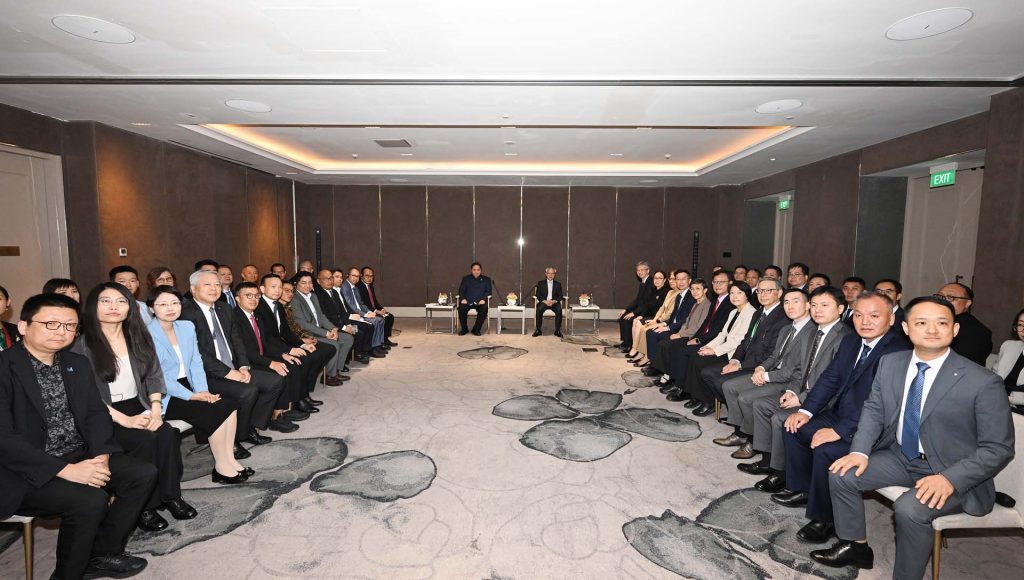
Indonesia’s Tourism Minister, Widiyanti Putri Wardhana, and the Chief Executive also discussed deeper tourism cooperation following Indonesia’s restoration of visa-free entry for MSAR passport holders. Macao, meanwhile, has been strengthening its Muslim-friendly tourism environment by encouraging halal certification, publishing a Muslim Travel Guide and providing further hospitality training. Indonesia was Macao’s third-largest international visitor source market in 2025, according to official data.
That is why Halal industries were an important part of the economic discussions, alongside TCM, healthcare, artificial intelligence (AI) and environmental technology.
In his meeting with Ambassador Wang, Mr Sam sought support in connecting Macao businesses with Indonesian halal-certification organisations and understanding the standards required to serve Muslim consumers.
Cultural ties also had a prominent place. The exhibition “Splendor of the Mirrored Sea: Macao’s Symphony of Civilizations on the Maritime Silk Road” opened at Jakarta Textile Museum during the visit, presenting Macao’s history as a meeting point along the Maritime Silk Road through intangible cultural heritage, craftsmanship and performing arts.
At the MSAR Government reception in Jakarta, nine cooperation agreements were signed in fields ranging from trade, investment and tourism to the MICE industry, pharmaceuticals, environmental engineering, TCM, Big Health and halal-product raw materials.
Malaysia: linking markets
The final stop, Malaysia, brought another set of complementary opportunities into focus.
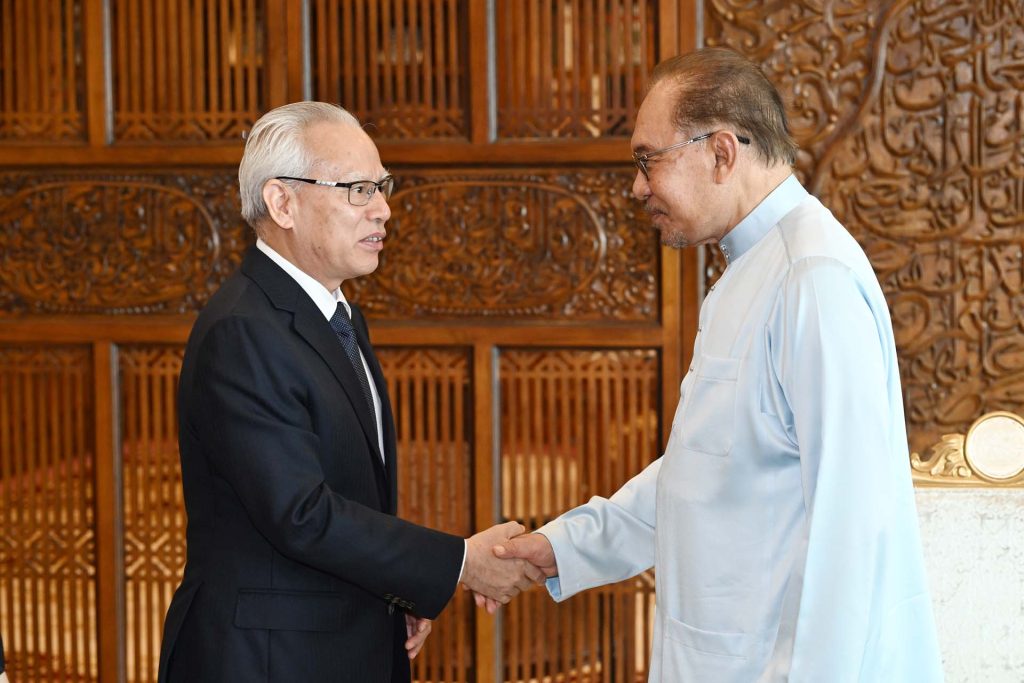
Meeting Prime Minister and Minister of Finance, Anwar Ibrahim, Mr Sam discussed cooperation spanning economic matters, trade, tourism and culture. He invited Malaysian companies to establish or expand operations in Macao and Hengqin, while also using Macao as a platform for reaching both the Chinese mainland and Portuguese-speaking markets.
The discussions also produced a potentially significant longer-term proposal: exploring a Macao-Malaysia free trade agreement and an agreement to eliminate double taxation. Mr Anwar supported examining both ideas, saying they could help deepen trade and encourage sustained two-way investment. He also advocated stronger cooperation in healthcare, education, technology and tourism.
At a meeting with Malaysia’s Deputy Minister of Investment, Trade and Industry, Sim Tze Tzin, and business representatives, the Chief Executive highlighted the MICE, TCM and halal industries as promising fields. Malaysia was Macao’s largest ASEAN trading partner in terms of bilateral trade volume in 2025, while its mature halal certification system and regional supply chains offer potential gateways for Macao businesses seeking to reach Muslim consumers across Southeast Asia.
The delegation also engaged the Malaysian Chinese community. Mr Sam met Senator and Malaysia-China Business Council Chairman, Low Kian Chuan, along with Chinese community leaders and representatives from local chambers of commerce, encouraging them to connect companies and resources between Malaysia, Macao and Hengqin. Mr Low highlighted Macao’s international MICE platform, network of Chinese entrepreneurs and role as a connector between China and Portuguese- and Spanish-speaking countries.
Chinese Ambassador to Malaysia, Ouyang Yujing, similarly pointed to the potential for cooperation, particularly in tourism, noting the complementarity between Malaysia’s outbound travel market and Macao’s tourism infrastructure.
Education provided another dimension. Macao’s Education and Youth Development Bureau and nine of the city’s higher education institutions staged a “Study in Macao” Education Fair in Kuala Lumpur to encourage Malaysian students to pursue tertiary education in the city. Mr Sam and Mr Ouyang attended the launch, during which 12 education cooperation agreements were signed. Across the three-country tour, Macao institutions concluded 16 education agreements with counterparts in Singapore and Malaysia.
Turning agreements into cooperation
The visits to the three countries showcased the breadth of Macao’s ambitions in Southeast Asia, with the Chief Executive summarising the main achievements under four key aspects.
First, the visit helped strengthen external exchanges and promote Macao’s successful practice of the “One country, two systems” principle. Mr Sam also promoted Macao as an important bridgehead for China’s high-level opening-up, highlighting the city’s unique advantage of being “backed by the motherland and connected to the world”.
The second goal highlighted by Mr Sam was the deepening of economic and trade cooperation with the three countries and the promotion of Macao’s appropriate economic diversification.
That was followed by the strengthening of tourism collaboration with Singapore, Indonesia, and Malaysia, alongside efforts to attract more international visitors to Macao. The three ASEAN countries are important international tourist-source markets that Macao is seeking to expand.
The fourth aspect highlighted by the Chief Executive was the strengthening of cooperation in fields such as education and culture, thus promoting closer people-to-people exchanges.
For Mr Sam, the trip ultimately represented a two-way exercise: taking Macao and Hengqin’s opportunities abroad while bringing international capital, companies, talent and ideas back to the city. The Chief Executive also said that, following the delegation’s return, the MSAR Government would follow up on the cooperation projects and provide support to participating enterprises.
| New perspectives on urban development |
|---|
| Cooperation was not the only purpose of the Singapore visit. Macao’s delegation also examined policies and projects that could provide lessons for the city’s own development. At a meeting with Singapore’s Coordinating Minister for Social Policies and Minister for Health, Ong Ye Kung, Chief Executive Sam Hou Fai discussed public health, TCM and the challenges posed by ageing populations. Macao and Singapore already have longstanding health cooperation, including a memorandum of understanding renewed every three years since 2005, covering areas such as medical personnel training, public-health emergency response and information exchange. Urban renewal was another focus. In Queenstown, a redevelopment project built in a former satellite town, Mr Sam toured a Housing & Development Board (HDB) public housing redevelopment project and discussed planning and housing policy with HDB chief executive, Tan Meng Dui. He said Singapore’s approach to replacing ageing public housing could provide useful references as Macao tackles its own stock of older buildings. The MSAR delegation also visited Sentosa and Gardens by the Bay, examining how tourism infrastructure, public space, culture, ecological technology and facilities for children and older people can be integrated into urban development. Mr Sam stressed that urban renewal is a critical livelihood-related initiative, a key component in building the policy vision of “Blissful Macao” and directly impacts the city’s overall image. This was also one of the priorities outlined in the city’s Third Five-Year Plan. 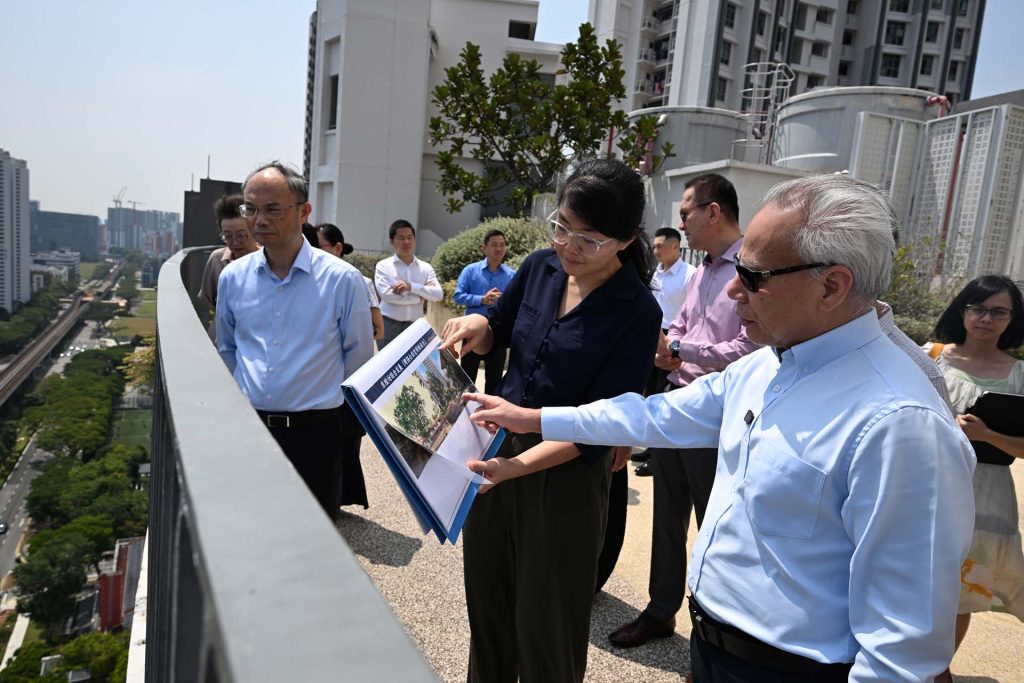 The Chief Executive visits a Singapore HDB public housing project redeveloped on a former urban area site (Handout by GCS) The Chief Executive visits a Singapore HDB public housing project redeveloped on a former urban area site (Handout by GCS) |
| Strengthening the ASEAN links |
|---|
| The three-country tour also sought to strengthen Macao’s relationship with the Association of Southeast Asian Nations (ASEAN) as a whole. In the Indonesian capital, Jakarta, Chief Executive Sam Hou Fai visited the ASEAN Secretariat and met with the Secretary-General of ASEAN, Kao Kim Hourn. Mr Sam said Macao would seek closer ties and more practical cooperation with ASEAN member states, using its position within the Guangdong-Hong Kong-Macao Greater Bay Area to help connect Southeast Asian markets with the Chinese mainland. The Chief Executive also noted that strategic mutual trust between China and ASEAN “has continued to strengthen, cooperation in various fields has deepened,” and the ASEAN-China Comprehensive Strategic Partnership “has maintained a good momentum in its development under the strategic guidance of the leaders of China and ASEAN member countries”. China, he added, “strongly supports” the Greater Bay Area in becoming “a new point of growth” for cooperation with ASEAN. Tourism, trade, industrial cooperation and cultural exchange were among the areas highlighted. The Chief Executive also expressed hope that, with the authorisation of the Central Government and support of the ASEAN Secretariat, Macao could participate in relevant China-ASEAN cooperation mechanisms in an appropriate capacity and take part in ASEAN activities. Mr Kao pointed to significant room for further cooperation. ASEAN countries welcomed some 120 million international tourists in 2024, while Macao has also recorded strong international visitor growth. He identified investment, trade, tourism and cultural exchanges as areas where the two sides could complement each other, adding that the ASEAN Secretariat was willing to maintain close contact with the MSAR Government. The Chief Executive separately met Wang Qing, Head of Mission and Ambassador Extraordinary and Plenipotentiary of the People’s Republic of China to ASEAN. Their discussions focused on how Macao could build on existing China-ASEAN cooperation mechanisms, particularly in MICE, culture and tourism, and the Big Health industry. Mr Wang said Macao’s role as “One Centre, One Platform and One Base” placed it in a strong position to expand exchanges with ASEAN in trade, tourism and other areas. 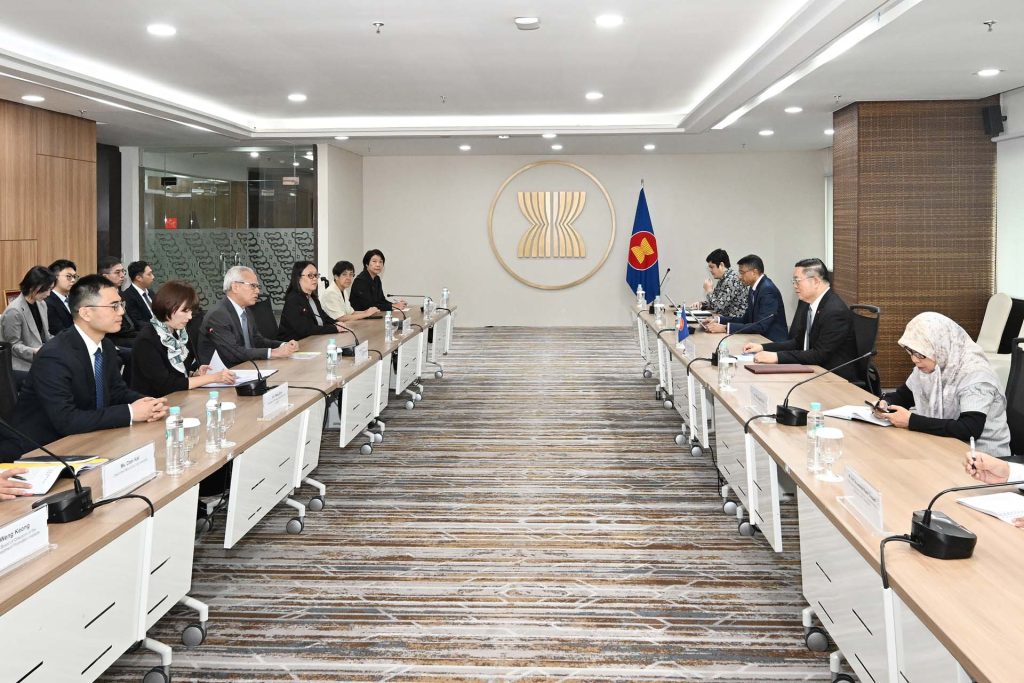 Sam Hou Fai in a meeting with ASEAN Secretary-General, Kao Kim Hourn (Handout by GCS) Sam Hou Fai in a meeting with ASEAN Secretary-General, Kao Kim Hourn (Handout by GCS) |