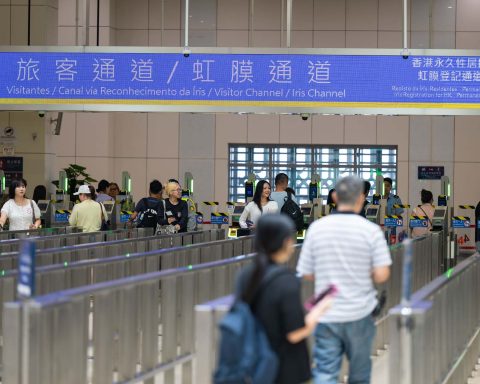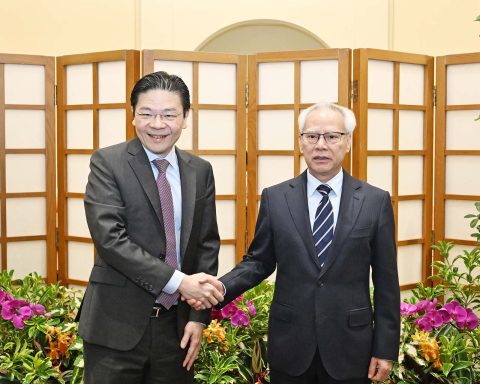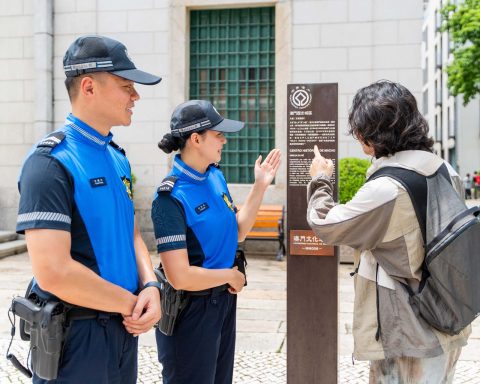
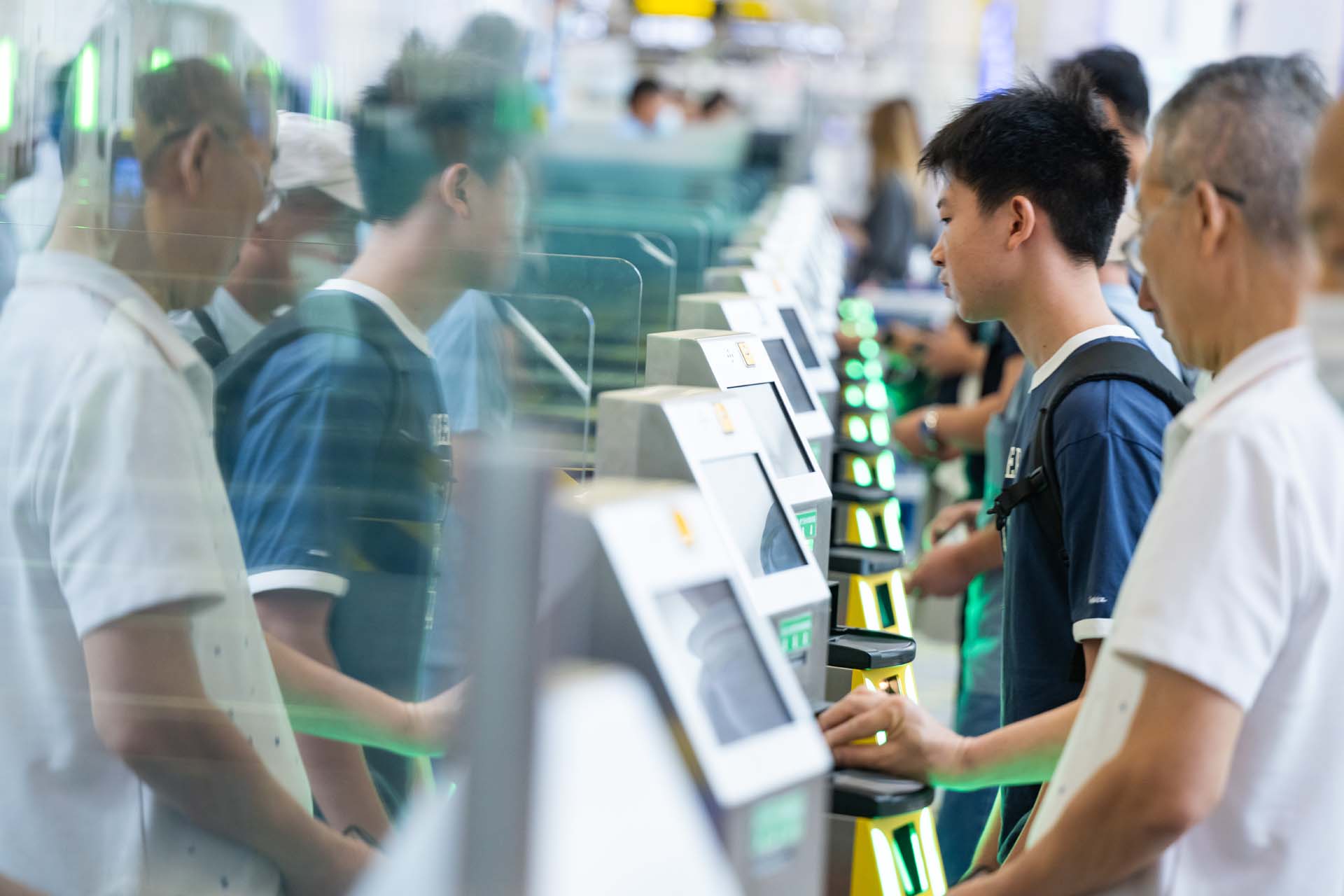
Crossing a boundary checkpoint used to be a very different experience in Macao. Two decades ago, every traveller depended on manual inspection. Then, in 2005, automated immigration channels arrived, beginning a transformation that has steadily changed how people move in and out of the city.
Automated clearance is now routine for many residents of Macao, the Chinese mainland and Hong Kong. The technology itself has also moved on. Traditional “two-gate” automated channels use document readers and fingerprint scanning, while “three-gate” automated channels – also known as a “joint inspection, one-time release” system – have made crossing between Macao and the Chinese mainland increasingly seamless.
Behind that evolution is a broader effort to make Macao’s boundaries easier to navigate without compromising security.
The Public Security Police Force (CPSP), in partnership with the Public Security Forces Affairs Bureau of Macau, the Zhuhai General Station of Exit and Entry Frontier Inspection and the Hong Kong Immigration Department, has progressively introduced measures to streamline boundary controls and simplify immigration procedures. International visitors are increasingly part of that process.
Also in this feature
 Seamless travel with a human touch
QR codes, iris recognition and intelligent facial recognition are among the technologies now being used. But the changes go beyond making boundary crossings faster. They also support Macao’s ambitions to strengthen its role in the country’s high-level opening-up and its positioning as “One Centre, One Platform and One Base” and “One Hub”.
With the Macao Special Administrative Region (MSAR) seeking to reinforce its position as a bridge between China and Portuguese-speaking countries; a world centre of tourism and leisure; and an international destination for conventions, exhibitions, sports and entertainment, it is more important than ever to ensure people can move seamlessly across its boundaries.
More countries, fewer barriers
The numbers illustrate the scale of that challenge. Macao recorded more than 6.27 million boundary crossings by foreign nationals in 2025, including tourists, non-resident workers and international students. That was 14.5 percent more than in 2024.
The use of automated channels grew even faster. Foreign nationals made approximately 124,000 crossings through automated channels during 2025, an increase of 65.4 percent year-on-year.
The trend has continued in 2026. From January to June, Macao recorded around 3.27 million crossings by foreign nationals, up 6.5 percent from the same period last year. About 76,000 were made through automated channels, up 32.6 percent.
Part of the effort to make Macao more accessible has involved expanding the number of nationalities benefiting from simplified entry arrangements.
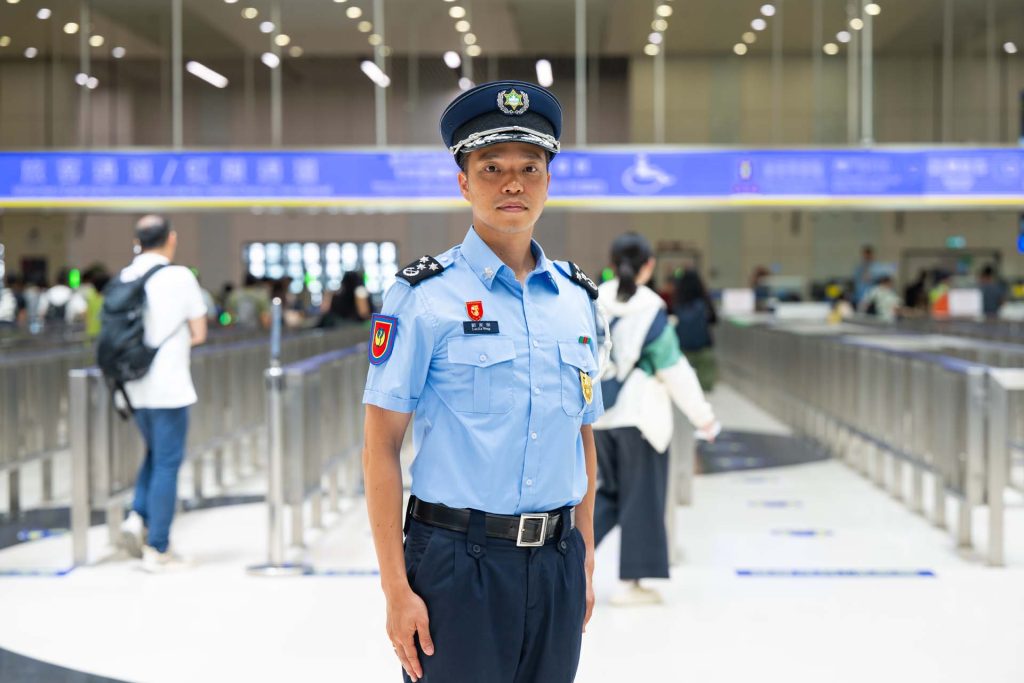
“To make it easier for foreign nationals to visit Macao, last year several new countries were added to allow their citizens to enter the MSAR either visa-free or with prior authorisation,” says Lao Ka Weng, head of the CPSP’s Border Control Department.
The arrangement currently covers 88 countries, he adds. For many of those who fall outside the visa-exemption arrangements, entry can still be relatively straightforward.
“The vast majority of other foreign visitors who do not benefit from visa-free entry may apply, upon arrival at Macao’s boundary checkpoints, for an authorisation to enter and stay,” Mr Lao says, referring to the procedure commonly known as a visa on arrival.
At the same time, automated clearance is becoming available to a wider range of international travellers.
“With the aim of making boundary procedures more efficient and improving the experience of international visitors, in 2024 and 2025, the CPSP successively extended the use of Macao’s automated channels to visitors from Singapore, Portugal, Brazil, Germany, France, Malaysia and Spain,” the officer notes. “Together with visitors from Australia and South Korea, who were already covered, visitors from nine countries can currently register to use Macao’s traditional two-gate automated channels.”
Foreign visitors currently enter and leave the city mainly through the Border Gate, the Hong Kong-Zhuhai-Macao Bridge boundary crossing, the Outer Harbour and Taipa ferry terminals, as well as the Macau International Airport, according to official data.
Seamless travel
International connectivity is only one side of Macao’s changing boundary landscape. The city’s deeper integration into the Guangdong-Hong KongMacao Greater Bay Area and the development of the Guangdong-Macao In-Depth Cooperation Zone in Hengqin are also generating more frequent journeys between Macao and Guangdong.
That has created another challenge: how to make movement between two jurisdictions simpler for an increasingly mobile population. Integrated automated inspection channels are one answer.
“Following consultations between the Public Security Police Force and the Zhuhai General Station of Exit and Entry Frontier Inspection, the categories of people eligible to use the integrated automated inspection channels at the Hengqin boundary crossing were expanded on a trial basis to include three new categories of foreign passport holders effective from October 28, 2024,” Mr Lao says.
Eligible travellers first complete registration procedures for automated clearance on both the Chinese mainland and Macao sides. They can then use the integrated automated channels at the Hengqin boundary crossing.
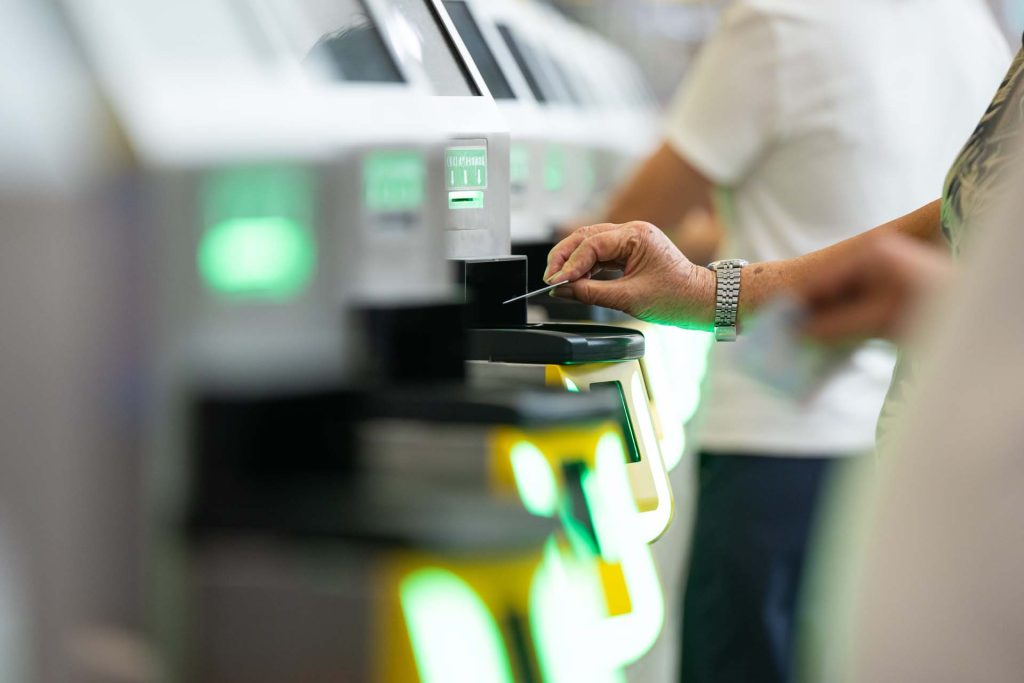
The initiative did not stop there. On January 26, 2026, it was extended to the Zhuhai-Macao inspection halls at the Hong Kong-Zhuhai-Macao Bridge boundary crossing, the officer notes.
Once registered, eligible foreign nationals can also use traditional two-gate automated channels at the Border Gate, the Outer Harbour, Taipa and Inner Harbour ferry terminals, Macau International Airport and the Hong Kong-Macao inspection halls at the Hong Kong-Zhuhai-Macao Bridge.
Combined, the measures are intended to shorten boundary-crossing times and make journeys easier not only for residents, but also for international visitors who want to travel between Macao and the Chinese mainland.
Staying in the car
Not every innovation involves an automated gate. The opening of the Hong Kong-Zhuhai-Macao Bridge created an important new route into Macao, including for travellers arriving through Hong Kong International Airport. Eligible foreign visitors are now able to make that journey even more conveniently without having to leave their vehicles.
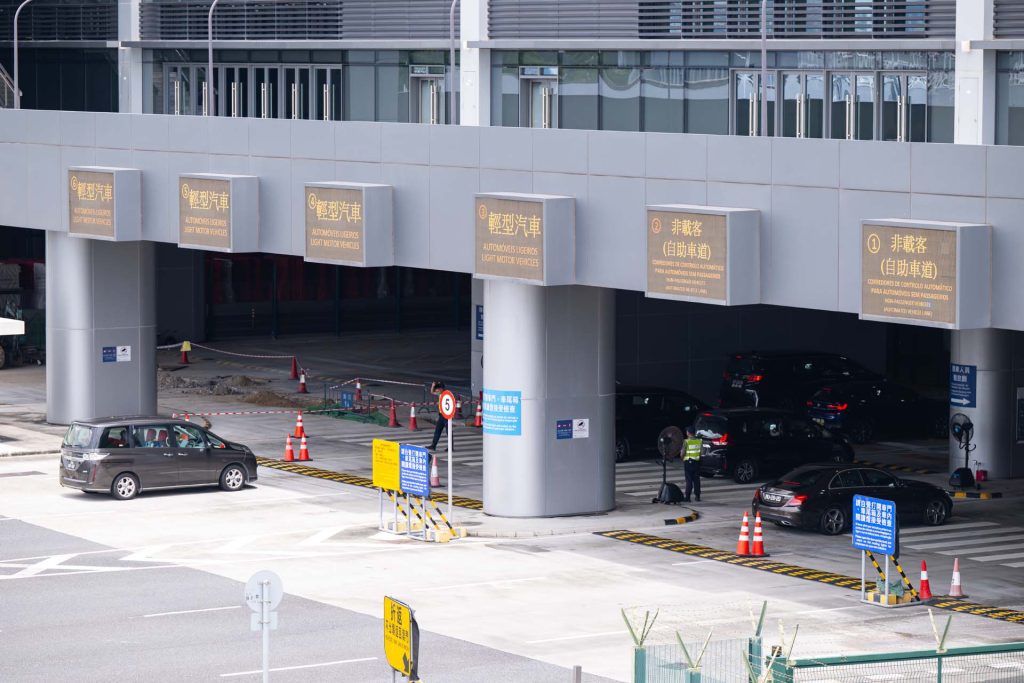
“Since 9 June 2025, the Macao boundary crossing of the Hong Kong-Zhuhai-Macao Bridge has allowed eligible foreign visitors travelling in vehicles with a maximum capacity of nine seats to complete entry and exit procedures using the vehicle lanes,” Mr Lao says.
The precise procedure depends on a visitor’s immigration status. “International visitors who are exempt from visa requirements for Macao can, with a valid passport, complete entry procedures without leaving the vehicle through the inbound vehicle lanes at the boundary crossing. International visitors who are not exempt from visa requirements can complete entry procedures in the inspection hall for vehicle passengers,” the officer explains. “All foreign visitors holding a valid passport can complete exit procedures without leaving the vehicle through the relevant outbound lanes.”
For eligible passengers, it removes another step from the cross-boundary journey and reduces the time needed to complete immigration formalities.
Efficiency at the boundary also matters to Macao’s ambitions as an international tourism and business destination. When major international events are held in the city, the CPSP can work with organisers to make arrival procedures smoother for participants.
“For example, during events such as the Ministerial Conference of the Forum for Economic and Trade Co-operation between China and Portuguese-speaking Countries (Macao) and the APEC [Asia-Pacific Economic Cooperation] Tourism Ministerial Meeting, the CPSP worked with the organising entities to establish dedicated green channels at boundary checkpoints, allowing participants to pass through quickly and helping to build a positive international image of Macao as a convention and exhibition destination,” Mr Lao says.
At the same time, Macao is increasingly able to function not only as a destination in its own right, but also as a gateway for international travellers wanting to explore the Chinese mainland.
A significant development came in November 2025, with the implementation at the Hengqin and Hong Kong-Zhuhai-Macao Bridge boundary crossings of the Chinese mainland’s 240-hour visa-free transit policy.
Eligible foreign visitors can enter designated areas of the Chinese mainland from Macao through the two checkpoints and remain for up to 10 days.
The measure “not only facilitates tourism and business activities by foreign visitors between the Chinese mainland and Macao, but also creates favourable conditions for cities in the Greater Bay Area and Macao to jointly develop ‘one itinerary, multiple destinations’ tourism,” Mr Lao states.
The CPSP “has also been actively working with the tourism sector to promote this measure, further strengthening Macao’s role as a platform connecting the Chinese mainland with the rest of the world,” he adds.
The transformation is far from complete. “The CPSP will continue to develop, with an innovative approach, further measures aimed at facilitating boundary crossings”, Mr Lao highlights.
Among the initiatives being studied are closer cooperation with the Chinese mainland to ease travel by foreign nationals across the Macao-Zhuhai and Macao-Hengqin boundaries; expand automated channels to more nationalities; and further streamline advance entry authorisation procedures.
Two decades after Macao launched its first automated immigration channels, the evolution of its boundaries represents more than just a shift from manual checks to technology. It reflects a profound transformation in how the city connects –integrating it more closely with neighbouring Hengqin and the Greater Bay Area, with international visitors and, ultimately, with the rest of the world.