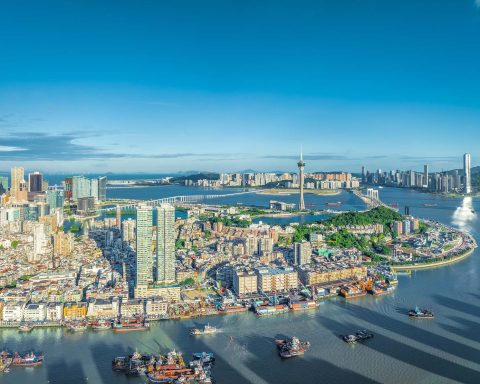
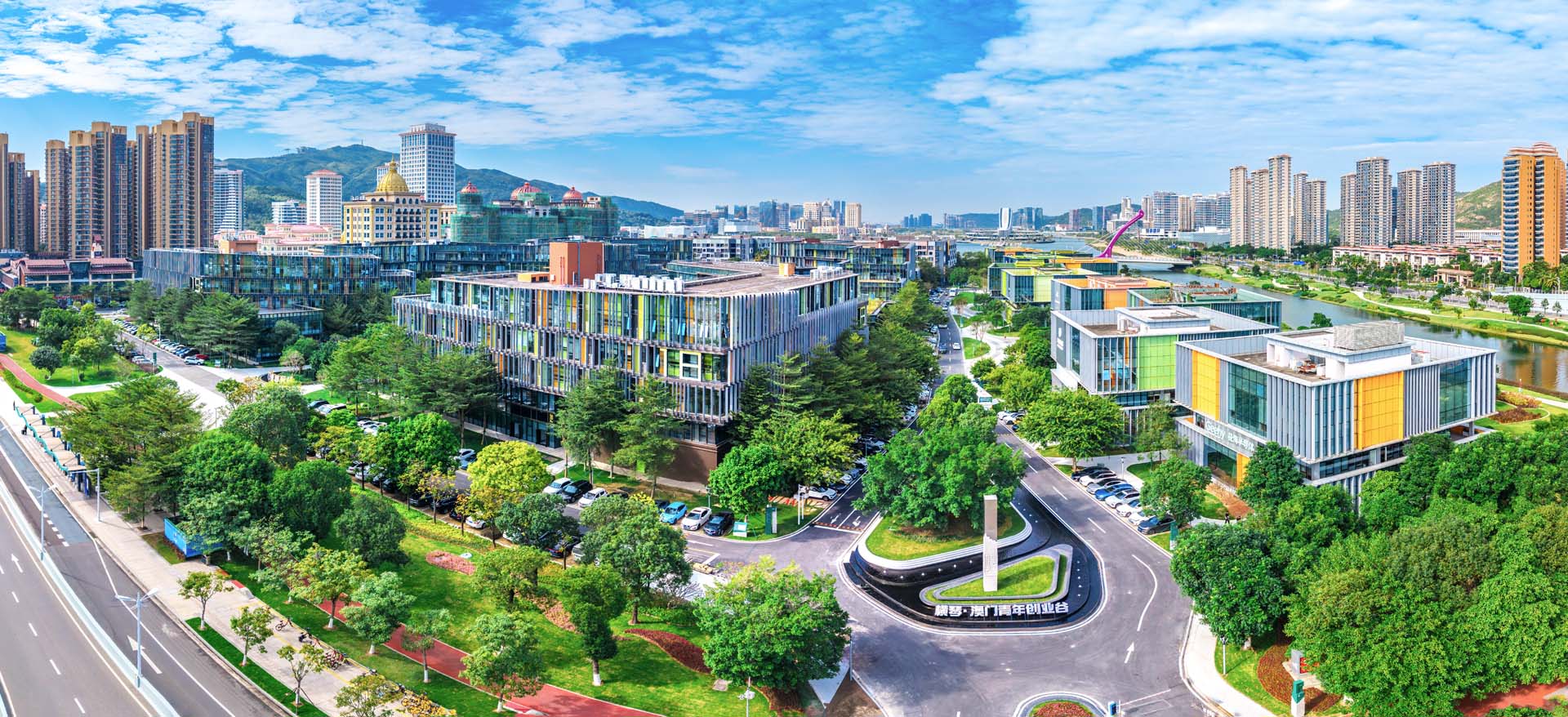
Five years after the launch of the Guangdong–Macao In-Depth Cooperation Zone in Hengqin, its four designated strategic industries are beginning to move beyond policy ambition and into measurable economic activity. What was conceived as a blueprint to help diversify Macao’s economy is now evolving into an experiment in cross-boundary development, with the neighbouring jurisdictions testing new models in technology, Traditional Chinese Medicine (TCM), finance, tourism and business collaboration.
When Alan Ho Hoi Meng, president of the Macao Association of Convention, Exhibition and Tourism Sectors, reflects on how far Hengqin’s exhibition industry has progressed, he begins with the figures. In 2023, six events were held under the “one event, two venues” model, in which a single conference or exhibition is split between Macao and Hengqin. Today, he says, more than 10 such events are staged each year, with as many as five taking place simultaneously during one recent month.
One recent example was the “Guangdong–Hong Kong–Macao Greater Bay Area Water Forum”, held in June. The main venue was Hengqin’s Tianmu Qintai Conference Centre, while Macao hosted a satellite venue and organised technical visits for participants.
“This shows that the connection between Macao and Hengqin has become closer,” said Mr Ho, who is also president of the Hengqin Guangdong–Macao In-Depth Cooperation Zone Convention and Exhibition Industry Association. “Over the past five years, as Hengqin’s hardware facilities have gradually increased, MICE [Meetings, Incentives, Conventions and Exhibitions] links between Macao and Hengqin have become increasingly close.”
Also in this feature
 The Hengqin experiment
 One neighbourhood, two cities
The figures suggest the model is gaining momentum. In 2025, Hengqin hosted more than 500 convention and exhibition events, with more than 20 adopting the cross-boundary format, according to the Cooperation Zone’s Industrial Development Bureau.
A four-cluster blueprint
The 2021 “Master Plan for the Development of the Guangdong–Macao In-Depth Cooperation Zone in Hengqin” set out an ambitious vision: to cultivate four “new industries” that would help promote Macao’s diversified economic growth. These priority sectors comprise scientific and technological research and high-end manufacturing; TCM and other Macao-branded industries; cultural tourism, conventions, exhibitions, commerce and trade; and modern finance.
That strategy has since been further developed. The Cooperation Zone’s industrial development plan for 2025–2029 groups the four sectors into four themed districts – International Health Island, Digital Island, Vitality Island and Wealth Island – each intended to build complementary industrial ecosystems.
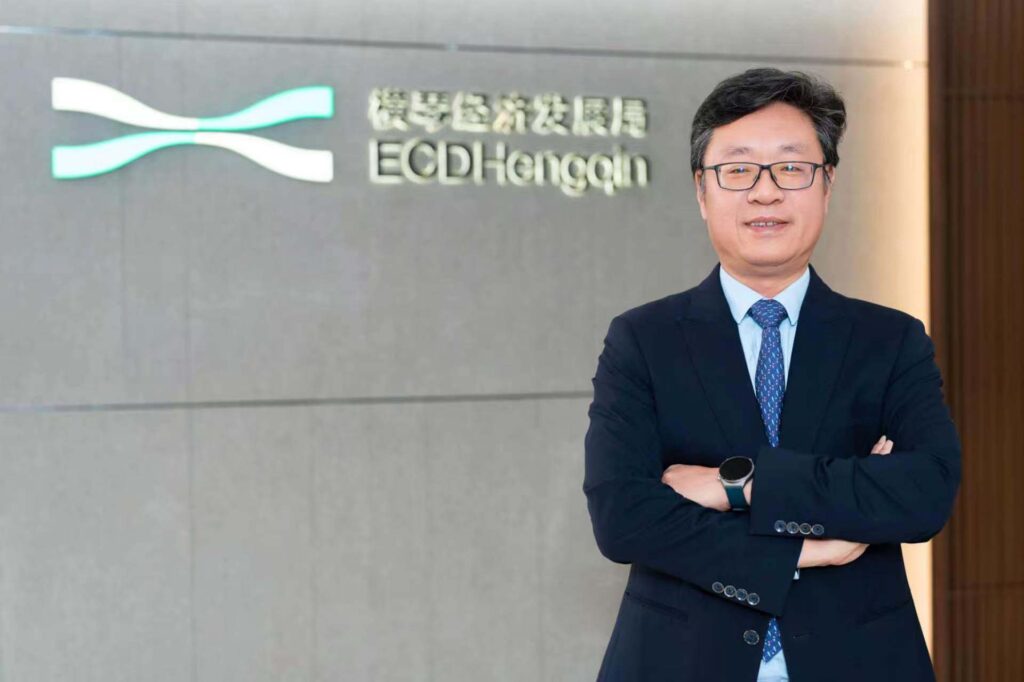
Wu Chuangwei, director of the Cooperation Zone’s Industrial Development Bureau – renamed from the Economic Development Bureau following an institutional restructuring in June – says the emphasis is now on removing obstacles to deeper integration. “The focus is on breaking down barriers to cooperation between Hengqin and Macao, improving industrial support, and stimulating market vitality,” he told Macao Magazine.
The four sectors underpinning Hengqin’s industrial development strategy closely mirror those identified in Macao’s own “1+4” economic diversification strategy. Building on the city’s established strengths in integrated tourism and leisure, the “1+4” policy seeks to foster the growth of four Macao emerging industries: ‘big health’, modern financial services, high-tech industries, convention and exhibition, sports, as well as the commercial and trade sectors.
For Director Wu, the first five years of the Cooperation Zone have been about turning top-level planning into tangible outcomes. “Over the past five years, more than 300 innovative measures connecting Hengqin and Macao have been implemented, creating a series of nationally distinctive pilot reforms in customs clearance, industrial development, finance, public services and the rule of law,” he said.
Lao Ngai Leong, a Macao deputy to the National People’s Congress and a businessman with investments in Hengqin, argues that the transformation is not merely quantitative but structural. “From a near-blank starting point, the four new industries have moved towards scaled implementation,” he told Macao Magazine.
He attributes much of that progress to what he describes as a “system-first” approach. Measures including Hengqin’s “separated-line management” customs system, preferential 15 percent corporate and personal income tax rates for eligible industries and professionals, and tax arrangements aligned with those in Macao for Macao identity card holders working in the Cooperation Zone have, he says, helped dismantle long-standing barriers to the movement of people, goods and capital.
High-tech hub in the making
Scientific research, advanced technology and high-end manufacturing have become central to Hengqin’s industrial ambitions, with policymakers seeking to position the Cooperation Zone as the bridge between Macao’s research strengths and the manufacturing capacity of the Chinese mainland.
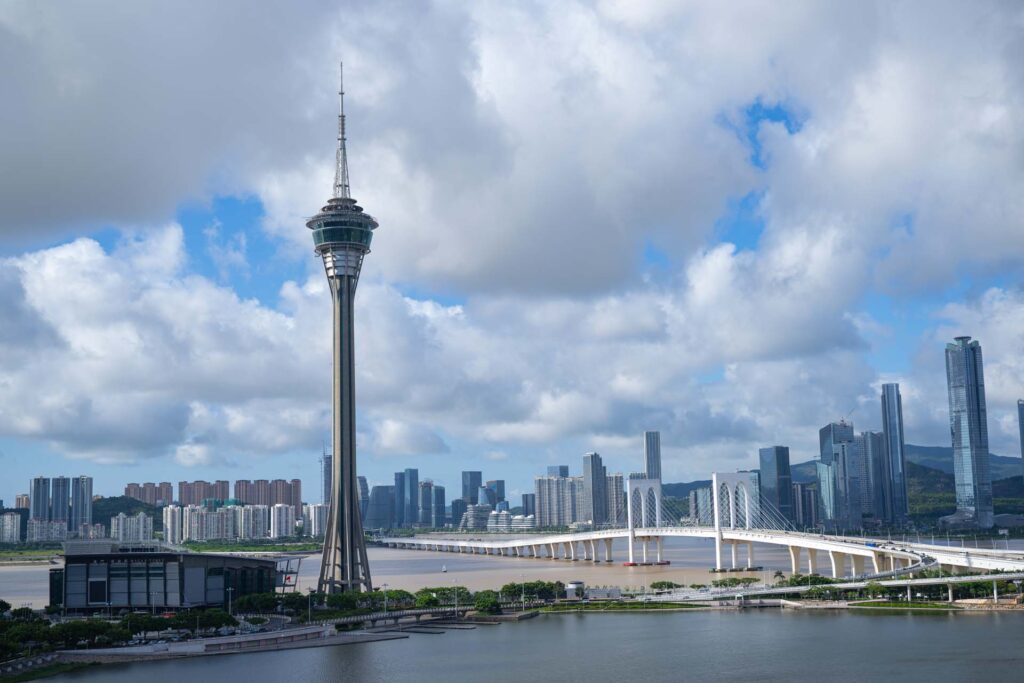
The integrated circuit industry has emerged as one of the clearest examples of that strategy. More than 100 semiconductor-related companies have established operations in the Cooperation Zone, while value added in information transmission, software and information technology services increased by 18.0 percent in 2025, according to the Industrial Development Bureau. Industrial investment rose by 154.0 percent during the year and accelerated by a further 285.4 percent in the first four months of 2026, as major Chinese technology companies, such as solar energy producer Sungrow, e-commerce giant JD.com and robotics and personal mobility manufacturer Ninebot, have expanded into Hengqin.
For Mr Lao, however, the statistics tell only part of the story. What distinguishes Hengqin is a development model that links “Macao R&D” with “Hengqin industrialisation”.
“The parks, laboratories and innovation platforms provide the ‘soft’ and ‘hard’ foundations for technology companies and talent to settle,” he said.
Director Wu points to several flagship institutions that illustrate the model in practice. Among them is the Chinese Medicine Guangdong Laboratory in Hengqin, which has developed a large language model for TCM diagnosis and treatment, and the Guangdong Institute of Intelligence Science and Technology, whose researchers have unveiled what is described as the world’s first refrigerator-sized, brain-inspired supercomputing system.
Setting up an innovation ecosystem
For Mr Lao, the evolution of the Cooperation Zone reflects a broader shift in industrial policy: development has moved “from piecemeal investment promotion to chain-based investment promotion.”
The distinction is significant. Rather than attracting isolated companies through individual incentives, Hengqin is attempting to build complete industrial ecosystems in which research, manufacturing, finance and commercialisation reinforce one another.
The ecosystem approach is fuelling the development of TCM in Hengqin. By the end of April, the Traditional Chinese Medicine Science and Technology Industrial Park of Co-operation between Guangdong and Macao (GMTCM Park) had attracted 238 registered companies, including 91 funded by Macao investors. The businesses span three interconnected clusters: innovative pharmaceutical developers, high-end research platforms and manufacturers specialising in ‘big health’ products.
For officials, the park’s importance lies not only in the number of companies it has attracted but also in the production model it is pioneering. Under the framework of “registered in Macao, produced in Hengqin”, companies can combine Macao’s recognised quality standards and branding with Hengqin’s greater availability of land, factory space and industrial infrastructure.
Director Wu says the arrangement has created opportunities that were previously beyond the reach of many Macao businesses. “The model effectively opens up broad space for scaled-up production.”
Following the launch of the first flagship product under the “Hengqin production, Macao supervision” model, six companies have received approval for 29 health food products to carry the official Macao-supervised manufacturing label, according to the Industrial Development Bureau.
The sector is also beginning to generate tangible technological advances. One Hengqin company has secured regulatory approval for innovative surgical navigation and microwave ablation systems.
The MICE factor
If technology and TCM illustrate Hengqin’s industrial ambitions, the tourism and MICE sector offer perhaps the clearest example of how integration between Macao and Hengqin is unfolding in practice.
For Mr Ho, a MICE industry veteran, the guiding principle can be summed up in a simple phrase: “MICE + industry.”
He points to sectors including TCM, biomedicine, integrated-circuit research and cross-boundary e-commerce, all of which are establishing a presence in the Cooperation Zone. Rather than existing separately from the exhibition industry, these businesses increasingly provide its commercial foundation, generating demand for specialist trade fairs, conferences and professional forums.
Increasingly, the two places are carving out complementary roles. Macao provides the international platform, business networks and event-management expertise, while Hengqin offers the land, large-scale venues and logistical capacity that the city itself lacks. The emergence of a joint “Macao–Hengqin MICE” brand is, in Mr Ho’s view, an indication that the relationship is maturing.
Promotion has likewise become coordinated. While Macao’s investment promotion authorities market the joint brand overseas, particularly in Southeast Asia, Hengqin’s industrial agencies promote it across major Chinese mainland cities.
The Cooperation Zone is also taking on an increasingly important behind-the-scenes role, becoming a logistical base supporting Macao’s exhibition industry. Measures introduced in 2024 have further streamlined the movement of exhibition materials across the boundary, facilitating the storage in Hengqin of equipment between events and reducing administrative barriers for organisers operating in both jurisdictions.
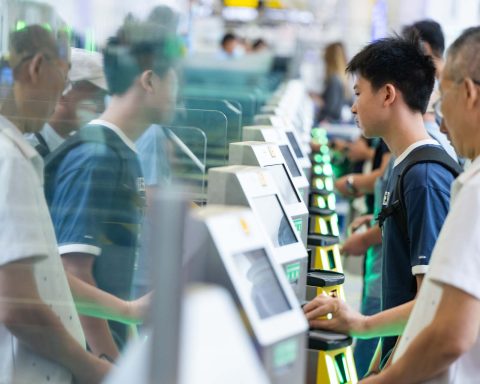
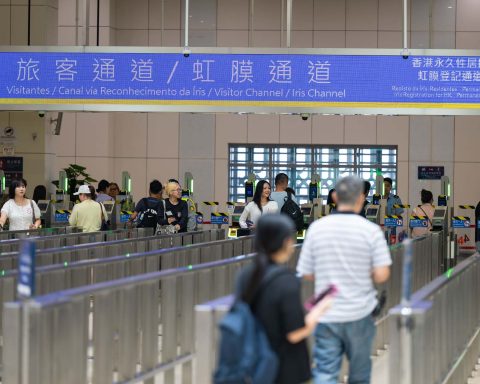
The same principle of integration is increasingly shaping tourism. A “group in, group out” policy introduced in Hengqin in 2024 allows eligible Chinese mainland tour groups to make multiple crossings between Hengqin and Macao under a single visa endorsement within a specified period. The arrangement enables tour operators to market the two places as a single itinerary without travellers needing to apply repeatedly for new travel permits.
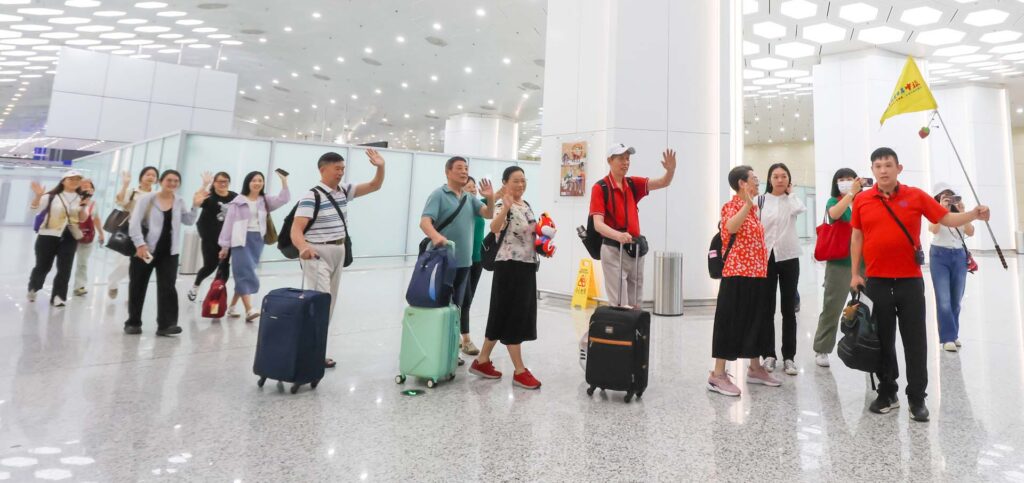
Official figures suggest demand has grown rapidly. According to Director Wu, Hengqin welcomed 16.5 million visitors in 2025. The zone’s major hotels recorded 5.15 million guest stays, with an average occupancy rate of 61.1 percent. By April this year, the “group in, group out” scheme had processed more than 36,000 tour groups and 168,000 travellers, while value added in the accommodation and catering sector rose by 17 percent in 2025.
A gateway for investment
Modern finance has become another pillar of Hengqin’s development strategy, with policymakers seeking to build a financial ecosystem capable of supporting the Cooperation Zone’s wider industrial ambitions.
For Mr Lao, the past five years have seen the sector evolve from a series of policy experiments into a broader and more sophisticated financial marketplace. Activities now extend beyond traditional banking to include private equity, cross-boundary leasing, green bonds and wealth management.
That expansion is underpinned by a series of institutional reforms designed to facilitate the movement of capital across the Macao-Hengqin boundary. Among them are EF (Electronic Fence) accounts – a multifunctional free trade account system that simplifies cross-boundary fund transfers within a ring-fenced regulatory framework – alongside wider renminbi settlement arrangements and the preferential 15 percent tax regime.
For Macao businesses, Mr Lao argues, the Cooperation Zone provides opportunities that the city’s relatively small domestic market cannot easily offer. “Hengqin has the convenience of taking in Macao capital,” he said. The zone, in his opinion, broadens investment options for Macao enterprises while creating greater access to projects rooted in the real economy.
Its appeal, however, is not confined to local investors. Mr Lao believes Hengqin occupies a distinctive position within the Greater Bay Area by combining the advantages of the “One country, two systems” principle with access to a regional market of more than 88 million people and Macao’s internationally recognised commercial and legal practices.
In his view, the Cooperation Zone has the potential to serve two complementary roles: as an entry point for overseas companies seeking access to southern China, and as a platform from which Chinese mainland enterprises can expand internationally, namely by drawing on Macao’s longstanding commercial links with Portuguese- and Spanish-speaking countries.
Those international ambitions are increasingly being supported by dedicated institutions. Macao and Hengqin have jointly established a service centre for trade with Portuguese- and Spanish-speaking countries, occupying around 250,000 square metres. They have also launched a joint investment fund with an initial capitalisation of one billion yuan to support projects involving those countries.
Talent for the long run
Behind the headline investment figures lies a more fundamental challenge: attracting skilled professionals and persuading them to stay.
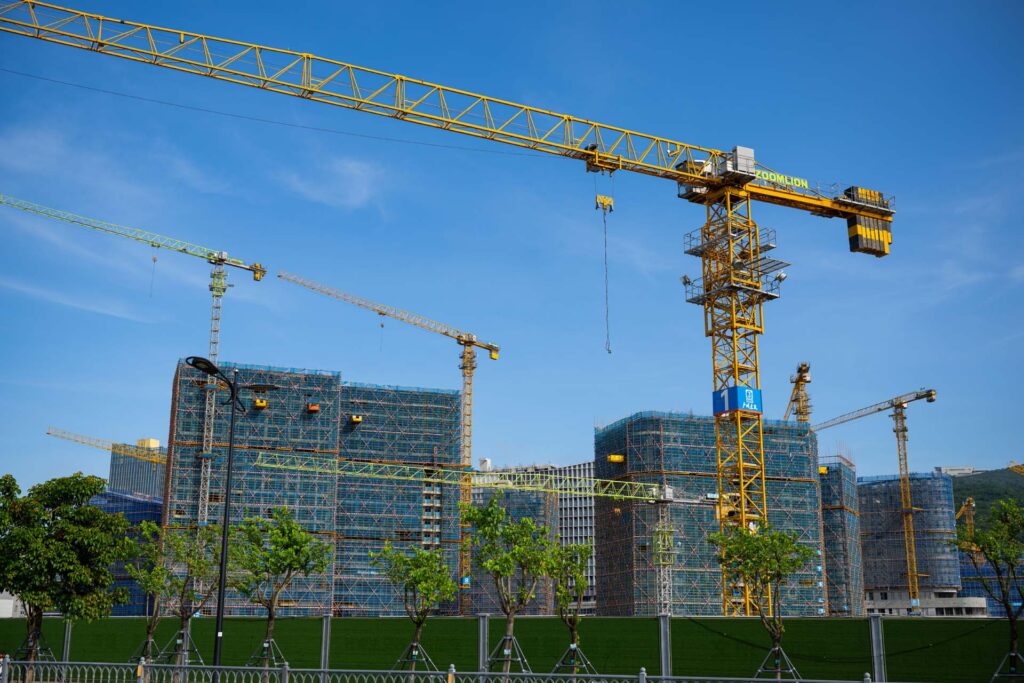
Recognising that talent will be as important as infrastructure in determining the Cooperation Zone’s long-term success, the authorities introduced a revised talent policy last April. The measures include grants of up to 10 million yuan for overseas high-level talent projects and up to one million yuan for technology ventures established by young Macao residents.
According to the Industrial Development Bureau, the Cooperation Zone now hosts 35 national and provincial innovation platforms, 237 national high-tech enterprises and 46 postdoctoral research stations. Since the zone’s establishment, 17,000 instances of high-end and in-demand professionals have benefited from the preferential 15 percent personal income tax rate.
For Mr Ho, however, developing human capital is not simply a matter of financial incentives. As the exhibition industry becomes increasingly specialised, he argues, employers need professionals with a broader range of skills.
“You cannot only know languages,” he said. “You also need to understand marketing and planning.”
Mr Lao cautions that industrial infrastructure alone will not determine whether the Cooperation Zone’s strategy succeeds. “Hengqin cannot focus only on building hardware platforms,” he said.
Housing, schools, and cross-boundary social security arrangements, he argues, are equally important if highly skilled professionals are to build long-term careers in the Cooperation Zone rather than treating it as a temporary workplace. If talent does not stay, the platforms themselves risk becoming hollow.
Mr Lao takes an even longer-term view. Preferential policies and modern infrastructure may attract companies initially, he notes, but they are not enough on their own to sustain economic growth: there needs to be a market.
Looking ahead, Director Wu says the priority for Hengqin is to align more closely with Macao’s “1+4” diversification strategy while avoiding head-to-head competition through differentiated positioning, a clear division of labour and complementary development models. This will be achieved by “integrating the advantages of both places, coordinating investment promotion efforts, improving industrial platforms, and innovating cooperation mechanisms.”