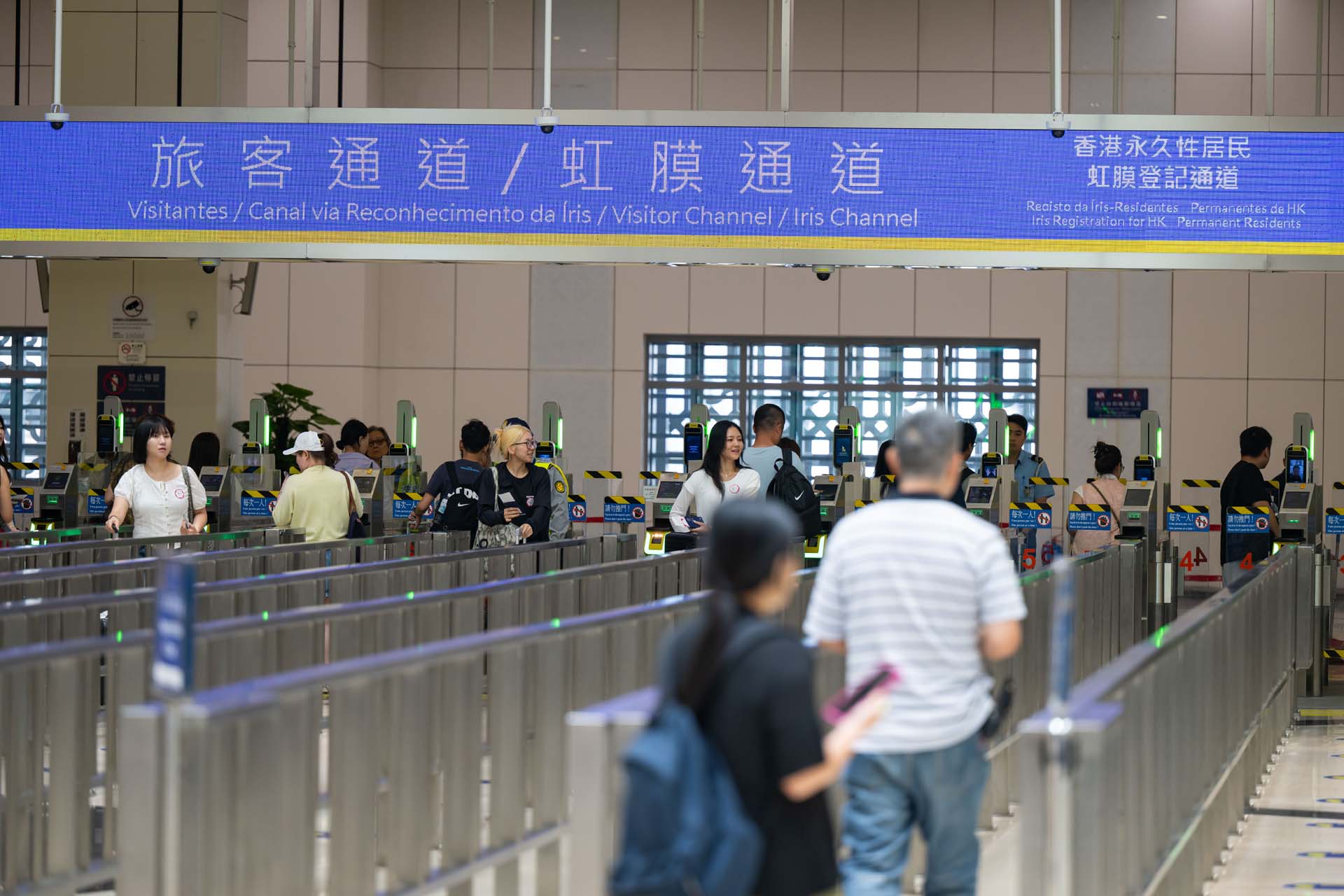
From biometric identification and QR codes to coordinated checks with neighbouring jurisdictions, technology has transformed how people enter and leave Macao. Yet behind every increasingly seamless journey are frontline officers whose judgement, preparation and willingness to help remain indispensable.
For Temur Gvaramadze, a frequent visitor from Georgia, entering Macao once meant joining a queue and waiting for a manual inspection. The experience, he recalls, could be “exhausting”. His recent registration for an automated channel took about 10 minutes and changed the journey altogether.
“It was so convenient and so fast. You just go to the checkpoint, scan your passport and use facial recognition,” he says. “Registration was very quick. They took my fingerprints and facial image, and now I can enter Macao much more easily.”

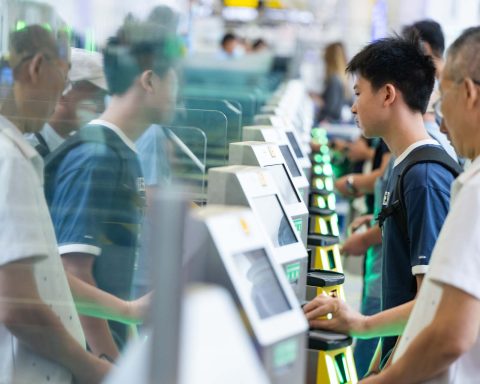
His experience reflects a transformation that has unfolded over more than two decades. A manual inspection can take several minutes; an automated check on the Macao side can be completed in around 10 to 12 seconds. Fingerprints, facial and iris recognition, QR codes and systems that complete Macao and Zhuhai formalities in a single process are now part of the daily routine at the city’s boundary checkpoints.
Also in this feature
 Opening Macao to the world
The scale of that routine is considerable. Macao recorded more than 230 million boundary crossings in 2025, an average of 640,000 a day. In the first six months of 2026, the total exceeded 120 million, averaging 677,000 a day, 7.3 percent more than in the same period a year earlier.
On May 2 this year, the city set two records: 889,000 total crossings in a single day and 248,000 arrivals. Managing flows of this size requires technology, planning and close coordination. It also requires frontline officers who can guide, reassure and assist people moving through the system.
From fingerprints to iris recognition
Since the Macao Special Administrative Region (MSAR) introduced its automated boundary-clearance system in 2005, automated channels have become a familiar feature at checkpoints, operating alongside manual inspection. They largely fall into two categories: conventional “two-gate” channels and integrated “three-gate” channels used under the joint inspection model between the Chinese mainland and Macao.
Access has gradually been extended to international visitors. Citizens of Australia, South Korea, Singapore, Portugal, Brazil, Germany, France, Malaysia and Spain can currently register to use conventional two-gate automated channels when entering and leaving Macao.
Following discussions with the Zhuhai General Station of Exit and Entry Frontier Inspection, the Public Security Police Force (CPSP) has also expanded eligibility for automated joint inspection channels at Hengqin and in the Zhuhai-Macao inspection halls at the Hong Kong-Zhuhai-Macao Bridge boundary crossing. Foreign passport holders who meet the relevant conditions can register for these channels and use conventional automated channels at other checkpoints.
Those conventional channels are available at locations including the Border Gate checkpoint, the Outer Harbour, Taipa and Inner Harbour ferry terminals, Macau International Airport and the Hong Kong-Macao inspection halls at the Hong Kong-Zhuhai-Macao Bridge. At Hengqin and the bridge’s Zhuhai-Macao inspection halls, the three-gate arrangement completes departure procedures for one jurisdiction and arrival procedures for the other in a single passage.
The identification technology has also evolved. The earliest system relied on fingerprints alone, before facial and iris recognition were progressively introduced. Until recently, foreign nationals using two-gate automated channels had to verify their identity through facial recognition and fingerprints.
Since June 11, holders of a Non-Resident Worker’s Identification Card or a Special Authorisation to Stay for international students have been able to register for channels that combine facial and iris recognition instead. The option is particularly useful for people whose fingerprints are difficult to read, but it also supports contactless clearance.
Lao Ka Weng, head of the CPSP’s Border Control Department, says the force is studying the use of iris recognition in more immigration procedures. The aim is to make automated clearance available to more people while improving the channels’ efficiency.
Biometrics are only part of the system. MSAR Resident Identity Card holders can link their electronic identity to the Macao One Account app and use a mobile phone at the boundary. After scanning the “My Boundary Crossing” QR code at a two-gate automated channel and confirming their identity, they can proceed with the remaining checks.
Travel between Macao and Hong Kong is also covered through the respective Hong Kong-Macao boundary-crossing QR codes. When combined with iris recognition, the system enables fully contactless clearance and reduces verification time by one to two seconds compared with a conventional automated passage, according to the CPSP.
Two jurisdictions, one passage
Automation goes furthest on the links with Zhuhai and Hengqin. The joint inspection model brings departure and arrival procedures together at one location, taking advantage of the jurisdictions’ geographical proximity. It depends on close cooperation between the relevant authorities, both to align procedures and to ensure travellers understand how the system works.
Macao first adopted the model at the Zhuhai-Macao inspection halls at the Hong Kong-Zhuhai-Macao Bridge checkpoint in 2018. It is now also used at Hengqin and Qingmao, while eligible foreign nationals can use automated joint inspection channels at Hengqin and in the Zhuhai-Macao inspection halls at the Hong Kong-Zhuhai-Macao Bridge.
Capacity at Macau International Airport has expanded as well. In 2020, the CPSP increased the number of automated channels on the departures floor from two to 10. In 2021, the number in the south arrivals hall rose from three to 10, while the north hall went from three to eight.
The time savings are substantial. Even when there is no queue, a manual check takes time because an officer must examine the travel document, verify its authenticity and confirm the holder’s identity. Mr Lao says an automated two-gate inspection on the Macao side takes about 10 to 12 seconds. A three-gate automated passage takes about 20 seconds and completes both the Macao and Zhuhai, or Macao and Hengqin inspections, he adds.
For vehicles travelling between Macao and Hengqin, One-Stop lanes combine procedures previously carried out at two locations. Passage takes about 100 seconds on average and can be completed in as little as 50 seconds. More than 75 percent of cross-boundary vehicles now use these lanes, which have also been available to eligible foreign drivers since August 18.
Mr Gvaramadze believes easier clearance can shape how international visitors view the city. “Foreigners can sometimes face difficulties when travelling in an unfamiliar country or city,” the tourist says. “Making it easier to enter Macao will encourage people to come more often. It is a big benefit because everything is simpler and faster, and you save a lot of time.”
The human connection
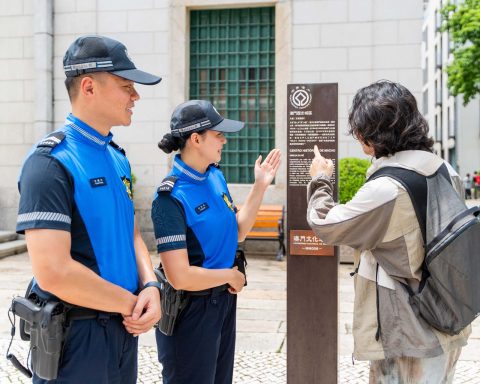
Speed, however, is only one part of a successful boundary experience. Alongside document checks and security inspections, CPSP personnel receive regular training designed to strengthen the interpersonal skills needed when dealing with travellers from around the world.
Communication is essential. Signs and notices at Macao’s boundary checkpoints are presented in Chinese, Portuguese and English, says CPSP officer Lei Wang Ngai.
“To continuously improve service quality, the CPSP regularly organises English and Portuguese courses taught by professional instructors, with the aim of strengthening frontline personnel’s basic communication skills in foreign languages,” he explains.
Sometimes, words alone are not enough. Fellow officer Lou Oi Leng recalls a distressed international visitor who approached officers in a boundary area. The tourist was speaking so quickly that they could not initially determine whether she was using English or another language. Once they understood that she had lost her mobile phone, officers immediately searched the control area. Colleagues who were off duty spontaneously joined the effort.
“After more than an hour of searching, we finally found the phone. The visitor smiled again and thanked us for our help,” Ms Lou says. “Although situations like this are part of our daily work, helping visitors resolve their difficulties gives us an enormous sense of achievement and of having fulfilled our mission.”
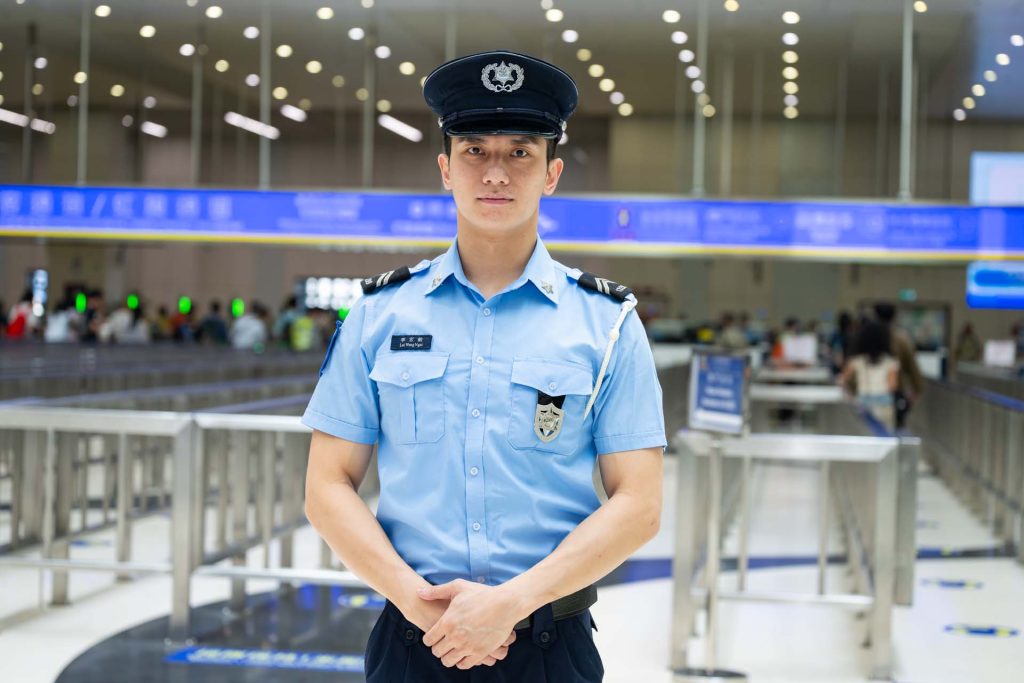
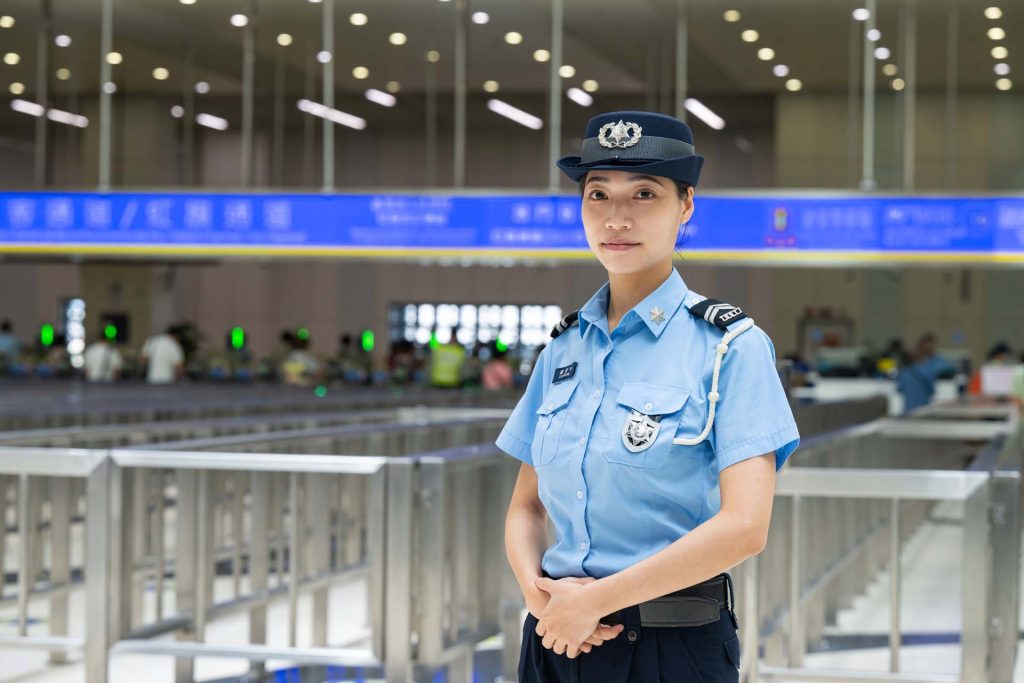
Holiday periods test both boundary infrastructure and coordination among public services. Ahead of major holidays, the CPSP prepares specific measures to handle peak flows.
Officer Lei says the force “draws up response plans for periods of high passenger volume and deploys administrative personnel to support frontline teams, ensuring that movement at the boundary remains safe and orderly”.
The CPSP also maintains close communication with the relevant authorities in Zhuhai and Hong Kong, sharing passenger-flow information so the authorities can respond in a coordinated manner during busy periods.
“The Macao-Zhuhai and Macao-Hengqin boundary checkpoints also conduct regular emergency and crisis-response exercises to ensure safety and order on both sides of the boundary,” Mr Lei stresses. Cooperation extends to the hotel and tourism sectors. Visitors are encouraged to travel outside peak periods, while information is shared on clearance procedures, road safety and public-security alerts in Macao.
In day-to-day operations, the CPSP adjusts the number of inspection channels in real time according to passenger volumes at each checkpoint, opening additional lanes during peak periods. Technology makes it possible to manage numbers that would be difficult to handle through conventional methods alone.
Automated channels have consequently become the norm rather than the exception. About 80 percent of all crossings into and out of Macao in the first half of 2026 were completed through such channels, according to the CPSP.
Among foreign nationals visiting Macao in 2025, the Macao checkpoint of the Hong Kong-Zhuhai-Macao Bridge was the leading point of entry and departure, accounting for about one-third of their crossings. Macau International Airport represented around 20 percent, followed by the Outer Harbour Ferry Terminal at 13.9 percent, the Taipa Ferry Terminal at 13.6 percent and the Border Gate checkpoint at 11.6 percent.
The CPSP is continuing to study ways of offering the same convenience to a broader range of foreign nationals. As technology develops, the seconds saved at a checkpoint will matter increasingly in a region where millions of people are constantly on the move.
Yet no boundary is made up only of equipment, automated systems and statistics. Behind every crossing is a human being – sometimes uncertain, hurried or in need of help. Technology can make the journey faster, but it is the judgement and small acts of care shown by those on the frontline that can make an arrival in Macao feel truly welcoming.