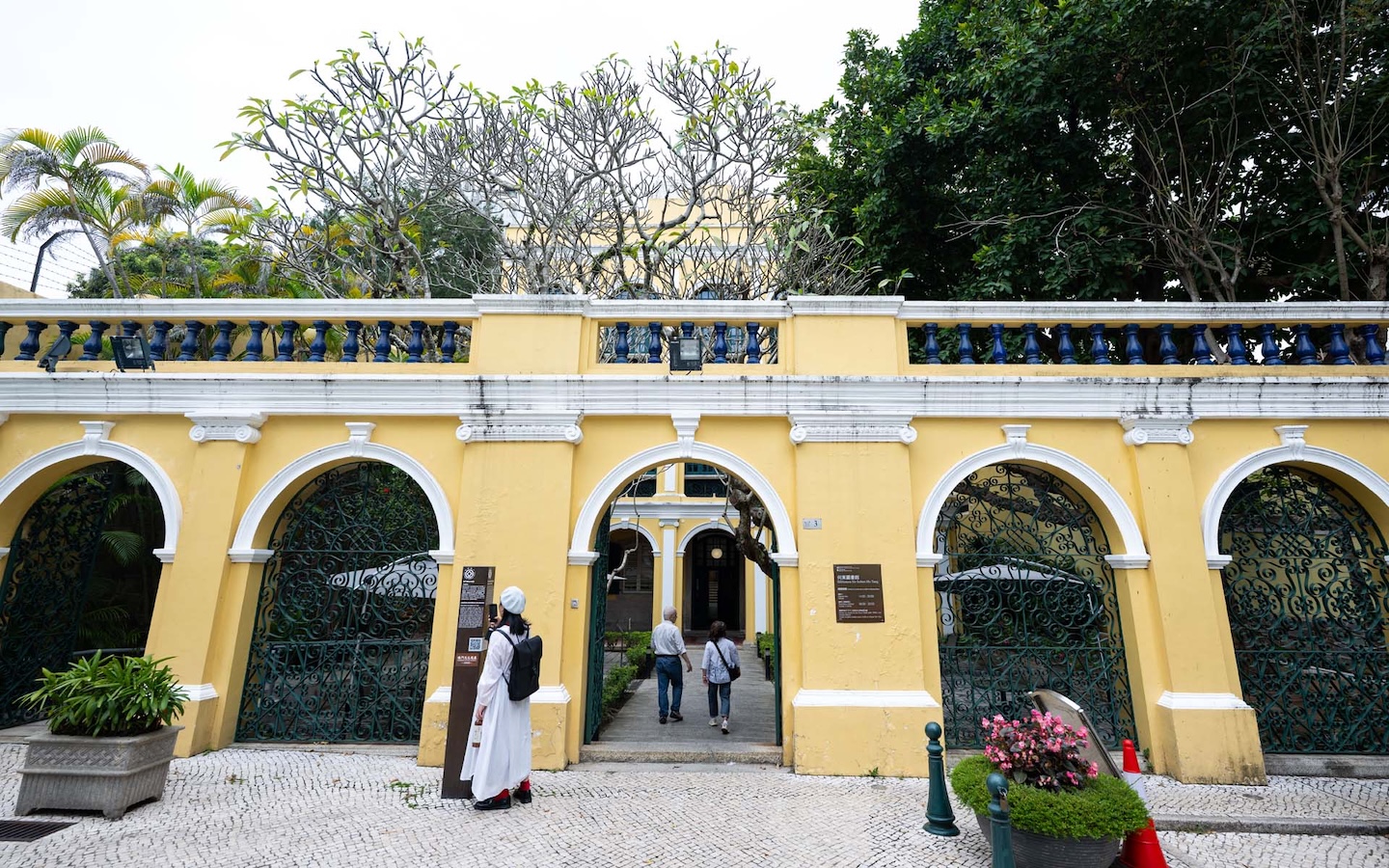
The Sir Robert Ho Tung Library offers a rare sense of stillness. Designated as a UNESCO World Heritage landmark within the Historic Centre of Macao in 2005, the library has served as a place of learning, reflection and cultural exchange for generations of residents and visitors alike.
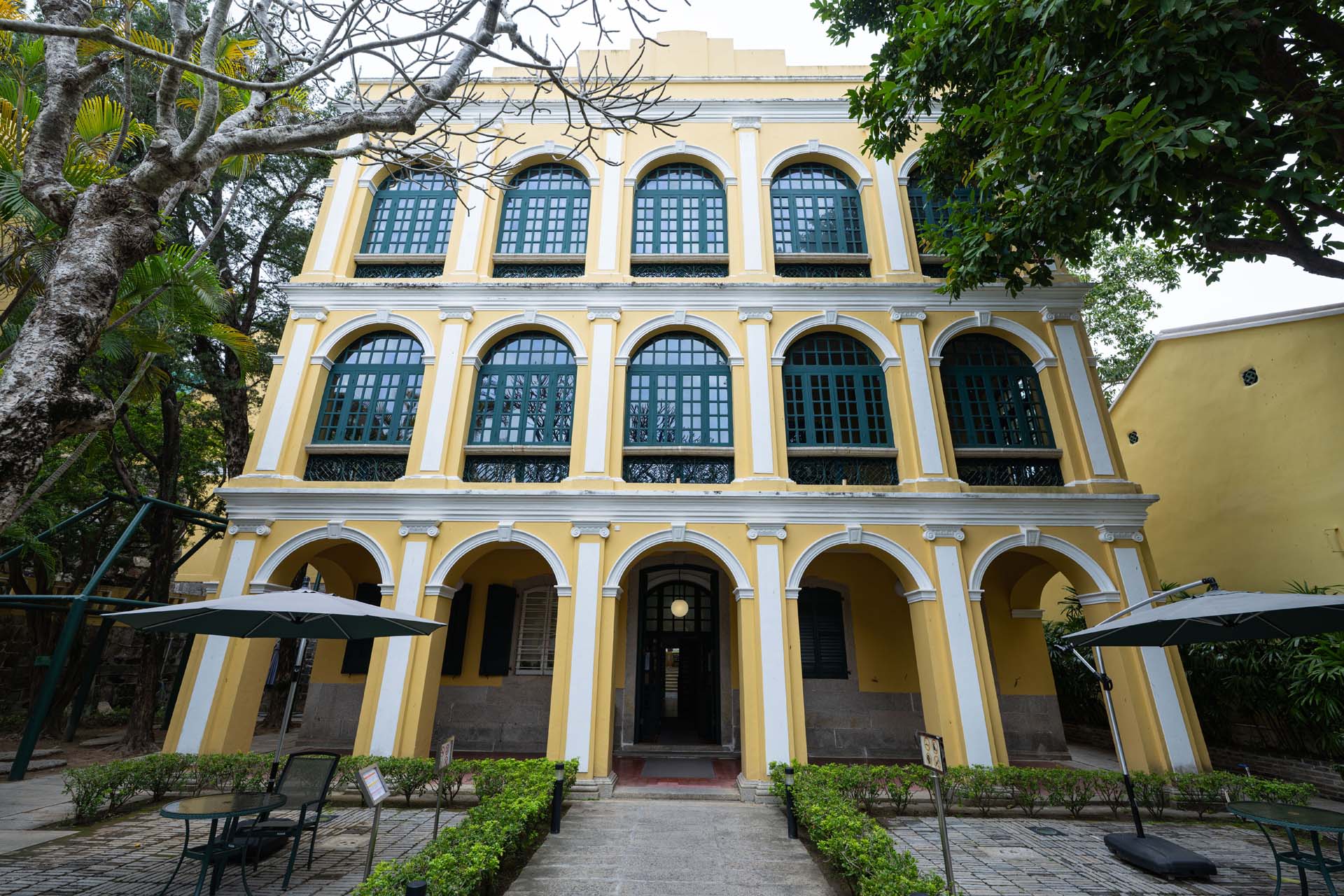
Quietly removed from the bustle of the city centre, the Sir Robert Ho Tung Library occupies an elegant 19th-century mansion distinguished by its pale-yellow façade, arched windows and neoclassical lines. Surrounded by shaded courtyards and terraced gardens, the building combines architectural grace with an atmosphere of tranquillity rarely found in an urban setting.
The Sir Robert Ho Tung Library remains one of the largest and most historically significant branches in the Macao Public Library network. The complex includes both the original mansion and a contemporary extension that carefully complements the historic structure while preserving its intimate character.
Behind the old building, a peaceful garden invites readers outdoors beneath the shade of mature trees, including a 175-year-old hackberry. Benches scattered throughout the grounds provide quiet corners for reading, accompanied only by birdsong and the rustling of leaves.
According to the Cultural Affairs Bureau, the library occupies a unique place in Macao’s cultural landscape.
“Visitors will not only appreciate the beauty of this architectural building, but also experience its unique cultural atmosphere. As a World Heritage site, this garden-style library is more than a cultural treasure. Importantly, it is a cultural space for people to access and experience,” the bureau told Macao Magazine.
Beyond its serene setting, the library is also home to one of Macao’s most valuable collections of rare Chinese texts. With seating for more than 400 readers and capacity for over 100,000 volumes, the venue houses nearly 5,000 rare ancient works and manuscripts in its Chinese Ancient Books Chamber.
Among the most significant treasures is the “Manuscript Draft of the Siku Quanshu Synopsis” by Qing scholar Weng Fanggang. The collection also includes early Chinese translations of Western religious and literary works, offering insight into the historical exchange between China and the West.
“The library includes religious books such as The Pilgrim’s Progress, translated into Chinese during the Ming and Qing dynasties, which recorded the dissemination of Western culture in China. These rare books not only reflect the profound essence of Chinese culture, but also showcase the fusion of Chinese and Western cultures,” the Cultural Affairs Bureau noted.
A lasting legacy
The mansion that now houses the library was built before 1894 as the residence of Dona Carolina Antónia da Cunha, widow of former Governor Pedro Alexandrino da Cunha.
In 1918, prominent businessman and philanthropist Sir Robert Ho Tung purchased the property for 16,000 patacas, transforming it into a summer residence. During the Second World War, after Hong Kong fell to Japanese forces, Sir Ho Tung and his family sought refuge in Macao, where they remained for the duration of the conflict.
To fulfil his vision of promoting cultural access for the local community, Sir Ho Tung donated his former residence to the authorities and requested that it be converted into a library dedicated to Chinese books. Upon his death in April 1956, the authorities honoured his wishes. The Sir Robert Ho Tung Library officially opened on August 1, 1958.
What began as a modest collection of approximately 3,000 books gradually evolved into one of Macao’s most cherished cultural institutions. Over the decades, the library has welcomed students, researchers, families and curious visitors. Within its reading rooms and gardens, generations of readers have discovered literature, explored Macao’s history and studied rare manuscripts from the Ming and Qing dynasties.
The library entered a new phase in the early 2000s, when the Macao Special Administrative Region (MSAR) Government launched an ambitious expansion and restoration project. With an investment of approximately 10 million patacas, the project aimed to modernise the facilities while preserving the site’s historic identity.
Architect Joy Choi Tin Tin was commissioned to design the extension. “The new building, of course, is next to the UNESCO-listed building,” she recalled. “There was also the surrounding environment. We had to launch a thorough investigation to devise which possibilities [would be best] to expand the library. [While] that was the [main] purpose, we were also keen on keeping the historical features there. Ever since the beginning, our intention was to enhance the old building, while creating a new space and a new architectural legacy. The way we approached the design is deeply connected to Macao.”
Whispers of light and stone
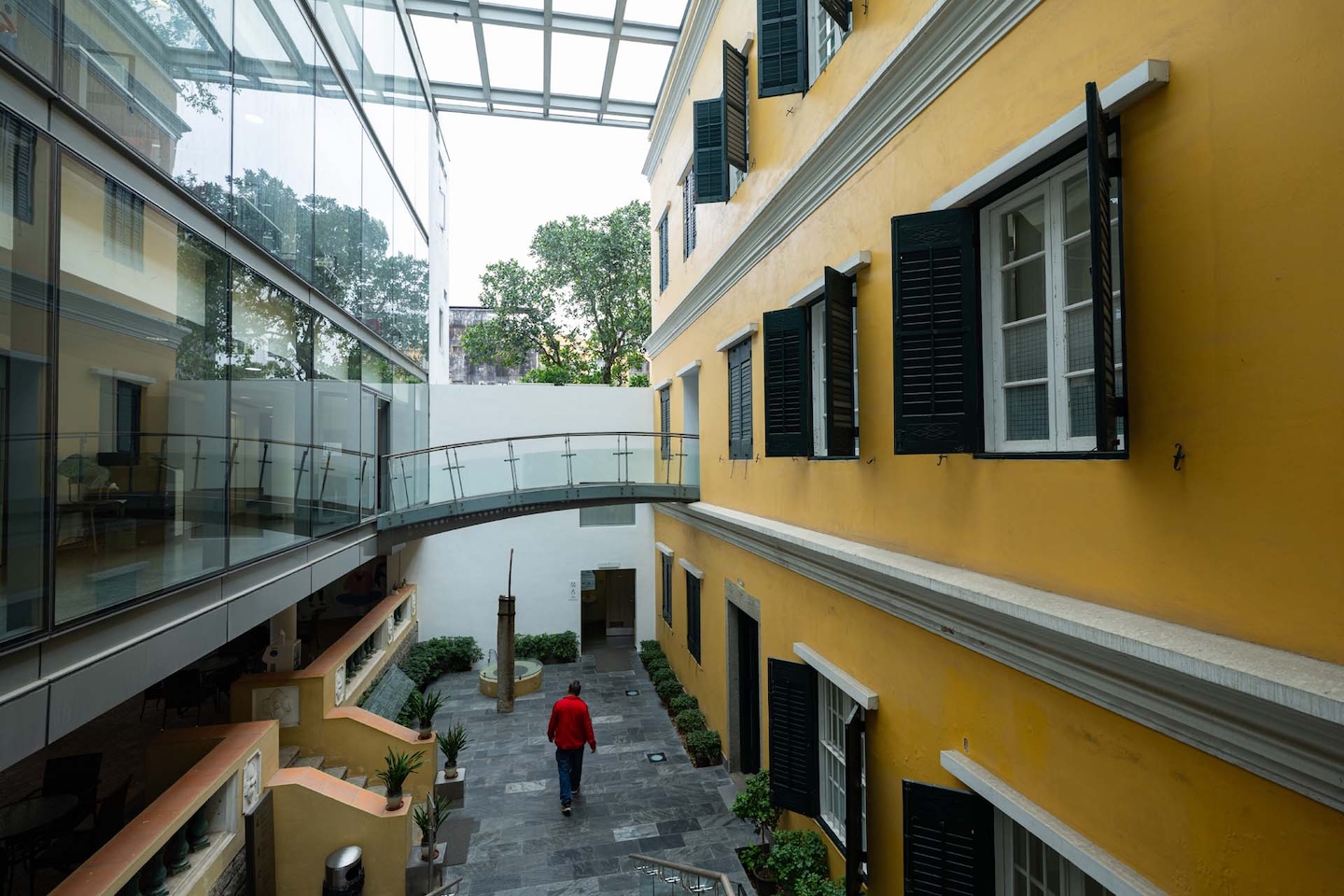
Completed in 2006, the modern extension rises discreetly behind the historic mansion, expanding the library’s capacity while maintaining the intimacy and serenity of the original site.
Rather than imitating the old structure, Ms Choi deliberately embraced contrast.
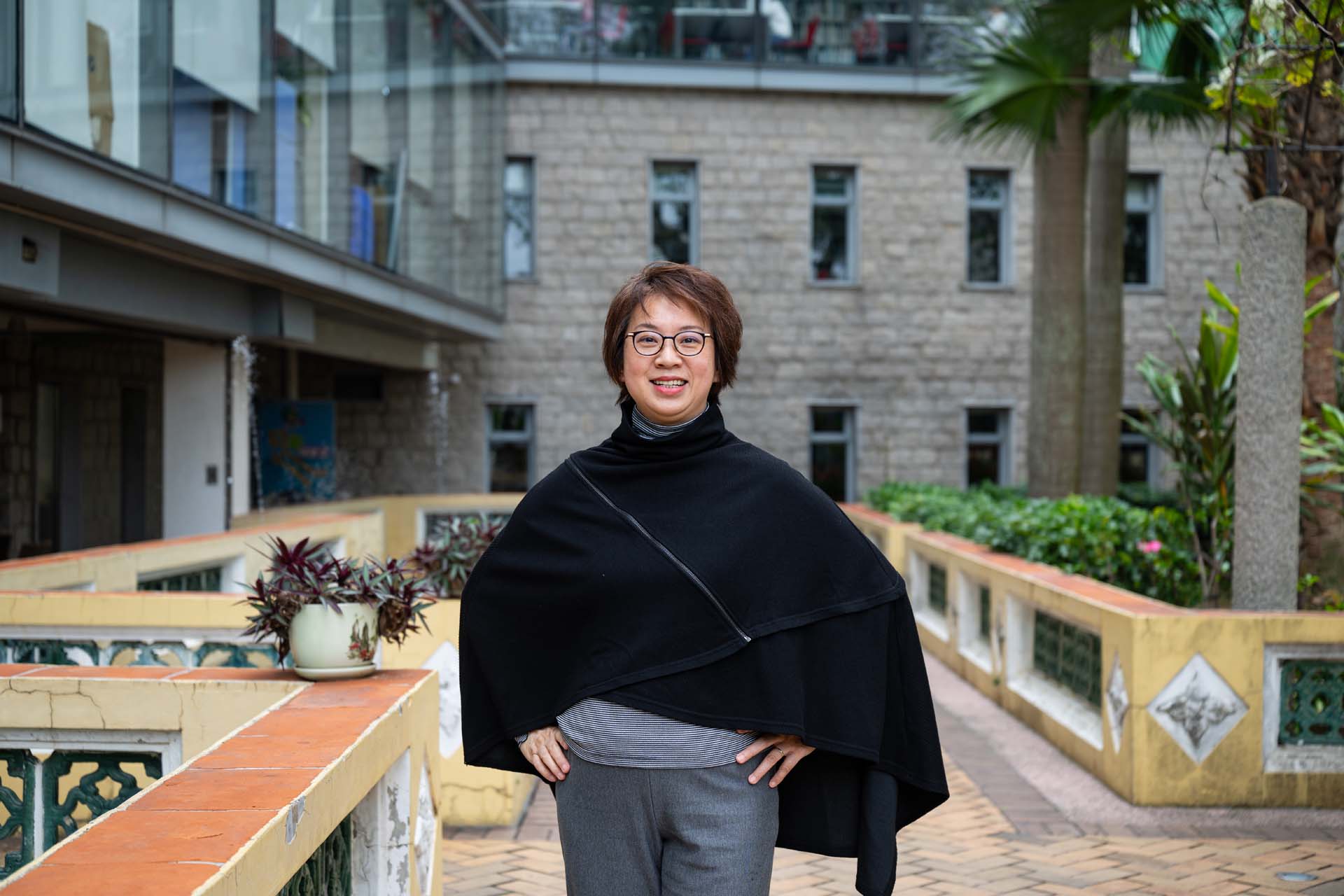
“In the beginning, we believed that the design should be harmonised with the original building. Nevertheless, I ended up conceiving the building in a contrasting way,” she explained. “You may find there are many yin-yang sorts of contrasts. We have Western and Chinese influences, but also different approaches to the way space is used. There’s an atrium, for instance, and our basement floor is very Chinese.”
Inspired in part by Lingnan architectural traditions, the extension incorporates open circulation areas, an atrium and carefully layered spaces that encourage natural light and ventilation.
More than tripling the library’s original floor area, the project expanded the total built space to approximately 3,195 square metres. Glass, steel and stone create a contemporary counterpoint to the solid masonry of the 19th-century mansion, establishing a dialogue between heritage and modernity.
“My aim was always to preserve as much as possible the existing historical building,” Ms Choi said. “We decided to separate old and new and to enhance the old building, by conceiving something new. We left a considerable space between both buildings and used glass and metal, which are very light materials, so that the new expansion could stand in striking contrast with the original materials of the old building. This was a purposeful choice.”
She said there were significant challenges throughout the construction process as well.
“Since the historic library building could not be disturbed, access to the construction site had to be negotiated through the neighbouring Seminary of Saint Joseph,” the architect noted. “We had to create temporary structures for deliveries and construction access. Workers, materials and heavy equipment all had to enter through the neighbouring site.”
To this day, the Sir Robert Ho Tung Library stands as both a monument to Macao’s layered history and a living cultural space that continues to evolve with the city.