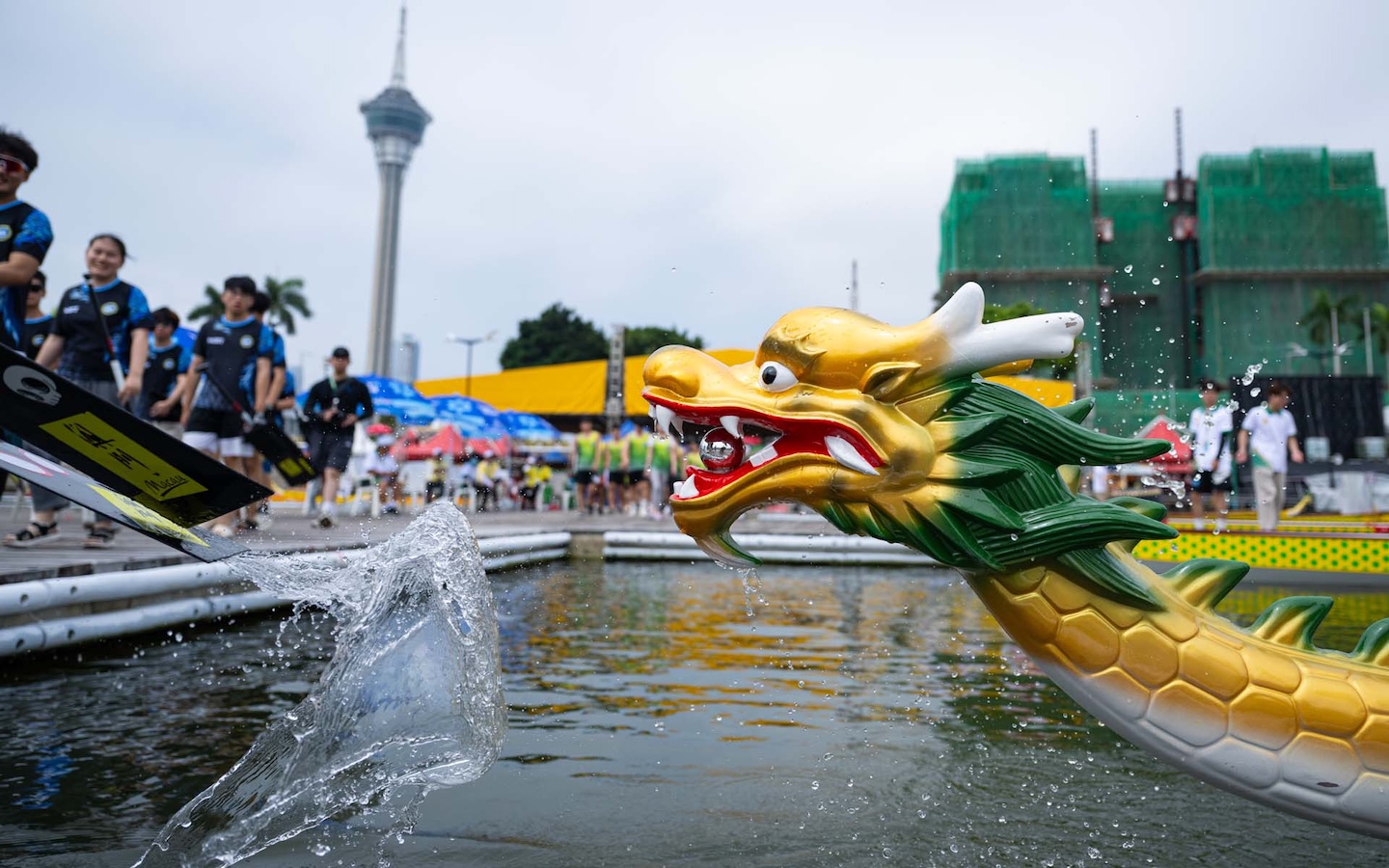
Thump, thump, thump, thump, thump. The rhythmic pounding echoes across Nam Van Lake on a late April afternoon. A promise of rain looms over the city, heavy clouds slowly gathering above the buildings. The air is thick, heavy with humidity, but on Nam Van Lake, a paddling squad in a sleek, colourful vessel seems unconcerned by the brewing storm. Over the past two decades, the crew of Dragão em Liberdade de Macau has been part of a time-honoured tradition, one that combines intense physical activity, precise synchronisation and rich cultural heritage. The paddlers, as many as 20 per boat, drive the vessel forward in perfect harmony, each stroke a testament to strength, discipline and unity.
The rhythmic thunder of drums will once again echo across Praia Grande as the 2026 Macao International Dragon Boat Races return to the Nam Van Lake Nautical Centre. Over three days – 13, 14 and 19 June – crews will slice through the water in displays of precision, endurance and teamwork, celebrating one of China’s most cherished traditions.
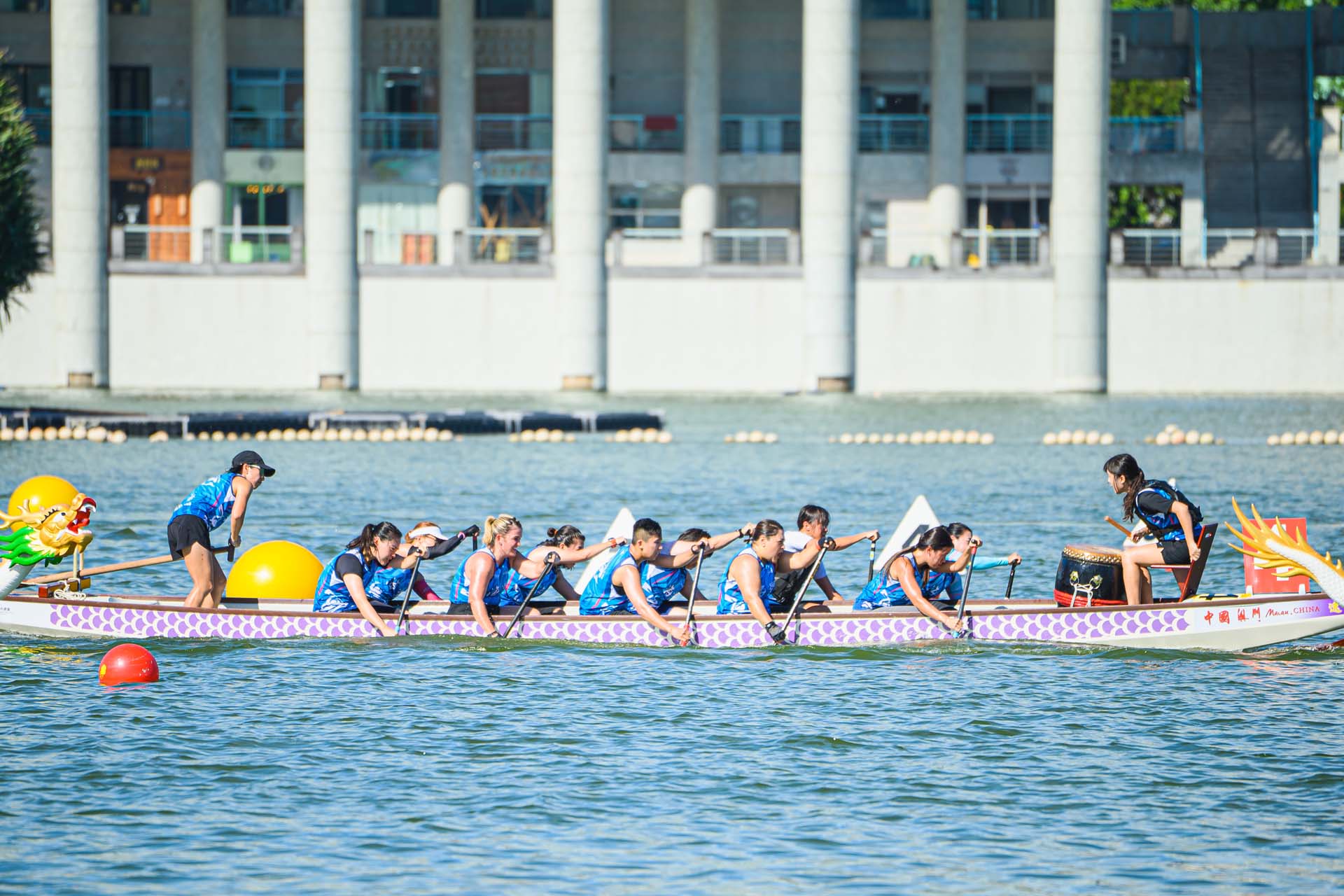
At the heart of this display of coordination is the drum. Its deep, resonant beat reverberates across the Nam Van Lake Nautical Centre like a collective heartbeat. Long and steady, the rhythm rises from the bow, where the drummer stands like a conductor, orchestrating the crew onward.
“Even though a race only lasts for one or two minutes, depending on the distance, during that time we can’t stop at all. A wrong or delayed movement, as tiny as it might be, can break the rhythm of the entire boat,” Rui Ribeiro, a long-time dragon-boat competitor, points out.
“We spend months preparing so that every paddler moves in unison, and synchronised with the drummer,” he adds. “The drummer sets the pace and the rest of the crew must respond instantly. Those at the back have to follow the front rowers and keep the same momentum, so that we can be perfectly synchronised. The drum is the lifeblood of the boat.”
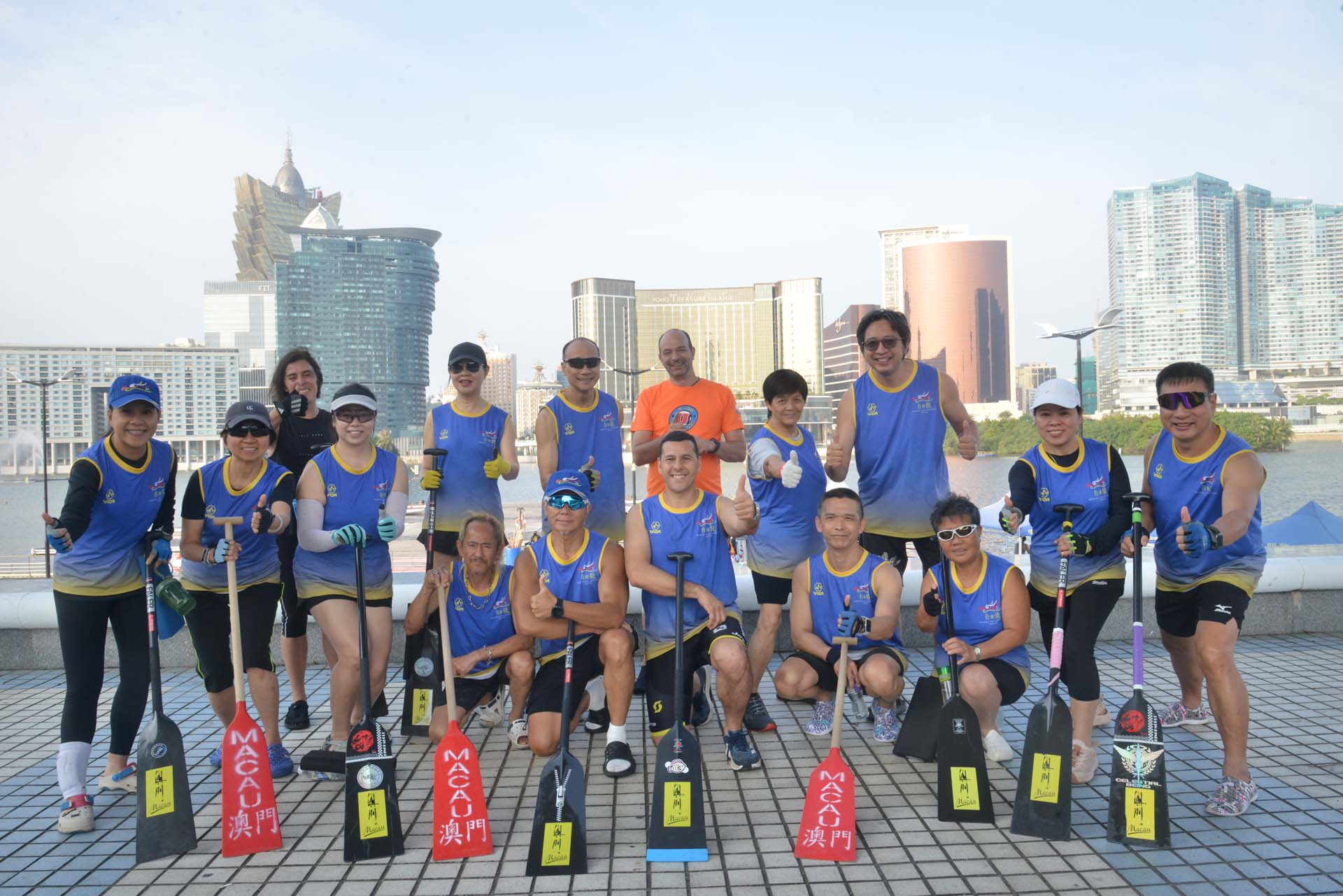
A familiar name on the starting line of the Macao International Dragon Boat Races for more than two decades, Dragão em Liberdade de Macau continues to embody the spirit of one of China’s most iconic traditional sports. Founded in 2004 by a group of enthusiasts, the team was created with the aim of preserving dragon boat racing as an important expression of cultural identity.
“The association was founded 22 years ago with the purpose of promoting the traditions and customs associated with the Dragon Boat Festival, while also encouraging senior athletes to remain active and healthy,” team captain Chan Ho Keong recalls. “At the same time, we also hope to introduce dragon boat racing to younger generations and strengthen interest in the sport among local youth.”
Strength in every beat
By late spring, the sound of drums once again becomes part of the Praia Grande waterfront. While the races usually take place in late May or early summer, teams begin their preparations months in advance. On-water training usually starts around three months before the event, once Nam Van Lake opens for practice. Sessions last approximately 90 minutes and combine warm-ups, endurance work and explosive power training.
“We need strength to accelerate the boat at the start and explosive power when approaching the finish line, to be able to overtake the other teams,” Mr Chan explains, adding that synchronisation “is equally important”.
“As we have a crew that combines newcomers and experienced paddlers, at the start of the training season, beginners learn rowing techniques in stationary boats so they can improve posture and coordination before going onto the water,” he adds.
Calling for a blend of balance, coordination, endurance and raw strength, dragon boat racing stands out as an exceptionally demanding sport, Mr Ribeiro argues. A dedicated multi-sport athlete who competes in marathons and triathlons, the 51-year-old says dragon boat racing is the most demanding discipline he has practiced, as it requires full-body strength – legs, back, core and arms – along with high cardiovascular endurance and strong mental resilience.
“I consider myself a sportsman and I enjoy challenges, but dragon boat racing is the most difficult sport I have encountered so far,” he says. “Mental endurance is especially important. The longest race in Macao is 500 metres, but once we reach the last 200 metres, we start to feel the strain. The entire body is exhausted, and it is mental resilience that helps the team push.”
The dragon doesn’t roar alone
Demanding as it may be, dragon boat racing gave Natasha Fellini a rare sense of belonging. When she arrived in Macao in 2001 from Brazil, Ms Fellini was unprepared for the sight of an ornate, slender vessel slicing through the water, powered by up to 20 paddlers moving as one. A lifelong lover of aquatic sports, Ms Fellini joined the local regattas once and never looked back.
“I had never seen a sport practiced this way,” the Brazilian teacher recalls. “There’s also a strong cultural dimension to dragon boat racing. It has a very ceremonial beginning, and that fascinated me.
“We all sacrifice personal time to prepare for the regattas, but it is always rewarding. It helps us relax and disconnect from the pressures of daily life,” she adds.
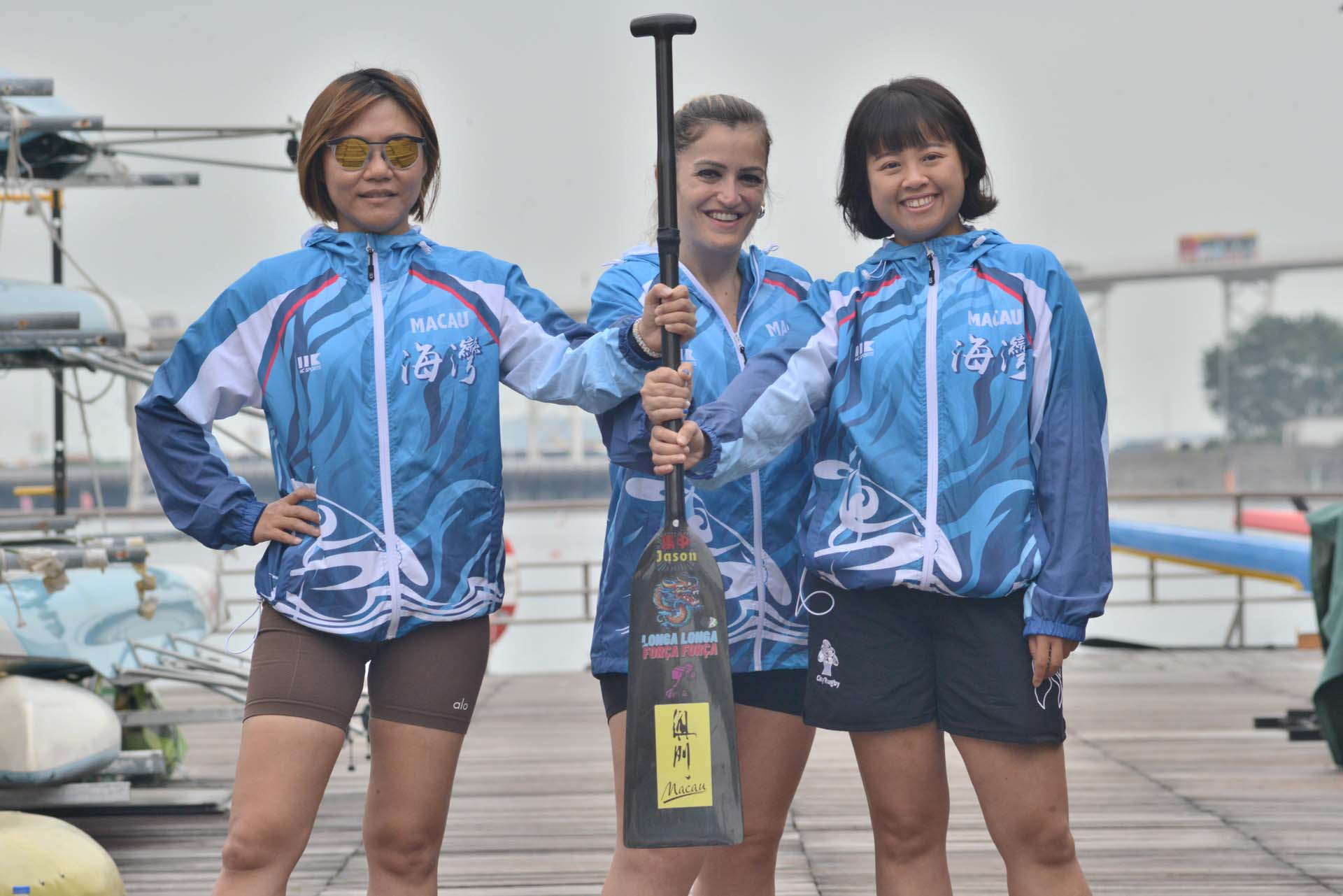
Lisa Hao, a fellow paddler at Clube de Canoagem Baía do Mar, began her journey earlier, but took longer to flourish. As a secondary school student, she would watch the boats crossing Nam Van Lake, captivated by their speed and grace. After studying in Portugal and later returning to Macao to teach, she eventually joined Clube de Canoagem Baía do Mar and found a strong sense of community within the team.
“One strong person does not move the boat. Twenty people rowing together do,” Ms Hao says. “Team spirit is essential in dragon boat racing.”
“It takes months for a crew to develop proper timing and coordination. We only manage to do it in perfect harmony when we get close to the competition. Only by then, do we begin to understand which techniques we should use so that we can row in unison,” she adds. “Dragon boat racing is not like canoeing or other sports, because individual strength alone is never enough.”
For both women, the decision to embrace dragon boat racing over more conventional sports was almost instinctive. The appeal goes beyond physical exercise. The unique combination of athletic intensity, cultural tradition and collective spirit is what continues to set the sport apart.
First organised in 1979, Macao’s dragon boat races are now considered a central part of the city’s Tuen Ng Festival celebrations, a centuries-old tradition linked to the poet and statesman Qu Yuan, who is said to have drowned himself in protest against political corruption and exile. Increasingly popular, the Macao International Dragon Boat Races are now among the city’s largest annual sporting events.
“Nowadays, the races have become a major annual sporting event spanning three days,” the Sports Bureau told Macao Magazine. “Local organisations, associations and government departments compete during the first two days, while the Tuen Ng Festival holiday features the Macao International Invitation Standard Dragon Boat Race and the Macao University Student Invitation Standard Dragon Boat Race.”
The event also showcases cultural performances and a dragon boat-themed carnival featuring local creative products, food stalls and interactive activities, the bureau notes.
Shaping lives, empowering the future
Beyond personal fulfilment, dragon boat racing carries deep significance for generations of local residents. Established in the late 1980s, Clube de Canoagem Baía do Mar has been a consistent presence in Macao’s flagship regattas for more than two decades. The multi-sport association also played a foundational role in the creation of the Dragon Boat Association of Macao, China.
Apart from dragon boat racing, Clube de Canoagem Baía do Mar also promotes canoeing, stand-up paddleboarding and canoe polo, disciplines that help preserve a connection to the sea while offering young people structure, mentorship and purpose.
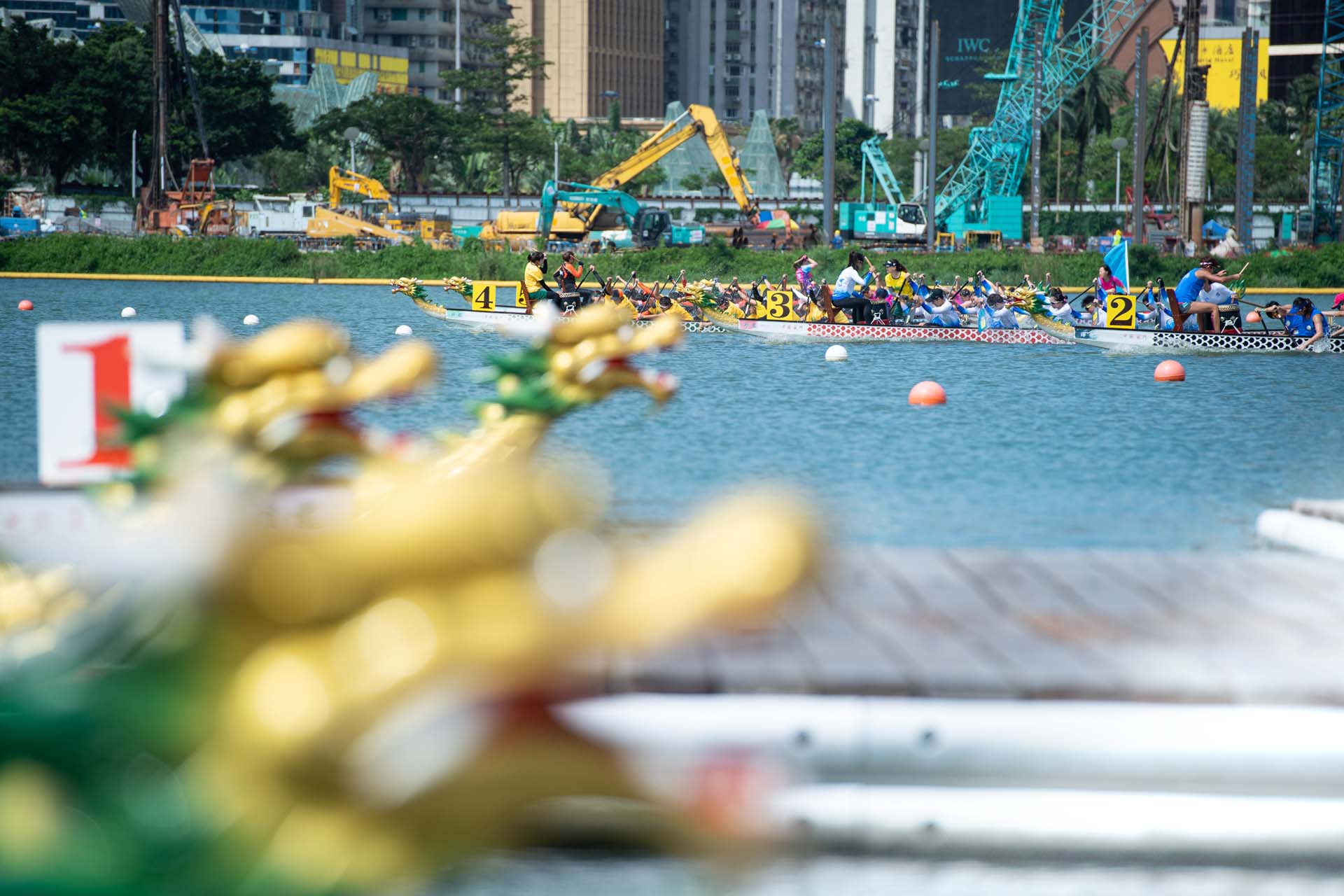
“When I saw the challenges young people face today, I decided to return from retirement because I believe sport can help them integrate into society,” coach Sam Siu Heng says. “Young people today spend so much time online and staring at screens that many struggle with social interaction. Through sport, we hope to help them build confidence, discipline and stronger connections with others,” he explains.
With a strong emphasis on youth development, the team has also become an example of intercultural harmony. With around 70 members enrolled and a dedicated core of 20 to 30 paddlers, Clube de Canoagem Baía do Mar functions as a genuine family. Newcomers and veterans, locals and expatriates – Chinese, Portuguese, Macanese, Russians and Brazilians – row side by side, united by teamwork and mutual support.
“It’s undoubtedly a large family,” Ms Fellini notes. “There are always one or two people asking who wants to go for a run after practice. We genuinely support one another.”
She adds: “Over the years, we have built very strong friendships and emotional bonds. We take care of one another, and that is what makes the experience so meaningful.”
The 2026 Macao International Dragon Boat Races will feature elite teams from the Chinese mainland and overseas alongside local crews. But beyond the competition itself, the races will remain a celebration of endurance, tradition and collective spirit, values that continue to resonate in Macao, both on and off the water.