
China has in just a few decades, since launching its first satellite in 1970, transformed into one of the world’s leading space powers. Missions such as the Chang’e lunar programme, the Tianwen-1 Mars rover, and the Tiangong Space Station (“Heavenly Palace space station”) showcase not only technological achievement but also the ambition and scientific drive behind China’s space programme.
In January 2022, the central authorities announced their latest white paper for outer space. The document, titled “China’s Space Programme: A 2021 Perspective,” laid out the country’s goals for space-related development, spanning both government and commercial segments.
“To explore the vast cosmos, develop the space industry and build China into a space power is our eternal dream,” stated President Xi Jinping, as highlighted in the document. According to the white paper, the space programme is a “critical element” of the overall national strategy, with China upholding the “principle of exploration and utilisation of outer space for peaceful purposes”.
The strategy sets specific development and technological milestones for China’s space programme within seven mission areas: space transport system; space infrastructure, including satellite development; manned spaceflight; deep space exploration; space launch sites and telemetry, tracking and command; experiments in new technologies; and space environment governance.
In 2025, China’s space programme continued to expand with missions like Tianwen-2 for asteroid exploration and the Shenzhou-20 and 21 crewed spacecraft, the latter launched last October. The Tiangong space station (see on page 55) also strengthened its role as an international hub for scientific collaboration.
The successful launch of the Long March-7A carrier rocket on December 31 last year meant that the state-owned China Aerospace Science and Technology Corporation (CASC) completed a record 73 space launch missions throughout 2025, the body said in a release.
The year before, China became the first country to collect rock and soil samples from the far side of the Moon, and, in 2021, it was the second country ever to release a rover – dubbed Zhurong – on Mars to study the planet’s geology. The nation also has a fleet of satellites in space and plans for many more, while helping other countries launch their own satellites.
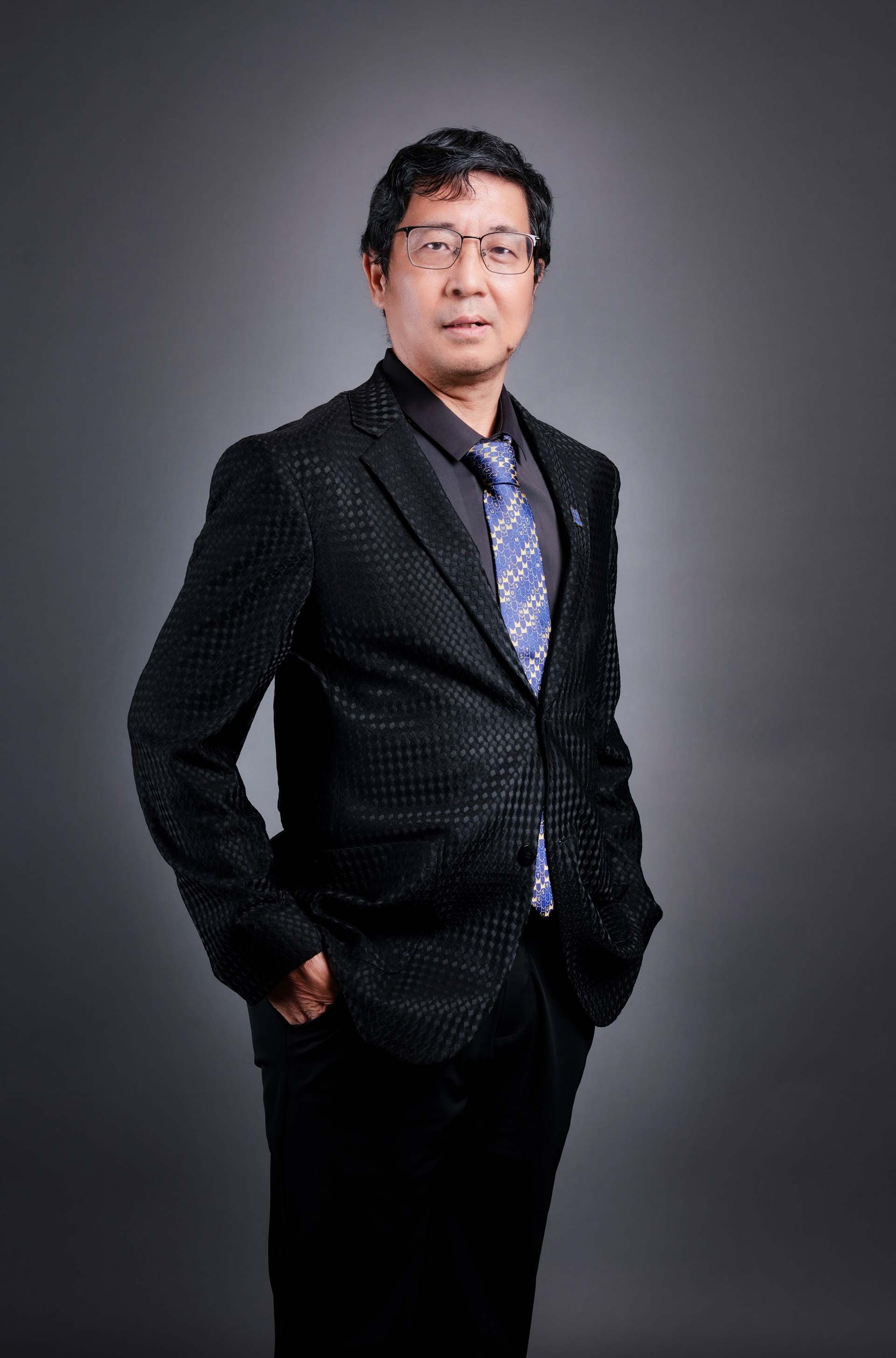
Professor Zong Qiugang, director of the Space Science Institute and the State Key Laboratory of Lunar and Planetary Sciences (SKLPlanets) at the Macau University of Science and Technology (MUST), says China’s rapid progress in space “comes down to a few clear, sustained choices,” which include a “clear vision, sustained resources, investment in people and technology, and patience”.
“Long‑term planning and steady investment created the runway for ambitious projects and incremental learning,” Prof. Zong told Macao Magazine in a written interview.
Clear roadmap
As China’s outer space exploration continues to grow, the country is preparing to send its first ‘taikonauts’ (the Chinese name for ‘astronauts’ coined from the Mandarin word taikong 太空) to the moon before 2030.
The plan is anchored in a new national mid- and long-term development programme for space science, unveiled in October 2024, which serves as a guideline for the country’s planning of space science missions and space research up to 2050.
The programme, the first of its kind at the national level, was jointly released by the Chinese Academy of Sciences (CAS), the China National Space Administration (CNSA) and the China Manned Space Agency (CMSA). It outlines the development goals of China’s space science, including 17 priority areas under five key scientific themes, as well as a three-phase roadmap.
The five key scientific themes include the extreme universe, space-time ripples, panoramic view of Sun-Earth, habitable planets, as well as the biological and physical sciences in space, Ding Chibiao, vice president of the CAS, said at a briefing to present the programme, according to a press release.
In the first phase, leading up to 2027, China is set to focus on the space station operation, implementing a manned lunar exploration project, and the fourth phase of its lunar exploration programme, as well as a planetary exploration project.
An international lunar research station will be developed during the second phase, between 2028 and 2035, while in the third phase, from 2036 to 2050, China plans to launch over 30 space science missions.
According to Prof. Zong, home-grown innovation and self‑reliance, such as the BeiDou navigation system and the Long March rocket family, have helped build “technical independence and industrial capacity” over the years.
Additionally, “a strong pipeline of talent from universities and research institutes supplied the engineers and scientists needed to design, test and operate complex missions,” he noted.
The scholar also suggested that international engagement “provided useful exchanges” without “compromising” China’s “core capabilities”.
“A track record of successful missions, from the Chang’e lunar programme to Tianwen‑1 at Mars, has validated this approach,” he stated.
Macao’s leap forward
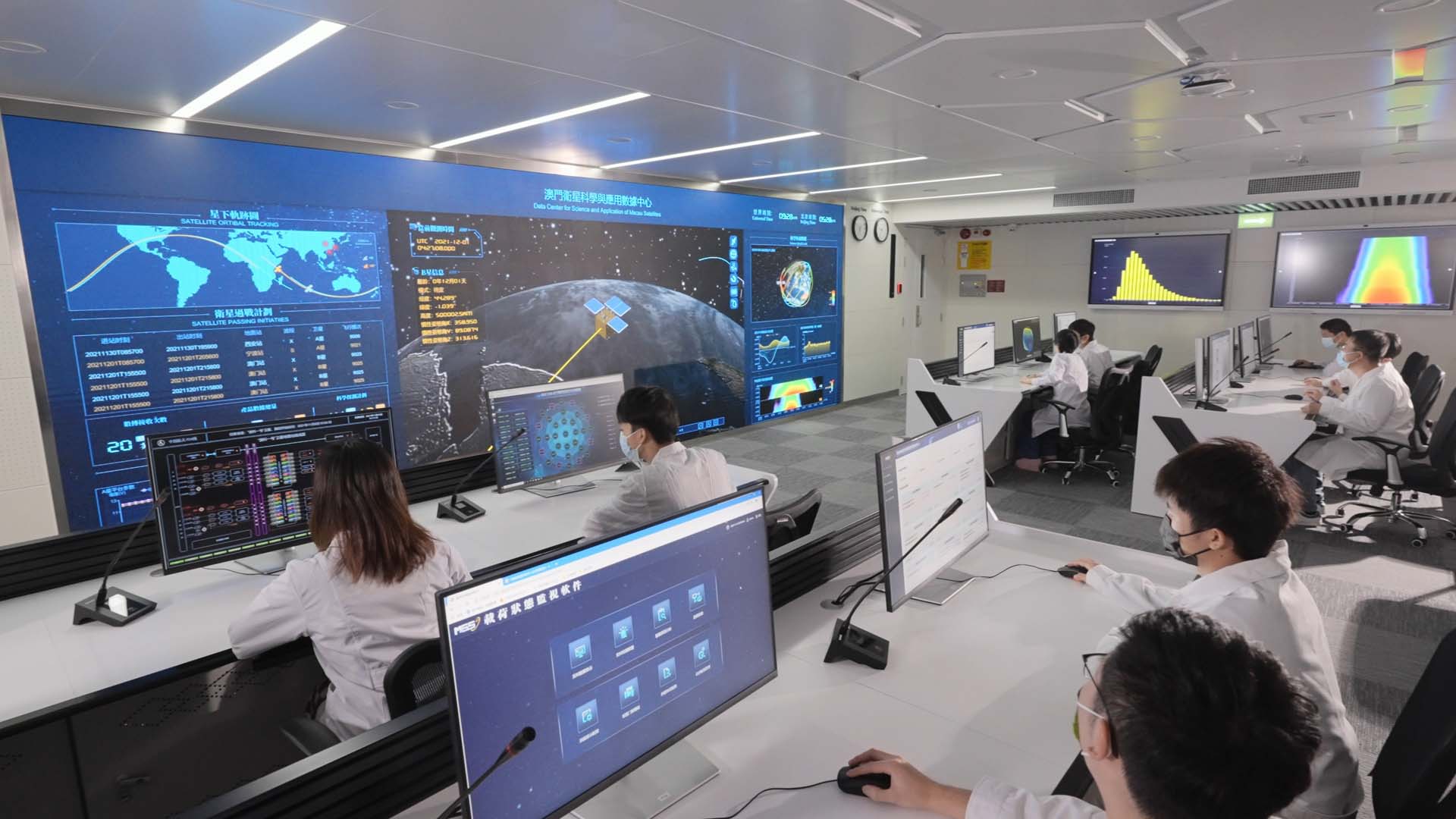
To help achieve long-term goals, scientific centres have been established at a number of locations, including the Guangdong-Hong Kong-Macao Greater Bay Area.
Prof. Zong noted that Macao has been involved in China’s lunar programme “from the very beginning”.
“Since 2005, our team has been involved in analysing and interpreting data from the Chang’e missions, especially in studying surface geology and space environments,” the scholar stated. “For instance, by examining Chang’e-5 and Chang’e-6 samples, we uncovered surprising patterns in how solar wind shapes the Moon’s surface. This has actually offered new insights into how Earth’s magnetic field shields the lunar near side,” he added.
Macao has also “contributed to designing and calibrating instruments” onboard some of the space missions. “This work has not only led to publications in top journals like Nature Astronomy, but also helped improve the reliability of mission payloads. Overall, this reflects Macao’s growing capabilities in both space instrumentation and advanced scientific analysis,” the SKLPlanets’ director said.
The facility at MUST, he noted, “is the first and only State Key Laboratory in China focused on astronomy and planetary science”. “I believe we play an essential role in supporting China’s lunar and deep-space exploration goals,” Prof. Zhon stressed.
The scholar said the laboratory’s role “is to drive cutting-edge research in areas like planetary environments and habitability, planetary formation, and space exploration, all supporting national projects such as lunar bases and deep-space missions”.
“Operationally, we play a central role in analysing data from missions like Chang’e and Tianwen, turning raw information into real scientific insight,” Prof. Zong explained.
“We also bridge research and application by developing payloads for missions like Chang’e, Tianwen, and Chase [satellite]. And thanks to Macao’s “one country, two systems” framework, we’re able to act as an international gateway, bringing experts from around the world to collaborate more flexibly on China’s space projects,” he outlined.
Data from the Institute of Science and Technology Strategy Consulting of the Chinese Academy of Sciences, showed that between 2021 and 2025, MUST’s ranking in lunar science publications jumped from 13th to 7th globally.
“This leap in research output signifies that MUST has established world-class academic innovation capabilities in this field and lays a solid foundation for playing a more crucial role in the nation’s grand blueprint for deep space exploration,” Prof. Zong stated.
Payload development
From a role mostly focused on academic exchanges and some funding support, Macao has entered a stage of deep integration and even leadership in some areas of research related with the country’s space programme.
“We’re proposing missions, building instruments, and taking on roles in national science committees. Essentially, we’ve gone from the edge to the centre of China’s space science efforts,” Prof. Zong highlighted.
He said the laboratory’s capacity for sustainable development is demonstrated “by its deep involvement in major future national missions”.
“The team has completed a major transition from scientific analysis to payload development, and from collaborative participation to leading responsibilities,” the SKLPlanets’ director stated. “At present, the team is undertaking payload development tasks for a series of major upcoming national space missions, becoming an indispensable scientific and technological force”.
Those endeavours include developing the Martian molecular and ionic composition analyser and participating in the development of a laser heterodyne spectrometer for the Tianwen-3 mission. The latter will be China’s first Mars sample-return mission, scheduled for launch around 2028, with the goal of returning no less than 500 grammes of Martian samples to Earth by around 2031.
Other projects include: the Chase-2 mission, with the Macao laboratory leading the development of a medium-energy electron detector and a solar X-ray spectrometer; the Chang’e-7 mission, with the local team participating in the development of a lunar regolith water molecule analyser and a dust detector; and the Chang’e-8 mission, the joint development of a terrain probing drill for the International Lunar Rover. The laboratory is also responsible for developing a terrestrial gamma-ray flash monitoring system under the “International Meridian Circle Programme” – aimed at conducting all-weather observations and studying the space weather.
Prof. Zong said the Macao Special Administrative Region (MSAR) Government “has also provided dedicated support for payload development” related to some of the space missions carried over the years.
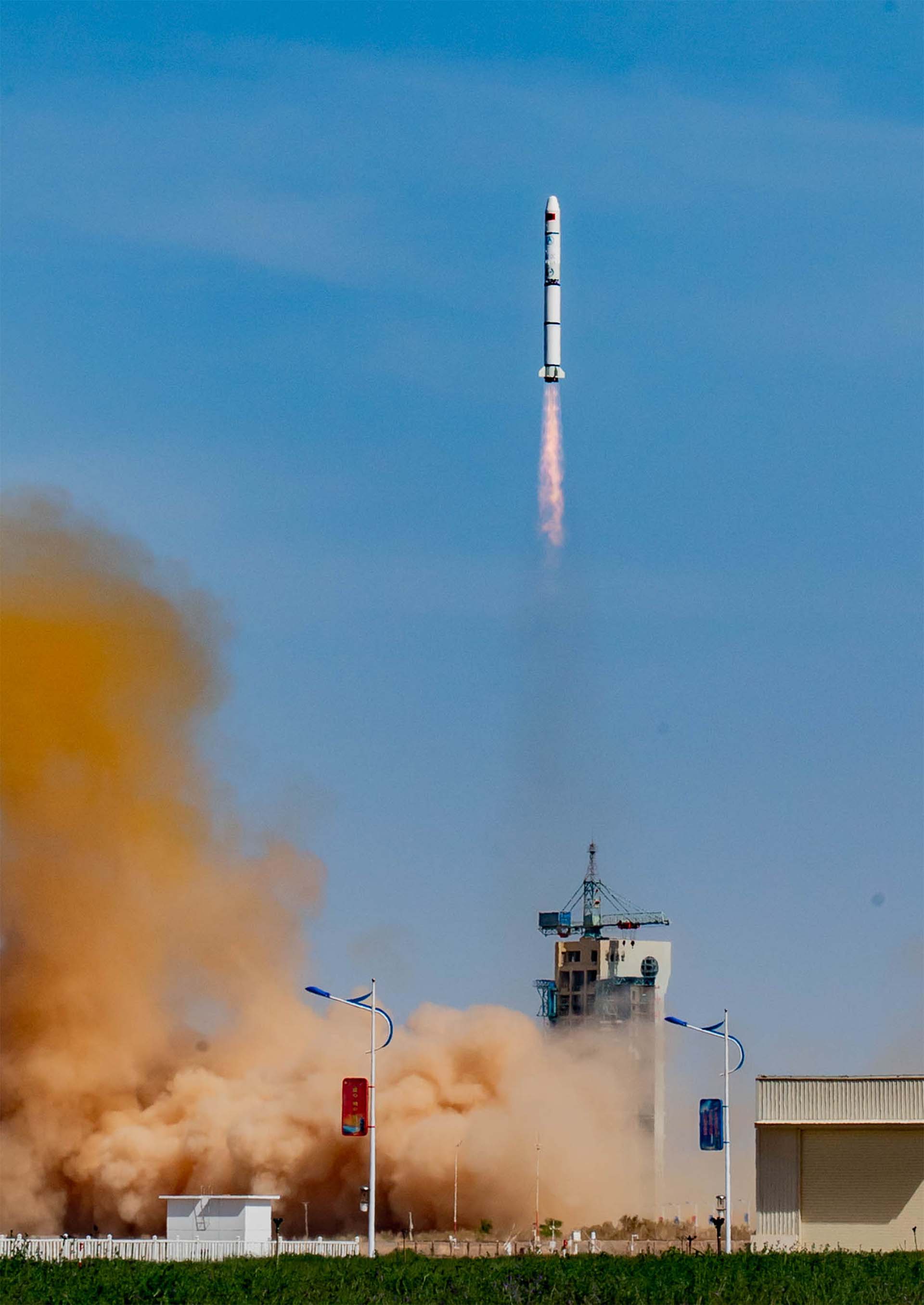
China successfully sent two satellites of “Macao Science 1”, a space exploration programme, into space in May 2023. It was the first space science satellite programme jointly developed by the Chinese mainland and Macao.
Macao Science 1 took a twin-satellite approach. While satellite A carried payloads like high-precision magnetometers to detect Earth’s magnetic field, satellite B was equipped with high-energy particle detectors and solar X-ray instruments to obtain space environment data.
Inspiring the future
In another breakthrough, a Macao resident was selected in mid-2024 as a payload specialist for the fourth batch of taikonauts for China’s manned space programme, and is currently undergoing training before joining a spaceflight.
The selection of a Macao local for such role “shows that Macao is now truly part of China’s space exploration story,” Prof. Zong observed. “It confirms that Macao’s scientific expertise is trusted to conduct complex experiments on the space station, which is a real testament to our research quality.”
But just as importantly, he noted, it inspires young people. “Seeing someone from Macao possibly wear the taikonaut suit sends a powerful message that space isn’t out of reach anymore. It builds a deeper sense of national pride and shows our youth that their future has no limits,” the SKLPlanets’ director said.
Nurturing talent however requires a multi-pronged strategy, the scholar emphasised. “Firstly, we must focus on interdisciplinary education. Space science requires a fusion of physics, geology, engineering, and computer science. Universities in Macao must continue to update their curricula to reflect these needs,” he suggested.
“Secondly, we must also provide hands-on opportunities. At SKLPlanets, we encourage students to participate in real research projects, such as analysing fresh satellite data or testing instrument prototypes, rather than just learning from textbooks,” Prof. Zong continued.
Another important step would be to “strengthen exchange programmes,” the scholar said. “We should send our students to top universities and research institutes for internships, and conversely, invite top scientists to mentor students here.”
Additionally, “public outreach via planetariums and competitions can spark interest early,” he added. “With commitment, Macao can produce a new generation driving China’s space developments.”
Looking ahead, Prof. Zong said Macao should shift from analysing data to developing payloads and proposing missions.
“Our goal is to design and build advanced instruments for China’s future satellites and deep-space probes,” he noted. “Macao can serve as a global data and analytics centre for space science. By establishing high-performance computing centres here, we can process and archive data not just for China, but for the international community,” he added.
Macao, the SKLPlanets’ director said, “can leverage its capital and commercial environment to explore commercial spaceflight opportunities, acting as a bridge to bring space technologies into the commercial market in the Guangdong-Hong Kong-Macao Greater Bay Area”.
“Thanks to Macao’s unique cultural role, we have a real opportunity to lead in space science outreach and education, inspiring young people here in Macao, across the Greater Bay Area, and beyond,” he concluded.
| ‘HEAVENLY PALACE’ FOR SCIENTIFIC EXPERIMENTS The Tiangong Space Station, meaning “Heavenly Palace”, is a permanently crewed modular space station operated by China in low Earth orbit, at an altitude of between 340 kilometres to 450 kilometres. Completed in 2022 with three modules – Tianhe (core), Wentian, and Mengtian – the space station hosts three taikonauts for six-month missions. The first crew at Tiangong arrived in June 2021, when only the core module was in orbit, and since then a number of other crews have spent time at the station. The Tianhe core module provides life support and living quarters for crew members and houses the station’s guidance, navigation, and orientation control systems. It is divided into three sections: living quarters, a service module, and a docking hub. The two laboratory cabin modules – Wentian and Mengtian – support microgravity and freefall research. Wentian focuses primarily on life sciences, while Mengtian is oriented toward microgravity research. According to the China Manned Space Agency, the space station deployed and implemented 265 science and application projects in orbit last year, and set multiple records. Such records included China’s first mammalian test subjects on a space station, the world’s first biological study conducted in a sub-magnetic and microgravity environment, as well as the longest single spacewalk task, according to an annual report released in early January 2026. Meanwhile, a separate space telescope module, China Space Station Telescope (CSST), is due for launch this year. It is designed to operate independently alongside Tiangong, occasionally docking at the space station for maintenance, repairs and upgrades. Also known as “Xuntian”, which translates to “Survey the Heavens”, the telescope is said to have a 2-metre diameter mirror and a 2.5-billion-pixel camera. |
| DOWN TO EARTH China’s first “ground-space station”, the Space Environment Simulation and Research Infrastructure (SESRI), was launched in February 2024 in Harbin, the capital of Heilongjiang province. It was hailed as another significant step to support the country’s growing space ambitions. Simulation tests provide vital information about what is possible in the space environment, conditions that are now simulated at SESRI, according to official Xinhua News Agency. The facility covers an area equivalent to 50 football fields and can simulate a wide range of conditions to help understand the impact on spacecraft performance and human health. Developed by the Harbin Institute of Technology and the China Aerospace Science and Technology Corporation, it has simulation capabilities for nine space environment factors, including plasma, particle irradiation and solar electromagnetic radiation. “Building such a basic scientific research platform that resembles the real cosmic space environment is akin to bringing a space station to Earth,” Li Liyi, from the Institute of Space Environment and Material Science at Harbin Institute of Technology told Xinhua at the opening of the facility. The facility has already served several domestic and international users, supporting the implementation of a series of major national aerospace missions. Han Jiecai, president of the Harbin Institute of Technology and an academician of the Chinese Academy of Sciences, told the news agency that the research platform was of “great importance” to the country, as it would facilitate “major breakthroughs in scientific and technological innovation, industrial transformation and upgrading, and the cultivation of highly skilled talent”. |