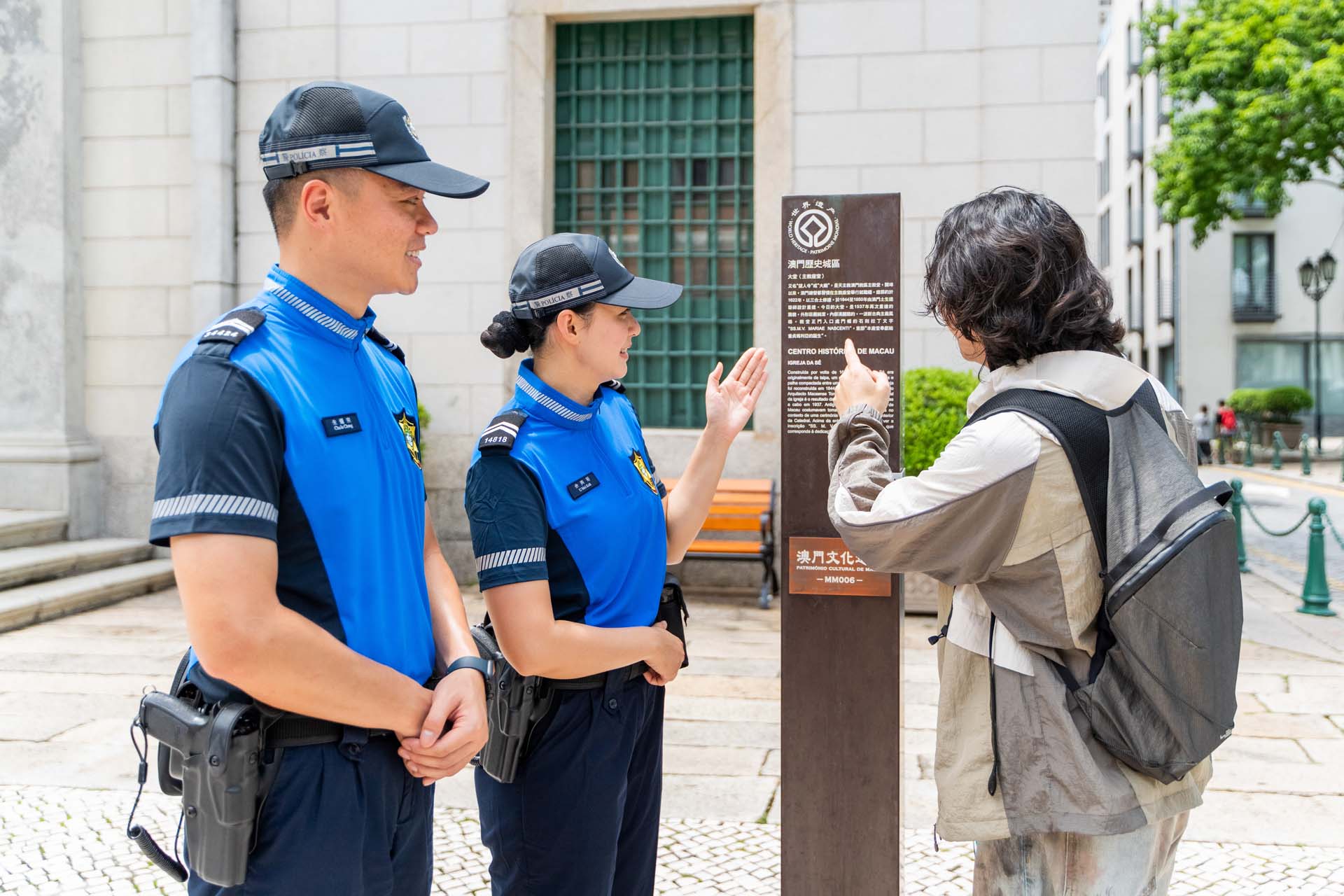
At the Ruins of St Paul’s, the flow of people rarely stops. Visitors climb the steps towards one of Macao’s most recognisable landmarks, pause for photographs and filter into the surrounding streets. Not far away, Senado Square has its own steady rhythm of tourists, while across the water Rua do Cunha draws another stream of visitors through the narrow streets of Taipa Village.
Amid the crowds, the blue uniforms of Macao’s Tourist Police are easy to spot.
The officers patrol some of the city’s busiest visitor areas every day. They keep watch, manage crowds and respond to incidents, but their job extends beyond conventional policing. They give directions, help recover lost belongings, navigate language barriers and assist visitors who find themselves in challenging situations far from home.
It is a role shaped by the particular demands of a city that receives millions of visitors each year, and where the experience of feeling safe can be almost as important as the attractions themselves.
For Virginia Hertroy, a 46-year-old visitor from France, that sense of security accompanied a week spent discovering very different sides of Macao.
“Macao is a very nice place. It’s a mix between the modern and traditional, and I like it a lot. I give it a 10 as a tourist walking around the city, and I’m sure I’ll be back,” she says.
Her itinerary ranged from the city’s integrated resorts to its temples and the Macao Giant Panda Pavilion. “Within a week, I saw everything from the part of the city with integrated resorts to the pandas and the temples. In the street along the Ruins of St Paul’s, there are many people and tourists, but that’s normal,” Ms Hertroy adds.
Policing a tourist city
Creating that level of comfort for visitors was one of the principal ideas behind the Tourist Police. The unit emerged as Macao’s tourism industry expanded and increasing numbers of visitors began converging on a relatively small number of popular districts.
Lei Ieng Long, acting commander of the Macao Police Department of the Public Security Police Force (CPSP), traces the origins of the Tourist Police back to 2015.
“In response to the development of Macao’s tourism industry, the large number of visitors and the high concentration of people in tourist areas, the CPSP established the Tourist Police on a trial basis in April 2015,” Mr Lei recounts. “After nearly two years of experience and refinement, this force was officially established on 5 March 2017.”
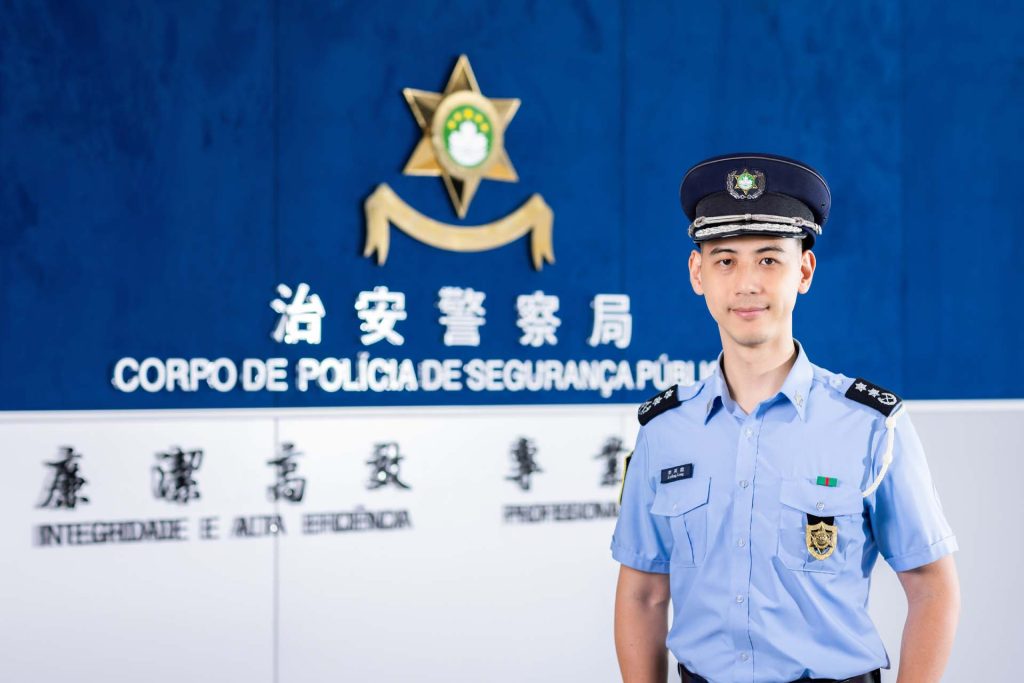
Rather than creating an entirely different form of policing, the idea was to adapt police work around the particular pressures found in tourist areas. “The establishment of the Tourist Police was intended to improve police work in tourist areas, strengthen patrols and crowd management in these areas, as well as improve the quality of services provided to visitors,” Mr Lei says.
The remit is consequently broad. Officers receive requests for information and reports of lost property, assist visitors in difficulty and provide an initial response to emergencies. At the same time, they retain the fundamental responsibilities of any police officer: maintaining public order and preventing and combating crime.
From just over 30 officers when the initiative was launched in 2015, the Tourist Police has grown to 97 active members – 59 men and 38 women. Sixty are deployed on the Macao peninsula and 37 on the islands.
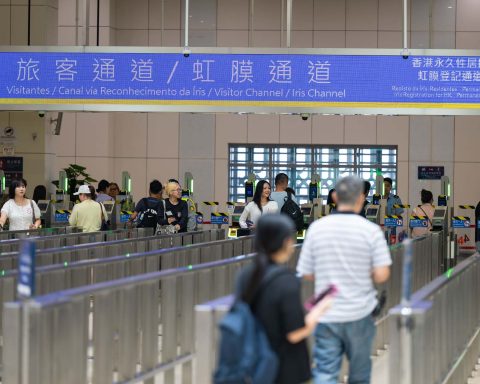
Their presence is concentrated where visitors are most likely to encounter them: the historic centre, Taipa and Coloane, major tourist attractions and boundary checkpoints, according to the authorities.
Multi-faceted training
Helping a visitor who has lost a passport requires a different approach from managing a dense holiday crowd. Explaining a local regulation to someone who speaks another language demands yet another set of skills. Thus, Tourist Police officers are trained for both sides of the job, Mr Lei explains.
Before taking up their posts, they undergo specialised programmes and must pass the relevant assessments. So far, 10 training courses have been held, completed by 276 officers: 178 men and 98 women.
The model is built around what the authorities describe as a “dual competency”: policing ability combined with visitor-service skills. Operational training is provided by the CPSP Police School and includes the use of specialised vehicles and equipment, crowd-control techniques and the application of technology to police work.
The other side of the training is developed in collaboration with the Macao University of Tourism (UTM). Officers learn about the city’s history and culture, international etiquette, language communication and techniques for dealing with stressful situations and complaints.
Language training is particularly important, notes Tourist Police officer Chu Io Chong. He says communicating with people from different parts of the world is one of the most obvious ways in which his work differs from conventional policing.
“Tourist Police officers are deployed in places with large numbers of visitors, such as the Ruins of St Paul’s, Senado Square, Rua do Cunha, the Coloane area and boundary checkpoints, where they provide assistance to visitors from all over the world,” he says. “Therefore, in our daily work, it is necessary to have a command of Cantonese, Mandarin and English, while some posts also require knowledge of Portuguese. Multilingual communication has become an essential component of our daily work.”
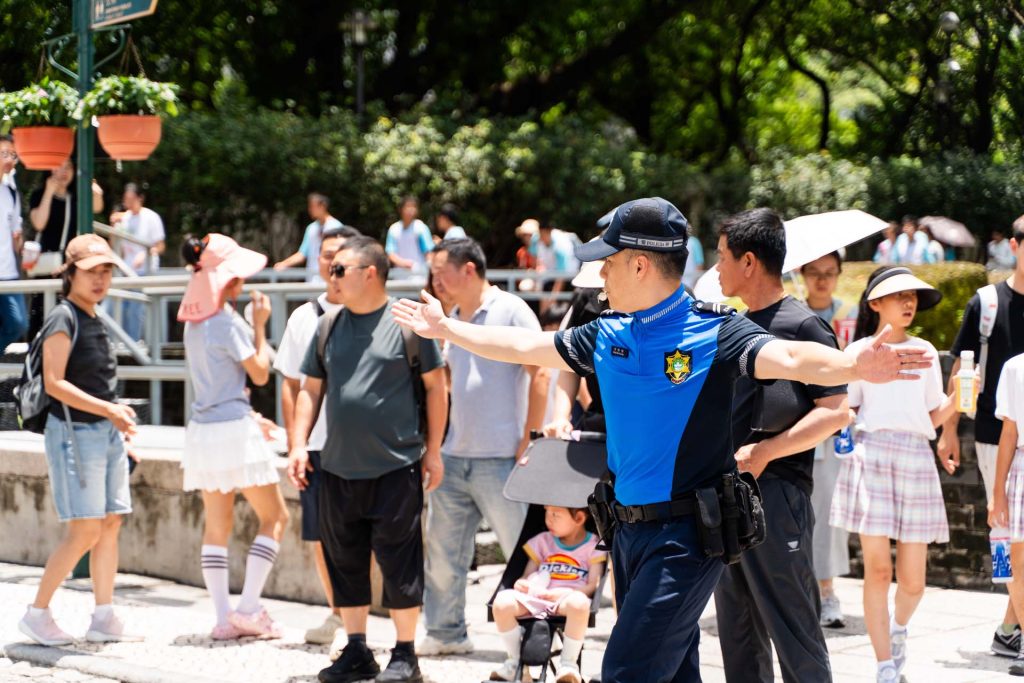
Assistance from officers can be as straightforward as giving directions, or as urgent as helping someone who has lost important documents. Their duties also include mediating disputes involving tourists, dealing with lost-property cases and issuing replacement copies of the “Slip of Authorisation to Stay”.
Blue in a sea of visitors
There is a reason Tourist Police officers look different from their colleagues elsewhere in the force. Their distinctive blue uniform is intended to make them easy to recognise, particularly in a crowd. But its design also reflects a less visible aspect of the job: the sheer amount of walking involved.
“Tourist Police officers have to carry out long foot patrols in Macao’s main tourist areas, frequently moving over uneven surfaces and covering long distances, which requires a high degree of mobility,” Mr Lei explains.
Cobblestones, steps and uneven streets are part of the terrain, particularly around the historic centre. “Therefore, the fabrics used in the uniforms prioritise flexibility and breathability, while the design also incorporates practical solutions for carrying equipment, in order to support prolonged periods of intensive outdoor duty,” he says.
At the same time, Mr Lei adds, “the distinctive blue colour scheme of the uniform not only conveys the authority inherent in law enforcement, but also allows visitors to quickly identify officers and approach them amid the crowds”.
Their equipment is otherwise similar to that used by other police officers and includes a firearm, pepper spray, handcuffs, a radio, body camera and service mobile phone. Cut-resistant gloves and protective vests designed to offer protection against attacks with bladed weapons have also been added, according to the authorities.
Their working hours follow the rhythms of tourism too. While conventional policing operates 24 hours a day, Tourist Police activity is concentrated between 7am and 11pm. During public holidays, festivals and major events, when visitor numbers surge, officers from other CPSP units are deployed to reinforce the main tourist areas. The challenge not only lies in maintaining security, but also in keeping people moving safely through intensely crowded streets.
When something goes wrong
Not every visitor knows Macao’s rules. Mr Chu says officers regularly encounter tourists using drones without permission, dropping litter or taking photographs in places where photography is prohibited. In those situations, enforcing the rules is only part of the job. “In addition to patrolling and responding to requests for assistance, we have to patiently explain local regulations to visitors, provide them with timely guidance and put a stop to any violations, thereby helping to preserve Macao’s image as a tourist city,” he notes.
Other encounters are more personal. Officer Chu remembers being called to Rua de São Paulo after a tourist realised while shopping that her wallet might have been stolen. In an unfamiliar city and unsure what to do next, she was understandably distressed.
“When a colleague and I arrived at the scene, we immediately tried to reassure her. We then quickly gathered the necessary information, checked the video-surveillance footage and accompanied her to the police station to complete the subsequent procedures,” he recalls.
What stayed with him was not simply the police investigation, but the woman’s vulnerability. “This experience left a deep impression on me and reminded me that the work of the Tourist Police requires not only professional competence and efficiency in law enforcement, but also a strong sense of empathy. In moments of crisis, providing support and assistance can effectively help alleviate victims’ distress and demonstrate the human side of police work.”
For fellow Tourist Police officer U Mei Kok, the job similarly moves back and forth between law enforcement and public service. Lost belongings, missing people, disputes involving tourists and language difficulties are common. During festivals and major events, officers must handle these individual requests while simultaneously managing crowds and preventing theft.
“Because they are in an unfamiliar environment, visitors frequently lose identification documents or personal belongings, and requests for this type of assistance are very common,” Ms U says. “We have to act quickly to help them search for lost items, follow up on the respective cases and provide guidance on replacing documents, thereby seeking to address their most urgent needs.”
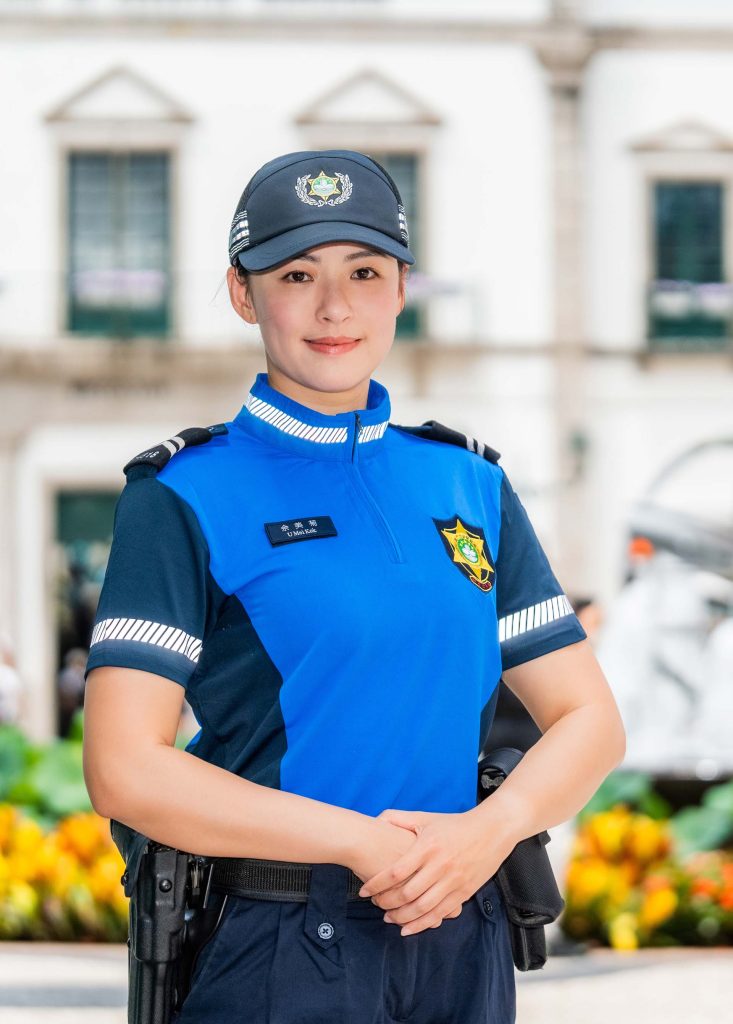
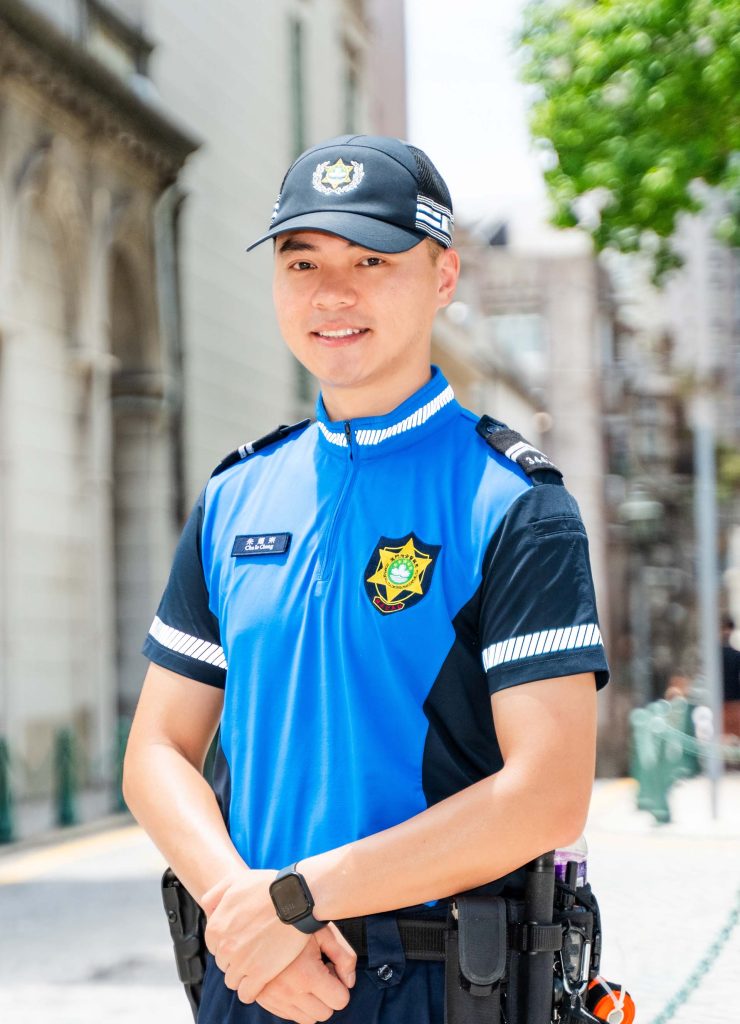
One case involved two tourists who arrived at the Tourist Police Services Centre in a panic. They had left a mobile phone in a taxi. Officer U began by recording where and when they had entered and left the vehicle, along with details of the car itself. The information allowed officers to identify the taxi and, working with other services, contact the driver. The phone was found and returned.
“The visitors expressed their appreciation for the cooperation between the different services and for the efficiency with which the case was handled. This experience further strengthened my determination to serve visitors,” Ms U says. “I will continue to perform my duties in a professional, approachable and responsible manner, helping to convey the image of the Tourist Police as a helpful and dedicated force.”
Most people who come to Macao will never need the Tourist Police to find a missing phone, replace a document or respond to a crime. Their encounters, if they have any, may amount to little more than asking for directions or noticing a blue-uniformed officer while walking through Senado Square.
In a city where residents and visitors constantly share busy streets, squares and attractions, the Tourist Police occupy a space somewhere between authority and hospitality. They are there to enforce the rules when necessary, but also to make an unfamiliar place easier to navigate.
For visitors such as Ms Hertroy, what remains after a trip is not necessarily the police presence itself, but the feeling it helps create. “I feel very safe,” she says.
For a tourist city, that simple impression can be part of the welcome.
* Contributor to the Chinese edition of Macao Magazine, with Rui Pastorin