For years, education reform on the Chinese mainland focused largely on building the foundations for digital learning. Initiatives such as the “Ten-Year Education Informatization Plan 2011-2020” and the “Education Informatization 2.0 Action Plan”, launched in 2018, broadened access to digital resources by expanding broadband connectivity in schools, replacing traditional blackboards with interactive whiteboards and introducing digital textbooks. Yet these efforts remained primarily focused on technology infrastructure.
Building on these earlier initiatives, the growing importance of artificial intelligence (AI) in education was reflected in April, when five central government departments led by the Ministry of Education jointly unveiled the landmark “AI + Education Action Plan”. The strategy – informed by prior government guidance in this field – sets out an ambitious vision to transform classrooms across the country by accelerating the adoption of AI, redefining teaching methods, and building an education system designed for the AI era.
Rather than treating AI as a specialist discipline, the plan frames AI literacy as both a civic necessity and an economic imperative. It calls for a universal framework that spans compulsory education, vocational training, higher education and lifelong learning, ensuring that AI becomes a core element of education at every stage of life.
Schools are encouraged to introduce structured AI courses and integrate the subject into local curricula through clearly defined learning objectives, teaching content and recommended classroom hours appropriate to each educational level.
The strategy also seeks to narrow regional disparities. Rural and remote schools will be supported through national digital platforms, such as the National Smart Education Platform, launched by the Ministry of Education in 2022, which provides nationwide access to courses, textbooks and interactive learning resources.
Underlying the policy is a broader vision of AI’s role in society. Rather than defining future competitiveness solely by who develops the most sophisticated algorithms, policymakers argue that prosperity will increasingly depend on how effectively ordinary citizens learn to collaborate with intelligent systems.
The view reflects AI’s growing importance to China’s economy. Official figures show that the country’s core AI industry was worth more than 1.2 trillion yuan (approximately US$174 billion) in 2025, with more than 6,200 AI companies operating nationwide. By the end of last year, more than 30 percent of manufacturing enterprises with annual revenues exceeding 20 million yuan had incorporated AI technologies into their operations.
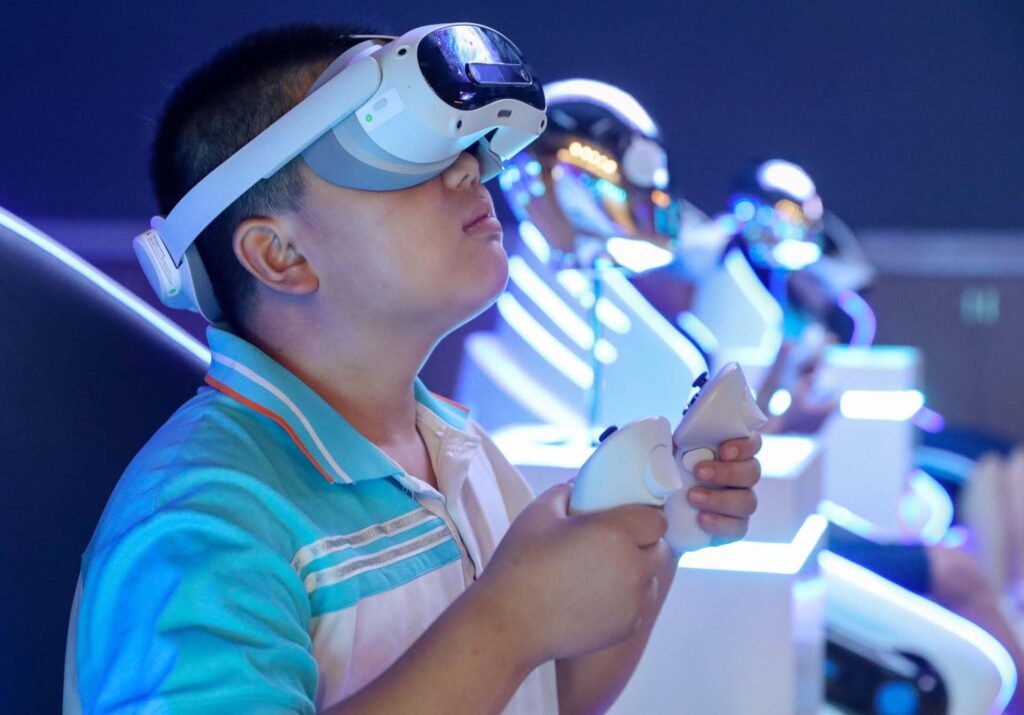
Beyond curriculum reform, the action plan proposes embedding intelligent teaching systems throughout the learning process. AI-assisted grading, tutoring and question-and-answer systems are intended to reduce teachers’ administrative workload while improving educational outcomes. The goal is to create a comprehensive national AI learning ecosystem by 2030.
A top‑down educational revolution
At the launch of the AI + Education Action Plan, Zhou Dawang, director of the Ministry of Education’s Department of Science, Technology and Informatization, outlined the government’s ambition: “We will build a general AI literacy system for all stages of education and for the whole of society.”
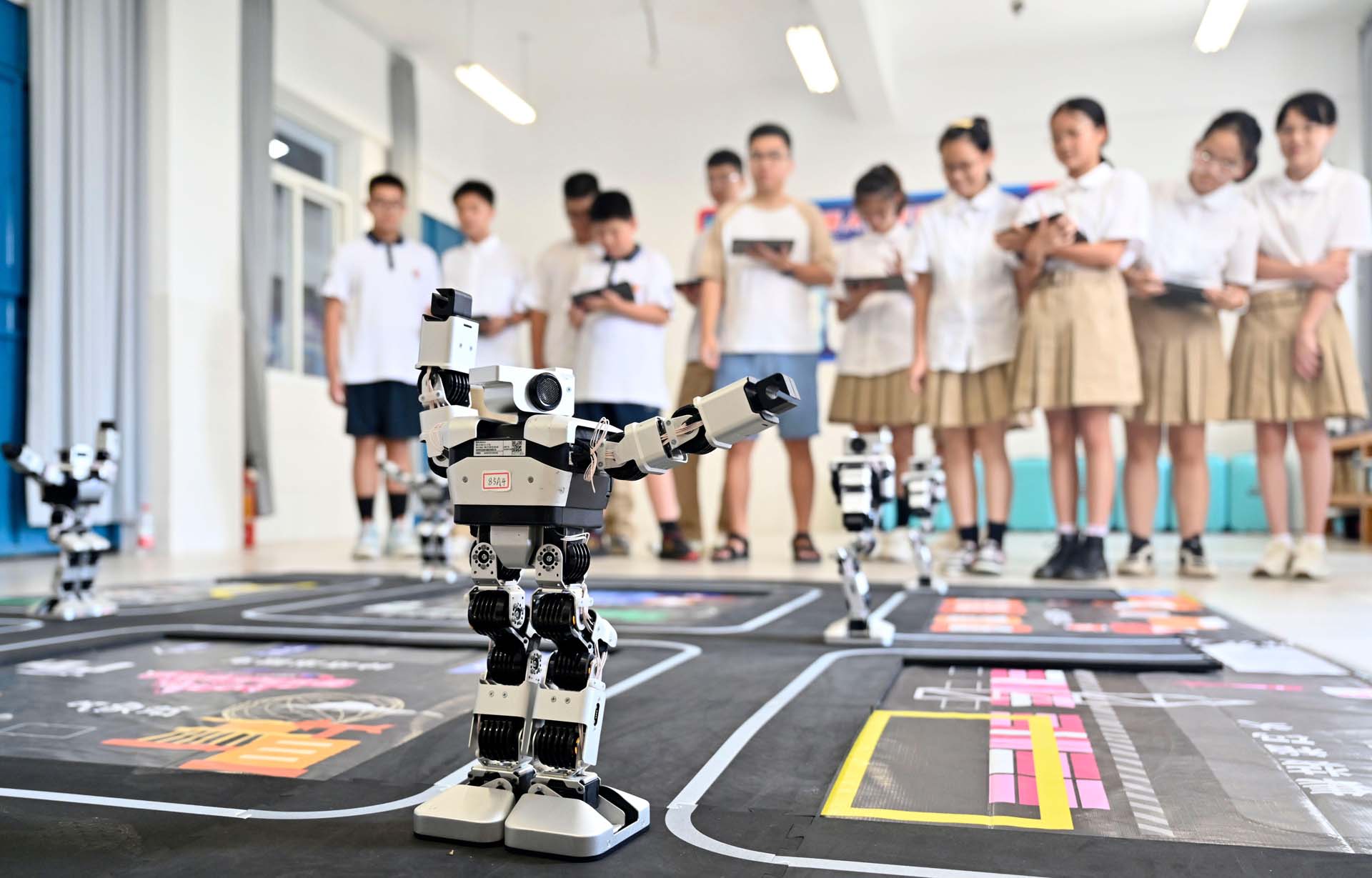
The strategy rejects the idea of AI as a specialist elective confined to a handful of students. Instead, it promotes interdisciplinary teaching throughout primary and secondary education, while encouraging schools to incorporate AI into after-school activities, study tours and other forms of practical learning.
Several regions had already begun implementing pilot schemes for AI education even before the action plan was announced. Beijing introduced a citywide strategy in 2025 requiring every primary and secondary school to provide at least eight hours of AI instruction each academic year. According to local officials, by the end of last year the adoption rate of AI across schools at different educational levels in Beijing had reached 87.7 percent.
The transformation envisioned by the action plan extends even further in higher education. Universities are encouraged to make AI a foundational subject for all students, regardless of discipline, while developing teaching materials tailored to different academic fields. Institutions are also expected to expand interdisciplinary AI programmes that bridge traditional subject boundaries.
Many universities have already begun adapting to these priorities through “X + AI” dual-degree programmes that combine specialist expertise with AI training. Among the most prominent examples is Fudan University in Shanghai, which has launched 41 such programmes, including an innovative pathway that combines a PhD in a traditional discipline with a master’s degree in AI. Notably, the first doctoral cohort came not from computer science but from journalism and communications. The university has also introduced more than 100 AI-related courses, ranging from introductory modules to highly specialised subjects.
A human‑aligned classroom revolution
For Yi Dai, assistant professor at the City University of Macau and a researcher specialising in the intersection of technology and education, the AI + Education Action Plan represents far more than a technological upgrade. It signals a fundamental reassessment of what knowledge, intelligence and learning should mean in the age of AI.
Dr Dai identifies two central ambitions underpinning the policy. The first is a redefinition of human agency.
“Universal AI literacy does not mean everyone must learn to code. Its essence lies in nurturing critical thinking, the ability to collaborate with AI, and the skill of asking precise prompts,” Dr Dai told Macao Magazine. The greater challenge, he argues, is ensuring that learners preserve the qualities machines cannot replicate: empathy, creativity and imagination.
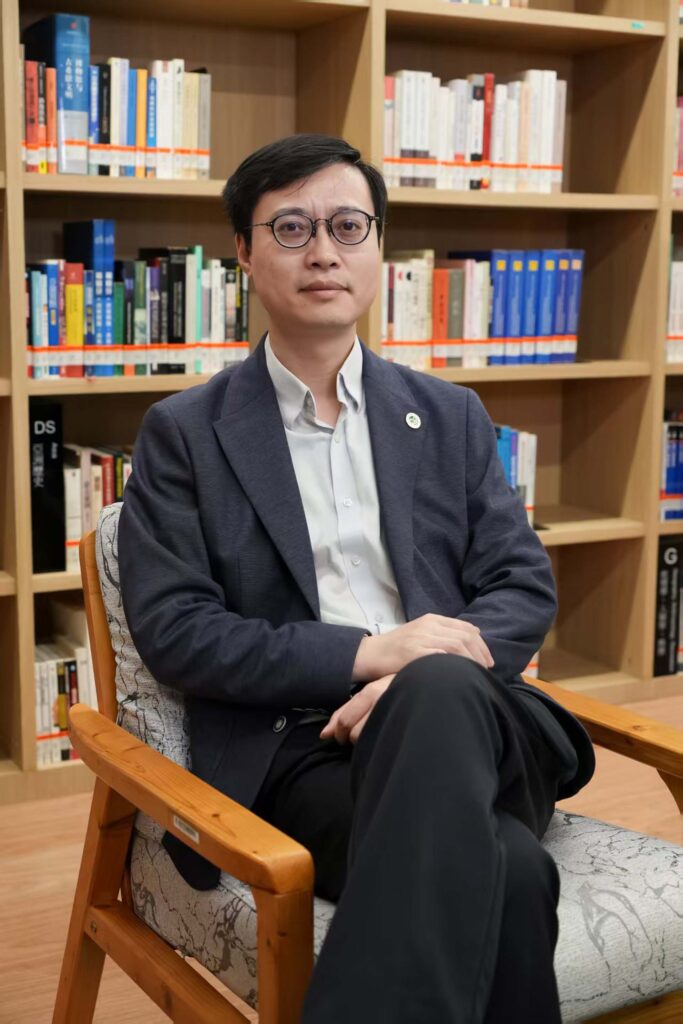
The second dimension is educational fairness. Dr Dai argues the action plan is not just about spreading technology, but about building a new kind of national literacy, akin to the “eradication of illiteracy” campaigns of the 20th century. Its aim is to ensure that students in resource‑constrained regions enjoy the same opportunities as those in major Chinese cities, he says.
To achieve this, the plan shifts the focus from merely providing digital tools to fundamentally redesigning the educational ecosystem. AI is intended to become an integral part of teaching itself. The government plans to establish national standards for AI literacy among teachers, supported by tiered training and assessment frameworks tailored to different professional roles. AI knowledge will also become part of teacher qualification examinations and certification processes.
The reforms extend beyond formal education. Vocational institutions are encouraged to integrate AI into traditional industry-related programmes, equipping students with skills suited to rapidly evolving workplaces. Lifelong learning also features prominently, with plans to provide high-quality digital resources, including micro-courses and micro-credentials, enabling workers to update their skills throughout their careers.
The strategy has already begun to take tangible form. In May, the Chinese authorities released two new educational resources for primary and secondary schools: the “AI Literacy Education Handbook” and the course series “Ten Lectures and 100 Questions on AI Literacy”. Developed through collaboration between universities, schools and technology companies, the materials are intended to provide a structured national framework for AI education.
The handbook is divided into four volumes covering lower primary, upper primary, junior secondary and senior secondary education. Its progression mirrors pupils’ cognitive development. Younger children encounter AI through illustrated stories, while older primary pupils are introduced to basic problem-solving activities. Junior secondary students begin exploring core technical concepts, and senior secondary learners are encouraged to examine interdisciplinary applications alongside emerging developments in AI.
Bridging the industry–classroom chasm
Technology leaders argue that the success of China’s AI education strategy will ultimately depend on how effectively classrooms keep pace with the relentless speed of technological innovation.
That is the opinion of Joe Liu Cheuk Yin, president of the newly established Greater Bay Area (Macao) Artificial Intelligence Development Association. Having built businesses spanning fintech, digital marketing, public utilities and AI, Mr Liu has seen first-hand how quickly the gap can widen between academic instruction and industry practice. While new AI models and tools emerge almost every month, he notes, school curricula often take years to develop, approve and revise.
“The greatest disconnect today does not stem from students lacking diligence,” Mr Liu told Macao Magazine. “It is the fact that the pace of technological development has already far outstripped the speed at which traditional curricula can be updated.”
For Mr Liu, the AI + Education Action Plan is an attempt to close that gap by compelling education systems to anticipate, rather than merely respond to, future labour market demands.
“Future employment competitiveness will no longer hinge on ‘what you know’, but on ‘what you can successfully accomplish by leveraging AI’,” he said. “When basic AI usage becomes universalised, the true competitive gap will be driven by high-order human capacities: the ability to ask the right questions, critically judge information, execute cross-disciplinary integration, and transform raw creativity into tangible outcomes.”
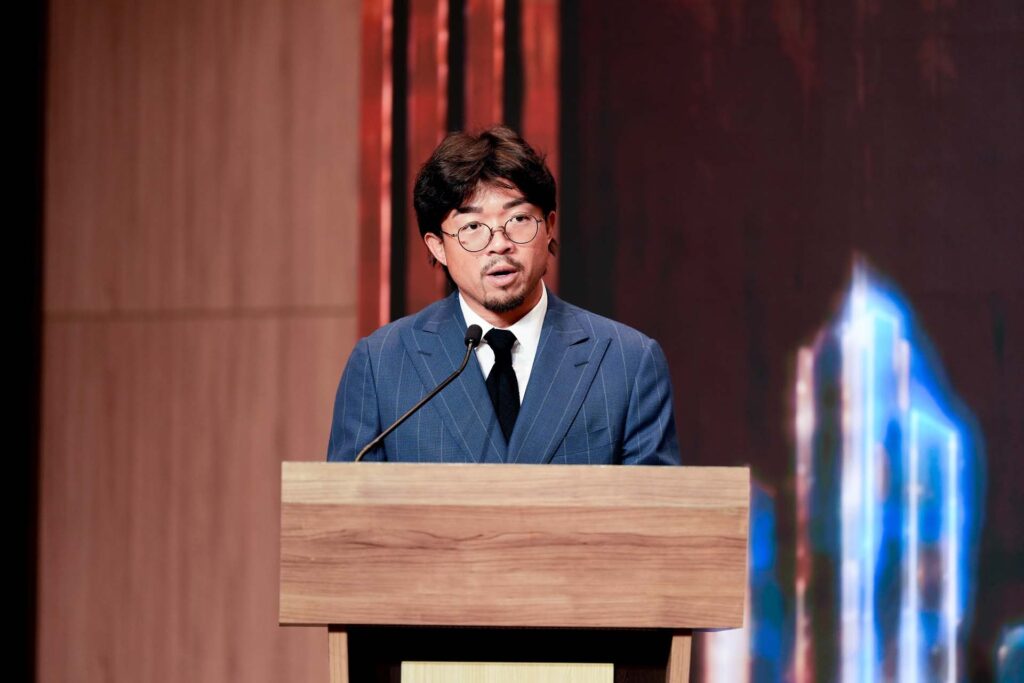
As AI becomes embedded in workplaces around the world, Mr Liu believes human qualities will become more valuable rather than less. “In this environment, human-to-human communication, empathy, leadership and ethical value judgement become more critical than ever before, because while technology drives hyper-efficiency, genuine trust and care remain fundamentally human attributes.”
Dr Dai believes the divide between education and industry can be narrowed through what he describes as “scenario twinning” – feeding anonymised, high-fidelity virtual replicas of real-world workplaces and business challenges into sector-specific AI models used in schools. Such systems would allow students to work on problems drawn from factory floors or commercial environments almost as soon as they arise, with AI tutors handling routine feedback while human teachers focus on developing judgement, craftsmanship and complex decision-making.
The Macao proof of concept
Macao is already beginning to translate elements of the national strategy into practice. The Education and Youth Development Bureau has announced that, from the 2026/2027 academic year, it will fund “AI experimental classrooms” in local schools. A dedicated grant under the School Development Plan subsidy programme will support the creation of these facilities, while new AI teaching materials and the first phase of a smart teaching platform – featuring automated question banks, examination paper generation and marking tools – are intended to provide teachers with more personalised support for lesson planning and assessment.
Meanwhile, with backing from the Macao Science and Technology Development Fund, Dr Dai and his research team have developed the Macao Smart Education Platform to create what they call a “Digital Twin Learner” capable of enabling real-time adjustments to the learning process.
By monitoring indicators such as eye movements and blinking frequency, the system can detect signs of fatigue. If a pupil has been studying continuously for around 45 minutes and their blink rate falls, the platform automatically adjusts colour temperature and virtual viewing distance through an augmented reality interface, helping to reduce eye strain without interrupting concentration.
The team has also sought to overcome the limitations of general-purpose large language models, which can struggle with specialised subjects such as classical Chinese and advanced mathematics. Instead, they have adopted a process known as “reasoning distillation”, compressing the logical capabilities of large AI models into smaller, localised Small Language Models (SLMs) trained on local curricula, textbooks and examination standards. These models power Subject Teaching Agents (STAs), which provide personalised, subject-specific instruction and adapt their guidance in real time according to each student’s progress.
“China’s scale has already positioned it as the world’s largest living laboratory for intelligent learning, and the AI + Education Action Plan offers a powerful blueprint for the future,” Dr Dai said. “Yet the true measure of success will not rest solely on algorithms or efficiency gains, but on how wisely technology is woven into the fabric of human teaching.”
Dr Dai cautions that highly personalised AI learning, while capable of increasing engagement and motivation, must be deployed carefully to avoid undermining resilience or weakening the collective experience of the classroom.
For Mr Liu, the defining characteristic of successful education in the AI era will not be teachers’ technical expertise, but their judgement, compassion and ability to connect with students. “AI can provide standardised solutions, but only teachers can recognise emotions, nurture resilience and offer encouragement that no algorithm can replicate.”