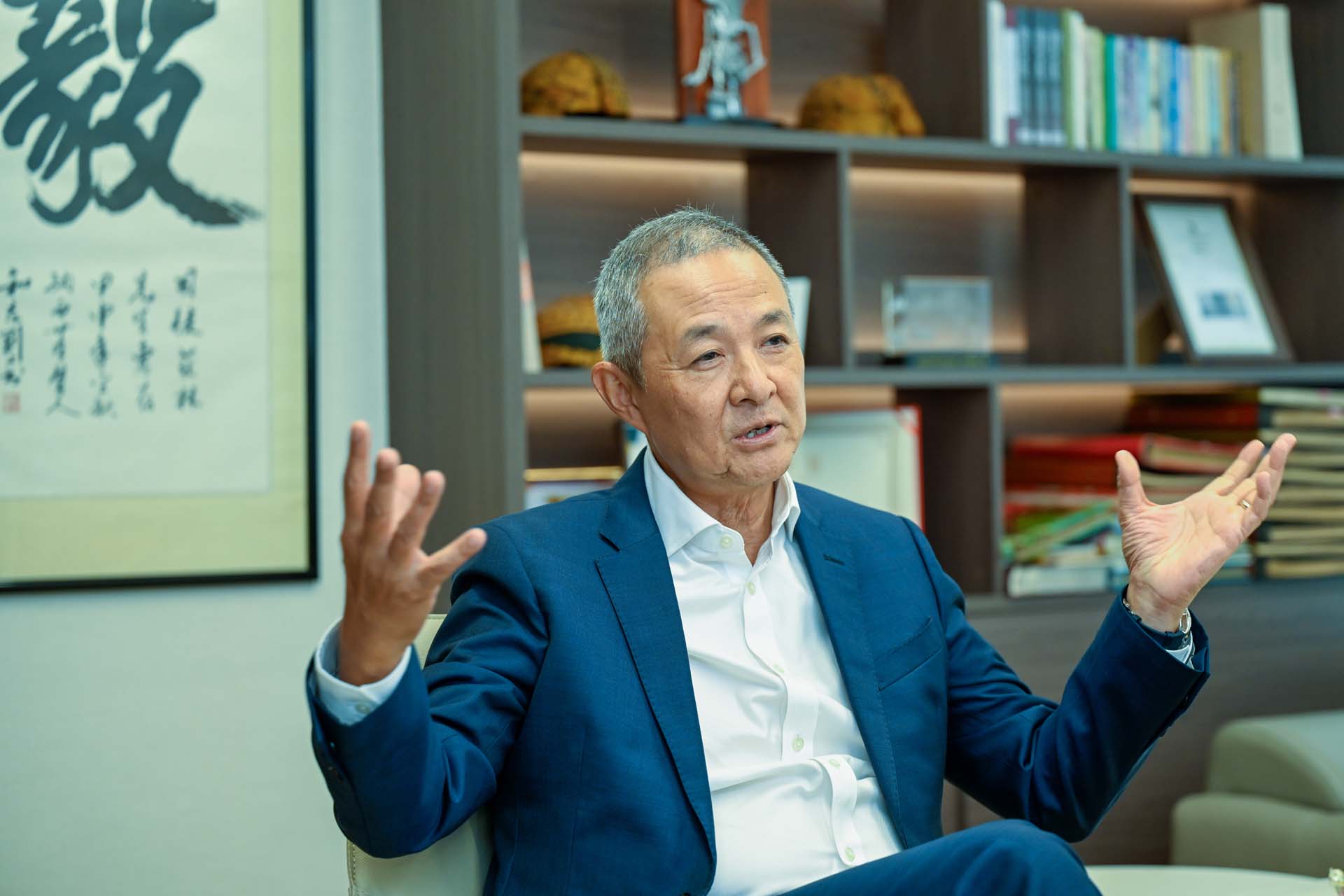
When Macao entrepreneur Johnny Sitou Tek Lam first set up a company in Indonesia in 2002, he recalls encountering only a few Chinese mainland or Macao firms. More than two decades later, that environment has shifted: Chinese capital, suppliers and companies are now a familiar presence in Indonesia’s business scene.
That shift carries implications for Macao. As president of the Indonesian Chamber of Commerce in Macau, Mr Sitou sees the city as a potential financing platform for mainland small- and medium-sized enterprises (SMEs) expanding into what he describes as one of Asia’s fastest-growing economies. Beyond capital, he believes there is scope to deepen Macao–Indonesia exchanges across sectors ranging from Traditional Chinese Medicine (TCM) to tourism.
The macroeconomic data reflect these closer ties. Chinese authorities say China has been Indonesia’s largest trading partner for 13 consecutive years, with bilateral trade reaching US$167.49 billion in 2025. The Chinese embassy in Jakarta has also noted that China has ranked among Indonesia’s top three sources of foreign direct investment (FDI) for a decade, with Chinese FDI into Indonesia totalling about US$7.5 billion last year.
Mr Sitou is not surprised by the strength of the relationship, which in 2025 marked the 75th anniversary of diplomatic ties between the two sides. “Indonesia has a population of over 285 million and a very young demographic, with a median age of around 30,” he said in an interview with Macao Magazine. “That makes it an enormous market, and it has attracted a lot of Chinese companies, especially over the past decade.”
The entrepreneur has watched mainland manufacturers steadily recalibrate supply chains into Southeast Asia, with Indonesia and Vietnam often at the top of the list. Labour may not be the cheapest in the region, he added, but the trade-off is access to a vast domestic consumer base and an industrial policy that rewards localisation. “Indonesia’s long-term fundamentals are compelling, as the country prioritises and protects Indonesian businesses. If you manufacture locally, you are, in effect, treated as an Indonesian enterprise,” Mr Sitou stated.
Indonesia’s economic momentum has also remained steady. Its gross domestic product (GDP) expanded 5.11 percent in 2025 to 23,821.1 trillion Indonesian rupiah (US$1.37 trillion), making it the largest economy in Southeast Asia and among the world’s top economies by nominal GDP, based on data from the International Monetary Fund (IMF). On a purchasing power parity (PPP) basis – an output measure adjusted for differences in prices and living costs – Indonesia already ranks as the world’s seventh-largest economy.
Even so, the scale of the Indonesian market has not attracted a proportionate presence from Macao businesses or investors. While the mainland and Hong Kong have demonstrated strong investment appetite in the archipelagic state, with Hong Kong also among Indonesia’s leading sources of FDI, Macao companies remain relatively scarce, Mr Sitou noted. This reflects the city’s smaller corporate base and narrower sector mix, he added.
Beyond his own business, which supplies mainland-made equipment for oil operations in Indonesia, he pointed to only a handful of Macao firms active there, mainly in areas such as fruit cultivation, electric vehicles and employment agencies that bring Indonesian workers to Macao.
Diverse opportunities
Despite Macao’s limited corporate footprint in Indonesia, the chamber president argues that the relationship should not be judged solely by company numbers or investment amounts. As Macao seeks to diversify its economy, he sees scope for the city to act as a practical funding hub for mainland firms building operations in Indonesia.
He points to his own experience, with his company using Macao to raise capital to support its Indonesian operations. “Borrowing costs are much higher in Indonesia, as the interest rate there typically runs about 8 percent to 12 percent,” he said. “In Macao, I can borrow in yuan at around 3 percent to 4 percent to settle my payments to mainland suppliers,” he explained.
“An interest-rate gap of roughly four to eight percentage points is significant. Macao can lean into that advantage of lower interest rate to attract mainland SMEs looking at Indonesia or the wider Southeast Asian market,” he continued. Just as important, he added, is the free flow of capital, as Macao allows funds to move in and out more freely than the mainland, where capital and foreign-exchange controls apply.
Finance, however, is only one part of Macao’s diversification strategy. Under the “1+4” framework, the Macao Special Administrative Region (MSAR) Government has identified four emerging economic pillars alongside tourism and entertainment: the "big health" sector, notably TCM, high-end manufacturing and technology, modern finance, and sectors including sports, culture, conventions and exhibitions.
Against this policy backdrop, Mr Sitou sees Indonesia as a natural partner, particularly in the health sector. He points to opportunities to deepen cooperation in the TCM sector, noting that Indonesia’s geography – comprising some 17,000 islands with a tropical climate – supports the cultivation of a wide range of botanicals that are difficult to grow in Macao or the Chinese mainland. One example is dragon’s blood resin, valued for its haemostatic properties in TCM, and found largely in Indonesia and Malaysia.
“Macao, potentially together with nearby Hengqin, could work with Indonesia’s herbal-medicine units on extraction and processing,” he said. “The aim would be to bring semi-finished botanical inputs to Macao for manufacturing into TCM ingredients and then supply mainland pharmaceutical companies.”
Drawing more Indonesian visitors
Tourism offers another avenue for closer ties. As Macao seeks to broaden its visitor mix beyond Greater China – with plans for two new centres to promote economic, trade, tourism and cultural exchanges with Northeast and Southeast Asia – Mr Sitou sees Indonesia as a natural priority market.
Official data show Indonesia was Macao’s fourth-largest international source market in the first half of 2026, with 87,907 arrivals, down 16.0 percent year-on-year. This followed a 13.7 percent increase in 2025 to 208,043 visitors, a 12-year high. The latest half-year result accounted for 6.2 percent of Macao’s international arrivals.
With nearly 90 percent of Indonesians identifying as Muslim, Mr Sitou said that expanding Muslim-friendly options – such as halal-certified restaurants that meet Islamic requirements in food preparation, storage and service – would help improve visitor comfort and confidence. “But from what I’ve seen, when Indonesians travel overseas their expectations are often less demanding than at home,” he noted. “Many simply avoid pork, rather than insisting on halal-certified restaurants.”
The businessman suggested that marketing may ultimately play a more decisive role. “The MSAR Government and other stakeholders should step up promotions in Indonesian shopping malls, position Macao as an easy-to-reach destination with a wide range of offerings, and work with local travel agencies and credit-card partners on packaged deals,” he said. “That’s likely to be more effective in bringing in more Indonesian visitors.”
From businesses to public bodies
Turning such ideas into action is part of the mission of the Indonesian Chamber of Commerce in Macau, established in 2016 to deepen exchanges between Macao and Indonesia. Its functions span people-to-people links, business cooperation and engagement with government departments.
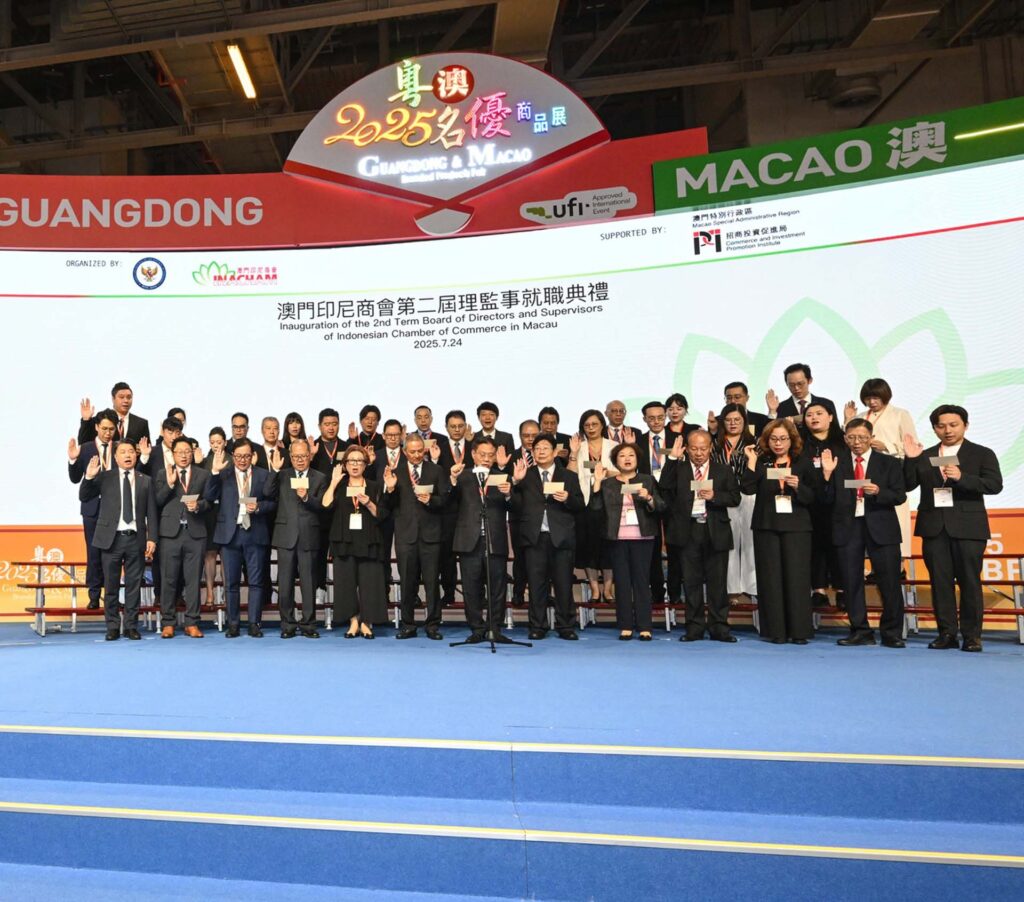
According to Mr Sitou, the chamber organises delegations to Indonesia each year. In addition to attending Trade Expo Indonesia (TEI), these visits typically include meetings with local business associations and site visits aimed at identifying new opportunities. Last year, for instance, a delegation from Macao’s food-and-beverage sector toured major Indonesian shopping malls and held discussions with experienced restaurant operators to better understand the local market.
Exchanges also flow in the opposite direction. The chamber supports Indonesian businesses in participating in Macao’s trade fairs, including the Guangdong & Macao Branded Products Fair organised by the Commerce and Investment Promotion Institute (IPIM). Trade fairs such as these provide platforms to showcase products and explore partnerships with counterparts in Macao and neighbouring Guangdong province.
The chamber also acts as a connector at the government level, namely by helping link Indonesian travel associations and agencies with the Macao Government Tourism Office to support efforts to attract more Indonesian visitors. It has also facilitated coordination among Air Macau, the Consulate General of Indonesia in Hong Kong and the Jakarta airport operator to improve flight timings on the direct Macao–Jakarta route. “If the government or businesses have any needs, we do our best to see how we can help,” Mr Sitou affirmed.
The chamber’s members include Macao companies and entrepreneurs operating in Indonesia, as well as members of Macao’s Indonesian Chinese community, an identity Mr Sitou himself shares. Like many overseas Chinese families in Southeast Asia during the 1960s, his family left Indonesia amid political and social upheaval and resettled in Macao. His father, Situ Meisheng, previously served as a personal assistant and Chinese interpreter to Indonesia’s first president, Sukarno.
Mr Sitou estimates that thousands of overseas Chinese from Indonesia have since made Macao their home, with second- and third-generation families, including his own, now deeply rooted in the city. Yet Indonesia continues to play an important role in his household. He often tells his two daughters that if they want to build something of their own, Indonesia deserves serious consideration, not only because of family heritage, but also because of the country’s long-term potential.
“China is a huge market, but the supply chain is already highly developed, and competition is intense unless you have a very distinctive edge,” he said. “Indonesia is still in the early stages of industrialisation, and many parts of its supply chains aren’t mature yet. If you spot a gap, you can fill it. For businesspeople, that’s an opportunity.”