For more than two decades, Macao has served as the country’s platform to the Portuguese-speaking world, drawing on its centuries of cultural exchange, bilingual legal system and long-standing commercial relationships.
Since the establishment of the Forum for Economic and Trade Co-operation between China and Portuguese-speaking Countries (Macao) in 2003, trade between China and Portuguese-speaking countries has grown from around US$11 billion to US$225.8 billion in 2025, according to the Commerce and Investment Promotion Institute (IPIM).
The Macao Special Administrative Region (MSAR) Government is now preparing to take that role a step further, as it works to extend its reach to Spain and, progressively, to the wider Spanish-speaking world. For IPIM, the strategy represents a natural evolution rather than a fundamental change of direction.
“Over more than two decades, Macao has developed an irreplaceable role as a bridge between China and Portuguese-speaking countries,” IPIM noted in a written reply to Macao Magazine. “Building on this success, Macao is now extending the platform’s reach to Spain and Spanish-speaking countries in Latin America,” aiming, “through a dual Portuguese- and Spanish-speaking strategy, to evolve from being a ‘precise connector’ between China and Portuguese-speaking countries into a broader gateway linking China with the wider Latin-language world,” IPIM added.
The initiative is also closely aligned with China’s national development priorities.
“President Xi Jinping has described the country’s 15th Five-Year Plan not only as a blueprint for the country’s development, but also as a ‘list of opportunities’ for the rest of the world,” IPIM observed. “Macao is actively embracing these opportunities and strengthening its role as an important gateway for China’s opening up in the new era.”
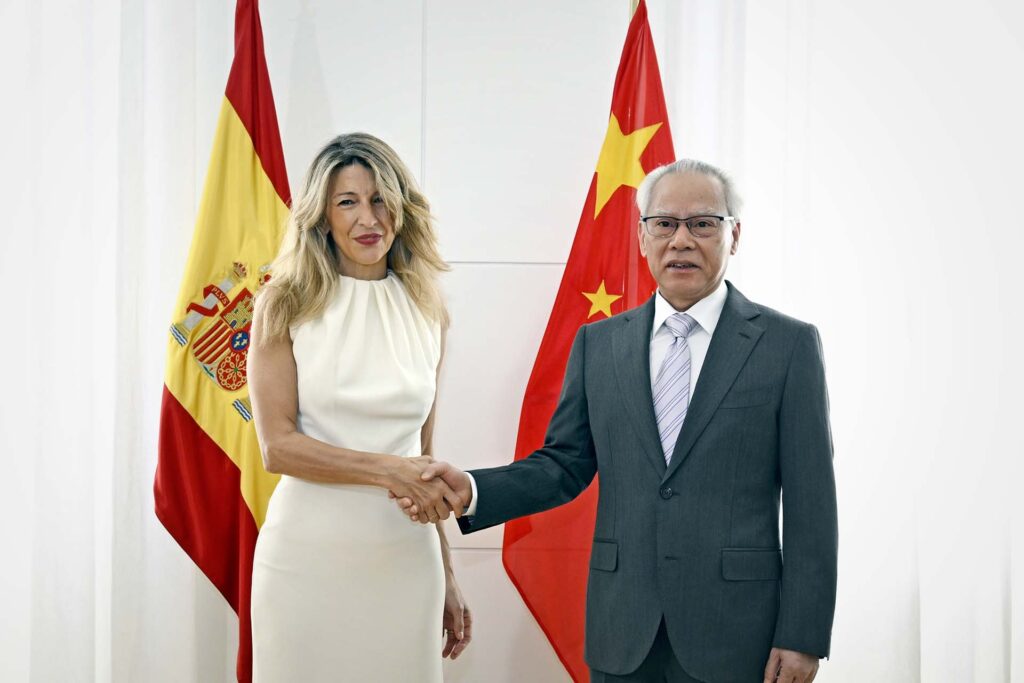
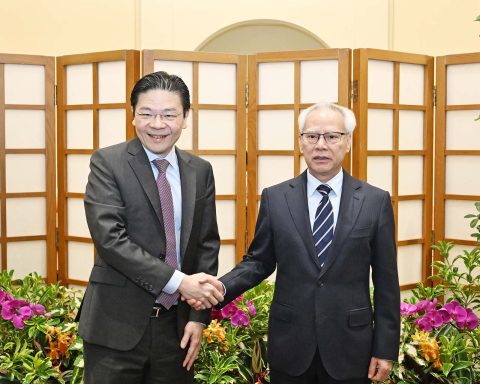
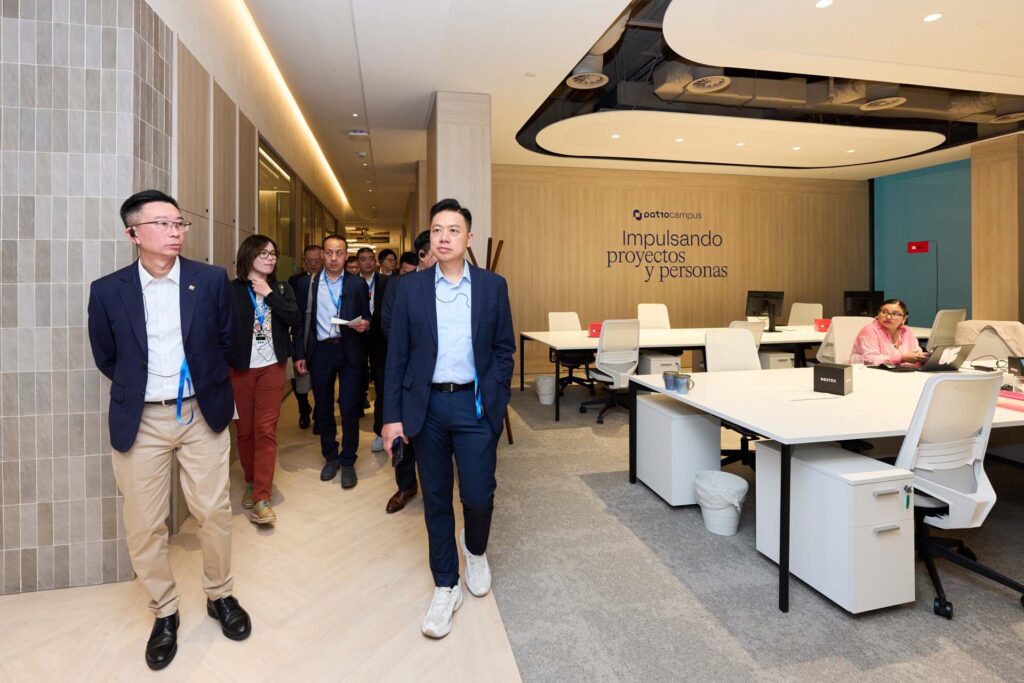
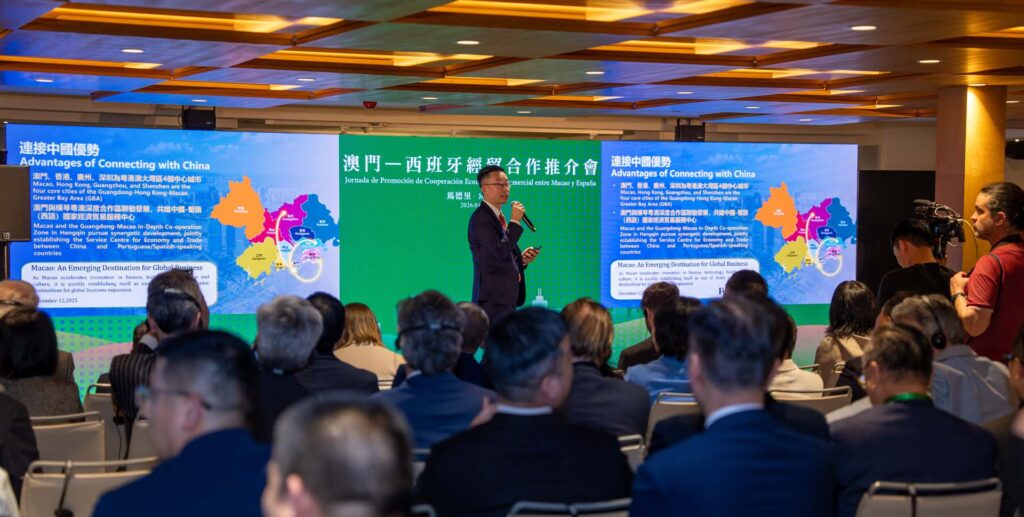
The plan gathered considerable momentum earlier this year during Chief Executive Sam Hou Fai’s first official overseas visit since taking office. Leading a delegation of around 120 representatives from Macao, Hengqin and the Chinese mainland to Portugal and Spain, Mr Sam used the trip to underline the Government’s intention to expand Macao’s international platform beyond its focus on Portuguese-speaking countries.
Spain, a deliberate choice
As the European Union’s fourth-largest economy, Spain combines a modern industrial base with deep historical, cultural and commercial links to Latin America. Geographically neighbouring Portugal and sharing many legal and institutional characteristics with Portuguese-speaking countries, Spain provides what IPIM considers the ideal “starting point” for extending Macao’s platform into the Spanish-speaking world.
The April visit produced tangible outcomes. During six days of meetings, the delegation participated in more than 220 business-matching sessions, resulting in the signing of 109 cooperation agreements. Of these, 61 were concluded in Portugal and 48 in Spain, covering sectors ranging from technology and healthcare to tourism, professional services and cross-border investment. At the same time, IPIM signed strategic cooperation agreements with the Chinese Chamber of Commerce in Spain and the Federation of Chinese Business Associations in Spain, while establishing official working relationships with ICEX – Spain Trade and Investment and the investment promotion authorities of the Community of Madrid.
Those agreements are intended to create the foundations needed for sustained commercial cooperation. “The initiative will gradually expand to Spanish-speaking countries across Latin America,” representing a market of about 500 million people, IPIM stated. “Rich in natural resources and highly complementary to China’s economy, these markets offer significant opportunities for Chinese mainland companies expanding overseas.”
According to the institute, Macao’s role will be to help facilitate those connections while providing businesses with practical support, professional services and access to the Guangdong-Hong Kong-Macao Greater Bay Area.
For Rui Pedro Cunha, president of the General Assembly Board of the Macau Portuguese and Spanish-Speaking Countries Entrepreneurs Association, the plan represents the logical next chapter in a story that Macao has been writing for more than two decades.
“Macao already has a solid foundation as the platform between China and Portuguese-speaking countries,” he noted in commentary to Macao Magazine. “What the association intends to do now is to extend this experience into a broader China-Portuguese-Spanish-speaking countries cooperation framework,” Mr Cunha explained.
In the initial phase, he said, Spain will be one of the association’s “key priorities”.
“Spain is an important European economy, and it can also serve as a gateway for Macao and mainland enterprises to better understand and connect with Spanish-speaking markets,” he noted. “At the same time, the association will not treat the Spanish-speaking world as one single market. Different markets have different strengths. Spain has clear advantages in tourism, MICE [Meetings, Incentives, Conventions and Exhibitions], professional services, green finance, renewable energy, high-end manufacturing and technology.”
Latin American markets meanwhile “offer major opportunities in agriculture, food and beverage, energy, infrastructure, e-commerce, digital economy, healthcare and consumer markets,” he explained.
Mr Cunha added: “The approach will be to use Spain as an important starting point and bridge, while gradually learning and expanding into Latin American markets according to industry demand, our member’s needs and available cooperation partners.”
Turning strategy into business
Macao’s success in expanding beyond the Portuguese-speaking world will depend on whether companies see the city as a useful place to invest, find partners and develop projects.
IPIM’s role has evolved significantly in recent years, mirroring the MSAR Government’s broader economic strategy. Under the “1+4” economic diversification strategy, greater emphasis is placed on attracting industries that complement Macao’s long-term development and strengthen its role within the Greater Bay Area.
The trade body said it is “shifting” its promotional efforts “from expanding investment scale to improving quality and optimising industrial structure”. Rather than pursuing investment indiscriminately, IPIM is focusing on enterprises capable of contributing to Macao’s emerging industries while taking advantage of the city’s unique international positioning.
Three sectors have become the immediate priorities. The first is high technology, “with emphasis on biopharmaceuticals, digital technology, integrated circuits and aerospace technology,” the institute noted.
Working alongside the Macao science and technology research industrial park and the Guangdong-Macao In-Depth Cooperation Zone in Hengqin, the MSAR Government aims to create an innovation chain in which “research and development is carried out in Macao, and the products are commercialised and industrialised in Hengqin”.
The second priority is modern financial services. Macao has long aspired to strengthen its financial sector, and officials increasingly see opportunities to develop specialist services connecting China with Portuguese- and Spanish-speaking markets. Wealth management, private equity and financial technology form part of that strategy.
According to IPIM, market interest is already emerging. By May this year, 56 financial institutions had entered discussions about establishing operations in Macao.
The big health industry forms the third pillar, with Macao striving to attract leading companies involved in Traditional Chinese Medicine (TCM), biopharmaceuticals and healthcare services. Officials believe the city’s established relationships with Portuguese-speaking countries provide an effective channel for promoting the internationalisation of TCM while encouraging wider collaboration in medical research and pharmaceuticals.
“The objective is to build an industrial investment ecosystem capable of attracting high value-added companies that closely align with the city’s long-term industrial positioning and contribute to sustainable economic development,” IPIM observed.
Boosting support for investors
Beyond identifying priority sectors, IPIM is expanding practical support for investors. Businesses entering unfamiliar markets often face practical challenges ranging from regulatory requirements and legal procedures to finding trustworthy local partners. Thus, IPIM has spent recent years developing services intended to accompany companies throughout the investment process rather than limiting its role to initial introductions.
One of its flagship initiatives is the China-Portuguese-speaking Business Navigator, a one-stop service providing project matching, market intelligence, investment consultancy and business facilitation.
Between January and May this year, the service handled more than 200 new projects, reflecting growing demand from companies seeking to explore opportunities in both directions. Among them are the establishment of manufacturing facilities in Brazil and Angola by Chinese Fortune 500 companies, together with procurement arrangements linking one of China’s ten largest grain and edible oil enterprises with Brazilian commodity suppliers, according to data from the institute.
Trade fairs have become another important mechanism, with IPIM ensuring that companies are introduced to carefully selected partners through dedicated business meetings, allowing discussions to move quickly from initial contacts to concrete commercial negotiations.
During its flagship exhibitions in 2025, IPIM organised more than 2,200 business-matching meetings, facilitating over 240 cooperation agreements. Around 500 companies attended presentations introducing Macao’s investment environment and development opportunities, leading to 148 investment proposals from enterprises based in Portugal, Brazil, Indonesia and other international markets. Nearly one-third of those companies have since completed company registration procedures in Macao, it disclosed.
For Mr Cunha, those practical services are exactly what will determine whether Macao’s broader strategy succeeds.
The association’s positioning “is to serve as a ‘connector’ for enterprises,” he added. “This means the association is not only creating a general exchange platform, but also helping enterprises identify real partners, understand market entry requirements, access professional services, participate in MICE activities, and move from initial contact to concrete cooperation.”
Through this integrated network, Mr Cunha said the organisation hopes “to provide one-stop support for overseas enterprises entering Macao, Hengqin and the Greater Bay Area, while also helping Macao and mainland enterprises expand into Portuguese- and Spanish-speaking markets”.
This, he noted, “is also closely aligned with Macao’s latest direction of strengthening its platform function,” including the development of the Service Centre for Economy and Trade between China and Portuguese/Spanish-speaking Countries (CECPS) in Hengqin.
From policy to partnerships
Rather than creating new institutions from scratch, IPIM is increasingly using the city’s established conventions and exhibitions to introduce overseas companies to Chinese mainland partners, showcase emerging industries and facilitate investment. That experience now provides an important foundation for expanding cooperation with Spanish-speaking countries, the trade body noted.
The annual International Infrastructure Investment and Construction Forum & Exhibition (IIICF) is one example of how that strategy is already taking shape. Since its launch, according to IPIM, the event has welcomed almost 150 ministerial-level representatives from Spanish-speaking countries over the years and has “successfully hosted 12 editions of the China–Latin America Infrastructure Cooperation Forum”. This year’s edition, which concluded in June, marked another important milestone: for the first time, ministers and senior representatives from Latin America were invited to visit the Cooperation Zone in Hengqin, “laying the groundwork for closer collaboration between Macao and Spanish-speaking Latin America,” IPIM stressed.
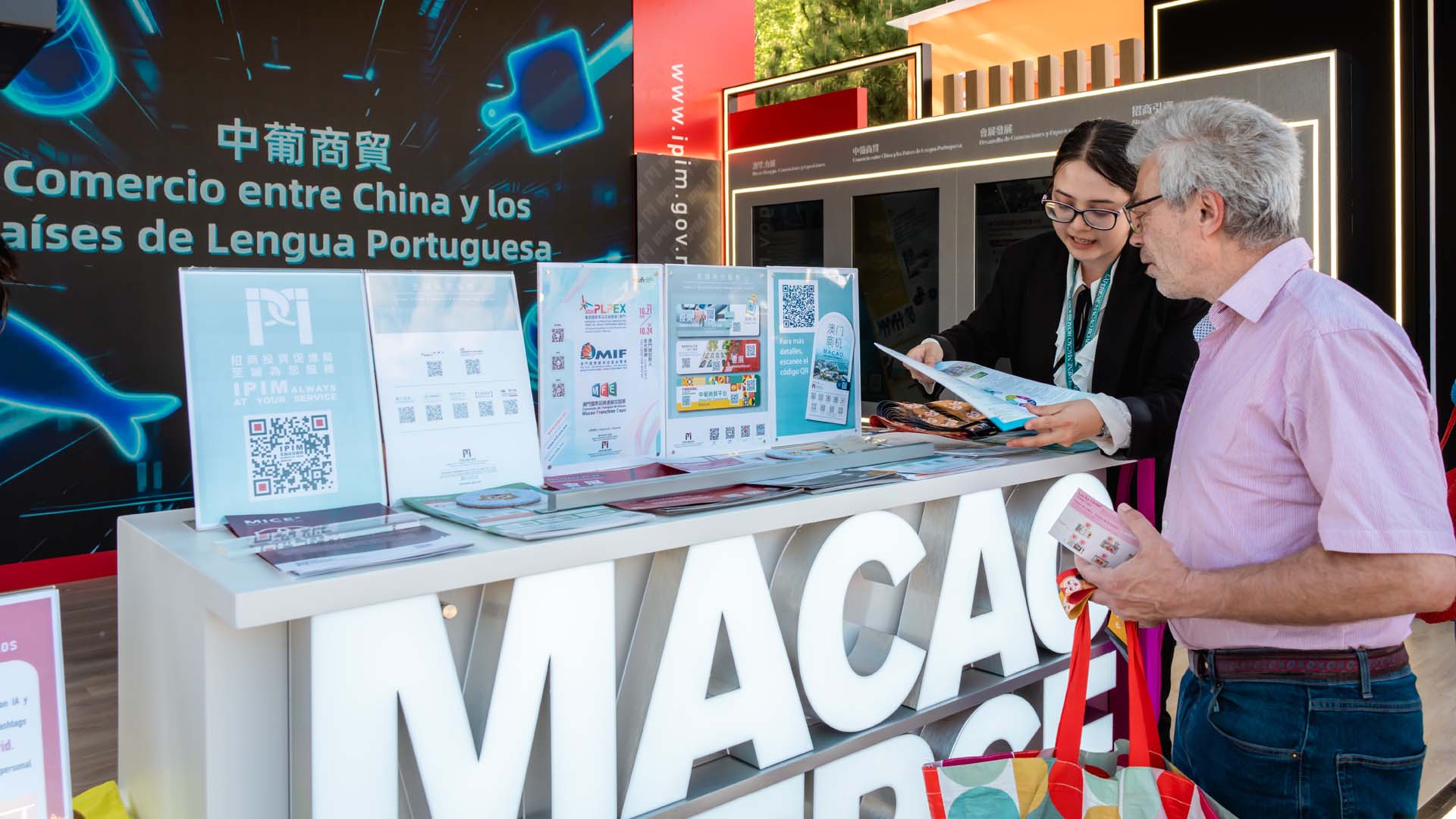
That approach will also be evident at this year’s Macao International Trade and Investment Fair (MIF), scheduled for October. For the first time, the exhibition will include a dedicated Spanish-speaking Countries Pavilion. Running alongside MIF, the Products and Services Exhibition of Portuguese-speaking Countries (Macao) is already recruiting exhibitors internationally and “is expected to attract companies from both Portuguese- and Spanish-speaking markets”.
The same thinking underpins the institute’s overseas trade missions. In July, IPIM took part in a business delegation organised by the Shunde Import and Export Chamber of Commerce to Brazil and Argentina, further strengthening multilateral trade and investment networks.
Earlier this year, another delegation of more than 40 companies travelled to Brazil, facilitating several cooperation agreements in the biopharmaceutical sector and “helping participating enterprises establish access to Latin American markets,” IPIM said.
For Mr Cunha, this gradual approach is essential. The city’s experience with Portuguese-speaking countries provides an important advantage in that respect.
Unlike many jurisdictions seeking to establish new international partnerships, Macao already understands the importance of acting as a trusted intermediary rather than simply promoting commercial transactions.
“Following the Chief Executive’s visit to Spain [in April], Macao’s cooperation with Spain has entered a new stage,” he said, noting that members of the association participated in the visit and established closer contacts with Spanish business organisations.
Those relationships are already being reinforced through cooperation with institutions such as the Spanish Chamber of Commerce in South China and the Macau European Chamber of Commerce, while the association has also established links with several Spanish organisations that it hopes will become long-term partners.
A gateway to larger markets
Officials also emphasise that Macao’s international appeal cannot be understood in isolation. Its greatest strength lies in the way it connects with neighbouring Hengqin and the Greater Bay Area. According to IPIM, this integrated approach “offers companies from Spanish-speaking countries a unique gateway into the Chinese mainland market”.
“Companies establishing operations in Macao and Hengqin can simultaneously benefit from Macao’s free port status, simple and competitive tax system, and free movement of capital, while also enjoying easier access to the mainland market and Hengqin’s industrial support ecosystem,” the institute stated.
The Greater Bay Area is home to more than 86 million consumers and ranks among China’s most economically advanced regions. For overseas businesses, “the Greater Bay Area’s highly integrated industrial and supply chains also provide comprehensive support in manufacturing, research and development, logistics and related services”.
Ultimately, however, it is the companies that decide whether opportunities become commercial realities, Mr Cunha noted. “Hengqin and the Greater Bay Area are essential to this process. Macao has the platform, cultural, legal, financial and international networking advantages, while Hengqin provides industrial space, policy support and project landing capacity,” he said.
“The association will continue to promote the ‘Macao + Hengqin + Greater Bay Area’ model. This includes supporting one-stop services for overseas enterprises coming in, helping local and mainland enterprises go global together, and linking enterprises with professional services in finance, law, tax, compliance, MICE, logistics and market development,” Mr Cunha added.
The organisation also hopes to “strengthen cooperation” with the CECPS in Hengqin, so that “policy resources, business resources, academic resources and enterprise needs can be better connected”.
Looking ahead over the next five years, Mr Cunha expects the “greatest opportunities” to emerge in sectors where the Chinese mainland, Macao and Portuguese- and Spanish-speaking countries possess complementary strengths. These include “trade and investment, MICE, cultural tourism, agricultural products and food trade, cross-border e-commerce, green finance, renewable energy, healthcare, biomedicine, technology innovation, professional services and education,” he added.
“The association believes there is strong potential in using Macao as a platform for Portuguese- and Spanish-speaking products to enter the Chinese mainland market, including food, wine, agricultural products, cultural products and lifestyle brands,” Mr Cunha noted.
Chinese mainland enterprises in the fields of technology, healthcare, renewable energy, infrastructure, e-commerce and professional services “can use Macao as a springboard to understand and enter Portuguese- and Spanish-speaking markets,” he concluded.
| Building a practical link |
|---|
| Rui Pedro Cunha, president of the General Assembly Board of the Macau Portuguese and Spanish-Speaking Countries Entrepreneurs Association says expanding Macao’s platform role beyond Portuguese-speaking countries is a natural evolution, but one that requires a pragmatic and long-term approach. Mr Cunha identifies the diversity of Spanish-speaking markets as the first major challenge. “Spanish-speaking countries cover very different legal systems, tax rules, business cultures, levels of market development and regulatory environments. For enterprises, this means that entering Spanish-speaking markets requires careful preparation, local knowledge and reliable partners,” he stated. “We need to gradually build more direct, regular and trusted channels with chambers of commerce, enterprises, government-related institutions, professional bodies and overseas Chinese business communities in Spanish-speaking markets,” he noted. Mr Cunha also believes interest alone is not enough. Many companies are attracted by the opportunities these markets offer but lack practical knowledge on market entry, risk assessment and partner selection. The association therefore intends to focus on cross-border training, legal and tax support, business matching, investment-risk awareness and market-entry guidance. “Macao’s advantage is that it already has experience in reducing trust costs between China and Portuguese-speaking countries,” he noted. To translate that vision into tangible opportunities, the association is pursuing several initiatives. It plans to strengthen partnerships with overseas business organisations. Planned activities include policy briefings, market-entry seminars, business-matching sessions, company visits, trade missions and investment promotion events. The association has already supported initiatives in Hengqin and Macao focused on Portuguese- and Spanish-speaking markets. Mr Cunha said the organisation also aims to offer a one-stop support service for Portuguese- and Spanish-speaking businesses interested in Macao, Hengqin and the Guangdong-Hong Kong-Macao Greater Bay Area, providing guidance on regulations, business registration, financing and local partnerships. For Chinese enterprises expanding overseas, he advocates a “going global together” model, allowing companies to share costs, exchange information, reduce risks and strengthen their bargaining power. According to Mr Cunha, the association also plans to launch international branding initiatives, including the “Portuguese- and Spanish-speaking Countries Outstanding Entrepreneurs Awards” due to be held in October 2026. |