
Five years after its launch, the Guangdong–Macao In-Depth Cooperation Zone in Hengqin stands as one of China’s most closely watched experiments in regional integration. It offers a new model for shared governance, economic cooperation and public administration.
Fong Fong Tan, director of the Livelihood Affairs Bureau of the Cooperation Zone, describes this transformation as a “profound shift” from “physical connection to chemical reaction” – a metaphor that captures the evolution from simple geographical proximity to genuine social, industrial and institutional integration.
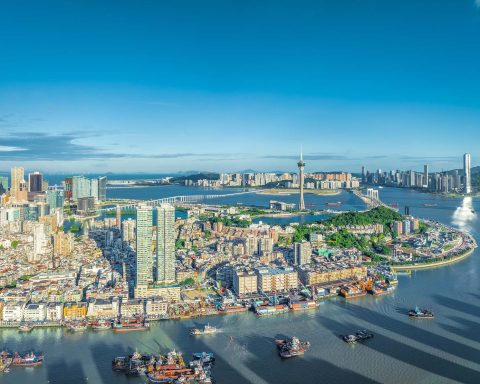
Separated from Macao by only a narrow stretch of water, Hengqin Island is about three times the size of its neighbour, covering 106.46 square kilometres. Encompassing almost the entire island – excluding the land leased to the Macao Special Administrative Region (SAR) for the existing campus of the University of Macau – the Cooperation Zone occupies a unique position within China’s plans for the Guangdong–Hong Kong–Macao Greater Bay Area. It is also a cornerstone of Macao’s long-term strategy to diversify its economy.
The zone combines preferential tax policies, simplified customs arrangements and measures designed to make it easier for holders of Macao identity (ID) cards to settle, establish businesses and pursue careers in Hengqin.
Also in this feature
 Hengqin’s four pillar industries gain momentum
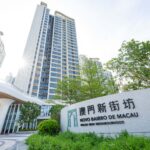 One neighbourhood, two cities
The changes are increasingly reflected in daily life. As of February this year, more than 30,000 Macao ID card holders were living, working or studying in the Cooperation Zone.
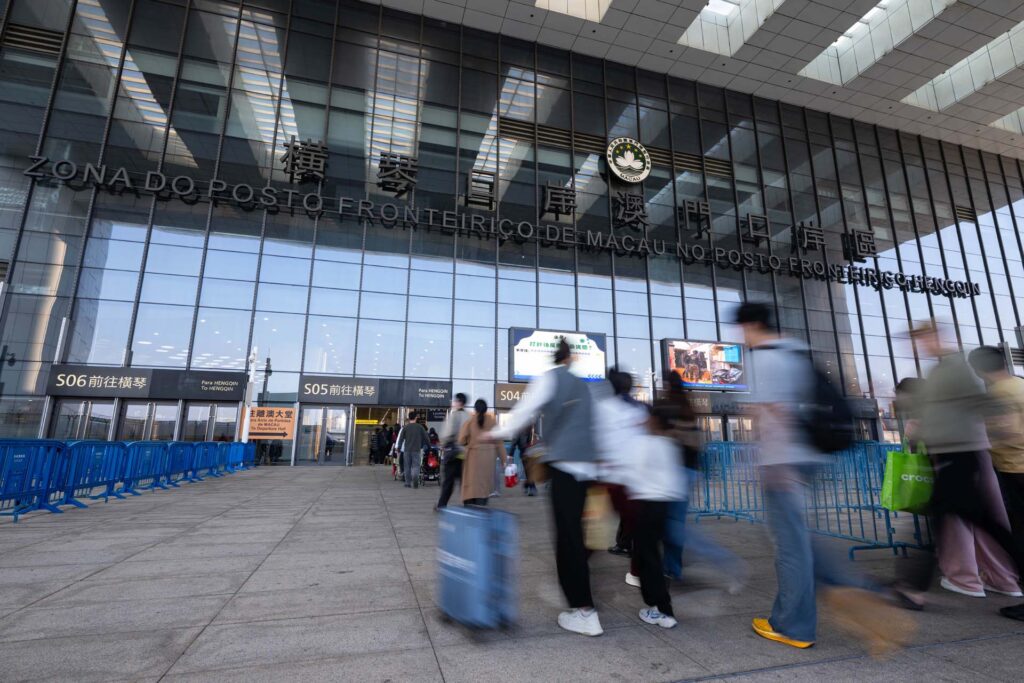
Passenger traffic through Hengqin Port – located at one end of the Lotus Flower Bridge, which connects the island with Macao – has grown from around 20,000 daily crossings when the port opened in 2020 to an average daily flow of more than 260,000. In a record first, annual passenger movements surpassed 30 million in 2025, more than triple the figure recorded in 2021.
Last year, some 3.5 million vehicles crossed the boundary, roughly two-thirds of them Macao single-plate cars, under a special policy allowing eligible Macao-registered vehicles to enter and travel within Hengqin Island.
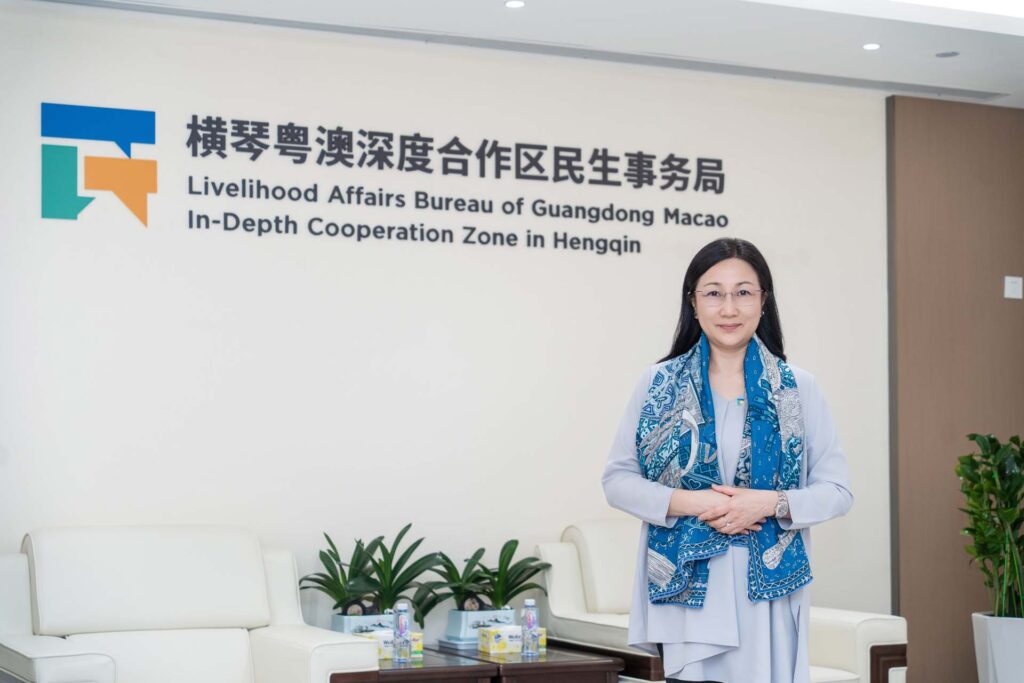
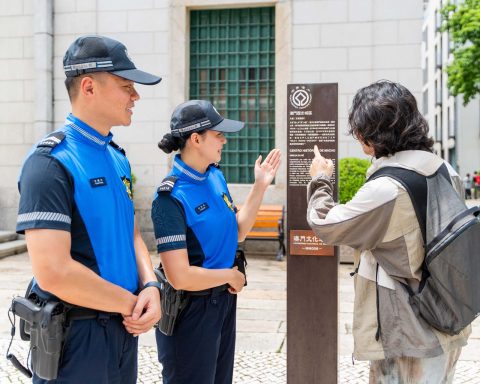
Director Fong observes that the creation of a familiar living environment encourages Macao ID card holders to settle in Hengqin. She describes the Cooperation Zone’s approach as advancing three types of connectivity: “hard connectivity” via infrastructure, “soft connectivity” through aligned rules and institutions, and “heart connectivity” by nurturing closer community ties across the boundary.
Rewriting the rulebook
Established in September 2021, the Cooperation Zone marks its fifth anniversary this September. More than an industrial park or economic development zone, it represents an attempt to reshape the relationship between two jurisdictions operating under the “One country, two systems” framework. The project combines institutional reform, industrial policy and regional planning on a scale without precedent in China’s approach to cross-boundary governance.
The origins of the project stretch back to August 2009, when the State Council approved the “Overall Development Plan of Hengqin”, identifying the island as a demonstration zone for cooperation between Guangdong, Hong Kong and Macao.
Momentum gathered a decade later with the publication of the “Outline Development Plan for the Guangdong–Hong Kong–Macao Greater Bay Area” in 2019, jointly issued by the Central Committee of the Communist Party of China and the State Council. Two years later came the “Master Plan of the Development of the Guangdong–Macao In-Depth Cooperation Zone in Hengqin”, followed in December 2023 by the “Overall Development Plan for the Guangdong–Macao In-Depth Cooperation Zone in Hengqin”, issued by the National Development and Reform Commission.
The project is being developed in three phases and enjoys strong backing from the country’s central leadership. The first phase concluded in 2024, coinciding with President Xi Jinping’s visit to Macao during celebrations marking the 25th anniversary of the city’s return to the motherland. During the visit, President Xi toured Hengqin and reviewed the achievements of the Cooperation Zone.
“Practice has proven that the central authorities’ decision to develop Hengqin and establish the Cooperation Zone is completely correct,” he said at the time.
In June, Xia Baolong, the nation’s most senior official responsible for Hong Kong and Macao affairs, led a four-day inspection tour of Zhuhai and the Cooperation Zone, accompanied in Hengqin by Macao SAR Chief Executive Sam Hou Fai.
According to the project’s master plan, when the second development phase is completed in 2029, Hengqin and Macao will have established “a system of highly coordinated economies and deeply integrated regulations”. Official targets envisage around 40,000 Macao ID card holders working in Hengqin and approximately 60,000 living there alongside 25,000 Macao-invested enterprises.
By the end of the third phase in 2035, those figures are expected to rise to around 80,000 Macao ID card holders working in the Cooperation Zone and approximately 120,000 living there.
Shared governance
Part of the innovation of the Hengqin experiment lies in its governance model: a framework built around four principles shared by Guangdong and Macao – “extensive consultation, joint contribution, joint governance, and shared benefits”.
“The process highlights joint consultation, creating opportunities for breakthroughs and providing broad practical scope for advancing coordinated regional development,” said Director Fong of Hengqin’s Livelihood Affairs Bureau. She notes that officials from Guangdong and Macao now collaborate, exchange views and deliberate together. This evolution has transformed Hengqin and Macao “from close neighbours to teammates working shoulder to shoulder to pursue the appropriate diversification of Macao’s economy”. In her view, the mechanism ensures that “the whole is greater than the sum of its parts”.
Lou Shenghua, a professor in the Faculty of Humanities and Social Sciences at Macao Polytechnic University, told Macao Magazine that the system has elevated cross-boundary governance “from a relationship of coordination to one of integrated development”. Through joint decision-making, delegated implementation and closer alignment of rules, he says, the model has gradually reduced what he describes as “institutional transaction costs” between Hengqin and Macao – the practical barriers created when different legal, regulatory and administrative systems interact.
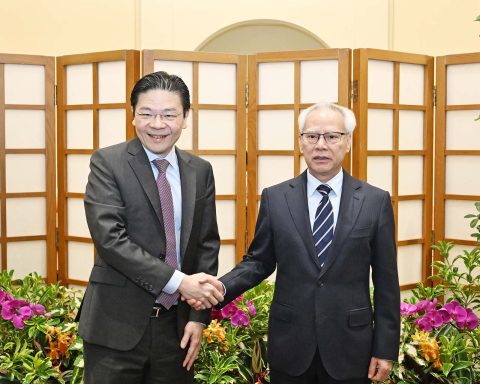
The framework has a clearly defined institutional structure. The Administrative Committee of the Cooperation Zone operates under a “dual director” system, jointly headed by the Governor of Guangdong province and the Chief Executive of the Macao SAR. Major plans, policies and projects require decisions from both sides. An Executive Committee, led by Macao, is responsible for industrial development, investment promotion and livelihood-related affairs, while Guangdong oversees areas including local security and judicial matters.
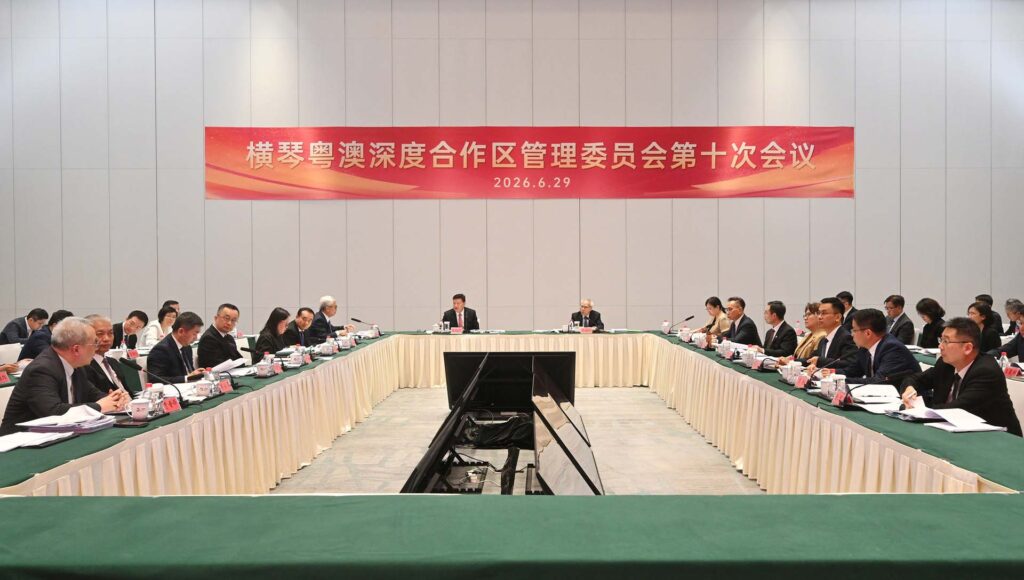
The latest meeting of the Cooperation Zone’s Administrative Committee was held in June. During the gathering, Macao SAR Chief Executive Sam Hou Fai stressed that the project must deliver tangible results as planned and remain accountable to both the central authorities and society.
To support the continued construction of the Cooperation Zone, the Macao SAR Government has also established a leading group dedicated to promoting its development. At the group’s latest meeting in July, Mr Sam stressed that Hengqin’s development should be regarded as Macao’s own responsibility.
Lowering barriers
Institutional innovation will ultimately translate into something practical: the easier movement of people, goods and businesses.
At the Macao–Hengqin boundary, a “joint inspection and one-time release” clearance model has already been introduced: passengers only need to queue once and have their identity documents examined.
Since March 2024, the Cooperation Zone has also operated a “separated-line management” customs system, creating a “first line” between Macao and Hengqin while maintaining a controlled “second line” between Hengqin and the rest of the Chinese mainland. The arrangement allows goods entering Hengqin from Macao to benefit from preferential customs treatment, while goods moving from Hengqin into the rest of the country through the “second line” are subject to national customs regulations.
Citing official figures, Prof. Lou says these customs arrangements have reduced Macao-Hengqin clearance times for businesses by more than 70 percent since their introduction. By November 2025, 2,331 enterprises had registered with customs to benefit from the system, an increase of 41.6 percent year-on-year.
The process of rule alignment also extends to professionals. Prof. Lou identifies talent mobility and mutual recognition of professional qualifications as among the Cooperation Zone’s most significant breakthroughs. Instead of requiring dual certification or additional Chinese mainland examinations, the new system allows professionals from Macao and abroad to qualify through approved registration mechanisms.
The Cooperation Zone has introduced the nation’s first “convenient practice recognition list for overseas professional qualifications”, covering fields such as law, finance, accountancy, healthcare, architecture, urban planning, tourism and social work. The list contains 49 items tailored to Macao professional qualifications, allowing eligible professionals to register and practise in Hengqin without having to take additional examinations.
The results are clear. Between January and November 2025, approvals for talent admission increased by 102.8 percent, while approximately 1,700 Hong Kong and Macao professionals now practise across the boundary.
For Prof. Lou, the significance is that Macao’s professionals are gaining something close to a “Greater Bay Area licence”, expanding their opportunities beyond the city’s market. Doctors, lawyers, accountants and architects, he says, are no longer operating as “outsiders” but becoming part of a broader Chinese mainland “professional community”.
In his opinion, the achievements represent “both a milestone and a foundation”. As integration deepens, he argues, Hengqin is becoming a place where Macao residents can conduct business and develop industries.
Macao moves into the zone
The success of integration will ultimately be judged not only by infrastructure or economic indicators, but by whether Macao ID card holders experience Hengqin as a place where daily life can continue with minimal disruption.
For Director Fong, education and healthcare stand out as key areas of Hengqin-Macao convergence, where cross-boundary integration delivers tangible benefits for families.
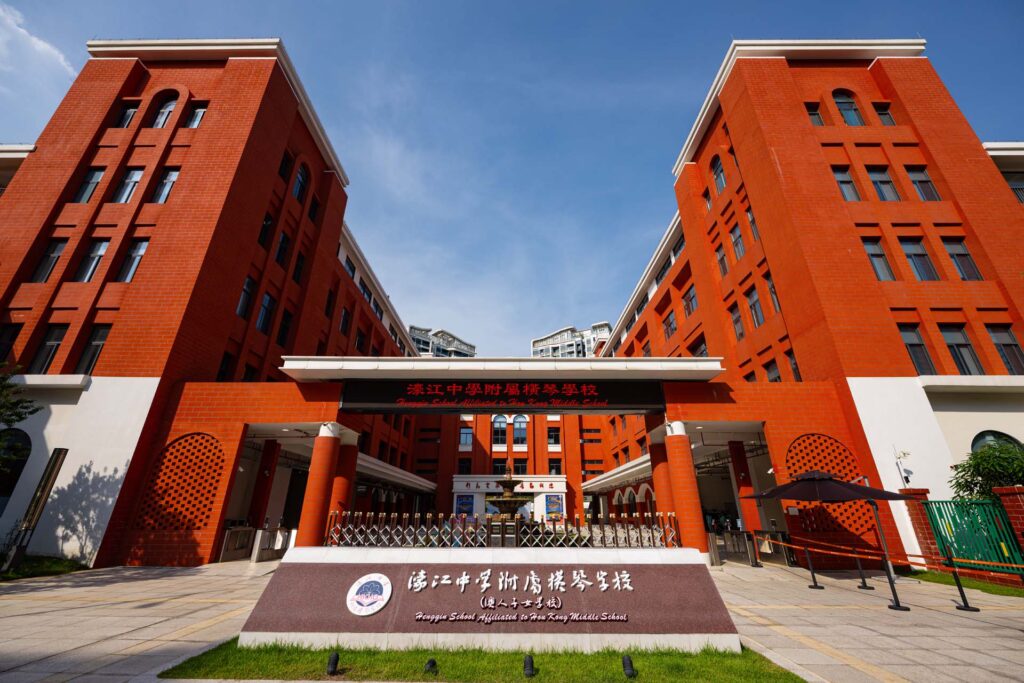
In the education sector, the Cooperation Zone has established a complete educational ecosystem spanning childcare, primary and secondary schooling through to higher education. Macao students enjoy the same admission arrangements as locally registered Chinese mainland students in Hengqin schools. As of April this year, more than 800 Macao students were enrolled in educational institutions across the zone.
The flagship project is the Hengqin School Affiliated to Hou Kong Middle School, the Chinese mainland’s first school dedicated to Macao students, adopting Macao’s curriculum framework and teaching materials. The school has a student body made up of 98 percent Macao pupils. Director Fong describes it as “a vivid example of educational integration under the framework of ‘One country, two systems’”.
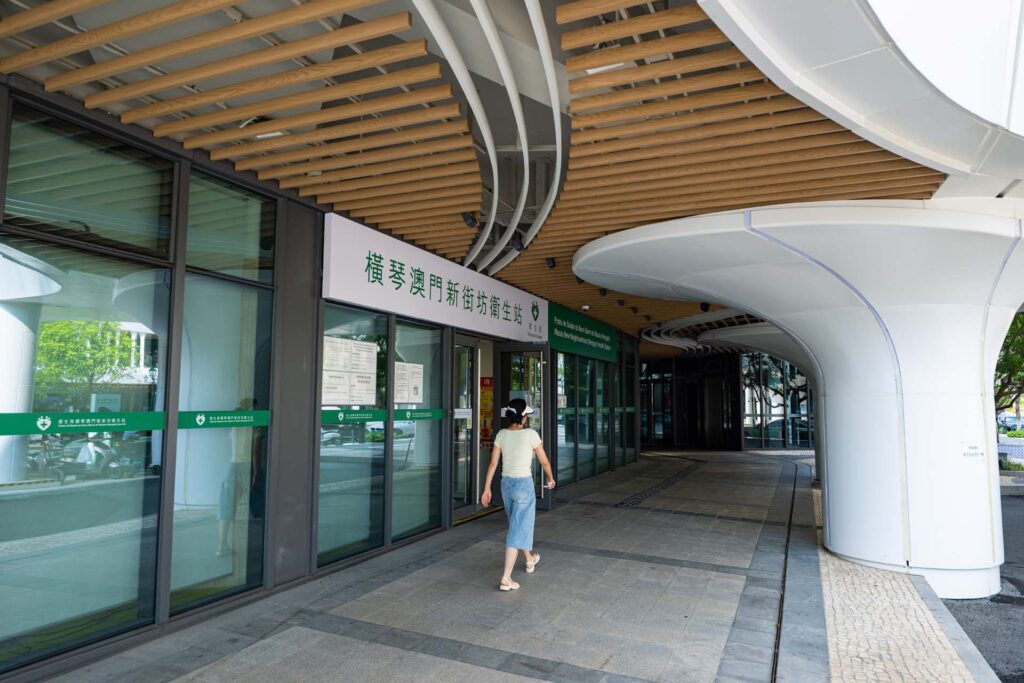
Healthcare presents a similar test of whether institutional integration can translate into everyday convenience. Over the past five years, the number of medical institutions in the Cooperation Zone has increased from 22 to 72, according to Director Fong. The new branch of the First Affiliated Hospital of Guangzhou Medical University Hengqin Hospital is scheduled to be completed by the end of 2026 and is set to commence operation in early 2027.
More significant, however, is the growing alignment of professional systems in healthcare. Macao medical practitioners can now register to practise in Hengqin. By May this year, more than 190 had done so, according to figures provided by Director Fong. Since 2024, Macao’s healthcare subsidy e-voucher programme has been extended to the Cooperation Zone, allowing Macao ID card holders to use their vouchers directly through the “Macao One Account” mobile platform.
For younger generations, Hengqin is being positioned as a place to build careers and establish businesses. By May this year, the zone had recognised – and provided targeted support to – 277 Macao youth start-ups and established 10 innovation and entrepreneurship bases for Macao young people, offering more than 310,000 square metres of incubation space, according to Director Fong.
She says the shift is visible in changing attitudes. Where young people once approached Hengqin cautiously, crossing the boundary has increasingly become part of everyday life.
Diversification driver
The economic purpose of the Cooperation Zone has always been closely linked to one central objective: helping Macao diversify its economy. Five years after its establishment, researchers point to early signs that the foundations of a broader economic structure are taking shape.
In 2025, Hengqin’s gross domestic product (GDP) reached 54.7 billion yuan. Foreign trade recorded particularly strong growth, rising by 70 percent, with exports doubling.
The momentum continued into 2026. During the first five months of the year, the value-added output of designated-size industrial enterprises surged by 197.7 percent year on year, while GDP increased by 5.5 percent. By the end of May, the number of Macao-funded enterprises registered in the Cooperation Zone had reached almost 8,000, accounting for 15.8 percent of all businesses in the zone and representing growth of 42.6 percent over three years.
Prof. Lou says Hengqin has gradually developed a more diverse economic base combining high-growth services, advanced manufacturing and foreign trade. The relationship between the two places, he argues, resembles a “front shop, back factory” model: Macao provides international links, professional services and brand advantages, while Hengqin offers space, industrial capacity and access to wider Chinese mainland supply chains. Such complementarity could help address one of Macao’s longstanding economic limitations – its lack of a significant manufacturing sector and limited land resources.
Maggie Fu Xiaoqing, a professor of finance and business economics at the University of Macau’s Faculty of Business Administration, told Macao Magazine that the most important achievement of the past five years is that economic diversification “has become more operational”. Modern finance, technological innovation, Chinese medicine and healthcare, and cultural tourism now have clearer platforms for development, she says.
“The first five years should be seen mainly as a foundation-building stage,” Prof. Fu stated. “The key task for the next stage is to turn these institutional advantages into real industrial capacity.”
She says successful technology industries require more than policy support and available space. They also depend on research capability, skilled talent and effective mechanisms for transferring knowledge from laboratories to businesses.
In recent years, the University of Macau has sought to strengthen those links through platforms such as the Zhuhai UM Science & Technology Research Institute (ZUMRI) and UMTec Limited, connecting university research with industrial needs. Other higher education institutions from Macao are following a similar path.
For a small economy such as Macao’s, Hengqin provides a much larger arena for gradually building a chain “from basic research to applied research, technology transfer, enterprise cooperation, and industrial application”, Prof. Fu said.
Testing the future
The deeper significance of integration, in her view, is the shift “from physical connectivity to institutional connectivity”. Where integration was once measured through bridges, roads and transport links, the more important question now – in financial matters, Prof. Fu’s area of expertise – is whether capital, credit information and resources can move efficiently across the boundary.
Cross-boundary initiatives such as the Electronic Fence (EF) account system and cross-boundary wealth management schemes represent attempts to “balance financial openness with risk control”, she said. Rather than opening markets immediately and completely, Hengqin provides a controlled environment in which new forms of financial cooperation can be tested.
But “opening channels is only the first step”, she noted. The greater challenge is building a complete financial ecosystem involving products, institutions, professionals, regulatory systems and market demand.
Education and research infrastructure will form another pillar of Hengqin’s development. The Macao-Hengqin International Education (University) Town, being jointly developed by Hengqin and Macao in three phases and scheduled for completion by 2030, is expected to accommodate 20,000 students, faculty and staff. Director Fong says the project will become an important platform for cultivating talent and supporting technological innovation across the Greater Bay Area.
For Prof. Lou, the priority for the Cooperation Zone must shift from aligning rules to integrating them – bringing the legal and regulatory systems of Hengqin and Macao closer together within a more coherent framework, in accordance with the national 15th Five-Year Plan and the Third Five-Year Plan for Economic and Social Development of the Macao SAR (2026–2030).
Prof. Fu argues that success should not be judged only by the number of policies introduced or enterprises registered. It should be measured by “whether firms can grow, whether talent can stay, whether capital can support productive activities, and whether Macao’s industrial structure becomes more resilient”.