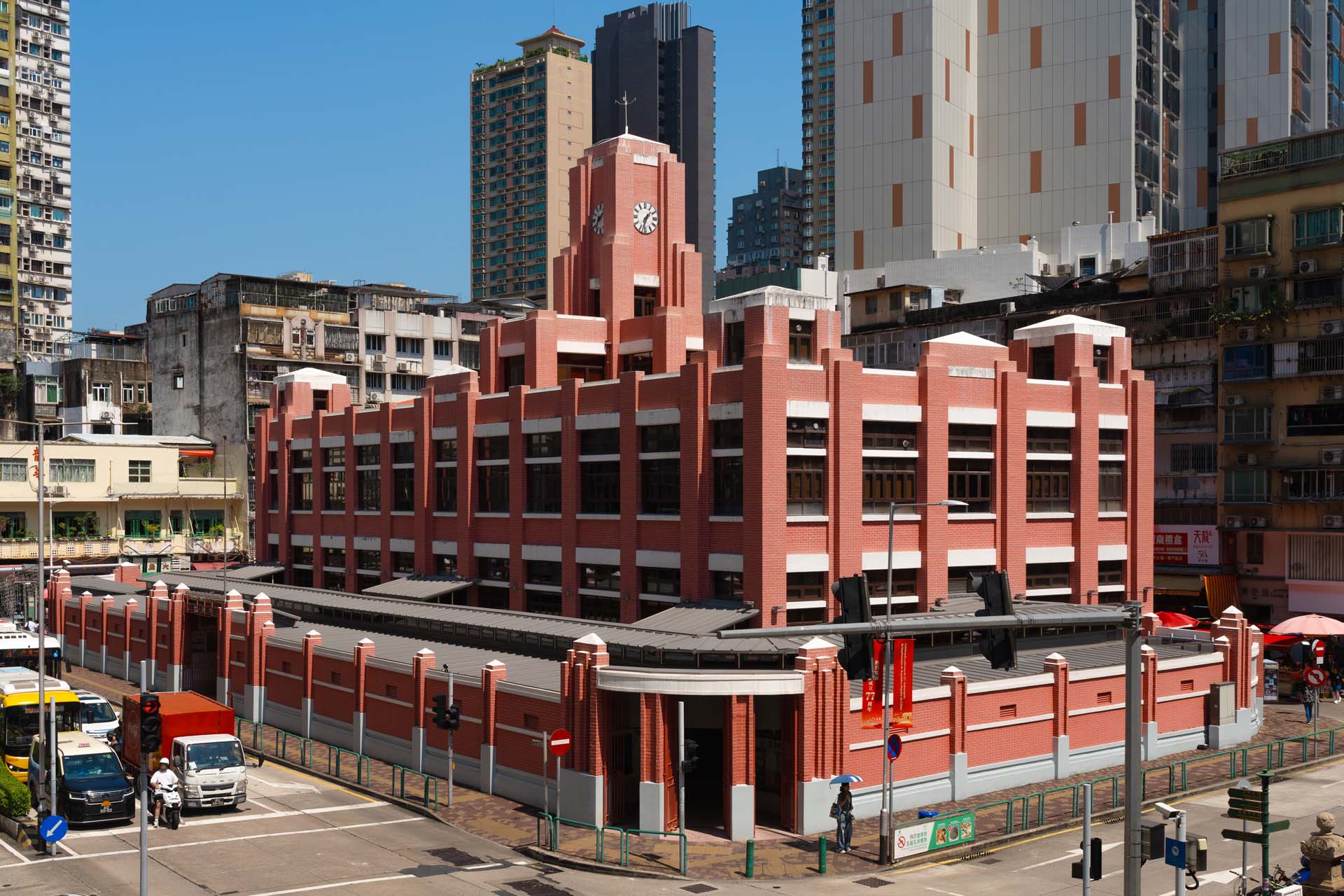
For many visitors, the Ruins of St. Paul’s may be the face of Macao, but for those who live here – particularly in the bustling neighbourhoods of the northern peninsula – the Red Market is the city’s true beating heart. This heritage landmark does more than preserve the past. As the only public market on Macao’s official cultural register, it is a living monument and a thriving anchor of daily life.
Opened in 1936, the historic 90-year-old market has forged a reputation for its selection of fresh fish, vegetables and other seasonal produce, but that is not all. Recently revived by a comprehensive renovation, the Red Market is a striking architectural landmark that continues to serve as a central pillar of the community. Its signature deep-red brickwork – from which it takes its name – stands as a proud badge of identity and collective memory.
Nuno Soares, an architect and head of the Department of Architecture and Design at the University of Saint Joseph, says the three-storey Red Market – situated at the intersection of Avenida do Almirante Lacerda and Avenida de Horta e Costa on the Macao Peninsula, and also known as the “Almirante Lacerda Market” – was conceived as an urban statement.
“It is not your typical market. It has an unusual architectural expression, more expressive than other markets of its time,” Mr Soares told Macao Magazine.
A timeless icon
Designed by local architect Júlio Alberto Basto and built between 1934 and 1936, the structure became a focal point for the northern district’s rapid urban and social development.
“It was a deliberate strategy to create an iconic building: the Red Market is iconic for its architecture, its colour and its location,” said Mr Soares, who also heads CURB – Centre for Architecture and Urbanism, a local think tank.
In the 1930s, Macao was undergoing rapid modernisation, driven by the need to streamline the food trade and improve public infrastructure. The Red Market was conceived in response to that demand.
Its development was not without controversy. During the planning and construction stages, local authorities received numerous objections from vendors and property owners at the nearby San Kiu Market. Fearing that the new development would undermine trade in the San Kiu district, objectors petitioned for construction of the Red Market to be halted. Municipal authorities responded by stressing the urgent need for a larger, modern facility that could meet rising hygiene standards and serve a growing population.
“The government’s strategy was to create infrastructure, to build key buildings in the northern zone, to encourage people to move and live there,” Mr Soares noted. “The market was not just a place to buy and sell, but a place of sociability.”
When the Red Market was completed, it stood as a prominent, freestanding structure on what was then the expanding fringe of the city. It also had a direct link to the waterfront.
The landscape around it has since changed dramatically. The stretch of sea that once lay close to the building was gradually reclaimed to create land for residential development, leaving the market surrounded by a much denser urban fabric.
Distinctive by design
Central to the Red Market’s enduring visual appeal is its architectural composition. The systematic use of red brick gives the building a distinctive identity, providing a warm contrast to the concrete streetscape around it. The material also had a practical purpose, helping the structure withstand Macao’s severe, humid climate and contributing to its long-term resilience.
The market represents the first public structure in Macao to explicitly embrace the international modernist movement. Symmetrical in layout, the building is distinguished by a central clock tower and watchtowers at each of its four corners.
“It’s an Art Deco building, but it has a tower. You don’t normally find that in a market,” Mr Soares said.
Devoid of neoclassical ornamentation, the Art Deco façade relies on its tower and geometric pillars for vertical emphasis, balanced by the white frames of rectangular windows that accentuate its horizontal lines. These crisp white borders, set against the red brickwork, reinforce the building’s clean, geometric character.
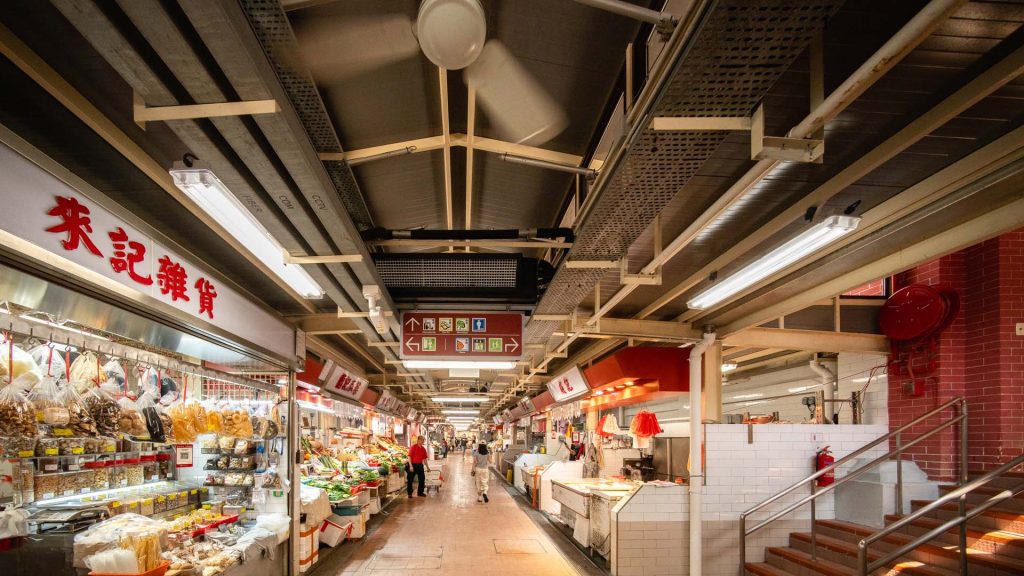
Originally, the interior face of the market’s outer walls was not lined with fixed stalls. Instead, they enclosed an open-air courtyard. As the neighbourhood grew and footfall increased, surrounding trees were cleared and a roof was installed over the perimeter space between the outer wall and the main structure, creating room for additional vendors.
“The Red Market has a robust structure... it still looks relatively young because of its expressive architecture and the way it has been maintained,” Mr Soares said.
The venue underwent a comprehensive rehabilitation project between 2022 and 2024. Guided by the principle of balancing historic conservation with functional modernisation, engineers rebuilt internal structural columns and floor slabs to improve load-bearing capacity and durability. Wall and floor tiles were replaced, ceilings restored and drainage systems overhauled. Walkways and entrances were optimised, while stall layouts were fitted with modern hardware.
Upgraded amenities now include full air-conditioning, barrier-free lifts, dedicated unloading platforms, improved lighting and modernised public restrooms, creating a more comfortable environment for shoppers and vendors alike.
A market for the future
Beyond its concrete and brickwork, the Red Market is a repository of living memory. Generations of families remember it as a backdrop to daily life.
“As the 20th century progressed, the Red Market stopped being the only urban centre in the area. Today there are supermarkets and minimarkets,” Mr Soares noted. “Still, people go to the Red Market for specific things. It is known as perhaps the best fish market in Macao.”
For the market to remain relevant, he argues, preservation cannot mean leaving the building untouched. “The Red Market must adapt to present needs to remain a vital part of the urban area.”
One possibility would be to introduce contemporary social uses within the historic structure. “To stay relevant, it must offer experiences that attract younger generations,” Mr Soares said.
The idea reflects recent initiatives by the Macao Government at other municipal markets. At the Taipa Market, selected stalls have been revamped to feature artisanal goods, speciality coffee and tea beverages alongside traditional produce, with indoor and outdoor seating areas designed to encourage visitors to linger.
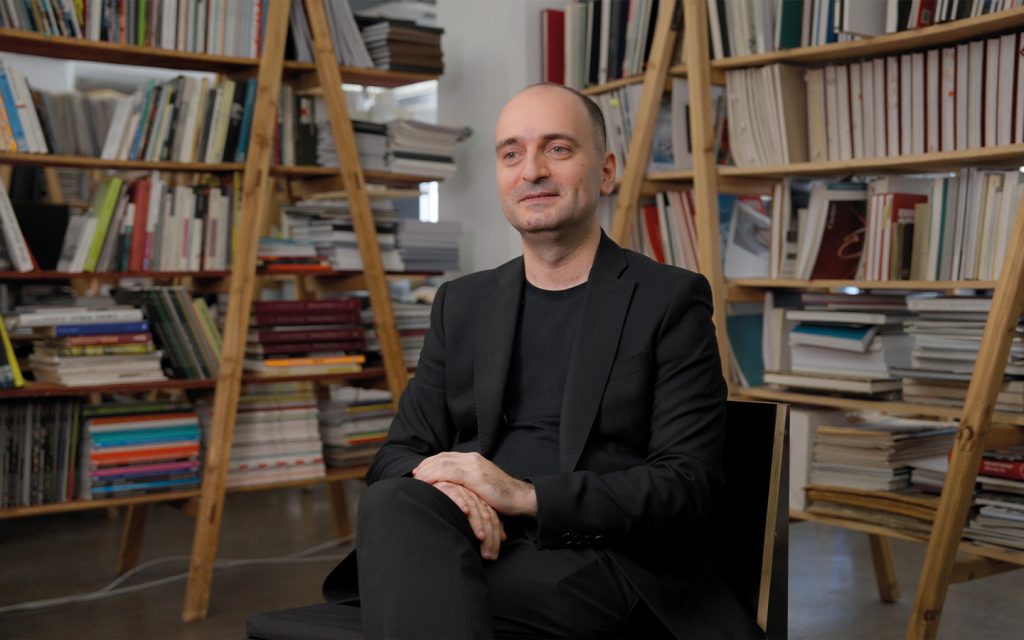
Education offers another route to keeping the market connected to future generations, Mr Soares adds.
“It is very important that schools visit it. Stepping inside allows people to discover the local culture,” he said.
For all the changes around it, the Red Market remains remarkably familiar – a building that, Mr Soares stresses, has retained its place while the surrounding city evolved.
“Even today we use the Red Market. Despite the city’s growth, it remains a central point, still instantly recognisable.”