The relationship between veteran freelance photographer Chan Hin Io and Macao is, in many ways, a story shaped by chance and devotion. Since the city’s return to the motherland in 1999, he has meticulously documented its transformation, creating an enduring visual archive of a place balancing heritage and renewal.
He is more than a photographer. He is a visual chronicler, librarian of the Macau Imagery Gallery at the Macau University of Science and Technology, columnist and contemporary artist, whose work has been exhibited internationally, from Portugal to Australia. His photographs are held in the collections of the Macao Museum of Art, the Archives of Macao and the Macao Foundation, reinforcing his role as one of the city’s foremost visual storytellers.
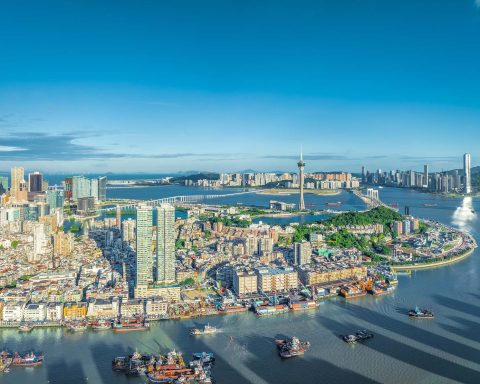
The Cultural Affairs Bureau has organised several exhibitions of his work and published photo albums under his name. Among his dozen-plus published works are “Where the World Heritage Shines – Photographs of the Historic Centre of Macao”, “Picturesque Beauty of the Land – Aerial Photos of Macao by Chan Hin Io”, “Memories of the Old Crafts and Trades in Macao: A Photographic Recollection”, and “Reflection of Macao – Documentary Photographs by Chan Hin Io”. He has also received numerous photography awards.
Since moving to Macao in 1999, Mr Chan has devoted himself to recording the city’s evolving urban and cultural identity. His images carry not only artistic significance, but also historical and social weight, preserving the fading rhythms of old neighbourhoods and traditional trades for future generations.
Circumstance played a defining role in bringing him to Macao. Born in Zhongshan, around 40 kilometres north of Macao, in 1964, he left school early and trained in reinforcement engineering. His life changed unexpectedly in 1990, when a brief stay in Macao enabled him to obtain a local resident identity card. Six years later, while still in Zhongshan, he bought his first camera.
Photography with a purpose
By the late 1990s, Mr Chan felt he had reached a dead end in construction work. At the same time, Macao was approaching a profound political transition with its return to the motherland. He saw in the city not only an opportunity to earn a living, but also a place suited to launch himself into photography.
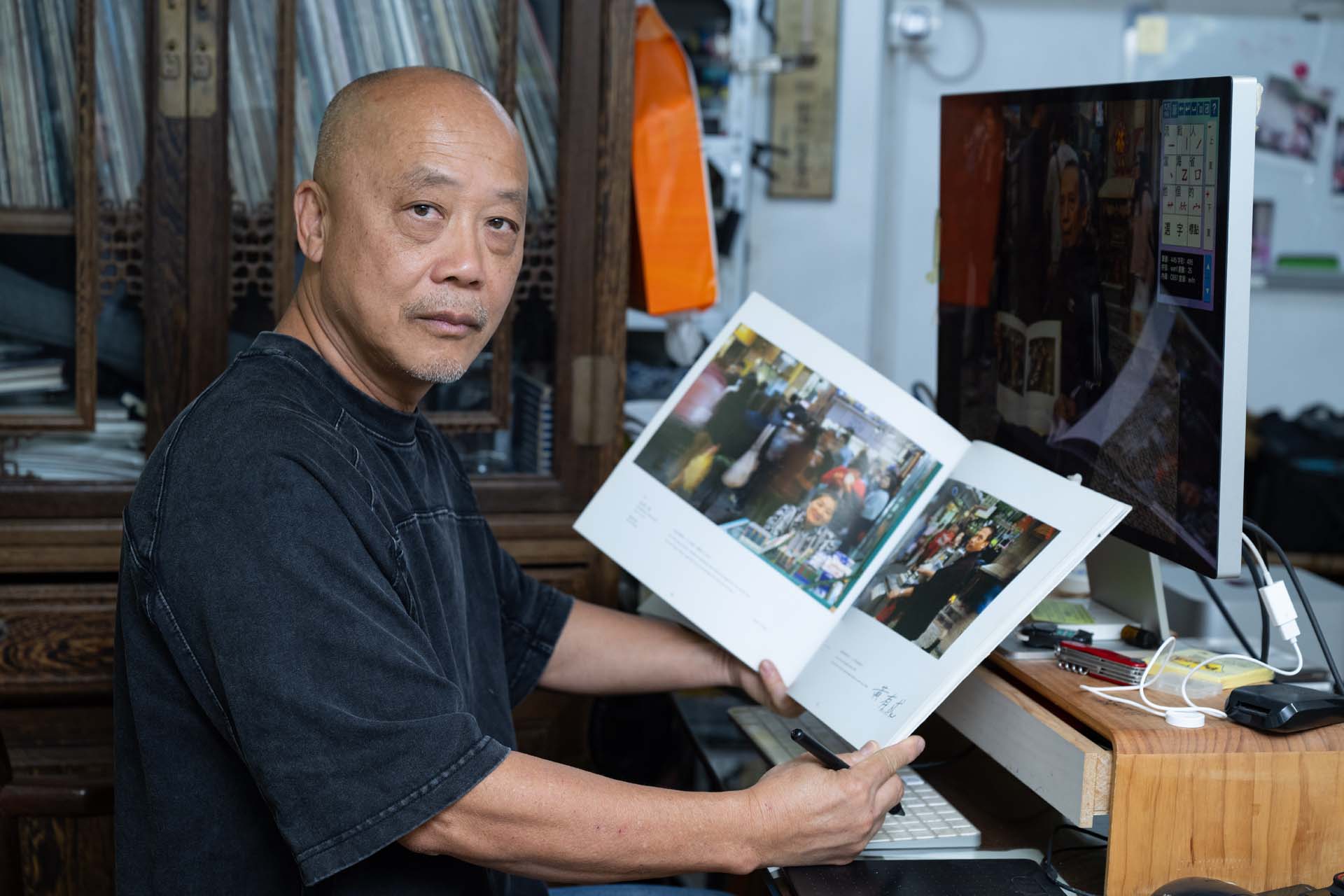
“If it wasn’t for photography, I definitely wouldn’t have come to Macao,” Mr Chan told Macao Magazine in an interview. “Photography’s most vital function is to record – to capture society and history.”
In 1999, he was still relatively new to the craft. “I bought my first camera in the summer of 1996, and it wasn’t until 1997 that I truly figured out how to use it.”
Yet Macao gave him a reason to commit fully. “Since I was already devoted to photography, I thought this was the perfect place to settle down and focus on my work. To have a passion that contributes to society and leaves a mark on a place – to me, that’s incredibly meaningful.”
“In a nutshell, I approach my work as a way of documenting Macao with a humanitarian eye.”
Humble beginnings
Mr Chan did not arrive in Macao without responsibilities. Supporting a family meant photography also had to provide an income. “It was also a way to make a living,” he said.
In his early years in the city, he entered photography competitions for prize money, accepted commercial commissions and collaborated with various organisations. “There’s nothing wrong with earning a living through art,” he said. “As long as you’re honest, how you earn your keep is perfectly justifiable.”
Making a career as a full-time photographer was not easy, but Mr Chan persevered. His grounded outlook enabled him to connect with residents and everyday life, giving his work a sense of intimacy and authenticity.
Still today, each morning begins with a ritual: reading newspapers to follow local affairs and social changes. Even small, classified advertisements, he believes, can reveal subtle shifts in the city’s rhythm. That instinct for observing change has shaped his understanding of where Macao is heading.
He has also worked to broaden his skills. “A photographer should strive to develop well-rounded abilities,” he said. Writing, once a weakness, became increasingly important through his role at the Macau Imagery Gallery.
His curiosity extends beyond photography itself. Through newspaper columns, he transforms visual records into written narratives, believing photographs gain greater meaning when paired with context. As librarian of the Macau Imagery Gallery, he collaborates closely with historians and researchers to ensure the archive is not only visually compelling but also historically precise.
Despite an impressive résumé, Mr Chan remains notably humble. “I understand the mindset of ordinary people because I come from a grassroots background myself.”
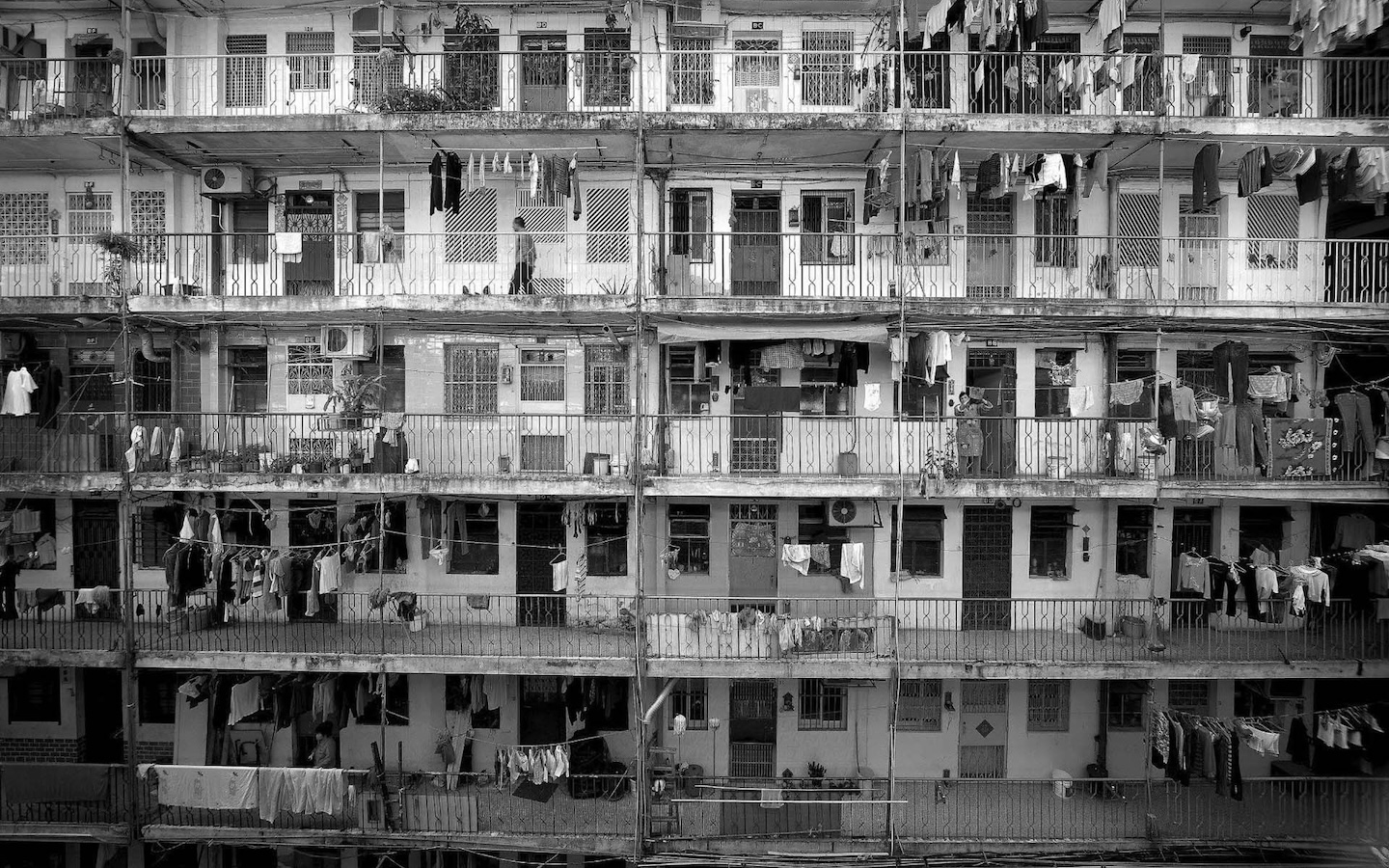
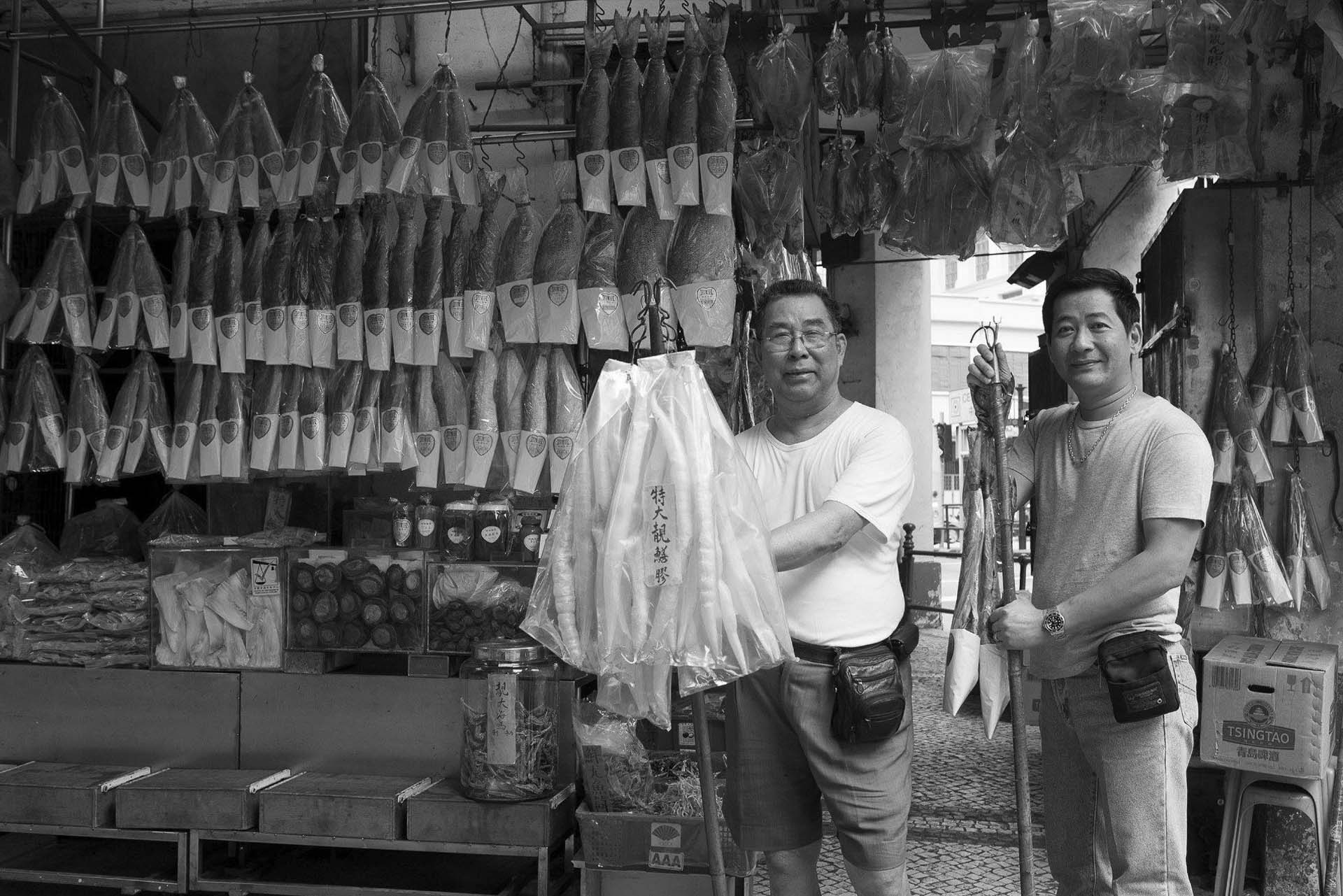
That humility has granted him access to spaces often overlooked: the back rooms of traditional shops, courtyard homes and private workshops. One of his landmark projects, “Neighbourhood”, documents the daily lives of residents, the streets and alleyways of old districts, and the traditional shops and vendors that continue to shape community life. The series captures the warmth and interconnectedness of neighbourhood relationships.
Mr Chan himself has spent years living and working in Macao’s older quarters – first in Pátio da Eterna Felicidade and now in Beco dos Faitiões.
A city of contrasts
Part of what makes Mr Chan’s work so compelling is its continuity. For nearly two decades, he has returned repeatedly to the same streets, shops and individuals, documenting the passage of time. “When I look back at the photos I took 17 years ago, I realise they’ve become even more meaningful,” he said.
“Macao is captivating because it never stops changing. When photographs capture people’s attention and spark discussion, they also create value. That cycle of change and response is what keeps my work alive.”
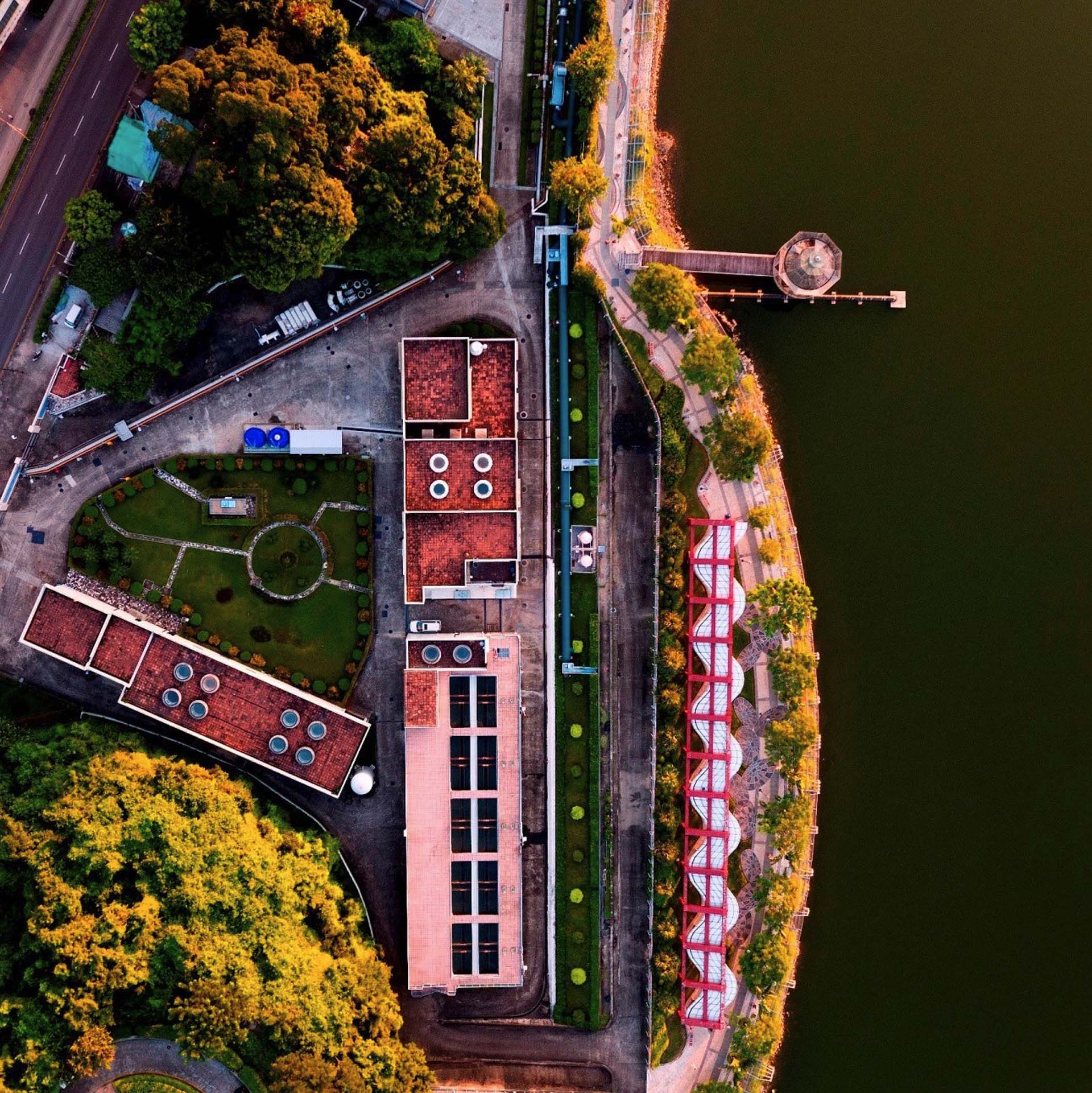
One central thread in his photography is Macao’s economic and urban evolution. From film cameras and helicopter photography to digital equipment and drones, Mr Chan has embraced every available tool to record the city’s growth. By photographing the same locations over more than two decades, he reveals land reclamation, changing skylines and evolving architecture with both artistic depth and documentary precision.
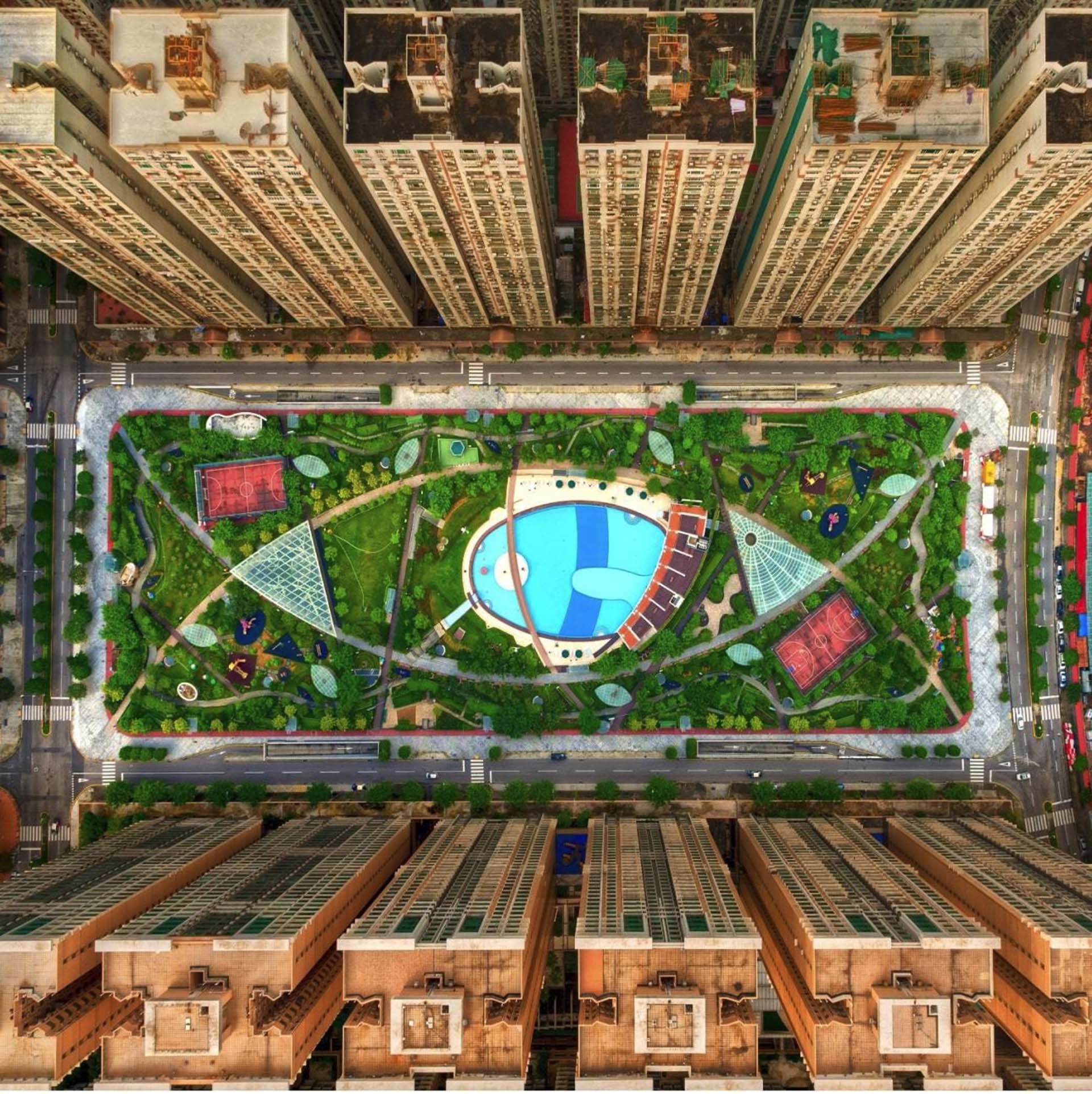
Yet beyond the large-scale developments, he remains fascinated by what he calls Macao’s “invisible history” – the customs, rituals and ordinary moments that quietly define its identity.
“By recording the same locations and people, we see how environments develop while people grow older,” he said. “Documenting them for decades brings a sense of melancholy, because the emotions tied to human change are very different from those tied to the changing cityscape.”
Audiences are often drawn to the contrasts embedded in his images: old and new, East and West, sacred and secular. These juxtapositions arise naturally from Macao itself, according to him.
“When photographing festivals or churches, the collision of cultures is so striking you simply have to capture it,” he said. “Living in Macao, such moments present themselves every day.”
Preserving authenticity
Mr Chan’s work has long extended beyond the city’s boundaries and the conventions of traditional documentary photography. One of his most visible international collaborations is “YiiMa” (“The Twins” in Cantonese), a creative partnership with Macao artist Ung Vai Meng. Together, they combine photography with performance, installation, video and archival art, pushing documentary work into more experimental territory while exploring Macao’s past, present and future. Their projects have been exhibited in Lisbon, Portugal, at the Venice Biennale in Italy, and at Art Macao: Macao International Art Biennale.
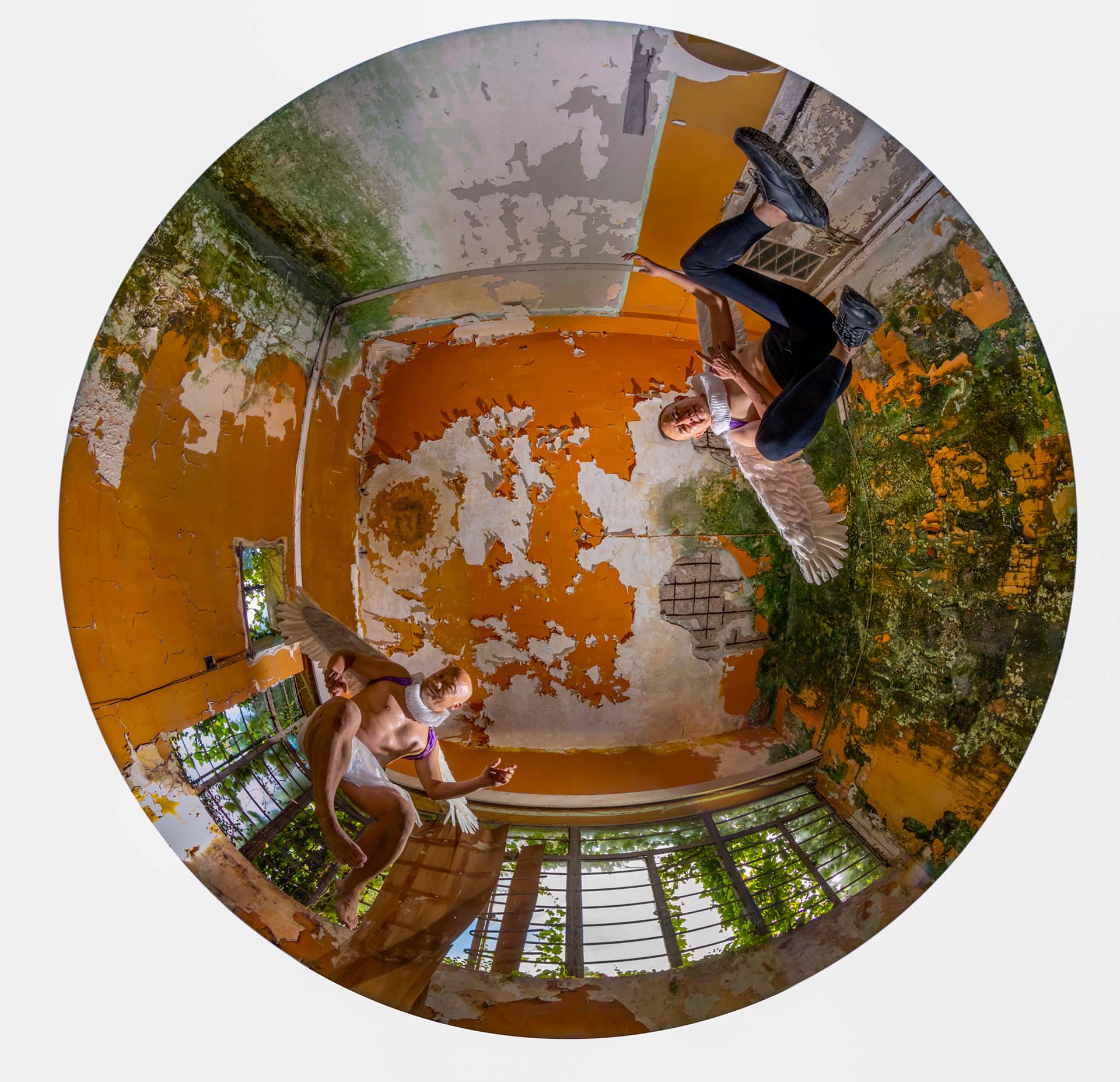
Mr Chan has also explored new artistic forms independently. For Art Macao 2023, he created the photographic installation “Abnormal Structure”, which has since entered the collection of the Cultural Affairs Bureau.
He sees the future of photography in Macao as a growing tree: rooted in documentary tradition, while branching into new technologies and artistic approaches. As digital tools become increasingly accessible, he believes more people will be able to document the city around them. But technology alone, he argues, is not enough.
“A beautiful image can be superficial. What matters is the story behind it,” he said.
For Mr Chan, documentary photography carries a responsibility: to celebrate progress while remaining willing to discuss it, ensuring an honest record for future generations. As librarian of the Macau Imagery Gallery, he now mentors younger photographers, reminding them that although technology evolves – from darkrooms to digital sensors and artificial intelligence (AI) – the fundamentals remain unchanged: presence, humility and curiosity.