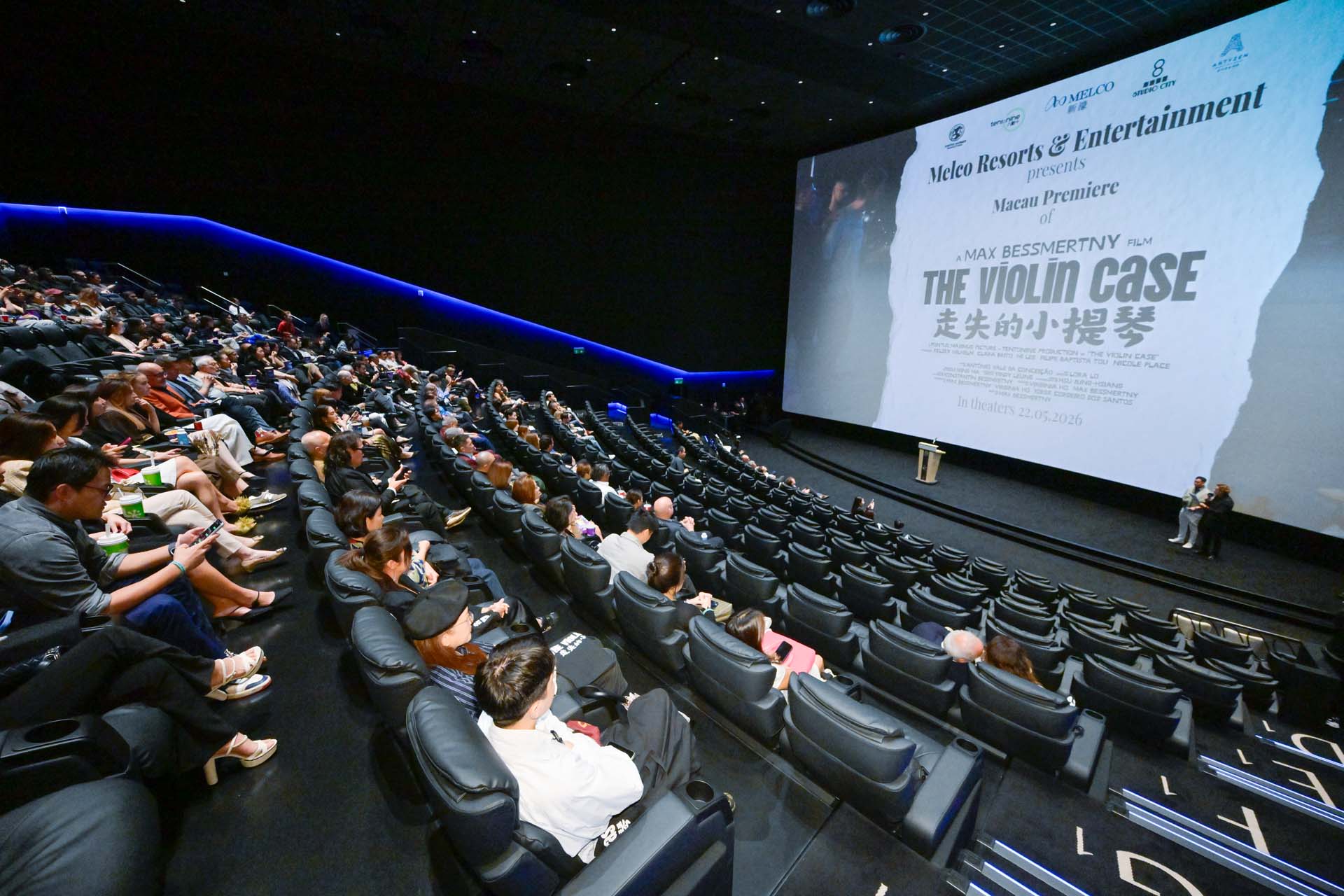
For “The Violin Case” director Max Bessmertny and producer Virginia Ho, the journey to the big screen has been just as adventurous as the disappearance of the violin at the heart of the film. Six years after development began, the 87-minute feature premiered in Macao on May 15 ahead of a limited local release on May 22. Now, the pair are looking far beyond the city’s borders, with a European premiere scheduled in Portugal on September 11.
“It’s been a long journey, and now it feels like the pinnacle of all possible pinnacles,” Mr Bessmertny told Macao Magazine.
The next challenge is ensuring “The Violin Case” secures a place in the international market. Last year alone, with support from Macao’s Cultural Development Fund, the team presented the production at 10 film markets and festivals, including some of the industry’s largest events – the Hong Kong International Film & TV Market, the Shanghai International Film & TV Market, the Tokyo International Film Festival Content Market and the Cannes Film Market.
Ms Ho acknowledges that placing an independent film on the global circuit is demanding. Promotional materials, festival submissions and meetings with buyers all require months of preparation. “From a business perspective, it’s a product,” she said.
Drawing on more than two decades in the industry, Ms Ho describes film markets as essential for independent productions seeking distribution.
“Going to a film market is like going to a regular market,” she said. “We try to figure out what’s going on, what we can offer, and what we can buy.”
Multicultural production
With its multilingual script and multicultural cast, “The Violin Case” attempts to capture what Mr Bessmertny sees as the essence of Macao: a city shaped by overlapping cultures, contradictions and encounters. English serves as the film’s primary language, though Cantonese, Portuguese, French and Tagalog are also spoken throughout.
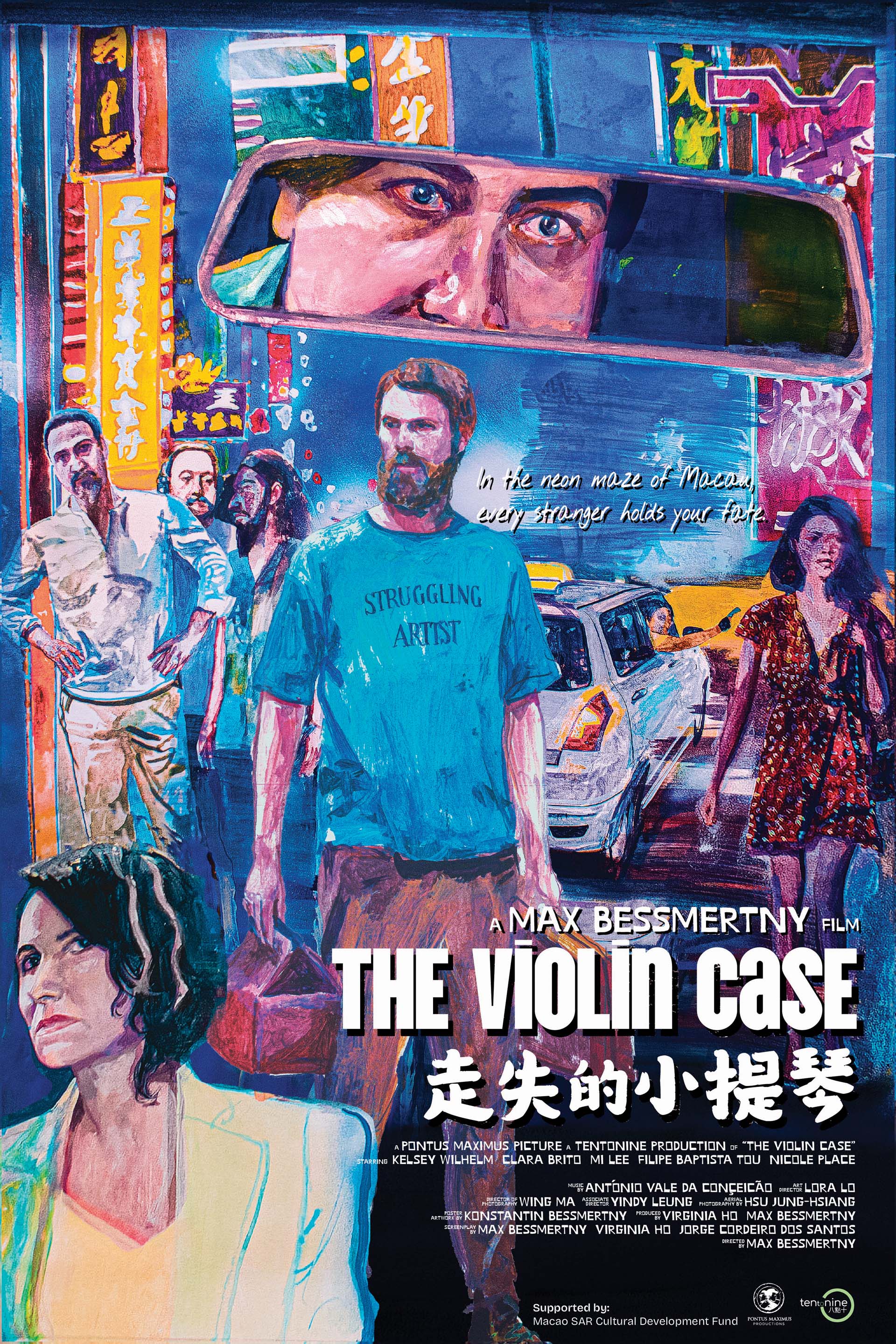
The screenplay was co-written by Mr Bessmertny, Ms Ho and Jorge Cordeiro dos Santos. Its origins lie in a real-life incident involving Mr Bessmertny’s father, Macao-based Russian artist Konstantin Bessmertny, who lost a painted violin in Hong Kong more than a decade ago. The artwork was never recovered, but the incident became the foundation for the film.
In “The Violin Case”, the missing violin becomes a metaphor for the fragility of art and the elusive value attached to it.
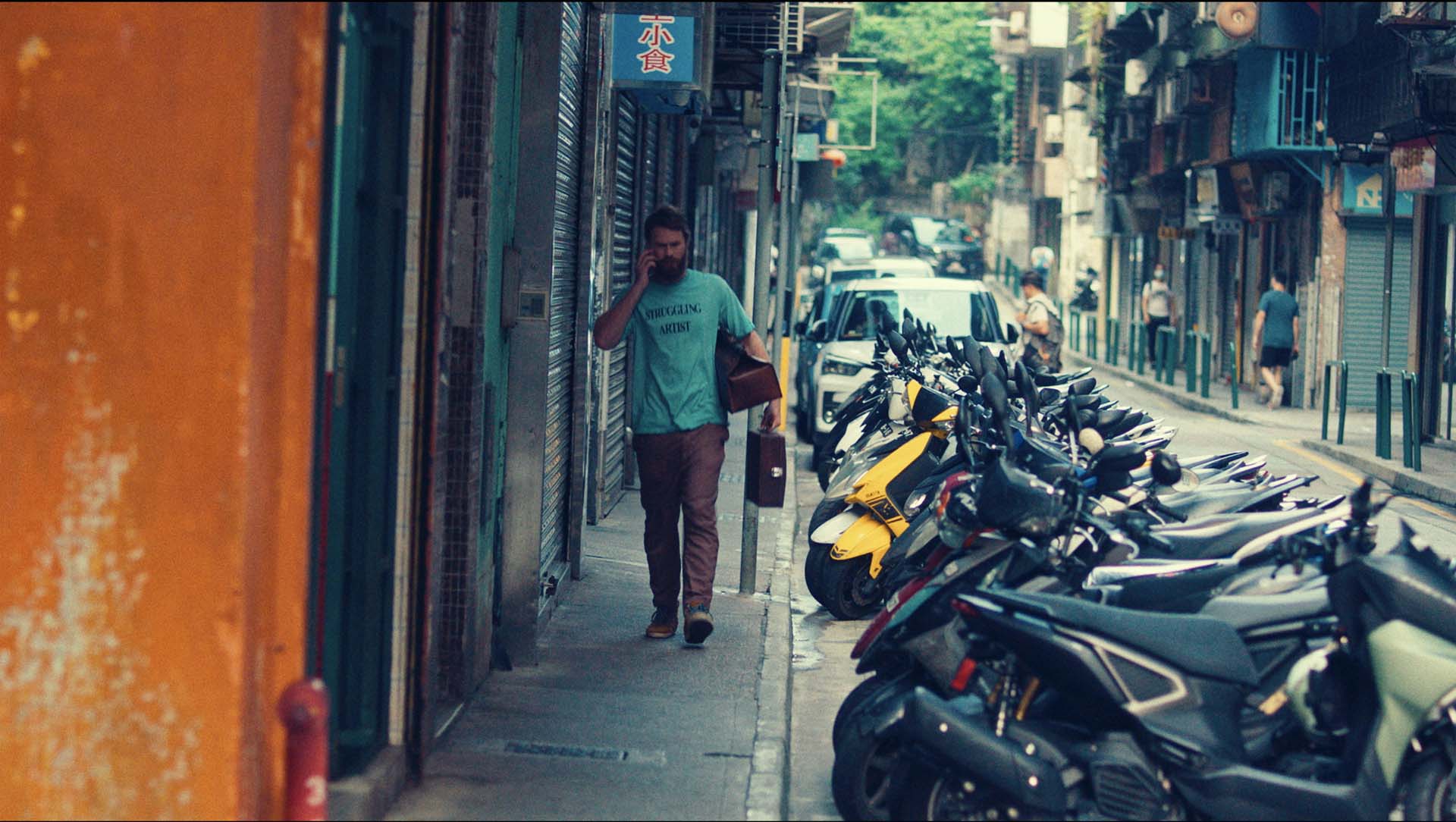
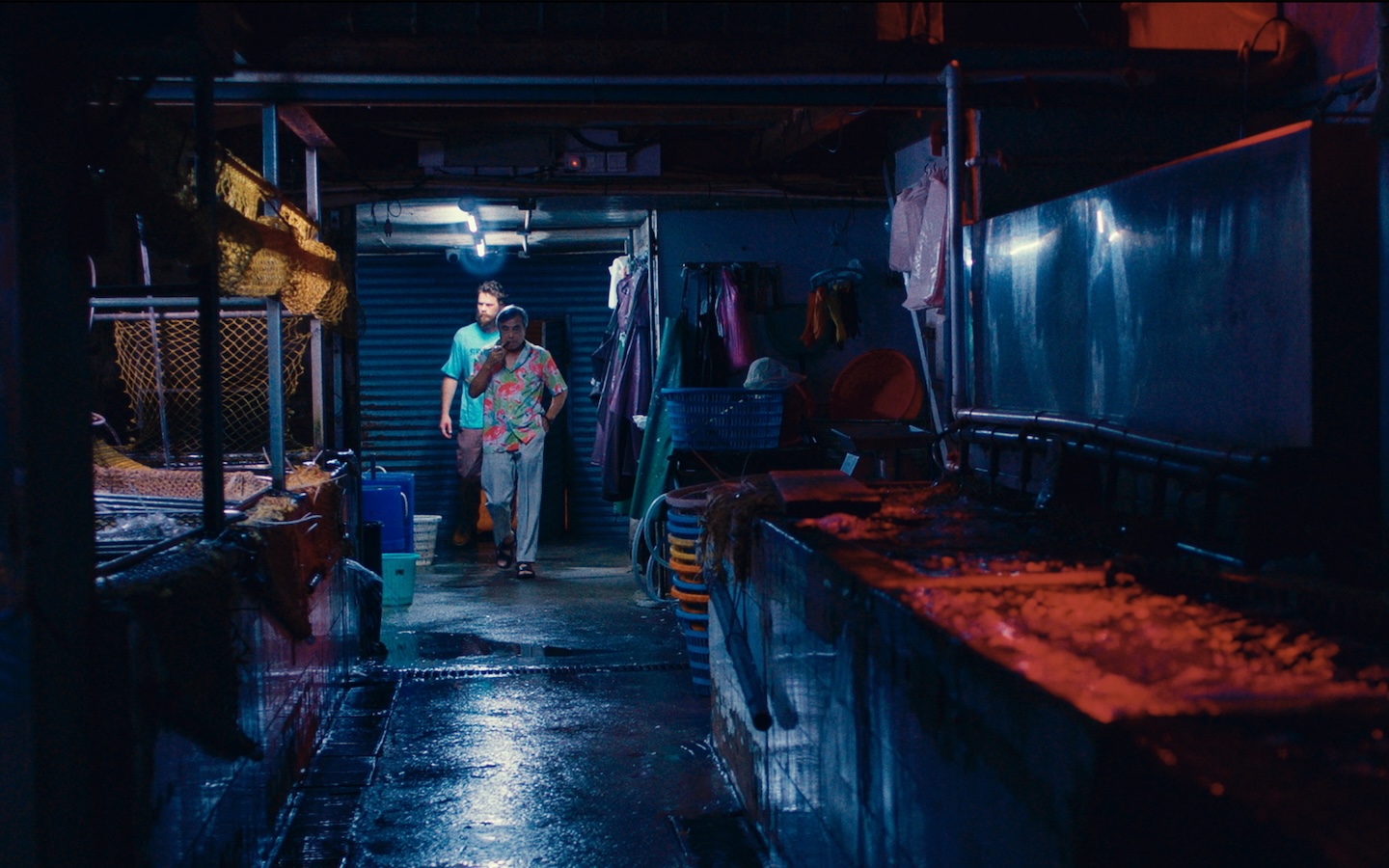
The story follows Theo, an American painter searching desperately for a discarded violin painted with Napoleon on both sides he left in the back of a taxi. The disappearance pushes the struggling young artist into financial and artistic crisis while he is pursued by calculating gallery owner Pauline. As Theo races through Macao’s streets in search of his artwork, he is introduced to the city’s bohemian undercurrent. But as the night deepens, so too does his descent.
For Mr Bessmertny, filming Macao is deeply personal. His family moved to the city in 1992, when he was four years old, and its streets and rhythms have long shaped his work.
After studying at New York University’s Tisch School of the Arts, he developed a filmmaking style that blends the technical discipline of American cinema with surreal and unpredictable storytelling. His earlier short films – including debut production “Tricycle Thief” (2014), which premiered at the Toronto International Film Festival, alongside “Death of a Parrot” (2015) and “Dirty Laundry” (2020) – already hinted at his fascination with absurdist narratives and urban eccentricity.
In “The Violin Case”, however, Macao moves beyond backdrop and becomes central to the story itself. “It’s the nuances of East and West, the harmony of so many cultures living side by side in just 33 square kilometres,” Mr Bessmertny said.
That is also why he insists the film should be experienced in cinemas. “Some films are meant specifically for the cinema, and this is one of them,” he said.
The soundtrack was composed by António Vale da Conceição, a Macao-born musician and producer now based in Portugal. As a member of the Macao rock trio Turtle Giant, he saw the band’s 2012 EP “All Hidden Places” featured in the 2015 Sundance film “Ten Thousand Saints”. Mr Conceição has since produced soundtracks for a range of multimedia projects.
The original soundtrack for “The Violin Case” – featuring songs such as “The Taxi Ride”, “Napoleon on the Beach”, and “The Flying Robber” – is now available on major streaming platforms.
From Macao, in Macao, about Macao
Filming the production required 42 locations across 24 nights – a process Ms Ho says was just “as exhilarating as it was gruelling”.
Her experience proved essential. The founder of Macao-based Tentonine Productions Ltd, Ms Ho has previously worked on projects ranging from an award-winning documentary about the construction of The Venetian Macao resort to television commercials featuring big names such as English football star David Beckham, French actress Sophie Marceau and Philippine boxing great Manny Pacquiao. She also provided production services for international films shot in the city, including Marvel Studios’ 2021 blockbuster “Shang-Chi and the Legend of the Ten Rings”.
From its earliest script drafts to its premiere in May, “The Violin Case” took six years to complete, spanning fundraising, filming and post-production. Mr Bessmertny recalls the challenge of maintaining creative focus over such an extended period, while Ms Ho points to the financial demands and emotional strain of sustaining an independent production as key reasons behind the lengthy process. The film’s 4.5-million Hong Kong dollar budget was secured through private financing.
Casting was guided by a principle: reflecting the diversity of Macao itself. Macao-based Kelsey Wilhelm, a longtime collaborator of Mr Bessmertny, was cast as Theo, while several supporting roles went to other local non-professional actors, including singer Filipe Baptista Tou, who plays a taxi driver.
The COVID-19 pandemic complicated auditions, forcing much of the casting process online. Even so, the team remained determined to preserve the city’s linguistic and cultural texture.
Mr Bessmertny recalls a moment in the film in which an elderly local man speaks to Theo in hesitant English on a public bus. “It’s one of my favourite scenes. It comes from observation and living in Macao.”
For Ms Ho, the film represents more than a creative achievement. It is also evidence that Macao’s film industry can produce internationally viable work without sacrificing its identity.
“This is Macao,” she said. “It has a multicultural cast and features multiple languages. That’s what exists here.”
Even as “The Violin Case” begins its theatrical run, Mr Bessmertny is already preparing his next project. Titled “Typhoon Heist”, it draws inspiration from 1940s Hollywood cinema and French film noir, centring on a group trapped inside a hotel during a robbery as a typhoon sweeps through the city.
For now, however, the team is focused on the reception to their debut feature at home. “This is our starting point, and it will always be our home,” Ms Ho said. “We want to make films from Macao, in Macao, about Macao.”
Reflecting on the production journey, Mr Bessmertny reduces the experience to four words: perseverance, team, trust and gratitude.
“First, never give up. Second, surround yourself with extraordinary people. Third, trust – because trust is essential. And finally, gratitude, because I am deeply grateful for what I do,” he said.
For the filmmaker, the city remains an endless source of material and inspiration. “It’s a gift that never stops giving.”