Across Macao’s casinos, playing cards are central to the rhythm of gaming floors, moving rapidly through baccarat, blackjack and other table games before disappearing just as quickly. To safeguard the integrity of play, decks are retired after short use and destroyed. The result is a constant stream of highly specialised waste, generated in volumes that often go unnoticed behind the spectacle of the city’s entertainment resorts.
For years, the fate of this waste has followed a familiar path. Some is incinerated locally, while some is transported for processing in the Chinese mainland under greener arrangements. Either way, the lifecycle of these cards has largely ended outside public view and beyond the city itself.
A different approach is now emerging. Local technology firm Fnetlink Technology Co. Ltd. has partnered with Macau integrated resort operator MGM China Holdings Ltd. to develop what they describe as a fully localised recycling and upcycling process for used playing cards. The initiative was unveiled in March this year, after securing an operating permit for a 1,394-square-metre processing facility.
“Macao needs solutions like this because our city generates an extraordinary volume of waste,” says Elaine Wong, general manager of Fnetlink, in an interview with Macao Magazine. “If we turn waste into reusable inputs, we can reduce the burden on the planet.”
Setting a standard
In a city where tourism and entertainment underpin economic activity, consumption levels are correspondingly high. According to the latest Report on the State of the Environment of Macao released by the Environmental Protection Bureau, municipal solid waste per capita rose 4 percent to 2.10 kilograms per person per day in 2024, surpassing levels in nearby cities such as Hong Kong and Guangzhou. Overall municipal solid waste increased 5.1 percent year-on-year to 526,979 tonnes in 2024, with paper and cardboard accounting for about 24.3 percent of the total, showed the report.
Playing cards are not tracked as a separate category in official data. However, some environmental groups estimate that at least 15,000 tonnes of used cards are discarded annually by Macao’s casinos. If broadly accurate, this would represent a notable share of the city’s waste stream.
Figures from MGM China highlight the scale at an operational level. The company says its two resorts in Macao generate six to seven tonnes of used cards each day, accounting for about a third of its daily solid waste. Once fully implemented, the recycling and upcycling programme is expected to process roughly 3,000 tonnes of MGM China’s used cards each year, offering a meaningful reduction in waste while potentially setting a precedent for the wider industry.
In announcing the initiative, MGM China described it as the first integrated resort operator in Macao to establish a fully localised, end-to-end system for recycling and upcycling used playing cards. Beyond reducing disposal volumes, the company sees potential for higher-value reuse, supporting applications in green materials and related industries.
Some other integrated resort operators in Macao, such as Melco Resorts & Entertainment Ltd and Wynn Macau Ltd, also have recycling initiatives for playing cards. Wynn Macau Ltd launched in November 2023 a programme to recycle and convert shredded playing cards into raw materials to make recycled paper products. Melco Resorts stated in 2025, a portion of its playing cards were processed into pulp that can be remanufactured into paper products such as box fillers, cup holders and paper towels.
Versatile applications
Behind the project lies several years of development. Fnetlink’s Ms Wong explained that the initiative builds on an automated card-shredding system co-developed with MGM China in 2023. It is designed to improve efficiency while reducing physical strain and injury risks for staff.
Because local regulations require gaming equipment such as playing cards to be destroyed on-site, shredding takes place within MGM China’s integrated resorts before any material can leave the premises. The shredded remnants are then transported to the processing facility, where dry fibre-regeneration equipment converts them into recycled fibres without the use of water.
“It ensures almost nothing is lost in conversion,” Ms Wong said, adding that the process achieves a recycling rate close to 100 percent.
The underlying technology, she explained, is sourced from the Chinese mainland and adapted to suit Macao’s distinctive waste stream. “Hardly anyone has processed playing cards this way before because this substantial volume of discarded cards is something that only happens in Macao,” she stated.
Unlike ordinary paper, playing cards are designed with a coated finish that withstands constant handling, requiring specialised recycling methods. “This solution is focused specifically on cards,” Ms Wong noted. “The same approach could be adapted for other kinds of waste, but it would require equipment modifications.”
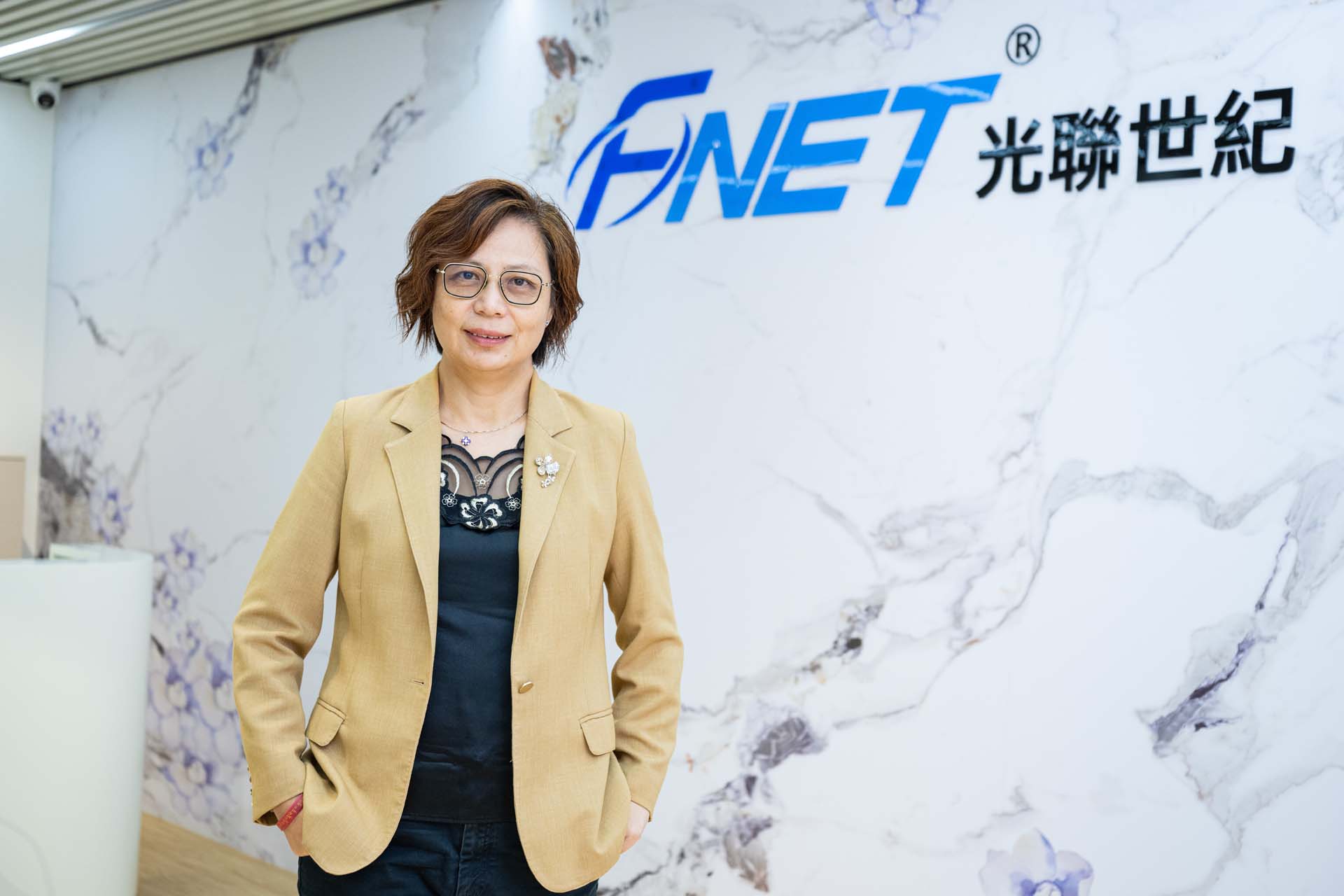
The resulting fibres offer a range of potential applications. “These [recycled] fibres have a wide range of potential uses,” the Fnetlink general manager suggested. “They can be used as filling materials, made into park benches, litter bins and paving tiles, or turned into all sorts of tables and chairs. With further processing, they could even be converted back into paper.”
This versatility points to opportunities beyond waste reduction, as it could also support new green business initiatives. “If Macao is throwing away 30 tonnes of playing cards every day, that’s a volume that could generate a huge supply of raw material after recycling and remanufacturing,” Ms Wong said. “This is something unique to Macao, and over time it could even become an industry, because it can be turned into many downstream products.”
Turning that potential into viable commercial products, however, depends on market demand. “First, we have to identify demand before we can make products from these recycled fibres,” she noted. “We’re now pushing ahead to see how these [fibres] can become items that Macao may export in the future, supplying Chinese mainland and other markets.”
Moving to a circular economy
To that end, Fnetlink and MGM China are exploring possible applications while introducing the concept to other integrated resort operators in Macao. The facility has the capacity to process around 30 tonnes of used cards per day – equivalent to roughly 10,950 tonnes annually – well beyond MGM China’s own requirements.
After securing the operating permit for the facility, Ms Wong said the company began discussions with other operators at the 2026 Macao International Environmental Co-operation Forum & Exhibition (MIECF), a key platform for advancing green solutions and circular economy initiatives in the city.
The partnership between Fnetlink and MGM China reflects a broader shift in Macao, as government and industry seek to transition from a linear model of consumption – where resources are used briefly and discarded –to a more circular approach. A United Nations Environment Assembly resolution defines the circular economy as a system in which products and materials are reused, remanufactured, recycled or recovered, reducing waste and cutting greenhouse gas emissions.
This direction was evident at the latest edition of MIECF, where organisers introduced a “Zero-waste Circular Economy Exhibition Zone” to showcase developments in waste management, resource recovery, sustainable innovation, and green building.
The concept is already embedded in policy in a number of jurisdictions. The Central Government introduced a circular economy promotion law in 2008, which came into force the following year. The mainland authorities have since reinforced the policy through successive action plans. The National Development and Reform Commission’s 14th Five-Year Plan for the Circular Economy (2021–2025) positioned the circular economy as key to addressing the nation’s environmental challenges and supporting economic growth.
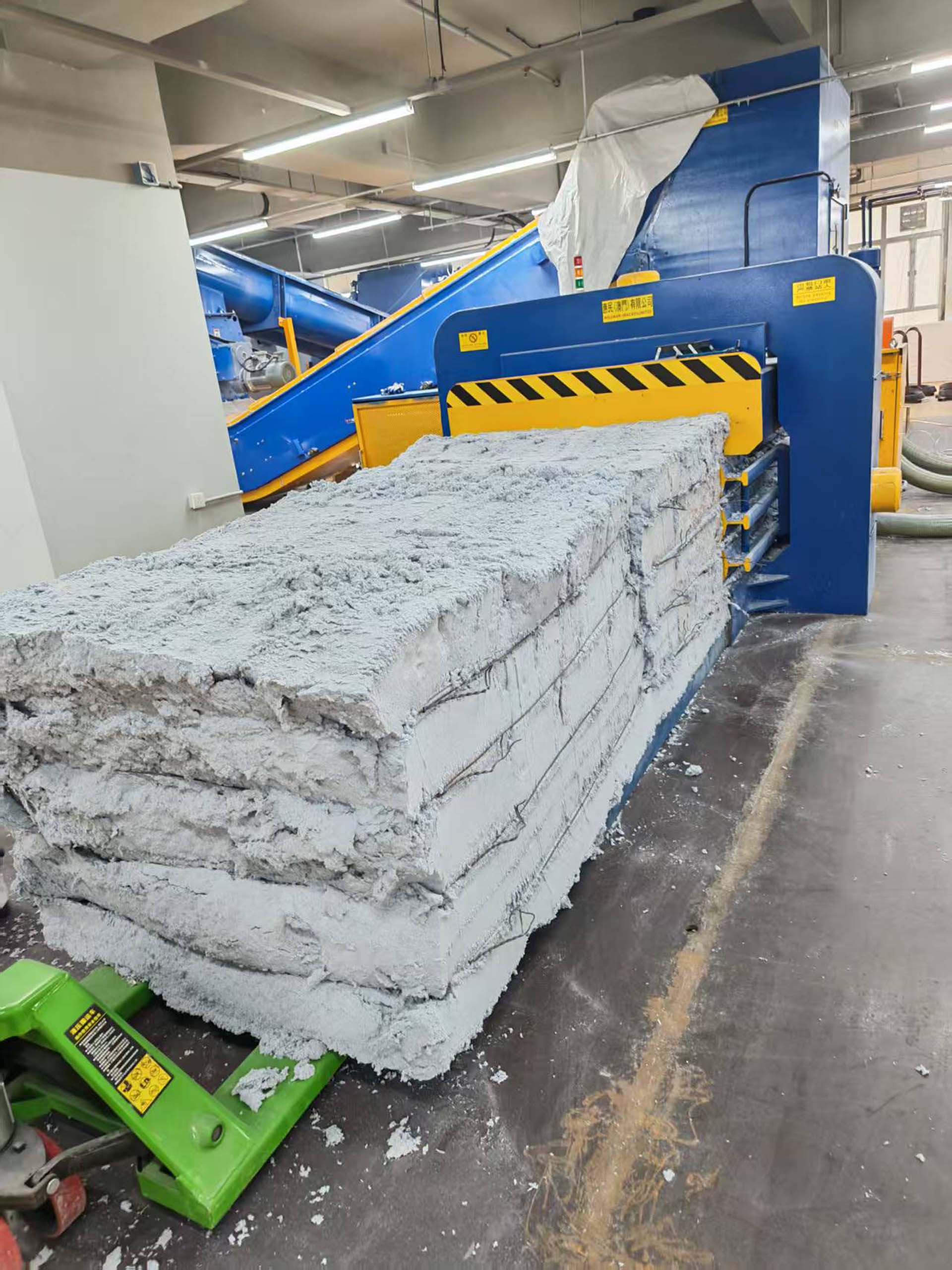
For Ms Wong, the relevance to Macao is clear. “Macao really needs this, because the volume of waste and discarded items here is astonishing,” she stated. “If you process these materials, they can be turned into recyclable resources.”
Overcoming challenges
Bringing such projects to life, however, is not without challenges. Securing a suitable site for the processing facility proved particularly complex, taking more than a year due to space constraints and regulatory requirements.
“Because we’re Macao people, and we live here, we all want a better environment for Macao, for the next generation and for all of us,” she stressed. “Everyone should do their part. That’s why, even when it’s been difficult, we’ve gritted our teeth and kept going.”
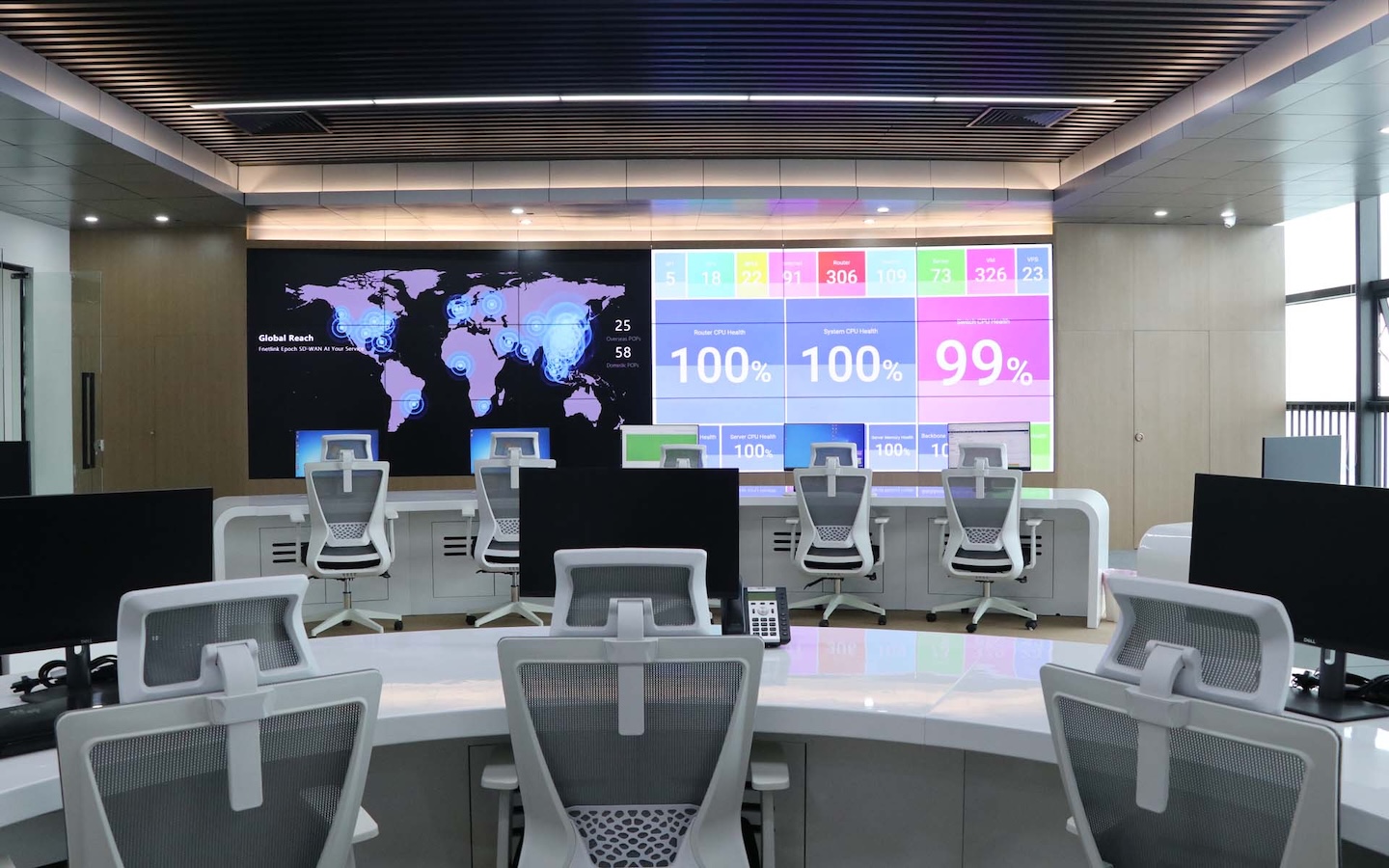
The recycling initiative builds on a longstanding partnership between Fnetlink and MGM China. Fnetlink, part of a Shenzhen-based group specialising in software-defined networking (SDN) and cloud services, established its Macao operations in 2017 and formally began work in 2019, with its client portfolio encompassing also governmental departments.
MGM China was Fnetlink’s first network-services client, Ms Wong noted, and the relationship has since evolved into a broader collaboration that now extends beyond technology into sustainability. Fnetlink, she added, had no prior experience in recycling before taking on the challenge. However, it was able to draw on the technical resources and supplier networks of its mainland parent company.
“Fnetlink on the mainland is very specialised, focusing on providing network services,” Ms Wong said. “Because Macao always talks about diversification, what we do here also has to be more diversified.”
The experience has since widened the company’s ambitions. Having established a viable model for processing playing-card waste, Fnetlink is now open to further opportunities in upcycling and environmental solutions.
Macao’s relatively small scale, Ms Wong suggested, can be an advantage, allowing for flexibility and experimentation. “In Macao, nothing is on an especially large scale, and we can have teams to handle operations in different sectors,” she explained. With a workforce of around a dozen people, adaptability is essential. “The [business] volumes aren’t huge, so each person can cover several tasks. In my case, I’ve ended up being a bit of an all-rounder,” she added.
The company also sees broader potential in rethinking waste as a resource. “We observe that there are plenty of materials that can be turned from waste into value, so we hope to use this opportunity to do more for Macao,” Ms Wong said. “This allows our company to have multi-track development and supports the MSAR Government’s call for diversification.”