Macao’s long-lasting connection with Europe entered a new chapter this April, as Chief Executive Sam Hou Fai undertook his first official overseas tour. Spanning Portugal, Spain, Switzerland and Belgium, the tour was both a reaffirmation of tradition and a forward-looking exercise in strategic positioning for the Macao Special Administrative Region (MSAR).
Mr Sam said the extensive itinerary yielded fruitful results and achieved its intended goals, with the outcomes focused on deepening cooperation with Portugal, extending Macao’s platform role to Spanish-speaking countries, and strengthening engagement with the European Union (EU).
During the tour, 46 activities of various kinds were held, including high-level meetings, events showcasing the achievements of the “One Country, Two Systems” principle, economic and trade promotions, tourism promotions, and cultural and educational exchanges. At governmental and enterprise levels, more than 100 cooperation agreements were signed, with consensus reached on areas for further cooperation and on additional projects.
Positive results were also achieved in promoting the development opportunities available in Macao and Hengqin, strengthening external exchanges and cooperation, realising the innovative “shared voyage” model, and assisting Chinese-mainland and Macao enterprises in jointly exploring Portuguese-speaking, Spanish-speaking, and continental European markets. It also comprehensively elevated mutual trust and the level of cooperation between the relevant countries, assisting in China’s high-level opening-up strategy.
The MSAR Government delegation was accompanied by a 120-strong entrepreneur delegation in Lisbon, Portugal, and Madrid, Spain.
The visits to Portugal and Spain further consolidated Macao’s role as a “precise connector”, helping to strengthen cooperative relations between China, Portuguese-speaking countries, Spanish-speaking countries, and the EU, Mr Sam noted.
High-level cooperation
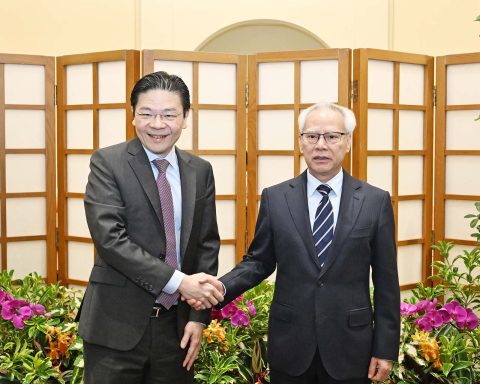
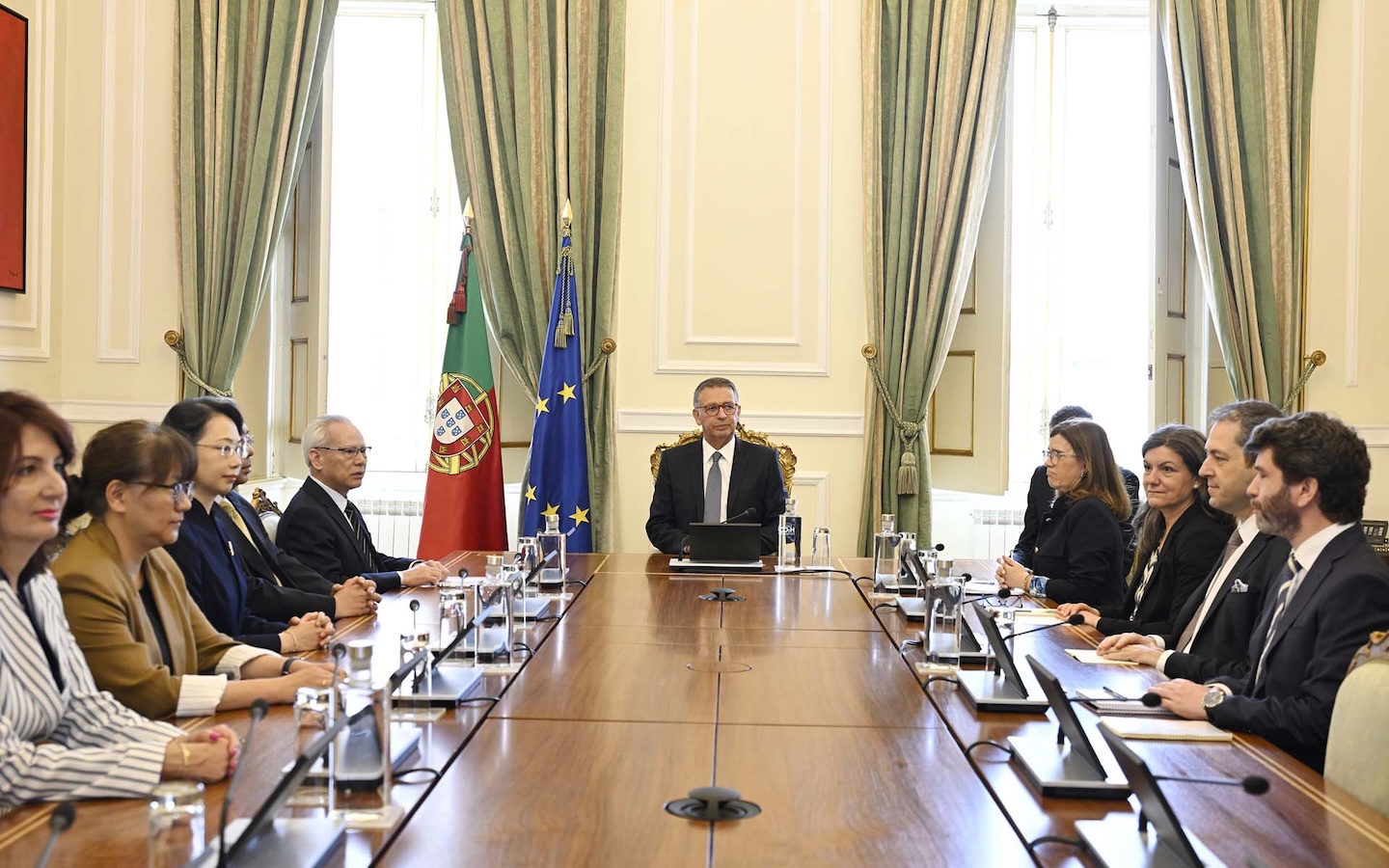
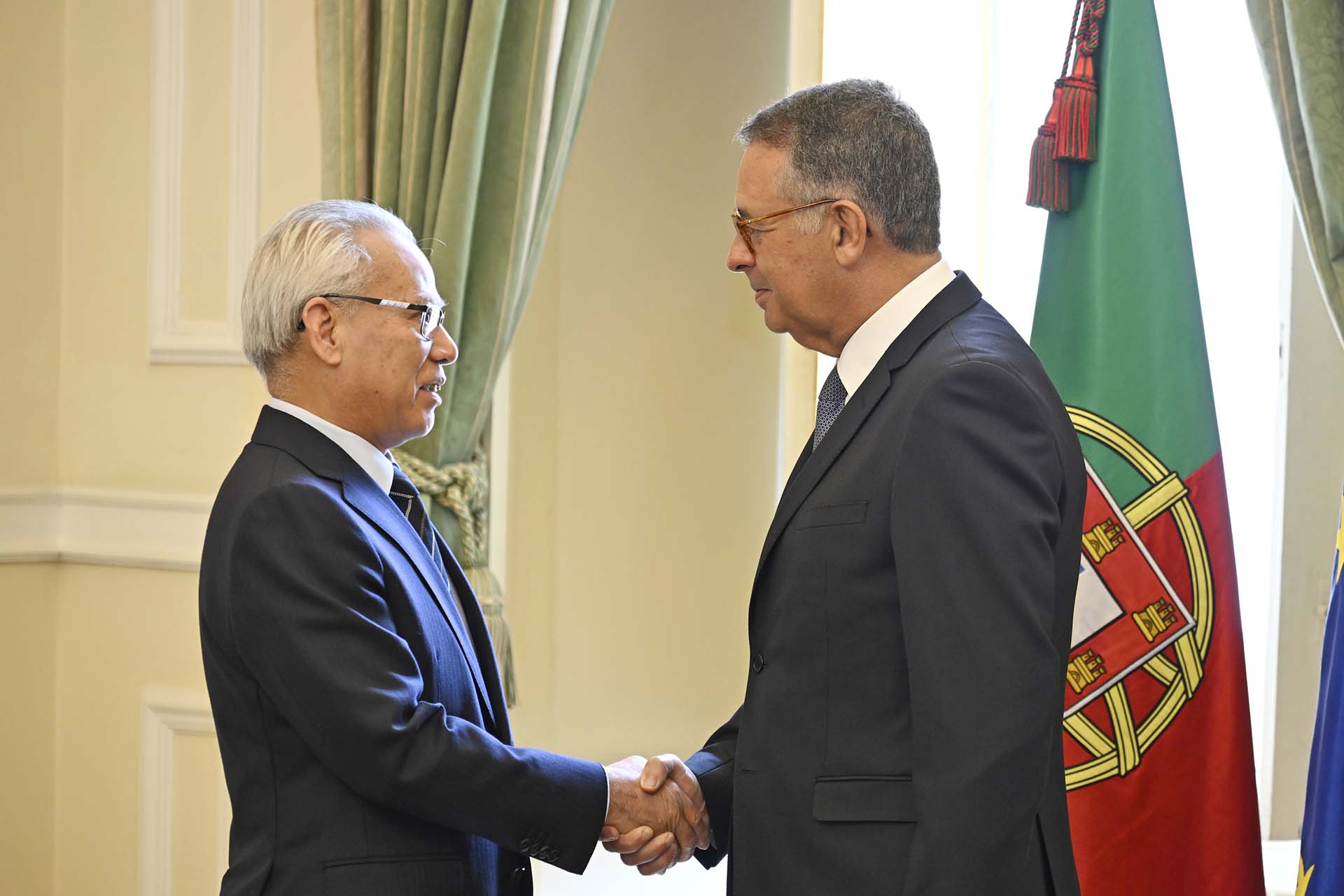
Portugal was the first stop of the visit and a central focus of the tour. In Lisbon, the Chief Executive met with seven leaders or senior officials, including with the President of the Portuguese Republic, António José Seguro, and Prime Minister Luís Montenegro, holding separate discussions on advancing bilateral cooperation across multiple sectors.
Mr Sam emphasised Macao’s commitment to elevating cooperation across multiple domains, from trade and investment to education, culture and innovation. Anchored in its positioning as “One Centre, One Platform, One Base”, Macao will continue to expand its external engagement, particularly deepening and broadening practical cooperation with Portuguese-speaking countries, he added.
The Chief Executive also highlighted that the MSAR Government has “consistently and vigorously” promoted the use of Portuguese and supported Portuguese-language education in Macao. The number of people studying Portuguese in Macao is currently the highest since the city’s return to the motherland, he stressed.
Mr Sam added that high-quality talent is essential for Macao’s future development. Under the current MSAR talent-attraction scheme, proficiency in Portuguese is considered an advantage, further demonstrating the Government’s strong commitment to the Portuguese language.
In the meeting with Prime Minister Montenegro, the Chief Executive said the MSAR Government welcomes Portuguese companies to expand their operations in Macao; and, through Macao’s platform link, actively participate in the development of the Guangdong-Hong Kong-Macao Greater Bay Area, and access the Chinese mainland market, he added.
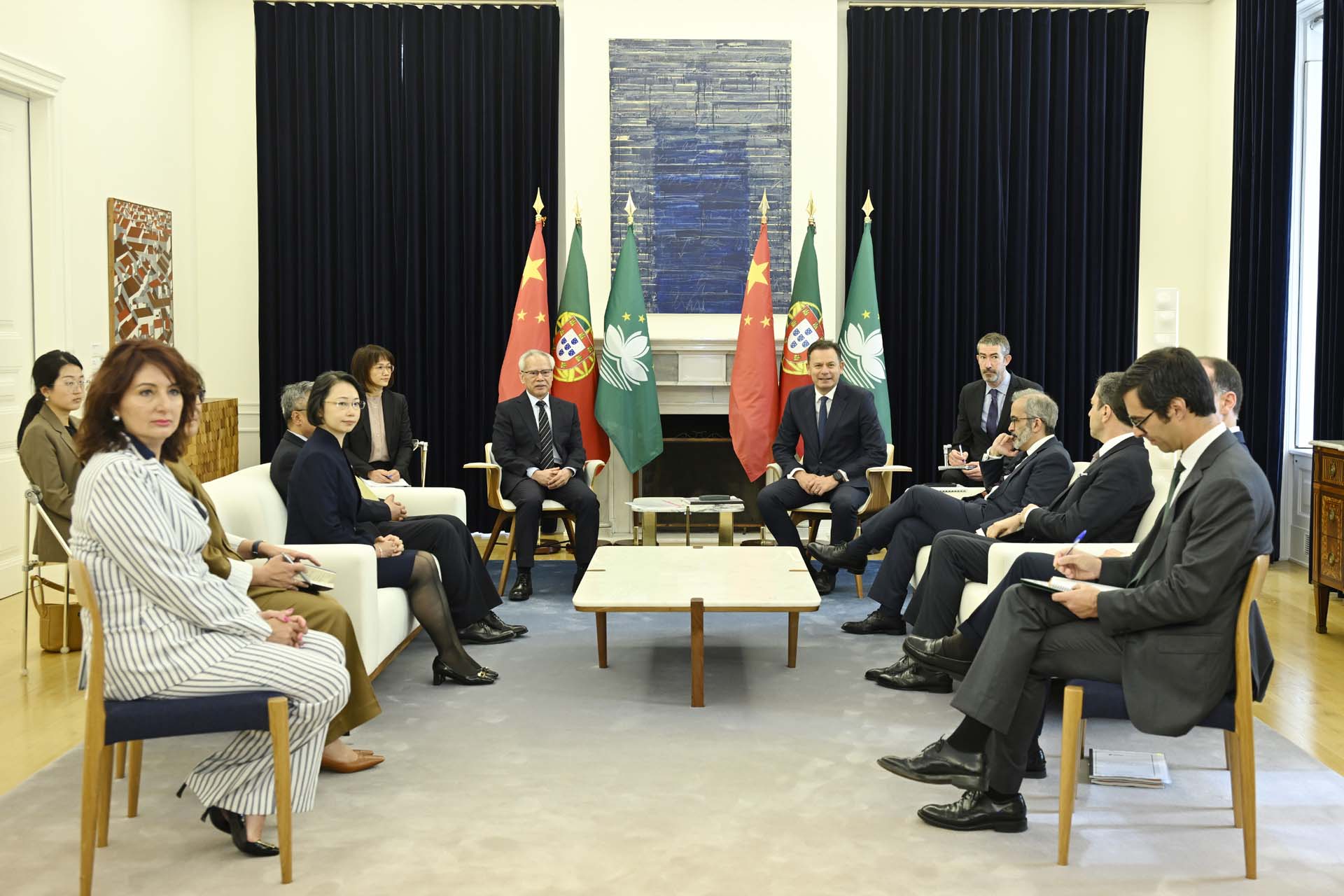
Mr Montenegro stated that Portugal is committed to deepening friendly and cooperative ties with China, emphasising that Macao serves as an important gateway for Portuguese businesses to enter the Chinese market, while Portugal can likewise serve as a platform for Chinese-mainland and Macao enterprises seeking access to the European market.
Regarding other areas of cooperation, the Prime Minister noted that Portugal would further deepen exchanges and collaboration with Macao in judicial cooperation, cultural and tourism development, Portuguese language promotion, and high-level talent development, aiming for mutual growth and shared benefits.
In Portugal, Mr Sam also met with the President of the Portuguese Parliament, José Pedro Aguiar-Branco; the Minister of Justice, Rita Alarcão Júdice; the Minister of Economy and of Territorial Cohesion, Manuel Castro Almeida; the Minister of State and Foreign Affairs, Paulo Rangel; and the President of Portugal’s Supreme Court of Justice, João Cura Mariano.
The Macao and Portuguese representatives engaged in comprehensive and in-depth exchanges, continuing the traditional friendship between Macao and Portugal and elevating exchanges and cooperation. Portugal reaffirmed its support for Macao’s development and internationalisation, while recognising the city’s unique position under the “One Country, Two Systems” framework.
During the Lisbon visit, the Chief Executive also met with the Chinese Ambassador to the Portuguese Republic, Yang Yirui.
Spanish reach
During the Madrid leg of the tour, the Chief Executive articulated a key strategic direction: extending Macao’s platform role from Portuguese-speaking countries to Spanish-speaking countries. The initiative includes promoting trade and investment through institutional mechanisms and a dedicated development fund supporting cooperation with Portuguese- and Spanish-speaking markets.
Strengthening cooperation with Spanish-speaking countries is part of the MSAR Government’s “strategic development effort,” Mr Sam stated. As such, the Macao authorities will also open up market opportunities and increasing trade with Spanish-speaking countries, including in Latin America, with the help of a one-billion yuan development fund – for promoting trade between China and Portuguese (Spanish)-speaking countries – jointly established by the MSAR Government and the Executive Committee of the Guangdong-Macao Intensive Cooperation Zone In Hengqin.
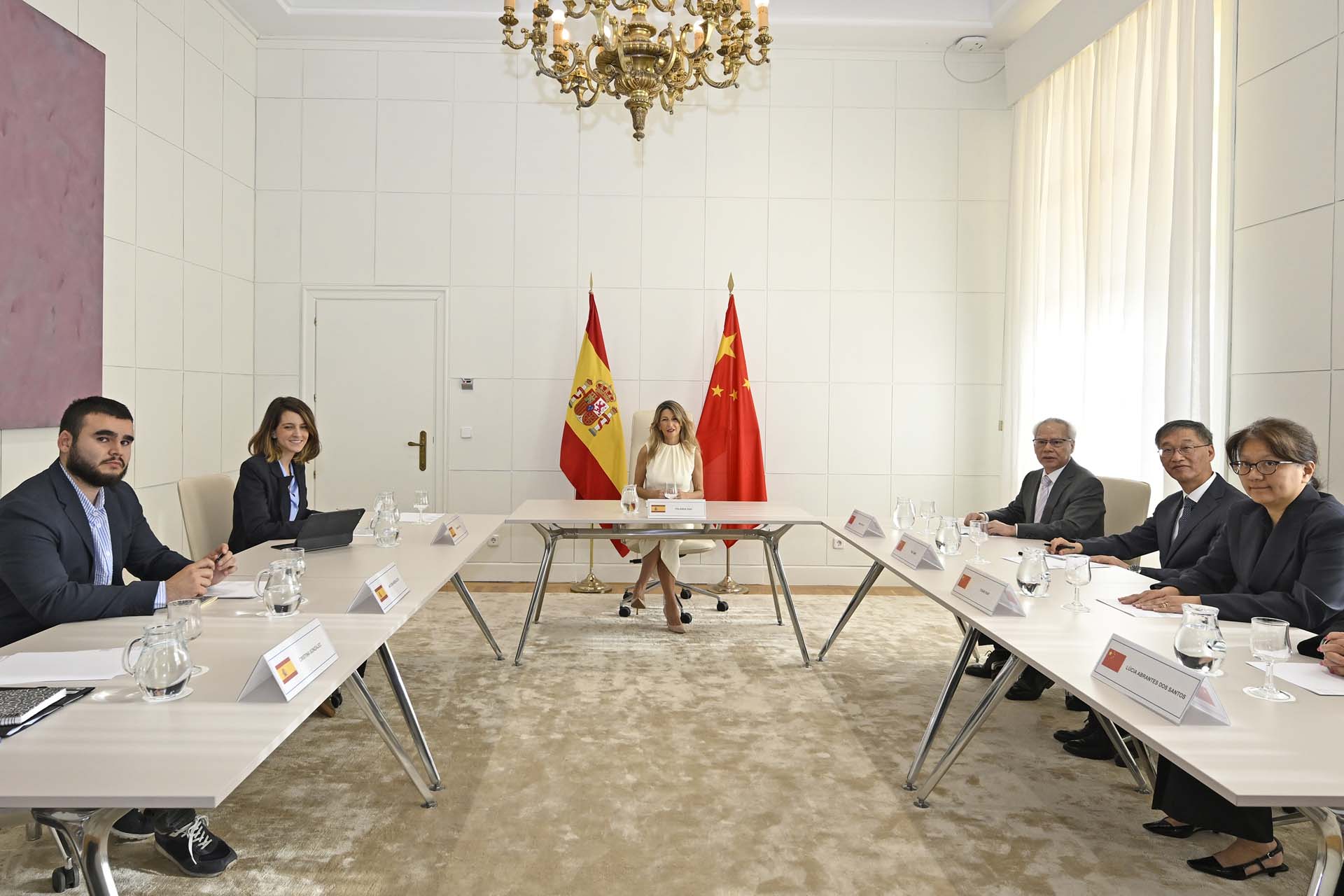
The visit to Spain was marked by active engagement with government officials and business communities. Economic complementarities, including advanced manufacturing, green finance and renewable energy, were identified as areas of strong potential.
At the same time, cultural and tourism cooperation emerged as a defining theme. Both Macao and Spain share rich cultural heritage and global tourism appeal, offering fertile ground for collaboration in high-quality tourism development.
Both sides agreed to launch joint promotion campaigns to attract more Spanish and international tourists to experience Macao’s unique blend of Chinese and Western cultures, Mr Sam noted.
The Chief Executive also said the Macao-Hengqin area serves as a gateway for Spanish enterprises to enter the Chinese mainland market, while Spain likewise is a bridge for Chinese mainland and Macao firms to access Spanish-speaking markets. Both sides, he added, agreed to establish a regular business-matching mechanism, to facilitate mutual investment and jointly tap into the vast market of the Spanish-speaking world.
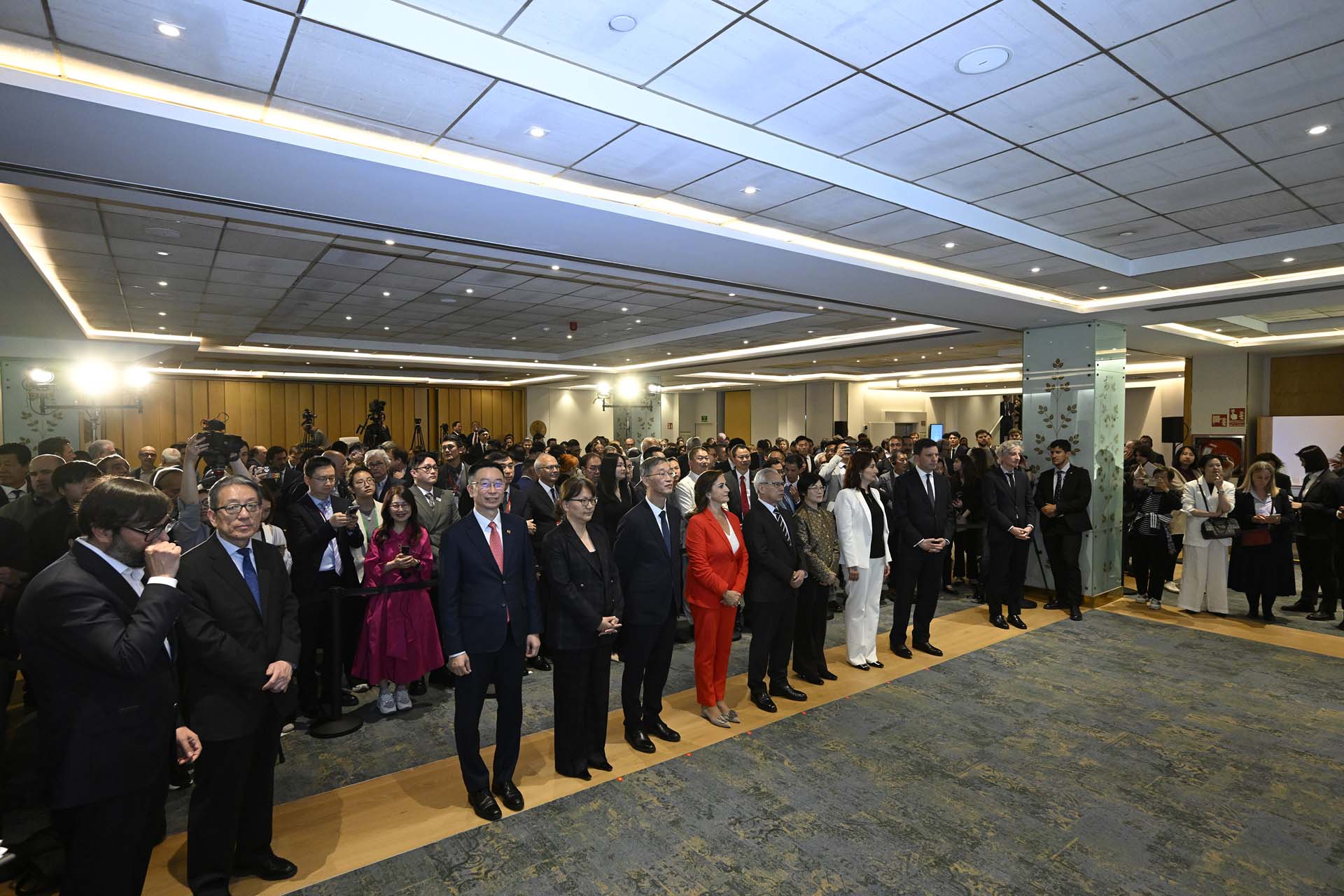
A total of 48 cooperation agreements was signed in Madrid, covering high technology, overseas expansion of exhibition brands, and sports events. Approximately 200 guests attended a Macao-Spain business cooperation seminar, with many Spanish firms expressing strong interest in collaboration with the other side.
While in Spain, Mr Sam met with the Second Vice-President of the Government of Spain and Minister for Work and Social Economy, Yolanda Díaz Pérez; the Minister for Foreign Affairs, European Union and Cooperation, José Manuel Albares Bueno; and the Second Vice President of the Senate of Spain, Concha Andreu Rodríguez. The Chief Executive also held a meeting with the Chinese Ambassador to Spain and Andorra, Yao Jing.
Linking with Europe
The final stage of the tour took the Chief Executive to Brussels, the administrative heart of the EU. Meetings with EU officials, including with Vice-President of the European Parliament, Younous Omarjee, and Deputy Secretary General for Political Affairs of the EU’s European External Action Service, Olof Skoog, highlighted the depth of Macao–EU relations and the potential for further cooperation.
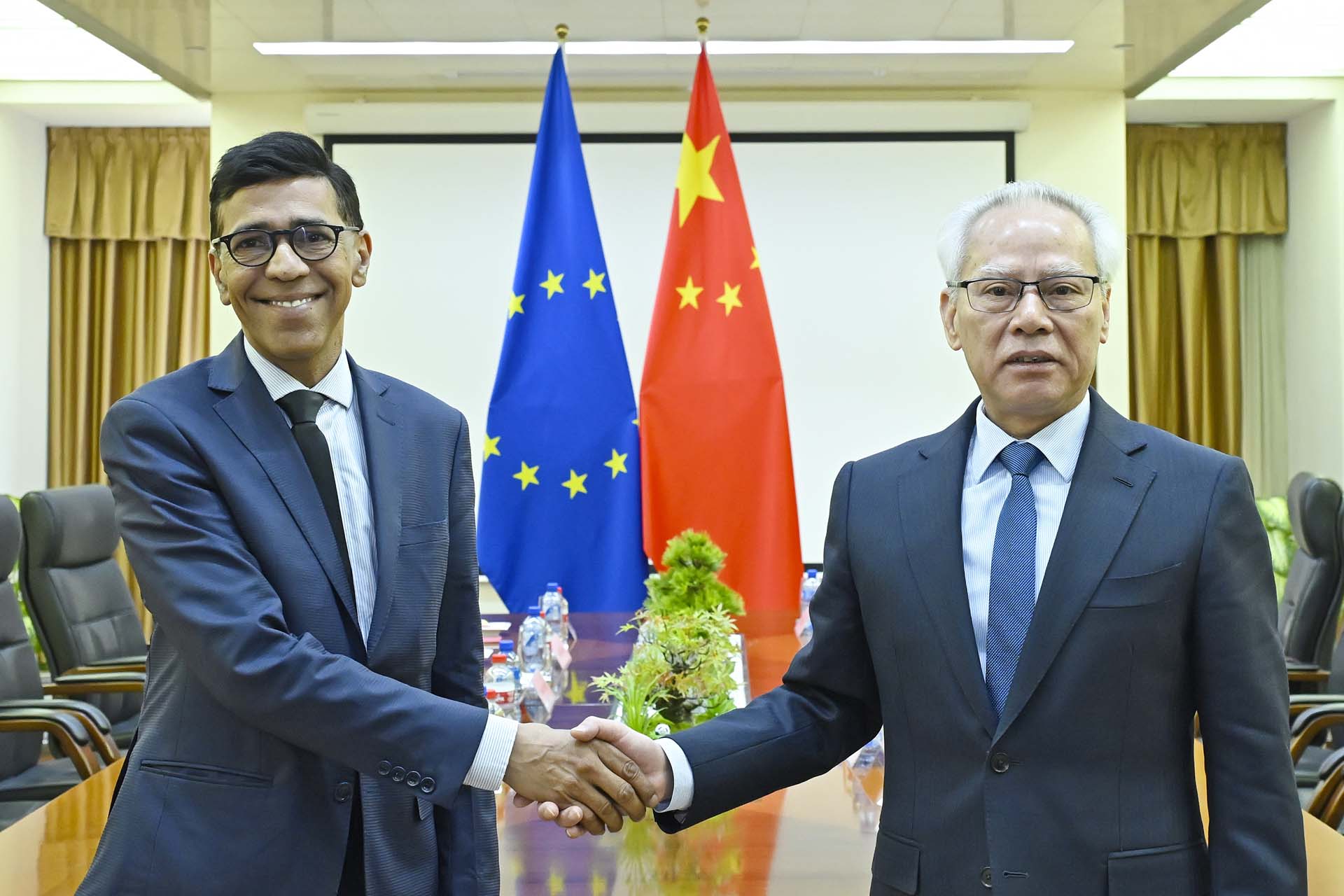
The partnership has matured into a close trade and investment relationship. The Chief Executive said the MSAR Government particularly hopes to strengthen alignment with the EU in fields such as innovation and technology development, green industries, and industry-academia-research collaboration.
Macao’s positioning as “One Centre, One Platform, One Base” aligns naturally with these areas, offering opportunities for collaboration that go beyond traditional trade, he added.
Mr Omarjee said he hoped that China-EU relations could be further developed through the Macao platform. The representative suggested that Macao could make use of its unique cultural characteristics to promote in-depth exchanges with European countries in the fields of culture and the arts, thus, jointly creating more compelling cultural and artistic offerings to further enhance Macao’s tourism competitiveness.
On his turn, Mr Skoog emphasised that the EU fully agrees it can expand cooperation with Macao in areas such as innovative technology, green technology, higher education, and cultural and tourism industries.
The Brussels leg of the journey included a meeting with Belgian Deputy Prime Minister and Minister of Employment, Economy and Agriculture, David Clarinval. The two sides discussed topics such as cooperation in logistics, aviation, and biomedicine. The Chief Executive also met with the Chinese Ambassador to Belgium, Fei Shengchao.
Following the European tour, Mr Sam said the MSAR Government will effectively play its unique role as a “precise connector”, continuously engage in external exchanges and cooperation, inject new momentum into Macao’s efforts toward appropriate economic diversification and contribute to the nation’s high-level opening-up.
| Positioning Macao on the multilateral stage |
|---|
| During the European tour, Chief Executive Sam Hou Fai placed strong emphasis on deepening engagement with key multilateral organisations, reinforcing Macao’s role as an outward-looking and globally connected city. In Geneva, Mr Sam met with Director-General of the World Trade Organization (WTO), Ngozi Okonjo-Iweala, where discussions focused on Macao’s continued participation in the multilateral trading system. As a founding member of the WTO under the designation “Macao, China”, the city has long contributed to global trade dialogue and policy development. The Chief Executive reaffirmed Macao’s commitment to supporting WTO initiatives, particularly those benefiting small economies. He highlighted the city’s unique role as a platform linking China and Portuguese-speaking countries, and its potential to further facilitate trade exchanges within the WTO framework. During the meeting, Ms Okonjo-Iweala expressed her hope that Macao and the WTO will continue to work together to advance various initiatives that are meant to benefit multilateral trade. Both sides also exchanged views on strengthening cooperation in areas such as investment facilitation and capacity-building, with Macao offering its experience as a small but highly open economy. The Macao Economic and Trade Office to the WTO, based in Geneva, has maintained close working contact with the WTO Secretariat, Mr Sam noted. Complementing this engagement, Mr Sam also met with the representative of China’s Permanent Mission to the WTO, ambassador Li Yongjie, underscoring the importance of coordinated efforts in advancing Macao’s participation in global trade governance. The visit to Geneva – a major hub for multilateral cooperation – also featured a meeting with the permanent representative of China to the United Nations Office at Geneva and other International Organizations in Switzerland, ambassador Jia Guide. Earlier on in the tour, in Madrid, the Chief Executive had a meeting with United Nations World Tourism Organization (UN Tourism) Secretary-General, Shaikha Al Nuwais. Tourism remains a cornerstone of Macao’s economy, and the meeting centred on strengthening collaboration in tourism promotion, talent development, and sustainable growth. Mr Sam noted the long-standing partnership between Macao and UN Tourism, which has been reinforced through successive cooperation agreements. In late March 2026, the two sides revised an existing memorandum of understanding, extending its validity until December 31, 2028. The Chief Executive expressed a desire to expand joint initiatives, particularly in tourism education and professional training, leveraging Macao’s institutions and international networks. Ms Al Nuwais, in turn, recognised Macao’s strengths as a global tourism hub and praised its contributions to international platforms such as the Global Tourism Economy Forum. She highlighted opportunities for deeper collaboration, particularly in raising global standards in tourism education and promoting sustainable industry practices. The secretary-general also highlighted Macao’s rich resources in tourism education, which have supported successful collaboration between UN Tourism and the Macao University of Tourism (UTM). |
| Connecting with talent and trade |
|---|
| During the stay in Lisbon, Chief Executive Sam Hou Fai engaged with both Macao students and business leaders, underscoring the city’s enduring ties with Portugal and its strategic global role. At a gathering with around 110 Macao students studying across Portugal, Mr Sam delivered a message that blended encouragement with expectation. He reaffirmed the Macao Special Administrative Region (MSAR) Government’s continued support for students abroad, while urging them to return home after their studies to contribute to national and regional development. He highlighted that bilingual and bicultural talent who have a global perspective are essential to Macao’s role as a bridge between China and Portuguese-speaking countries. Drawing from his own experience studying in Portugal, Mr Sam encouraged the Macao students to strengthen their academic foundations and broaden their global outlook. The Chief Executive also said he was pleased to see many students expressing interest in taking part in the development of the Guangdong-Hong Kong-Macao Greater Bay Area and the Guangdong-Macao Intensive Cooperation Zone in Hengqin. He highlighted that the MSAR Government has introduced a series of supportive policies and measures for Macao’s young people to integrate into national development. The MSAR Government will continue to create better conditions in the future, actively supporting students to build their careers in the Greater Bay Area and the Cooperation Zone in Hengqin, in order fully to utilise their talents across various fields, he added. Separately, at the Association of Chinese Enterprises in Portugal, Mr Sam met with representatives from both mainland Chinese and Macao businesses operating locally. Discussions focused on strengthening collaboration and leveraging Macao’s platform to expand overseas opportunities. The Chief Executive commended these enterprises for their contributions to Portugal’s socio-economic development and for playing a “significant role” in promoting China-Portugal economic and trade cooperation. The delegation included representatives of enterprises from Macao, Hengqin, and other places on the Chinese mainland, for the Portugal and Spain leg of the tour, under a “joint voyage” model, Mr Sam noted. The model aimed to better leverage Macao’s unique platform role in supporting both Chinese mainland and Macao enterprises in expanding overseas. The head of the MSAR Government also encouraged Macao companies in Portugal to strengthen collaboration with the Association, in a bid to effectively integrate into and serve China’s development agenda. |